


Community
How do we know that man went to the Moon? The Herald explains

EVERY single argument claiming that NASA faked the Moon landings has been discredited. But even today, 50 years later, people discuss conspiracy claims online, on television programmes and around the dinner table.
Herald moon fact: With a powerful amateur telescope, you can see the Apollo landing sites and, if you look at the photos from the Lunar Reconnaissance Orbiter, you can spot the remnants of the Apollo missions yourself.
Were the Moon landings faked?
If you find yourself in a debate questioning whether humankind first stepped on the Moon on 20 July 1969, the chances are that you are woefully underprepared. Most people take it as gospel that the US government, NASA, the 12 astronauts in total who have walked on the Moon, and the 400,000 people involved in the Apollo programme would have neither the will nor the way to fake one of humanity’s greatest ever achievements.
But there are those who think the landings were a hoax. They claim the US government faked Apollo 11 and later missions either to deal a crucial blow to the USSR in the Space Race, or to boost NASA funding, or to divert attention away from the Vietnam War. The argument for any of these viewpoints rests on finding evidence that the landings were faked.

And more often than not, people point out peculiarities in specific images or videos to deal the critical blow. If someone uses these oddities as evidence, what do you say? Here are the most common arguments that support this view, and why each of them is wrong.
Evidence of the moon landings include items left there, reflectors installed on the surface, and lunar rocks brought back to Earth.
Photographic evidence
One of the most popular conspiracy arguments is that there are never any stars in Apollo photos. Free from Earth’s light pollution and hazy atmosphere, you would expect to see thousands of stars in all the astronauts’ images. Unfortunately, this argument rests on the photos being snapped during the lunar night. All manned missions to the Moon took place in sunny daytime. This meant starlight lost the battle against the very bright surface of the Moon, too dim to show up in photos.

Another common argument is that the crosshairs that appear in many Apollo images sometimes appear to be behind objects in the photos. If the images were real, this would be impossible, suggesting someone painted them on. But testing here on Earth has shown that the brightly lit objects make the crosshairs appear fainter. When these images are copied or scanned some of this detail is lost completely, giving the effect that the crosshair is behind the object in certain shots.
Others point to an oddity in a photo of a Moon rock taken during the Apollo 16 mission. There appears to be a ‘C’ written on it, like a lettered movie prop. Again, analysing the original photo there is no anomaly – the ‘C’ isn’t there. Most likely it was a piece of hair or thread introduced during copying.
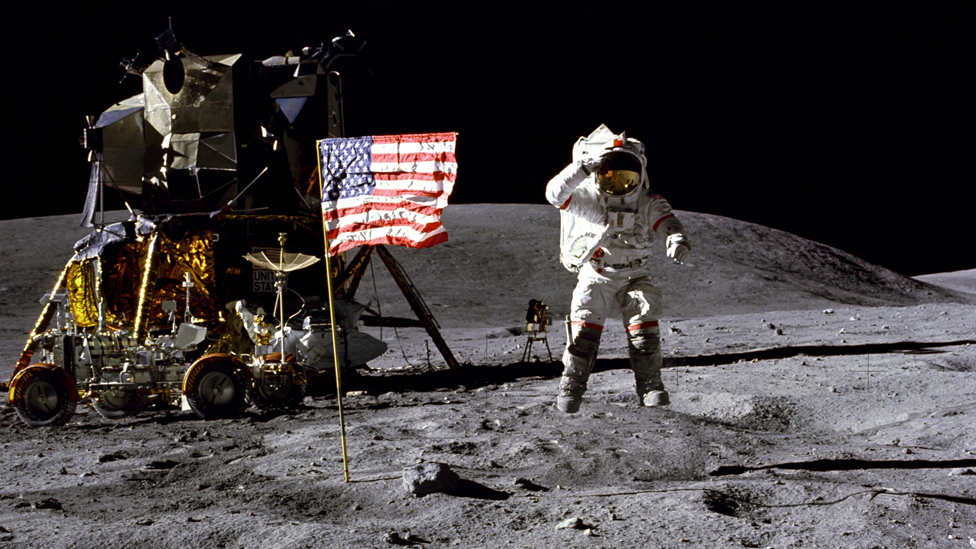
A more subtle argument that the landings were faked is based on various misunderstandings of NASA equipment and lunar physics. A well-known example is the American flag that Neil Armstrong and Buzz Aldrin placed on the Moon. It appears to flutter in the wind in some photos. How could this happen when the Moon has no wind?

In fact, it isn’t fluttering at all. A horizontal rod at the top of the pole holds the flag unfurled. This makes it look like the wind is stopping it from hanging down. And there is a fluttering effect because the weak gravity on the Moon is not strong enough to uncrumple the flag. After a little waving while the astronauts planted the flags into the Moon’s surface, they have remained still ever since.

Fried by radiation
Perhaps the most convincing argument that the landings were faked has to do with something called the Van Allen belts. These are two giant doughnut-shaped belts surrounding the Earth. They are made of highly energetic charged particles from the solar wind. Some people believe humans couldn’t have passed through these belts without being exposed to lethal doses of radiation.
This was a genuine concern before the Apollo missions. And it is the reason scientists behind Apollo 11 made sure they protected the astronauts as best they could. They insulated the spacecraft from radiation with an aluminium shell. And they chose a trajectory from the Earth to the Moon which minimised the amount of time spent in the Van Allen belts.
Readings from the nine Apollo missions that reached the Moon showed the astronauts’ average radiation exposure was 0.46 radiation-absorbed dose (rad). This proved NASA was right to shield the astronauts from radiation. Though it’s less than that experienced by some nuclear energy workers, 0.46 rad is around 10 times more than the radiation exposure of medical professionals who routinely work with x-ray and radiotherapy machines.
Proof we walked on the Moon
Of course, until we return to the Moon there will always be anomalies and oddities in the records that can spark new claims that the Moon landings were faked. But it is the sheer size and variety of this record that proves every one of these claims to be false.
From the Apollo Moon missions, there are 8,400 publicly available photos, thousands of hours of video footage, a mountain of scientific data, and full transcripts and audio recordings of all air-to-ground conversations. We even have 382 kilograms of Moon rock that Apollo astronauts brought back to Earth. These rocks have been independently verified as lunar by laboratories around the world, ruling out a US conspiracy.
If this is not enough to convince the most hardened sceptic, NASA’s Lunar Reconnaissance Orbiter (LRO) might sway them. Today, LRO takes high-resolution pictures of the lunar surface from a low orbit. During its mission, it has captured the landing sites and the abandoned descent modules and rovers from the Apollo missions. And its resolution is so good it has picked up the dark squiggly paths that the astronauts’ footprints made. Spacecraft from China, India and Japan have also spotted these landing sites, providing further independent verification of the landings.
A final nail in the coffin of the Moon hoax theories is a simple instrument installed 50 years ago by Apollo 11. During their day on the Moon, Armstrong and Aldrin planted a lunar laser ranging retroreflector array on the surface. It’s still operational today and allows us to reflect lasers off of it and measure the distance to the Moon down to the centimetre. We simply couldn’t do this if we hadn’t visited the Moon.


A local beauty therapist earns recognition in prestigious UK competition
A MILFORD HAVEN beauty therapist has been shortlisted for a major national award celebrating excellence in the hair and beauty industry.
Charlotte Mitchell-Johns, of The Attic Hair & Beauty, has been named a finalist in the Hair Extensions Specialist category at the UK Hair and Beauty Awards 2026.
Ms Mitchell-Johns, who is a Level four beauty therapist, also works as a hair extensions specialist and beauty educator with HB Training.
Speaking about the recognition, she said she was “truly honoured” to be named among the finalists.
She added that she believes the industry thrives on collaboration rather than competition, and that supporting others is key to long-term success.
Ms Mitchell-Johns has been recognised for her technical skill, commitment to clients, and efforts to maintain high standards within the beauty sector.
The UK Hair and Beauty Awards highlight leading professionals from across the country, celebrating talent, creativity and dedication within the industry.


THE FINAL sign-off for a pilot scheme for foster carers in Pembrokeshire to be exempt from council tax payments, has been backed by senior councillors.
Last July, Pembrokeshire County Council Cabinet members backed a pilot scheme, giving 100 per cent exemptions for those meeting the criteria, running from April 1 of this year, up to March 31, 2029.
In a report presented by Cabinet Member for Young Persons, Community, Well-being and Future Generations Cllr Marc Tierney, members heard the average yearly cost of a young person being supported by an in-house foster carer per year is £22,770, while the cost for those in in residential care per year is £409,812, a variance of £387,042 per year.
“It is evident that if we can support more people to foster through a council tax discretionary discount scheme, this will benefit the Local Authority by reducing reliance on far more expensive residential care placements, or independent fostering agency arrangements, whilst enabling children to remain in their own communities,” the report said.
It added: “Based on the 25/26 Council Tax (Band D) equivalent rate of £2,059.82 per annum, the cost of implementing a 100 per cent discount per year for current mainstream foster carers would be £133,888.30. It is noted that there may be some households within this cohort who are already receiving some sort of discount, however £133,888.30 should be the maximum impact.”

Offset against that, current costs for Independent Fostering Agencies placements are some £1,956,500; the spend for the same number of children placed with in-house foster carers based on average placement costs would £796,920 per annum, an annual variance of £1,159,580 less per year compared to IFA placement costs.
“Introducing this discount on a pilot basis would be with a view to identifying if additional costs incurred by implementing this scheme would be offset by reducing the number of children and young people placed with Independent Fostering Agencies and increasing the number of children being cared for via in-house foster carers,” the report said.
It added: “This proposal will also have the added benefit of creating capacity for more young people looked after to remain close to their families, their homes, their schools, and communities thus retaining crucial local links and support networks.”
At the March meeting of Cabinet, members were asked to again back the scheme, with minor amendments to eligibility, which was supported by Cabinet.
Animal seen galloping through residential streets and towards main road
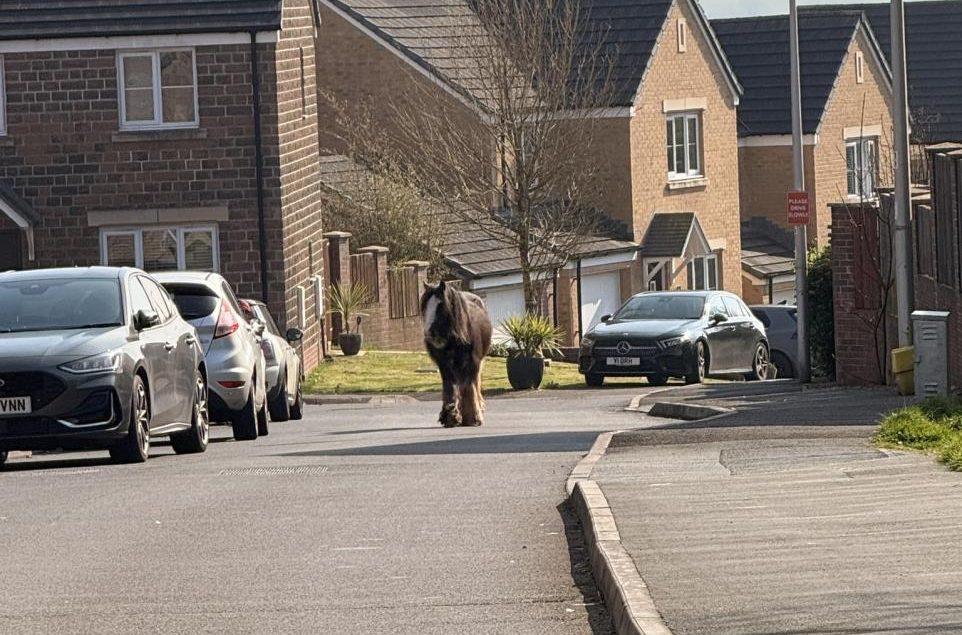
POLICE are reportedly tracking a loose horse which strayed into a residential area of Pembroke.
The animal was first spotted in Gatehouse View before making its way onto a nearby main road.
A post on the Pembroke and Pembroke Dock Citizens’ Forum said the horse had left Gatehouse View and was seen heading towards the road by Pembroke Leisure Centre.
The resident wrote: “Anyone recognise it? Police following it.”
The horse was later reported to be galloping down Buttermilk Lane in the direction of Martha’s.
Stray horses are not uncommon in the area. In January, several animals were reported loose around Pembroke and along the A477, particularly near Buttermilk Close and the Cleddau Bridge.
Those incidents created a hazard for motorists, prompting Pembrokeshire County Council to step in and return the animals. Drivers were advised to take extra care and avoid startling them.


Entertainment1 day ago
Tenby steams up in spectacular style as crowds flock to festival
Colourful parade, towering creations and Victorian flair bring town centre to life TENBY was transformed into a vibrant Victorian fantasy...

Crime2 days ago
Publican jailed for six years for supplying cocaine and cannabis
Milford Haven man sentenced at Swansea Crown Court following drug dealing operation A MILFORD HAVEN publican has been jailed for...

Local Government2 days ago
Poverty summit highlights support efforts across Pembrokeshire
A SUMMIT bringing together key organisations from across Pembrokeshire has highlighted both the scale of local poverty and the work...


Education3 days ago
Milford Haven school plans unveiled but funding not yet secured
PLANS for a new £100 million school in Milford Haven have been unveiled, but the project has not yet secured...


News3 days ago
Council unveils plans for new state-of-the-art secondary school in Milford Haven
PEMBROKESHIRE COUNTY COUNCIL has revealed plans for a new state-of-the-art school in Milford Haven, promising modern, inspiring learning spaces for...


Health3 days ago
NHS waiting list falls — but cancer delays and diagnostic backlog worsen
Record progress claimed by Welsh Government as critics warn key targets are still being missed THE NHS in Wales has...


Crime4 days ago
Rapist jailed after ‘abhorrent’ attacks on woman and children
Haverfordwest man told police “women won’t have sex without force” A HAVERFORDWEST man who raped a woman and a young...

News4 days ago
Reform secures first Pembrokeshire councillor in Hakin by-election win
Late Reform candidate takes seat as independent surge and Labour withdrawal shape contest REFORM UK candidate Scott Thorley has won...

News5 days ago
Scott Thorley elected as Pembrokeshire’s first Reform councillor
REFORM UK candidate Scott Thorley has won the Hakin by-election after securing 179 votes. The full result is as follows:...

News5 days ago
Police confirm man has died after being recovered from River Cleddau
Major emergency response in town centre after concerns raised for man in water A MAN has died after being recovered...
-
 News5 days ago
Emergency services flood Haverfordwest after reports of person in river
-

 Crime4 days ago
Mother given community order after admitting child cruelty offence
-
Health3 days ago
NHS waiting list falls — but cancer delays and diagnostic backlog worsen
-
 Crime7 days ago
Man cleared of sexual assault allegation after magistrates rule no case to answer
-
 News5 days ago
Senedd vote to ban greyhound racing hailed as ‘landmark moment’ by charities
-
 News5 days ago
Senedd votes to ban Greyhound racing in Wales to protect animal welfare
-
News4 days ago
Reform secures first Pembrokeshire councillor in Hakin by-election win
-
 News6 days ago
£3.8m to help Welsh families struggling with soaring heating oil costs