


News
Vaughan Gething could lose no confidence vote due to sick colleagues


First Minister Vaughan Gething is poised to face a critical vote of no confidence today, amid mounting controversy over his leadership and campaign funding. The Senedd vote, initiated by the Conservatives, comes after sustained criticism of Gething’s acceptance of donations from a company owned by an individual previously convicted of environmental offences. With significant internal party strife and key members absent, Gething is expected to lose the vote, which could significantly undermine his authority.
In a revealing interview with BBC Radio Wales Breakfast, Vikki Howells, chair of the Labour group of Members of the Senedd (MSs), disclosed that two Labour MSs are currently unwell and unable to attend the vote. This development places Gething’s leadership in jeopardy, as Labour’s narrow majority in the Senedd requires full attendance for a definitive win. The absent MSs are Hannah Blythyn and Lee Waters, both significant figures in Welsh Labour’s internal dynamics. Blythyn, recently sacked by Gething, and Waters, a former transport minister who has previously called for the contentious donations to be returned, are pivotal in this unfolding drama.
Their absences, compounded by the lack of proxy voting or remote participation options, have thrown Labour’s plans into disarray. Labour holds exactly half of the 60 seats in the Welsh Parliament, meaning every vote is crucial for maintaining Gething’s position. Without Blythyn and Waters, Labour is left vulnerable, especially as the Conservatives, along with Plaid Cymru and Welsh Liberal Democrat Jane Dodds, have refused to agree to a pairing arrangement to offset the absences.
The Conservatives’ motion could succeed if even one Labour MS rebels, abstains, or does not participate in the vote. This potential outcome has turned the vote into a high-stakes affair, with significant implications for Gething’s leadership. Vikki Howells criticised the vote as a “gimmick” by the Conservatives, aiming to distract from their own performance over the past 14 years in government. She emphasised that such votes should be decided by the public in a general election, not by parliamentary manoeuvres.
Plaid Cymru has accused Gething of showing contempt towards the Senedd. Their leader, Rhun ap Iorwerth, highlighted the internal conflict within Labour over this issue. “Are there Labour members who are wrestling with their conscience? Absolutely, we know there are,” he said, pointing to a fracturing within the party ranks.

Gething, who ascended to the position of First Minister just 77 days ago, has been under intense scrutiny following revelations that he received a £200,000 donation from Dauson Environmental Group during his leadership campaign. The company’s owner, David John Neal, has a history of environmental violations, further fuelling the controversy.
Throughout the leadership contest, Gething faced calls from within Labour to return any remaining funds from Dauson, a plea he has largely ignored. Additionally, Gething’s credibility has been questioned over his handling of a leaked message during the pandemic and the subsequent sacking of Blythyn, who has not spoken in the Senedd since.
The Conservative leader, Andrew RT Davies, laid out the rationale behind the no-confidence motion, citing concerns about Gething’s judgement, transparency, and honesty. “One there’s a question of judgement, two there’s a question around transparency and three there’s an issue around honesty,” he stated on BBC Radio Wales Breakfast.
While today’s vote is technically non-binding and does not necessitate Gething’s immediate resignation, the political ramifications are significant. A loss would underscore a weakening grip on his party and diminish his authority, casting a shadow over his nascent leadership. This vote underscores the turbulent nature of Welsh politics, where internal party strife and external criticisms can converge to threaten even the most newly established leadership.

The origins of this controversy trace back to Gething’s Welsh Labour leadership election victory in March. His campaign was notably dominated by the £200,000 donation from Dauson Environmental Group. Public reaction from Labour politicians was largely muted during the campaign itself, but Gething has failed to prevent private anger from rising to the surface. There were calls from within Labour for the party not to take any remaining money from Dauson, as it normally would with leftover funds from campaign contests.
Adding to Gething’s woes, he found himself defending a controversial message he sent during the pandemic. As then-health minister, Gething informed colleagues he was deleting texts from a ministerial group chat, an action that has drawn criticism and raised questions about transparency and accountability. His subsequent sacking of Hannah Blythyn, which he attributed to her being the source of a leak, has not been backed by evidence, leading to further discontent and demands for clarity.
In a political environment where every move is scrutinised, Gething’s ability to unify his party and command respect in the Senedd has been called into question. The no-confidence vote, while non-binding, is seen as a litmus test for his leadership. Should Gething fail to rally his party members, the implications could be profound, potentially triggering a leadership crisis within Welsh Labour.

As the Senedd convenes to cast their votes, the political stakes could not be higher. The outcome of this vote will not only determine Vaughan Gething’s immediate political future but also shape the broader narrative of Welsh politics in the months to come.

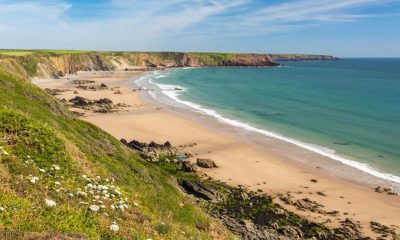








SAMUEL Kurtz MS has welcomed more than £4.3 million in National Lottery funding awarded to community projects across Carmarthen West and South Pembrokeshire since 2021.
Figures released by The National Lottery Community Fund show that £4,318,484 has been distributed through 122 grants in the constituency since the 2021/22 financial year, the same year Mr Kurtz was elected.
The funding has supported a wide range of grassroots charities, voluntary organisations and community groups through programmes including National Lottery Awards for All, offering grants of up to £20,000, and People and Places, which provides larger awards of up to £500,000.
Projects backed locally include mental health support for young people, environmental and sustainability initiatives, community workshops, outdoor wellbeing activities, support for vulnerable adults, and programmes aimed at building skills and confidence.
Among the organisations to benefit is Pembrokeshire Coast National Park Authority, which received £343,584 for its Routes to Discovery project, helping improve mental and physical wellbeing through accessible outdoor activities.

St Davids Diocesan Council for Social Responsibility was awarded £398,078 to deliver its Plant Dewi: Strengthening our Communities initiative, supporting families and local groups.
Other recipients include The VC Gallery, Redberth Croft CIC, The Tenby Project CIC and Neptune’s Army of Rubbish Cleaners, with funding supporting projects ranging from food initiatives and nature-based wellbeing to volunteering and environmental action.
Mr Kurtz said: “Community groups and charities across Carmarthen West and South Pembrokeshire do incredible work supporting people and strengthening local communities.
“It is fantastic to see more than £4.3 million of National Lottery funding invested in projects that are improving wellbeing, tackling isolation and creating opportunities for people of all ages during my time in office.

“The voluntary sector plays a vital role in our area, and this funding is helping organisations deliver projects that bring people together and make a real difference to people’s lives.”
The National Lottery Community Fund is the largest funder of community activity in Wales, supporting initiatives that bring communities together, promote environmental sustainability, help children and young people thrive, and improve health and wellbeing.
Organisations across Wales can apply for funding through the Awards for All and People and Places programmes to support projects that matter most to their communities.

Further information is available on The National Lottery Community Fund website.

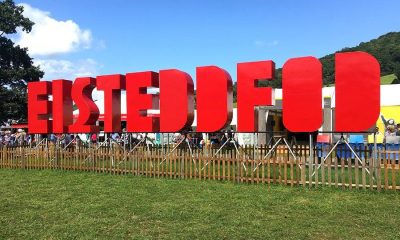
A NEW national framework aimed at securing a lasting legacy from the National Eisteddfod has been published jointly by the festival’s organisers and the Welsh Government.
The plan sets out how the Eisteddfod’s impact will be strengthened before, during and after each annual event, bringing together partners from across education, community development, culture, the economy and the Welsh language sector.
While each Eisteddfod reflects the identity of its host community, the framework aims to ensure long-term benefits are consistently delivered nationwide, rather than limited to the festival period.
The legacy programme will cover a wide range of areas including education, inclusion, digital innovation, volunteering and economic development, with new national and local structures designed to coordinate delivery more effectively.
A national project board will oversee the strategy, setting direction and sharing best practice year-on-year. At a local level, a steering group will drive community-based work, helping turn the Eisteddfod into a catalyst for lasting change.

Cabinet Secretary for Finance and the Welsh Language, Mark Drakeford said the festival’s impact goes far beyond a single week.
“The Eisteddfod is far more than a week-long festival. It is a multi-year project that leaves a lasting legacy for the Welsh language and culture in the area,” he said.
“By bringing together partners from across key sectors, this framework will help deliver real and lasting change for our communities and support our ambition of reaching a million Welsh speakers by 2050.”
Nic Parry, President of the Eisteddfod Court and Chair of its Management Board, said the framework strengthens collaboration at both local and national level.
“It allows us to deliver on a long-held ambition to drive language planning through the lens of the National Eisteddfod,” he said.
“It also positions the Eisteddfod as a powerful tool for boosting local economies and supporting sustainable communities for future generations.”
Further details are expected later this year, with membership of the national project board due to be confirmed by mid-June.
A dedicated session at this year’s Eisteddfod will also gather evidence from the 2026 host area to help shape future plans for 2027 and 2028.
More information is available via the Eisteddfod’s legacy framework online.
Tributes pour in for former Neyland officer remembered as a “true gentleman” and “local legend”
A FORMER Neyland police officer remembered as a “true gentleman” and “local legend” has died at the age of 83, prompting an outpouring of tributes from across Pembrokeshire.
Louis Knight, of Neyland Hill, Neyland, passed away peacefully at Withybush Hospital, Haverfordwest on Thursday (Mar 5).
Mr Knight, who served as a police officer in the area for many years, was a familiar and respected figure in Neyland and beyond. In the hours following the announcement of his death, hundreds of messages flooded social media, painting a picture of a man whose impact stretched far beyond his time in uniform.
Many described him simply as “one of the best,” while others called him “a proper local legend” and “a tremendous police officer.”
One resident wrote: “A face and name I will never forget from my youth.”
Another said: “He was a tremendous police officer… a kick up the backside and a word was enough. It stayed with you.”
Others remembered his warmth and humour away from policing.
“He always had a story to tell on the way home in the taxi,” one tribute read, while another added: “Every time you asked him how he was, the answer was always ‘bloody marvellous.’”
Many spoke of his kindness and the time he gave to people.
“Louis was one of the most kindest gentlemen around. Always made time to chat,” one message said.
Another added: “Neyland won’t be the same again.”
While some reflected fondly on a different era of policing, what came through most strongly was the respect Mr Knight earned within his community — something repeatedly highlighted in tributes from those who knew him as children, neighbours, and later as adults.

Mr Knight was the beloved husband of the late Angela, devoted father of Andrew and Alison, and adored father-in-law of Frank. He was also a loving grandfather to Michelle and Laura, and a cherished brother of Jennifer, Charles and Richard.
His family said he was loved dearly and will be greatly missed by all who knew him.
The funeral service will take place on Wednesday (Apr 1) at 11:30am at Parc Gwyn Crematorium, Narberth.
Family flowers only. Donations in memory of Louis, if desired, are for Ward 8 at Withybush Hospital and may be sent directly to the ward at SA61 2PZ.
All enquiries to Tom Newing & Sons Ltd, Funeral Directors, Dartmouth Street, Milford Haven (01646 693180).
Photo caption:
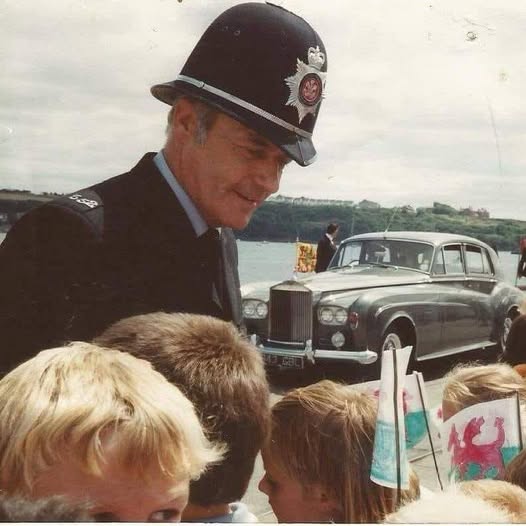
PC Louis Knight pictured during a Royal Visit, engaging with local children — a familiar sight in Neyland for many years (Pic: Supplied).



Education7 hours ago
Milford Haven school plans unveiled but funding not yet secured
PLANS for a new £100 million school in Milford Haven have been unveiled, but the project has not yet secured...


News7 hours ago
Council unveils plans for new state-of-the-art secondary school in Milford Haven
PEMBROKESHIRE COUNTY COUNCIL has revealed plans for a new state-of-the-art school in Milford Haven, promising modern, inspiring learning spaces for...


Health10 hours ago
NHS waiting list falls — but cancer delays and diagnostic backlog worsen
Record progress claimed by Welsh Government as critics warn key targets are still being missed THE NHS in Wales has...


Crime1 day ago
Rapist jailed after ‘abhorrent’ attacks on woman and children
Haverfordwest man told police “women won’t have sex without force” A HAVERFORDWEST man who raped a woman and a young...


News2 days ago
Reform secures first Pembrokeshire councillor in Hakin by-election win
Late Reform candidate takes seat as independent surge and Labour withdrawal shape contest REFORM UK candidate Scott Thorley has won...

News2 days ago
Scott Thorley elected as Pembrokeshire’s first Reform councillor
REFORM UK candidate Scott Thorley has won the Hakin by-election after securing 179 votes. The full result is as follows:...


News2 days ago
Police confirm man has died after being recovered from River Cleddau
Major emergency response in town centre after concerns raised for man in water A MAN has died after being recovered...

Community2 days ago
Davies and Kurtz urge groups to seek employability funding
Community organisations in Pembrokeshire encouraged to apply for new grants supporting skills and job access LOCAL Senedd Members Samuel Kurtz...


News2 days ago
Emergency services flood Haverfordwest after reports of person in river
Town centre sealed off as multi-agency response continues A MAJOR emergency response is underway in the centre of Haverfordwest after...

News2 days ago
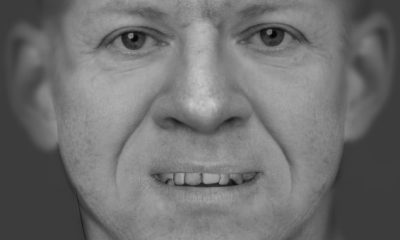
Detectives receive surge of new information in bid to identify man found at Powys reservoir
Public response follows release of facial image as officers pursue fresh lines of enquiry DETECTIVES investigating the identity of a...
-

 Health6 days ago
Welsh Ambulance Service to host bi-monthly Board meeting
-
 News5 days ago
Rayner and Lammy visit Wales to discuss justice and community safety
-
 News4 days ago
Fishguard linked to allegations in Many Tears Animal Rescue investigation
-
News2 days ago
Emergency services flood Haverfordwest after reports of person in river
-
 Charity7 days ago
Many Tears Animal Rescue visited by inspectors as police attend in support role
-
 Local Government5 days ago
Investigation confirmed after inspectors visit Many Tears Animal Rescue
-
 Community6 days ago
Local charity hosts cancer awareness event in Cardigan
-
 Business6 days ago
Work set to begin on £50m hydrogen plant in Milford Haven