


featured
Conservatives wiped out in Wales as Labour vote falls


THE CONSERVATIVES were wiped out in Wales for the first time since 2001 in an election that poses as many questions as it answers.Labour’s percentage of the Welsh vote usually easily outstrips the Party’s in the rest of the UK. However, an unpopular Welsh Government led by an even more unpopular First Minister saw Labour’s share of the vote decline across Wales, even as it picked up seats.
Plaid Cymru did better than expected. The Party of Wales won four seats, two of them, Ceredigion & Preseli and Dwyfor Meirionydd, by huge margins that suggest it now has a pair of safe seats for the first time in the Party’s history.
Although national polls predicted a Labour win in Caerfyrddin, the parties’ canvass returns in Carmarthenshire did not lie. The Labour vote fell back in our eastern neighbour, while Plaid increased its vote share by a small proportion to retain Jonathan Edwards’ former seat.
On Ynys Mon, a surge in support for Reform UK almost certainly handed Plaid Cymru’s Llinos Medi victory by 1500 votes over former Conservative MP Virginia Crosbie. Ynys Mon also saw the Labour vote drop in one of the few three-way marginals in the UK.
Alun Cairns, Stephen Crabb, David TC Davies, and Simon Hart – all former Welsh Secretaries, lost their seats. In the case of the first two former Secretaries of State, the margin was around 1500 votes, with Reform scoring well and proving the difference between their return and a Labour gain.
Labour threw the kitchen sink in their successful effort to eject the combative David TC Davies from Monmouthshire and – on changed boundaries – succeeded by around 3,000 votes.
It would have taken a miracle for Simon Hart, who accepted the most difficult of the four challenges by standing in Carmarthenshire, to return to the Commons. The miracle didn’t come. Reform took 8,000 votes from Labour and the Conservatives, and Simon Hart’s frontline political career is almost certainly over.

The seat held by another former Conservative Secretary of State for Wales, David Jones, was divided between three new constituencies, each of which returned a Labour representative.
The Liberal Democrat vote bombed across most of Wales. However, the Party regained the redrawn Brecon & Radnor seat from the Conservatives. The margin of victory, fewer than 1500 votes, was well within the number of votes Reform gained in the new constituency.
In Montgomeryshire, the MP at the centre of a betting scandal, Craig Williams, deservedly lost his seat, being beaten into third place behind Labour’s Stephen Witherden and Reform UK’s Oliver Lewis. Mr Williams now finds himself free to spend as much time at William Hill’s as he likes.
The Welsh picture overall looks superficially good for Labour, at least in terms of seats won. However, turnout was 56.6% across the whole country, and Labour’s share of the vote fell.
The vote shares for what we must now consider Wales’s five principal parties are revealing.
Labour got 37% of the vote in Wales, Plaid around 15%, the Conservatives around 18%, Reform 17%, and the Liberal Democrats 6.5%.
However, in polling for a Senedd election in 2026, a poll conducted for Barn Cymru, Labour’s vote share is 27%, with the Conservatives comfortably outpolling their Westminster result, and Plaid’s vote share solidly increased.
First Minister Vaughan Gething has claimed Wales will have a “true partner” in Keir Starmer.
In a post published to X, he said: “After fourteen long years, today we begin a new chapter for Wales.

“Your Labour Government will have a true partner in Keir Starmer as we build the fairer, greener future Wales deserves.
“Two Labour governments working together for a stronger Wales in a fairer Britain. Change begins here.”
However, working together will mean Labour in Wales abandoning some key policy pledges. UK Labour will not return full control of structural funds to Cardiff Bay. Even overnight, Labour MPs fought shy of any suggestion the Welsh Government would get full autonomy over it, as it enjoyed pre-2017.
The Welsh Government’s loud and persistent calls for a share of HS2 funding have also gone out of the window, even at the dramatically reduced £350m (down from almost £4bn) it now claims would be due to Cardiff Bay. The long-hoped-for sweetie of more funding for public services in Wales – specifically for Education spending and Health – will likely be far less than Labour in Wales hoped and will probably not all go into those spending pots.
The Barnett Formula, which decides how much Wales gets as a percentage of what is spent in England, will be “reviewed”. However, a change to a formula based on need – if a change takes place – is years away.
Despite their Welsh wipeout, the Conservatives now have a rare opportunity to take a long look at how they organise and campaign in Wales. Like “Welsh Labour”, the “Welsh Conservatives” are little more than a branch office for Westminster.
If the Conservatives find an authentic Welsh voice, as opposed to merely parroting the attack lines from Conservative Central OfficeHQ, they could regain ground as Labour in Wales struggles with Vaughan Gething’s electorally poisonous reputation and dissatisfaction with a quarter of a century of devolution. If they don’t, Plaid and Reform will benefit.
Reform must now try to organise and professionalise itself for the next Senedd elections. It can’t afford the omnishambles that engulfed its predecessor party between 2016 and 2021 or sit back and expect voters to flock to it.
As an almost explicitly English National Party, Reform must also consider how it will build an offer to appeal to Welsh voters on issues within the Welsh Government’s control.
Meanwhile, Plaid must consider both how to extend its reach in Labour-voting areas and consolidate its position in places where it is already strong. Rhun ap Iorwerth comes out of the campaign with considerable public credit in the bank. It is vitally important to Plaid that they build on his appeal and ability to communicate with voters in a way recent Plaid leaders have not.
For Mr ap Iorwerth, the main challenge is likely to come from within his own Party’s NEC, which is more focused on internal squabbles on single issues than fighting elections on a broad platform.









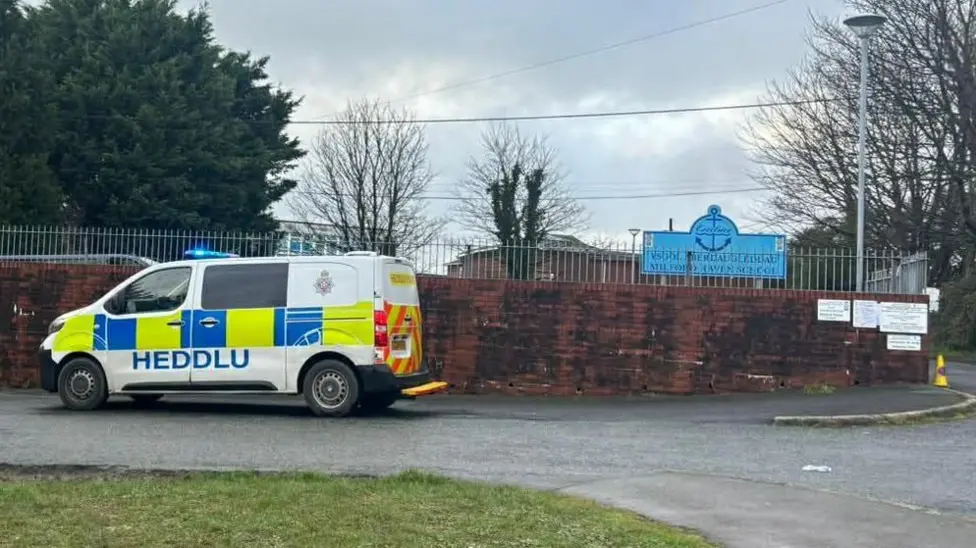
TEENAGER REMANDED AHEAD OF JULY TRIAL
A 15-YEAR-old boy has denied attempting to murder a teacher during a stabbing incident at Milford Haven School.
The teenager, who cannot be identified for legal reasons, appeared at Swansea Crown Court on Friday (May 8).
He pleaded not guilty to attempted murder, causing grievous bodily harm with intent, and unlawful wounding with a knife.
The charges relate to an incident at Milford Haven School on Thursday, February 5, when emergency services were called after reports that a teacher had been assaulted by a pupil carrying a weapon.
The school was placed into lockdown and pupils were later safely evacuated.
The injured teacher was taken to hospital with stab wounds, but was discharged later the same day.
Police said at the time that specialist officers were supporting the victim and the wider school community.
The teenager was remanded in custody following Friday’s hearing.
A trial is due to begin on July 6.
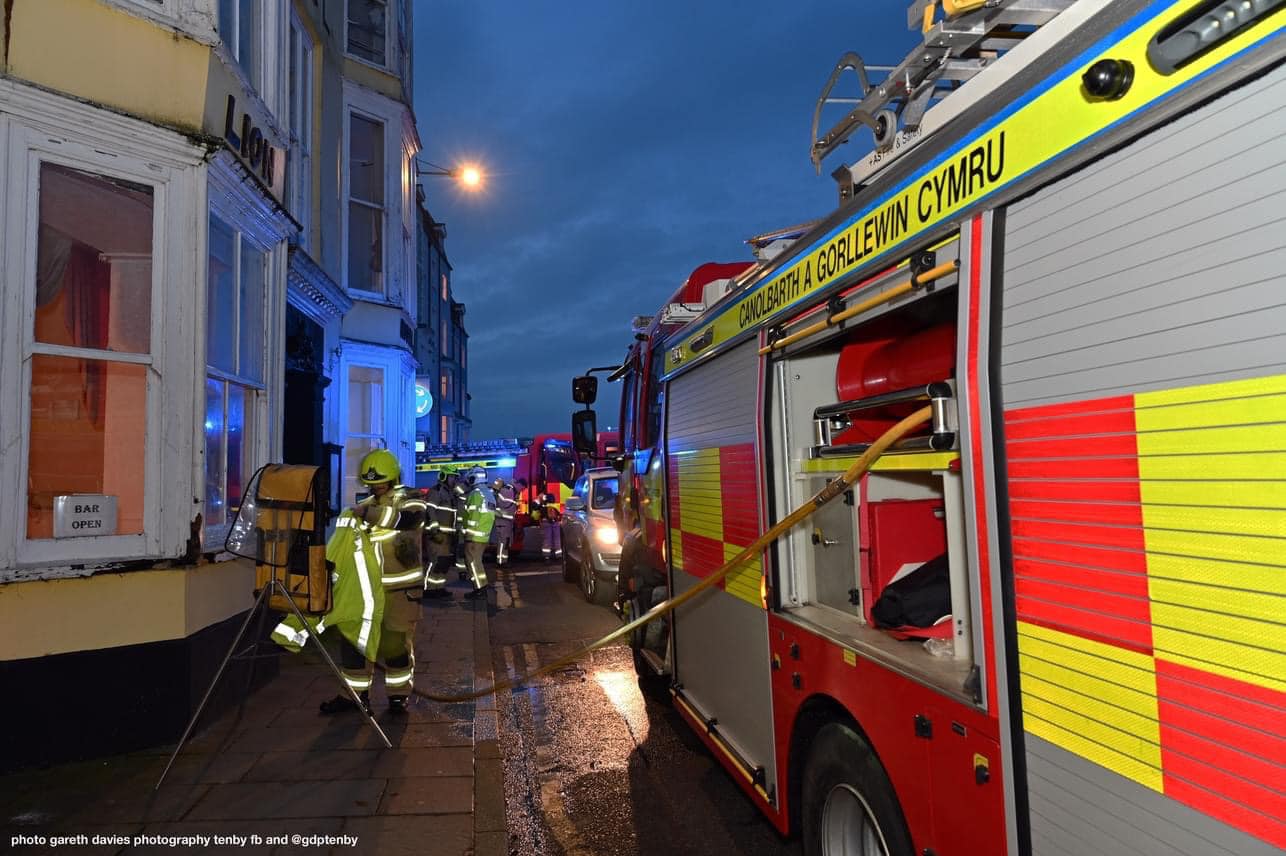
Haverfordwest ‘at the centre’ of Mid and West Wales Fire Service scandal
A DAMNING independent cultural review into Mid and West Wales Fire and Rescue Service (MAWWFRS) has laid bare widespread bullying, harassment, and a culture of favouritism – issues long suspected at Haverfordwest Fire Station, which was at the heart of controversy following the dismissal of Watch Manager Phil Irving in 2024.
The findings, published this month, confirm what many firefighters have been saying for years – that nepotism, intimidation, and a lack of accountability have created a toxic working environment across the service. The review follows a series of scandals, including Irving’s dismissal, which rocked Haverfordwest Fire Station and raised major concerns about the culture within the service.
“Operational boys’ club” exposed
The review describes MAWWFRS as an “operational boys’ club” – where personal connections with senior leaders, rather than skills or experience, dictate career progression. Staff reported that friendships with management led to promotions and special treatment, while others faced discrimination or were pushed out for speaking up.
One firefighter told investigators: “Help from the old boys’ club means promotion for many operational personnel.”
Another stated: “There is a pernicious cliquey culture within the organisation. Favouritism and nepotism thrive – if you are friends with the right people, you are untouchable.”
These findings mirror concerns raised in 2021, when The Herald revealed serious complaints about bullying and mistreatment at Haverfordwest Fire Station. At the centre of those allegations was Watch Manager Phil Irving, who was accused of intimidating staff, creating a culture of fear, and forcing multiple colleagues to request transfers just to escape his leadership. Despite repeated complaints, it took years for MAWWFRS to take action, and it was only in 2024 that Irving was dismissed.

Years of bullying ignored
The review found that bullying and harassment remain rampant, with 47% of staff experiencing it since 2021, and over half (54%) witnessing it firsthand. However, despite the scale of the problem, most staff do not report it, fearing retaliation or career damage.
One employee stated: “Speaking up means you’ll be marked. It’s easier to keep your head down.”
Another added: “If you’re not in the right circles, it doesn’t matter how good you are – you won’t go anywhere.”
Leadership failures and a lack of accountability
The review heavily criticises senior management, describing a lack of accountability at every level. Disciplinary procedures were found to be biased, unprofessional, and ineffective, with some managers protecting each other rather than enforcing proper standards.
This was evident in the handling of Phil Irving’s case. Despite numerous complaints and repeated concerns from colleagues at Haverfordwest Fire Station, it took years for leadership to act, leaving firefighters in a toxic working environment for far too long.
Even after Irving’s removal, firefighters remain sceptical that real change will happen.

One told The Herald: “People like him were allowed to thrive because the whole system is broken. Unless they fix leadership, it will happen again.”
Fire service pledges change – but is it too late?
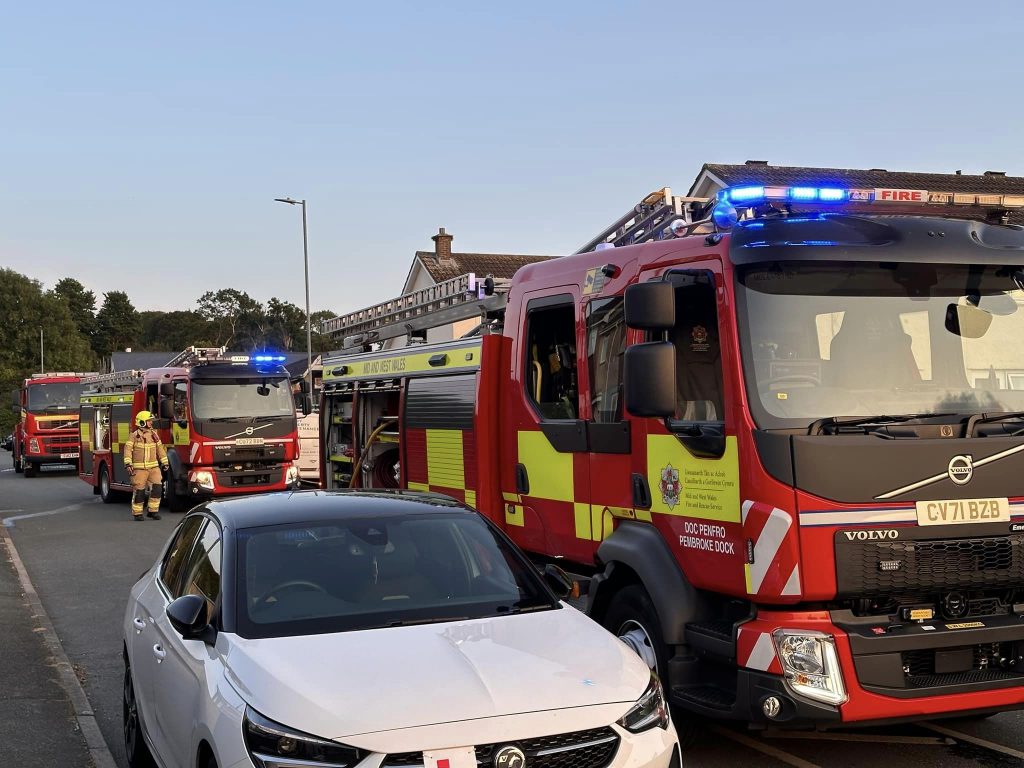

In response to the report, Chief Fire Officer Roger Thomas admitted the findings were serious, stating: “I accept the findings and recommendations within the review, which support my ambition to improve the culture of our service.”
However, many remain unconvinced that MAWWFRS will follow through with genuine reform. The cultural issues are deep-rooted, and Haverfordwest Fire Station is just one example of a wider problem across Mid and West Wales.
While some believe that Irving’s dismissal was a step in the right direction, others argue it was too little, too late. The challenge now for MAWWFRS leadership is whether they will take real action – or whether this report, like so many before it, will simply gather dust while the same toxic culture continues.

HEARD the story about the ‘major’ car crash in Tesco’s car park, Cardigan? The one where no one was hurt and no vehicles were damaged?
Or how about the story where a Cardigan street was recently pronounced as having the slowest average broadband speed in the whole of Wales? Except the ‘street’ is nowhere near Cardigan at all, but a hefty seven miles away – in Ponthirwaun.
Now, as hundreds of disgruntled Cardigan newspaper readers are becoming increasingly disillusioned at the ‘click-bait stories’ appearing in their 158-year-old local paper, another online publication is proving a farcical force to be reckoned with.
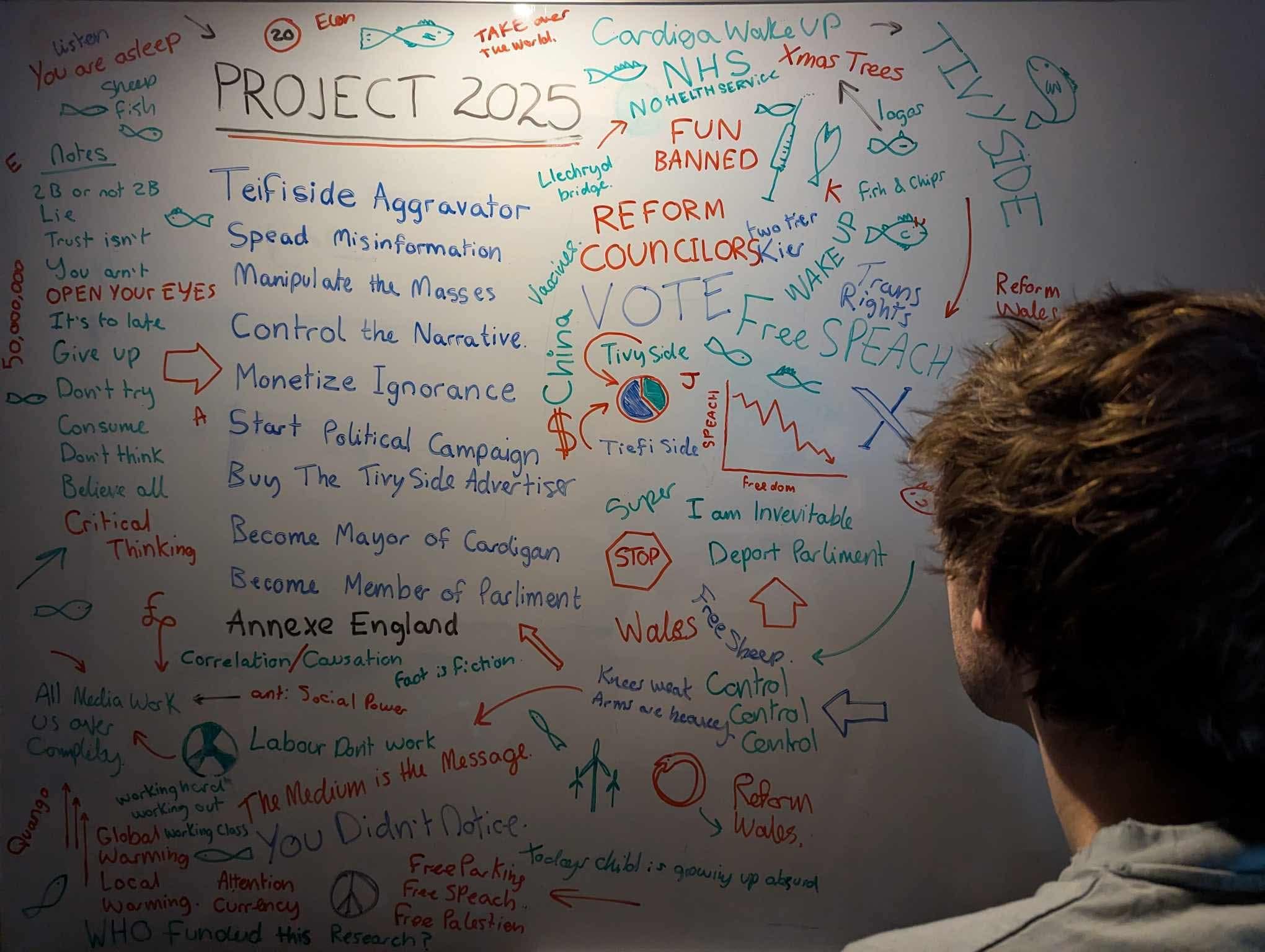
Enter the ‘Teifiside Aggravator’.
This week The Pembrokeshire Herald met up with the Aggravator’s creator and editor for an exclusive insight into what prompted its heady arrival into the ever-changing world of online media.
“It all started when I began to realise that so many of the news articles in the local paper were just pure nonsense,” he said. (And before anyone starts wondering who was being interviewed, the editor wishes to remain anonymous. All we know is that he’s male, 24 years old, and has lived ‘near Cardigan’ for the past 15 years).
“Take that car crash story in Tesco’s car park … it was a nothing story, because nothing had happened. It was just a tiny little bump. And yet it hit the newspaper with a big headline.
“I also began realising how much misinformation is being fed to each and every one of us, and the social implications that this means as a whole.
“Globally it’s such a huge issue, so I wanted to see what the limits are.
“This week many of us have been affected by the power cuts and I’ve been offline for two days. And this made me realise that the global issues which we’re bombarded with are suddenly irrelevant – the most important things are the things that are immediately around us.
“And it’s not just a manipulation by the media but all those other influencers, including the Government and everyone with a lot of reach.”
Which brings us neatly back to the Teifiside Aggravator.

Its first story, published on November 25, 2024, told of the controversial plans to replace Llechryd’s historic bridge with a £1.5 million flood-resilient structure built by a Chinese construction firm. Then there was Emyr the heroic sheep (soon to be honoured in the local Eisteddfod), who saved the life of a six-year-old child on a farm in Synod Inn closely followed by Cardigan’s acute sourdough shortage coupled with the locals’ failure to put the lids back on their marmite pots. Last but by no means least came Cardigan’s ‘bauble-based blunder after borough bigwigs bungled their budget with its plastic Christmas tree (Don’t you just love the Aggravator’s use of alliteration?)
The articles are beautifully composed, highly entertaining and ever-so-blatantly tongue in cheek, thanks to the candid thought processes of the editor.
“Very single article is written by AI,” he laughs. “Obviously the ideas are all mine and I give AI very firm instructions on how they should be written, usually with a fair bit of alliteration and the occasional stupid word dropped in. It usually takes around ten takes before I’m happy with the story but the interesting thing is, I’m still not sure whether everyone who reads my stories realises they’re fake.
“For example, people shared their disappointment over the Christmas tree story and the town council’s decision to erect a fake tree instead of a real one, and loads more people were extremely upset at the fact that Lechryd bridge was going to come down.

“But once people figure out that the stories are false, they find them funny. And to date, I haven’t seen anything negative in the way they’re being presented.”
One can’t help comparing the Teifiside Aggravator concept with that of Barri Bryth, Ceredig Pysgod-Jones and Gito Goch who are the unstoppable reporters responsible for Pembrokeshire Cachu News and its satirical news sensations. Since launching in 2020, the online news site has amassed over 10,000 followers.
“Yes, it’s quite entertaining to see people fall for my stories and believe that they’re true, but it’s made me realise that these people are no different to me. There’s probably someone out there laughing at my expense when I read what they’ve written, believing it to be true.
“Misinformation is such a big thing at the moment, with people telling us what we should be eating or who we should be supporting or not supporting.”
Speaking with the Aggravator, it soon becomes apparent that whoever is responsible for its creation is an exceptionally logical, clear-minded character. Despite still being offline as a result of the power cut, he was already working on his next story.
“Every story is about current events, but how they are presented may differ from reality. And this is because I feel that we should be focussing on the things that are directly in front of us in real life, and stop allowing ourselves to consume anything without critical thinking.
“At the end of the day, virtually everything around us is manipulated, even the article that you’re reading at the moment. The person who wrote it may not have understood everything in the context of how it was said, or perhaps the person who was interviewed just gave out snapshots of what was meant.”
Meanwhile, even though the Aggravator’s origins were inspired by the shortfallings of the local newspaper, the editor has now left those shortcomings firmly behind.
“I don’t care about the local newspaper any more – I’ve left that one behind,” concluded the Aggravator.
“ All I’m interested in is opening people’s minds to what’s going on in the information we’re being given on a constant basis.”



Charity14 hours ago
Toy Story fans fill charity toy box at Haverfordwest cinema
Donations pour in for SNAP Specialist Play as families embrace Toy Story 5 launch A TOY STORY-themed charity appeal at...


Community19 hours ago
Lord Rhys emerges from the mist in St Davids
Giant puppet begins historic journey marking 850 years since the first Eisteddfod MIST swirled around St Davids Cathedral on Friday...


News2 days ago
Tragic tribute paid to Haverfordwest man after A4075 collision
FAMILY REMEMBERS “KIND AND LOVING” CALLUM HANSON THE FAMILY of a 22-year-old man from Haverfordwest who died following a road...


News3 days ago
Motorcyclist, 22, dies in A4075 crash in Pembrokeshire
A 22-year-old woman remains in hospital after two-vehicle collision A MOTORCYCLIST has died following a serious two-vehicle crash on the...


Community3 days ago
Why police will be visiting every home in Pembrokeshire
New operation aims to knock on more than 257,000 doors across Dyfed-Powys over the next three years DYFED-POWYS POLICE has...


Crime3 days ago
Prisons at breaking point: MPs warn Wales is paying the price of a failing system
Frozen healthcare budgets, overcrowded jails, homelessness on release and mounting pressure on staff are undermining rehabilitation across Wales, according to...


News3 days ago
Brexit at 10: How Britain was sold a dream that cost us dearly
A decade after the referendum, the promised benefits remain hard to find while the economic costs are increasingly difficult to...


Crime4 days ago
Worcestershire man jailed after violent attack on woman in Tenby
Defendant was already serving a suspended sentence when serious assault took place A WORCESTERSHIRE man has been jailed for more...


Climate4 days ago
Offshore wind ‘could bring new generation of jobs to Milford Haven’
Pembrokeshire ports and Celtic Sea projects placed at centre of Wales’ green energy ambitions MILFORD HAVEN and Pembroke Dock could...


Community4 days ago
Police officer hailed hero after midnight sea rescue in Milford Haven
PC swam 100 metres offshore to save distressed woman heard calling for help in darkness A DYFED-POWYS POLICE officer has...
-

 Community6 days ago
Pembrokeshire Chess Club crowned Welsh champions
-

 Crime3 days ago
Milford Haven man jailed for breaching domestic violence protection order
-

 Local Government5 days ago
Security privately arranged by Mayor at Beating of the Bounds
-

 News3 days ago
Crash on Freeman’s Way causes school-run chaos across Haverfordwest
-

 Crime4 days ago
Man wanted by court after failing to attend hearing over alleged shop thefts
-
 Crime4 days ago
Man banned from roads after drink-driving offence
-

 Crime4 days ago
Man jailed after admitting strangulation and assaults
-

 Crime4 days ago
Man sentenced over stalking campaign and lock knife offence