


Business
Private sector experts wanted to help South West Wales thrive


DYNAMIC private sector experts are wanted to help ensure South West Wales becomes a more prosperous, greener and better connected region in the coming years.
The Corporate Joint Committee (CJC) for South West Wales is looking for applications from specialists in sectors including transport, planning, land use, energy, business and the economy to join a new private sector advisory board.
Once in place, the advisory board will provide expert guidance to members of the committee, which includes senior representatives from the Swansea Bay City Region’s four local authorities, as well as the Brecon Beacons and Pembrokeshire National Park authorities.
Strong experience in the identified sectors is being sought, as well as strong leadership and communication skills and a willingness to work in partnership with others.
Cllr Rob Stewart, Chairman of the CJC for South West Wales, said: “South West Wales has so much potential, and the CJC is committed to ensuring we work together to create a better region in the coming years for the benefit of our residents and businesses.

“Strong partnership work between the four regional councils and the two national park authorities is already in place, but we’re now looking to further boost our work by setting up a private sector advisory board that will be made up of experts in the sectors we’ve identified.
“These specialists will offer high-quality private sector insight and analysis to help guide our plans and decision-making, helping us to create more opportunities and prosperity for local people in the coming years while leaving a positive long-term legacy for generations to come.”
More information about the CJC for South West Wales is available at www.cjcsouthwest.wales
Private sector experts interested in finding out more or applying to become a member of the advisory board are asked to contact Kristy Tillman at the CJC on [email protected] by Monday July 22.



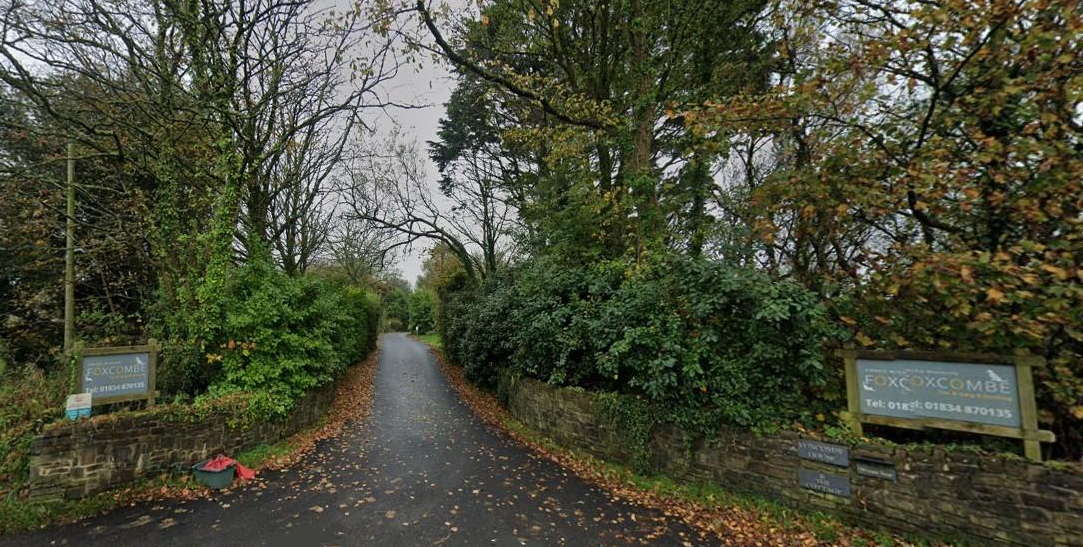
PLANS for the expansion of a Pembrokeshire kennels business has been approved by the national park despite neighbour concerns about increased noise.
In an application to Pembrokeshire Coast National Park, Nick Willis sought permission for the expansion of an existing kennels/cattery business at Foxcombe House, near Manorbier, with 15 new kennels with dog runs, an office, grooming room, kitchen, and associated facilities.
Three members of the public had raised concerns about the scheme including potential noise nuisance with its expansion of the site, just off the A4139 Tenby to Jameston road.
An officer report said the proposals were an amendment to original plans which proposed an extension into the field adjacent to the A4139, currently used as a small caravan and motorhome campsite.
“Whilst the level of development remains as originally proposed and represents a significant intensification of built development, the proposed location, closer to existing facilities, is considered to better reflect an extension of the existing business rather than a separate part of the business,” the report said.
It added: “Correspondence has been received from three properties in the surrounding landscape, which raise concerns about noise nuisance from the existing kennels and indicate that there is likely to be an increase due to the proposed expansion of the kennel business.
“Officers have consulted directly with Pembrokeshire County Council Public Protection team, who confirmed that no formal noise complaints had been received regarding the existing kennel business.
“It is recognised that there is potential for both the existing business and the proposed expanded business to create a noise impact within the immediate surrounding landscape. However, the nearest properties are 103 metres to the southeast and 64 metres to the west.”
It went on to say: “The proposed business plan states that the existing kennels are soundproofed, and the proposed new kennels will also be soundproofed to limit any noise impact. Obviously, it is recognised that the dogs will not be in the kennels for their entire stay and will require access to the exercise areas daily. These areas are open and could lead to noise impact, but again, the use of the exercise areas will be limited and is considered a necessary part of the business, and is an essential element of the business to keep the animals healthy during their stays at the site.
“As such, given the limited nature of the essential exercise areas and that the proposed kennels are to be soundproofed, sufficient mitigation has been proposed in this instance to minimise any noise disturbance to neighbours.”
The application was conditionally approved by park planners.
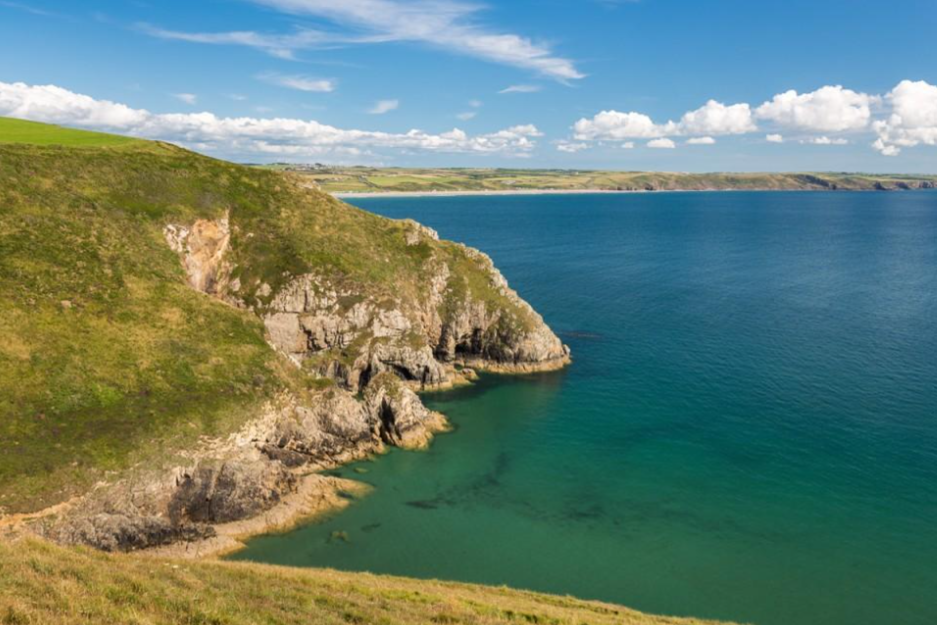
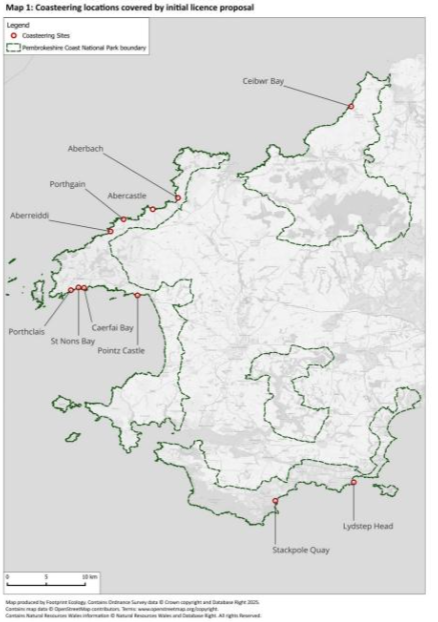
COMMERCIAL coasteering activities in Pembrokeshire’s national park will need to be licensed at a cost of £100 from May following a decision by park members.
At the March 25 meeting of Pembrokeshire Coast National Park, members were recommended to agree the delegation of the introduction of a licensing scheme in relation to commercial coasteering operations on land owned or leased by the National Park Authority, subject to the satisfactory completion of associated environmental assessments for specific routes.
A report for members said: “The Authority has historically relied on a combination of voluntary codes of behaviour to guide the operation of a range of recreational activities in Pembrokeshire, including on land in which the Authority has an interest.
“This has operated successfully for many years, however changes in the number of providers operating over time and complaints raised in the last two years have highlighted the benefits of moving to a more formal arrangement through the issuing of licences for coasteering activity.
“The intention is to move to a system of licensing following the completion of environmental assessments for existing coasteering routes from May 1. Should any routes not pass the environmental assessments, they would not be included in such licensed arrangements.”
It added: “The change to licensing agreements between PCNPA directly with coasteering providers is a significant change in the proposed management of coasteering. The majority of coasteering in Pembrokeshire takes place on land owned or managed either by PCNPA or by the National Trust. Both organisations have historically worked historically together on this issue and the move to issuing licenses is supported by the National Trust as well as PCNPA Officers.”
It went on to say: “There is a recognised difference between general public access and commercial activity. Licensing will give a legal basis to the permission for providers to use Authority-owned/managed land which will ensure that the public benefit (special qualities, wildlife and conservation features) is not compromised by commercial activity. Coasteering with commercial groups has the potential for much greater risk of disturbance/environmental impact than individual public access on foot on public rights of way or beaches which is why it needs to be dealt with differently.”
It added: “A fee of £100 as a cost for the PCNPA Licence is being assigned for this year, which does not cover the costs of the environmental assessment work but is a contribution towards costs whilst the Authority transitions to these arrangements. Over the next few years, the intention is for the Authority to move towards a position of full cost recovery for this work.”
Members, by 10 votes to one against, and one abstention, backed the introduction of the licensing scheme for national park lands.


The Carmarthen eatery is still open, but trading under a different legal entity after being put into liquidation
A CARMARTHEN Italian restaurant has been named by HM Revenue and Customs after deliberately underpaying more than a quarter of a million pounds in tax — with the company now in liquidation.
Claudio Cernat Ltd, formerly trading as Florentino’s on Jacksons Lane, appears on HMRC’s latest list of deliberate tax defaulters published on Wednesday (Mar 26).
The company failed to pay £278,561.67 in tax between April 2016 and March 2020. A further penalty of £185,977.52 was imposed.
Records held by Companies House show the firm is now in liquidation, having been incorporated in March 2015.

Largest west Wales case
The Carmarthen case is the most significant to emerge in West Wales from the latest HMRC “name and shame” list, both in terms of tax owed and penalties issued.

It stands in contrast to other Welsh entries, which are largely made up of smaller businesses and individual tradespeople owing tens of thousands rather than hundreds of thousands.
Who is running the restaurant?
Despite the liquidation of Claudio Cernat Ltd, Florentino’s restaurant in Carmarthen appears to still be operating, with bookings being taken through its website.
However, the website does not identify the company or individual currently running the business. Unless a sole trader, it is a legal requirement to have Limited company name on a business website.
The Herald contacted the restaurant by telephone on Thursday (Mar 26) to ask who currently operates the premises.

A female member of staff answered the phone as “Florentino’s” but declined to provide the name of the business employing her.
The call was then passed to a man who said the restaurant was under “new management” and “nothing to do with the old company”.
When asked to identify the business now operating Florentino’s, the man declined to give a company name or confirm the identity of the owners.

He gave his name only as “John” and said he would ask the new management to return the call “when they come in”.
Director linked to new company
Records show that Claudiu Florentin Cernat, a director associated with the former Carmarthen company, is now listed as a director of a separate business, Maximus Italian Ltd.
The Swansea-based company was incorporated in February 2025 and operates in the same sector — licensed restaurants.
There is no suggestion that the new company is involved in any wrongdoing.
Swansea cases also named
The list also includes three cases from the Swansea area.
Koyuncu Ltd, formerly trading as Pepino’s Pizza in Gorseinon, failed to pay £46,975 in tax, with a penalty of £28,185.
Lee Andrew Dunn, a mechanical fitter from Portmead, underpaid £29,326.20 and was issued a £17,449.06 penalty.
Christopher Lance Whitcombe, an engineer from Fforestfach, underpaid £54,598.69 and received a £46,596.84 penalty.
High street crackdown
Around 140 individuals and businesses across the UK have been named in the latest HMRC publication.
The list includes restaurants, takeaways, convenience stores and vape-related businesses, alongside self-employed trades, highlighting what HMRC says is ongoing non-compliance across high street sectors.
HMRC said all those named had the opportunity to avoid being listed by making a full disclosure during investigations, but failed to do so.
Kevin Hubbard, HMRC’s Director of Individuals and Small Business Compliance, said: “We are actively tackling tax non-compliance among high street businesses across the UK, and today’s namings show we will act wherever we find it.
“Everyone on this list had the opportunity to come forward to make a full disclosure — and didn’t. HMRC will always pursue those who deliberately refuse to pay what they owe.”
No businesses or individuals from Pembrokeshire or Ceredigion appear in the current list.
HMRC only publishes cases where more than £25,000 in tax has been deliberately underpaid. The list relates to civil penalties only, and names remain public for up to 12 months.



Education22 hours ago
Ysgol Henry Tudor reassures parents over Sikh ceremonial kirpan
School says religious item worn by pupil is secured, symbolic and non-functional YSGOL HENRY TUDOR has moved to reassure parents...


Crime2 days ago
Teen jailed after starting fire while others slept
Fire set in shared home left sleeping residents at risk and caused £130,000 damage A TEENAGER who started a fire...


Health2 days ago
GP crisis driving NHS pressure in Wales, Senedd report warns
Falling GP numbers and funding gaps blamed for worsening hospital delays THE NHS crisis highlighted earlier this week is being...


News3 days ago
Reform reveals west Wales candidates for Senedd battle
Monkton councillor tops Pembrokeshire list as party confirms Carmarthenshire names and includes Haverfordwest councillor in unwinnable Swansea spot REFORM UK...


Health3 days ago
Clash over Withybush Hospital services as Paul Davies challenges First Minister
A HEATED exchange in the Senedd has laid bare growing tensions over the future of hospital services in west Wales....


Crime4 days ago
Police stop car in Pennar as three arrested in drugs investigation
Suspected drug driver report leads to major police response and multiple arrests DRAMATIC scenes were reported in Pennar on Monday...

Business4 days ago
New pilot vessel Llanion arrives at Milford Haven
State-of-the-art 22-metre craft marks reset after £3.6m pilot boat controversy THE PORT OF MILFORD HAVEN has taken delivery of a...


Community4 days ago
Sycamore Gap legacy tree to take root in Pembrokeshire landscapes
A SAPLING grown from the famous Sycamore Gap tree is set to become part of Wales’ protected landscapes — with...


Business5 days ago
Could Primark be coming to Haverfordwest? Major retailer in talks for former Wilko site
Council confirms advanced discussions as speculation grows over high street boost HAVERFORDWEST could soon see a major high street revival,...


Business5 days ago
Rail investment ‘could unlock 40,000 jobs and £11bn for Wales’ says new report
RAILWAY stations across Wales could help unlock around 40,000 jobs and more than £11 billion for the economy by 2036,...
-

 Business4 days ago
Taxi fare shock in Milford Haven as drivers switch to meters
-
Business5 days ago
Could Primark be coming to Haverfordwest? Major retailer in talks for former Wilko site
-
 Crime6 days ago
Child rapist found with abuse images after moving to west Wales
-

 Community7 days ago
Charlie the ventriloquist doll returns to Pembroke Dock after 100 years
-

 Health4 days ago
Average of 18 deaths a week in Wales linked to A&E delays, figures reveal
-

 Sport6 days ago
Haverfordwest secure bonus-point win over title-chasing Tumble
-

 Crime6 days ago
Milford Haven drug dealing pub boss who boasted of ‘best coke around’ jailed
-

 Community6 days ago
Broad Haven volunteers secure ‘national asset’ status for nature reserve