


Education
Research reveals nearly half of children in Wales had additional learning needs


A NEW study has highlighted the prevalence of additional learning needs, formerly known as special educational needs, among under 16-year-olds in Wales. The findings come with a policy briefing, calling for a robust review of processes used to recognise such issues and more inclusive learning support for all children nationally.
The research and policy reports, led by the University of Bristol and funded by the Nuffield Foundation, found nearly half (47.9%) of children born in 2002/2003 were identified with some form of additional learning needs (ALN) at some point during their schooling. This was shown to have the biggest impact on academic achievement across all Key Stages of their education.
Lead author Dr Cathryn Knight, Senior Lecturer in Psychology of Education at the University of Bristol, said: “Our findings clearly challenge the notion that learning needs only affect a minority of learners. Key common factors increasing the likelihood of being identified with SEN also emerged, emphasising the importance of recognising the child’s environment and understanding their individual situation to effectively support their learning needs.”
Researchers from the University’s School of Education and Swansea University analysed data from more than 200,000 children in Wales, born between 2002 and 2009, to understand the levels of SEN and its impact on academic achievement.
Findings revealed that the earlier the additional needs emerged and were recognised, and the longer their education was spent with these known needs, the less likely they were to meet nationally expected levels of attainment.

Dr Knight said: “Our research suggests the former SEN system in Wales was unable to effectively support students to mitigate the negative impact of SEN on their grades. This underscores the substantial toll of SEN on academic achievement. To improve academic attainment levels in Wales, it is crucial to prioritise effective support for this very large group of learners.”
Learners having free school meals (FSM) throughout their education were found to be four times more likely to be identified with SEN compared to those not in receipt of free meals. Those born in the most deprived neighbourhoods were shown to be even more likely (4.6 times) to be identified with SEN.
The study also showed boys were much (5.5 times) more likely to be identified with SEN than girls. Children with higher school attendance had a lower likelihood of SEN identification and learners born in the summer, so younger in their year group, were three times more likely to be identified with SEN than those born in the autumn.
Dr Knight said: “This raises concerns about the effectiveness of SEN identification processes, particularly given the unexpectedly high number of learners identified with SEN. It suggests a potential issue of over- or under-identification of certain children.”

The main policy recommendations in the report were to prioritise inclusive educational initiatives that recognise and support all children. The substantial impact of SEN on children’s grades, raises questions about how children with learning needs can be supported to show progression within the education system. Therefore, consideration of more inclusive assessment practices is recommended. The report also calls for current methods used to identify learning need to be rigorously reviewed, with a new focus on ensuring accuracy, fairness, and inclusivity.
The research mirrors similar national findings. Evidence from the Education Policy Institute in England also found a high level (40.7%) of SEND (Special Educational Needs and Disability) identification. Other research, published in the British Educational Research Journal, has also shown that children with SEND in England are also far less likely to meet expected learning standards than their peers at Key Stage 1.
Dr Knight said: “We also need longer-term evidence within Wales and across the UK in order to develop a fuller understanding of the challenges. This includes possible systematic issues with how learning needs are recognised and their subsequent impact on attainment.”


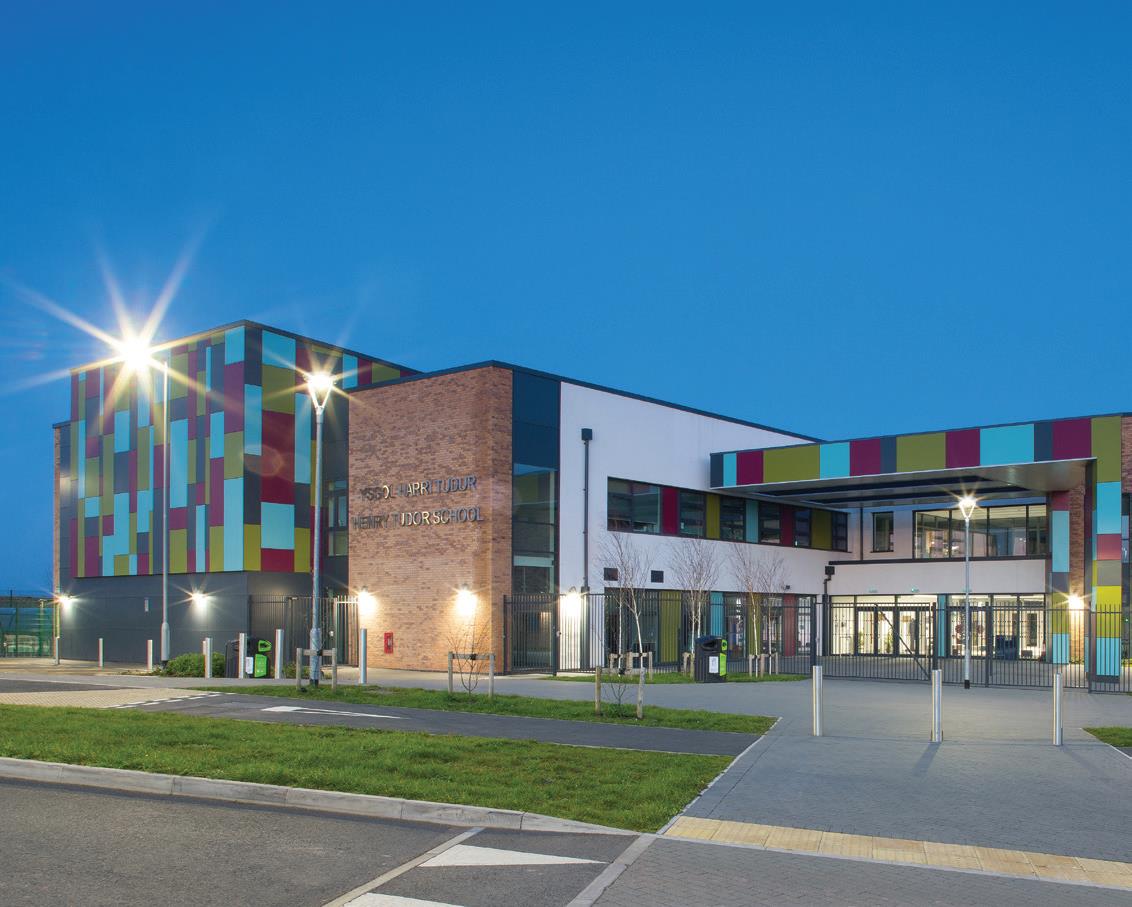
School says religious item worn by pupil is secured, symbolic and non-functional
YSGOL HENRY TUDOR has moved to reassure parents after confirming that a pupil is wearing a ceremonial kirpan as part of their Sikh faith.
The development comes after around a dozen parents with children at the school contacted The Herald expressing concern about the situation.
In a letter sent to parents on Wednesday (Mar 25), the school explained that a Sikh family had recently joined the school community, and that the pupil is an Amritdhari Sikh — meaning they are required to wear certain articles of faith.
One of these is the kirpan, a small ceremonial blade which holds deep religious significance within Sikhism.
The school stressed that in this case the kirpan is “small, sheathed and secured,” and cannot be unsheathed. It added that the item is worn purely as a symbol of faith and “not as a functional item.”

Parents raise concerns
Around a dozen parents have contacted The Herald expressing concern about the situation, with some questioning both safety and how the decision was communicated.
Posts on local social media groups also reflect unease among some parents. One parent wrote that they were “not at all comfortable” with their child returning to school until the issue was resolved, while others questioned whether enough notice had been given before the decision was implemented.
Another commenter raised concerns about safety, suggesting that allowing any form of blade on school premises could set a precedent.
However, some claims circulating online — including suggestions that similar cases have led to violent incidents without prosecution — have not been substantiated.

Reassurance over safety
The letter made clear that appropriate steps have been taken to ensure the situation is managed safely and in line with safeguarding responsibilities and UK law.
School leaders said they remain committed to respecting the religious beliefs of all pupils while maintaining a safe environment, adding that the matter will continue to be monitored “sensitively and appropriately.”
In some settings, schools may agree adjustments to how a kirpan is worn — such as ensuring it is very small, secured, or sealed — so that religious requirements are respected while maintaining safety.

Understanding the kirpan
The kirpan is one of the five articles of faith — known as the Five Ks — observed by initiated Sikhs. It symbolises a duty to stand up against injustice and to protect others.
Under UK law, Sikhs are permitted to carry a kirpan for religious reasons. In schools, these are typically very small, kept in a sheath, and often secured so they cannot be drawn.
Across the UK, many schools have policies in place to accommodate the wearing of the kirpan while ensuring appropriate safeguards are followed.
Promoting inclusion
The school’s letter reflects a wider approach across education settings in Wales and the UK, where inclusivity and respect for different faiths are balanced with clear safety measures.
Pembrokeshire County Council has since confirmed it was aware of the situation and had provided guidance to Ysgol Henry Tudor when the matter was raised. A spokesperson said the authority is satisfied that appropriate safeguarding measures are in place, and that the school is following its procedures as outlined to parents in its communication. The update comes amid some concern from parents, including comments shared with The Herald and on social media, although no incidents relating to the matter have been reported.
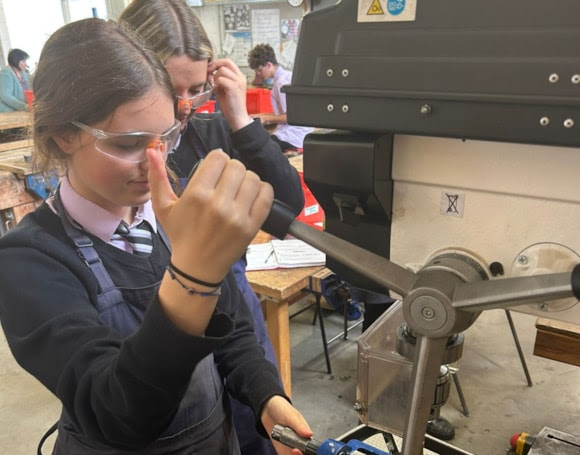
SCHOOLS in Carmarthenshire have been recognised for improving careers education as a national rollout of a new award scheme moves a step closer.
The Careers Wales Quality Award (CWQA), which has been piloted since September 2023, has involved 66 schools and education settings across Wales. These include primary and secondary schools, special schools, pupil referral units and EOTAS provisions.
Among those taking part are Ysgol Glan-y-Mor, Ysgol Bro Dinefwr, Ysgol Gynradd Llandybie and Burry Port Community Primary School.
Early feedback from the pilot suggests schools have strengthened leadership and planning around careers education, improved engagement with parents and employers, and increased pupils’ involvement in shaping their own learning. Teachers have also reported greater confidence in delivering careers-related lessons.
The scheme focuses on careers and work-related experiences for learners aged three to 16, aligned with the Curriculum for Wales.
Registration has now opened for schools across Wales to join the programme from September 2026.
The award is split into three stages — leadership, development and impact — designed to help schools build a structured approach to careers education and demonstrate its impact on pupils.
A national rollout will also introduce Bronze, Silver and Gold levels, aimed at recognising progress while allowing flexibility for different schools.
Mark Owen, Head of Stakeholder Services at Careers Wales, said the pilot had helped shape the scheme ahead of its wider launch.

He said: “High-quality careers and work-related experiences play an essential role in helping learners understand their options and develop the confidence and skills they need for the future.
“We’re encouraged by the positive impact we’re already seeing and look forward to welcoming more schools to take part.”

LOCAL authorities are helping schools manage their day-to-day finances, but a lack of consistent strategic support is undermining long-term planning, a new report has found.
The review by Estyn, titled Local authority support for schools to manage their budgets, examines how effectively councils are supporting maintained schools during a period of growing financial pressure.
Inspectors found that schools generally value the advice and guidance provided by local authority finance teams. Many benefit from strong operational support, helping them monitor spending, manage grants and meet financial requirements.
However, the report highlights significant weaknesses in longer-term planning. Too often, support focuses on balancing annual budgets rather than helping schools make confident decisions about the future.
While budget-setting processes are typically transparent, the quality and timing of financial information varies widely. This inconsistency makes it harder for headteachers and governors to plan staffing and curriculum provision effectively.
The report also found that although most councils monitor financial risks and support schools in difficulty, approaches to early intervention and long-term sustainability are uneven. In many cases, efforts focus on short-term savings rather than building financial resilience.
Estyn said the strongest performance was seen where finance, human resources and school improvement teams work closely together. This joined-up approach allows risks to be identified earlier and ensures financial decisions support educational priorities.
Owen Evans, His Majesty’s Chief Inspector at Estyn, said: “Local authorities across Wales are strongly committed to supporting schools, and schools value the professionalism of finance teams.
“However, schools need clearer, more timely information and stronger support to plan for the medium and long term. Where services work together, authorities are better able to identify risks early and support sustainable decisions that benefit learners.”

The report calls on the Welsh Government to improve the predictability of funding and simplify arrangements to support long-term planning.
It also recommends that local authorities strengthen strategic support by improving multi-year planning, providing clearer financial information and working more closely across finance, workforce and school improvement services.


Education9 hours ago
Ysgol Henry Tudor reassures parents over Sikh ceremonial kirpan
School says religious item worn by pupil is secured, symbolic and non-functional YSGOL HENRY TUDOR has moved to reassure parents...


Crime1 day ago
Teen jailed after starting fire while others slept
Fire set in shared home left sleeping residents at risk and caused £130,000 damage A TEENAGER who started a fire...


Health1 day ago
GP crisis driving NHS pressure in Wales, Senedd report warns
Falling GP numbers and funding gaps blamed for worsening hospital delays THE NHS crisis highlighted earlier this week is being...


News2 days ago
Reform reveals west Wales candidates for Senedd battle
Monkton councillor tops Pembrokeshire list as party confirms Carmarthenshire names and includes Haverfordwest councillor in unwinnable Swansea spot REFORM UK...

Health2 days ago
Clash over Withybush Hospital services as Paul Davies challenges First Minister
A HEATED exchange in the Senedd has laid bare growing tensions over the future of hospital services in west Wales....


Crime3 days ago
Police stop car in Pennar as three arrested in drugs investigation
Suspected drug driver report leads to major police response and multiple arrests DRAMATIC scenes were reported in Pennar on Monday...


Business3 days ago
New pilot vessel Llanion arrives at Milford Haven
State-of-the-art 22-metre craft marks reset after £3.6m pilot boat controversy THE PORT OF MILFORD HAVEN has taken delivery of a...


Community4 days ago
Sycamore Gap legacy tree to take root in Pembrokeshire landscapes
A SAPLING grown from the famous Sycamore Gap tree is set to become part of Wales’ protected landscapes — with...


Business4 days ago
Could Primark be coming to Haverfordwest? Major retailer in talks for former Wilko site
Council confirms advanced discussions as speculation grows over high street boost HAVERFORDWEST could soon see a major high street revival,...


Business4 days ago
Rail investment ‘could unlock 40,000 jobs and £11bn for Wales’ says new report
RAILWAY stations across Wales could help unlock around 40,000 jobs and more than £11 billion for the economy by 2036,...
-
Business4 days ago
Could Primark be coming to Haverfordwest? Major retailer in talks for former Wilko site
-

 Business3 days ago
Taxi fare shock in Milford Haven as drivers switch to meters
-

 Crime5 days ago
Child rapist found with abuse images after moving to west Wales
-

 Health3 days ago
Average of 18 deaths a week in Wales linked to A&E delays, figures reveal
-

 Crime6 days ago
Milford Haven drug dealing pub boss who boasted of ‘best coke around’ jailed
-

 Sport5 days ago
Haverfordwest secure bonus-point win over title-chasing Tumble
-

 Local Government4 days ago
Milford Haven set for £200m investment with schools, leisure centre and rail upgrade
-

 Community1 day ago
Hero female officer keeps job after sexual touching finding