


Crime
‘Lessons continue to be learnt’ after murder of Lola James

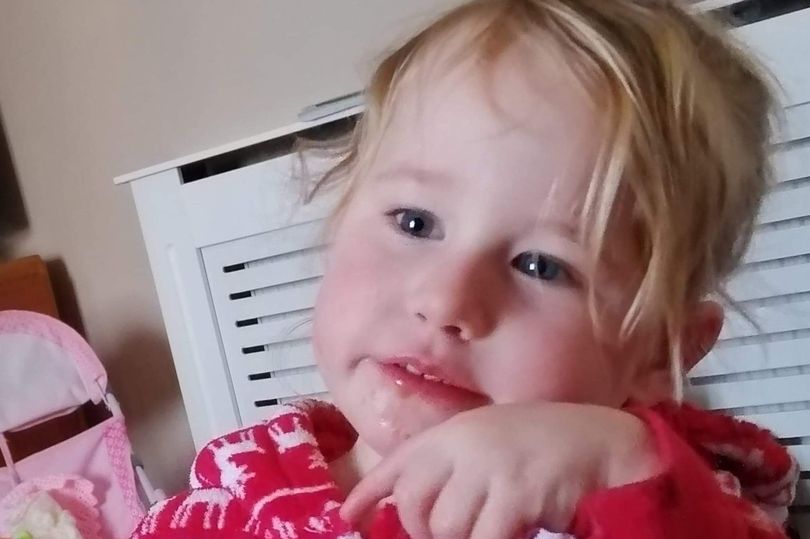
A MULTI-AGENCY review of the circumstances around the death of a Pembrokeshire toddler Lola James has been published yesterday (Thursday, August 1) with hopes an action plan will “ensure lessons continue to be learnt”.
Two-year-old Lola died in hospital four days after a “sustained and very violent attack” by Kyle Bevan in the early hours of July 17, 2020 at her home in Haverfordwest.
Bevan, 31, of Aberystwyth, was later found guilty of Lola’s murder and jailed for life, with a minimum of 28 years.
Lola’s mother Sinead James, 30, of Neyland, was found guilty of allowing the toddler’s death and sentenced to six years in prison.
During the course of the trial, the jury heard that Bevan and James met through Facebook in February 2020, and started living in the home within weeks.

James had just got out of a domestic violence relationship, and as a previous victim of domestic abuse had access to support, but she “shut her eyes to the very obvious danger which Kyle Bevan posed to her children”, the court heard.
A review was started following Lola’s death, and restarted after the trial concluded.
Today, August 1, the Mid and West Wales Regional Safeguarding Board published the report of the Concise Child Practice Review, CYSUR 1 2021,undertaken in accordance with statutory legislation set out in the Social Services and Wellbeing (Wales) Act 2014 and accompanying guidance Working Together to Safeguard People – Volume 2 – Child Practice Reviews (Welsh Government, 2016).
The report said that Lola suffered a violent attack by Bevan on the evening of July 16 2020 and into the morning.
Ambulance staff raised concerns that the injuries were inconsistent with falling down the stairs, as the mother had claimed on the phone to 999.
Lola was taken to the local hospital and later pronounced brain dead.
Bevan was known to the police since at least March 2019 for domestic incidents related to his own mother, who told the court he had an “anger problem”.

The review said concerns had been raised in January 2020 by a health visitor to Lola’s home, who said the mother was finding her daughter demanding, and at previous visits, she was unwashed, with her feet black with dirt.
While the health visitor submitted a multiagency referral form – to bring in social services – the review said there were a number of “missed opportunities” to arrange additional home visits, which could have allowed Lola’s well-being to be ascertained.
Those visits could also have uncovered that Bevan was living at the address, which James had not revealed to the team, and the condition of the home, which “would (on its own) have raised child protection concerns”.
Pembrokeshire county Council Cabinet Member for Social Care and Safeguarding Cllr Tessa Hodgson said: “Pembrokeshire County Council would first like to convey their sincerest condolences to the family of Lola James and to all those who have been affected by her murder, over four years ago.
“This review process, that we have fully and openly engaged with along with our multi-agency partners with whom we share safeguarding responsibilities, has been an opportunity for the local authority to reflect on its practice and to learn from the observations contained in the independent report.
“We would like to recognise the significant commitment and input of those who have taken part in the review process, and who have been involved with the family over the last four years.
“The local authority takes extremely seriously its duties within the safeguarding arena, and places the protection and support of the most vulnerable in society as its key priority.
“Whilst we would always strive to demonstrate good practice, there is always room for improvement and the opportunities that this review has presented us with, will allow us to improve how we work with vulnerable children and young people in the future.
“Ahead of the publication of the report today [August 1], we had developed an action plan to deal with the issues the review has raised for us, and we have made considerable progress against that plan already.
“In addition, we have established a social care improvement board, which includes amongst its membership locally elected politicians, senior officers and an external independent expert. This board will oversee delivery against the actions within that plan, with progress also being reported into local authority scrutiny committees and cabinet meetings.
“We hope also that the report, will contribute to wider ongoing learning and improvement in relation to a number of key safeguarding issues across all agencies with safeguarding responsibilities in the West Wales region and beyond. It is imperative that we take all opportunities to improve our services, and ensure that children and families receive the best quality of support available.
“Once again, Pembrokeshire County Council would like to extend its deepest sympathies to the family and all of those who knew Lola.”
Pembrokeshire County Council, Hywel Dda University Health Board and Dyfed Powys Police have made the following joint statement to accompany publication of the report.
“All agencies involved in this report wish to convey their sincerest condolences to the child’s family and to all those who have been affected by the murder of a child in such appalling circumstances.
“This review has been an opportunity to reflect and share learning amongst all partner organisations and practitioners on a multi-agency basis, and we acknowledge the commitment and contribution of those who have taken part in the review process.
“All agencies take very seriously the opportunities that this review presents, to consider our practice and improve how we protect vulnerable children. We hope that the report will also contribute to wider ongoing learning and improvement in relation to a number of key safeguarding issues across all agencies with safeguarding responsibilities.”
The Mid and West Wales Regional Safeguarding Board will oversee the delivery of an action plan to ensure lessons continue to be learnt and that services are improved across all agencies.


A 24-YEAR-OLD man has been sent to Crown Court to face a series of alleged drug supply offences in Cardigan.
Harrison Casey, of Harebell Way, Brownsover, Rugby, appeared before Aberystwyth Magistrates’ Court on Wednesday (Jul 2).
He faces six charges relating to alleged offences at Bridge Street, Cardigan, between April 7 and April 24, 2023.
The charges include being concerned in the supply of cocaine, a Class A drug, and being concerned in the supply of cannabis, a Class B drug.
Casey is also accused of possessing cannabis with intent to supply, possessing tetrahydrocannabinol with intent to supply, being concerned in an offer to supply THC edibles, and possessing flualpazolam, a Class C drug.
There were no pleas to the charges at this stage.
Magistrates sent the case to Swansea Crown Court for trial under Section 51 of the Crime and Disorder Act 1998.
Casey was granted unconditional bail and is due to appear at Swansea Crown Court on August 3 for a plea and trial preparation hearing.


THE WIDOW of a Carmarthenshire father killed by a dangerous driver has been left facing months of uncertainty after being told the man jailed over her husband’s death may fall under new sentencing rules.
Aaron Jones, 38, from Llanpumsaint, died while walking his dog on December 23, 2024. His death devastated his family and shocked the close-knit village community.
Daniel Douglas Wyke, from Carmarthen, later admitted causing death by dangerous driving. He was jailed at Swansea Crown Court for four-and-a-half years and banned from driving for eight years and two months.
Now Aaron’s widow, Lisa Jones, has received correspondence indicating that Wyke may be affected by provisions introduced under the Sentencing Act 2026.
The family has been told it may not know until the end of August whether the changes will affect the time he spends in custody.
Ann Davies MP for Caerfyrddin and Nerys Evans MS for Sir Gaerfyrddin have now written to the Ministry of Justice seeking assurances that Aaron’s family will be heard during any review process.
They said the uncertainty had added further pain for a family already living with unimaginable loss.
“Our thoughts remain firmly with Lisa Jones, her family and the community of Llanpumsaint, who continue to endure unimaginable grief following the tragic loss of Aaron,” they said.
“To now face uncertainty over the sentence of the man responsible for his death adds further distress at an already devastating time.
“It is vital that the Ministry of Justice listens to victims and their families. Any move to shorten sentences in cases of this seriousness must be approached with the utmost caution and sensitivity.”
Nerys Evans MS said victims and their families must remain at the centre of the justice system.
She added: “We have written to the Ministry of Justice to seek assurance that the voice and view of Aaron’s family are able to be heard as part of any process to review the sentence.”

Ann Davies also raised the case in Westminster on Thursday, July 2.
Speaking in the House of Commons, she said her constituent Aaron Jones had been killed in a hit-and-run while walking his dog, and that his widow had since received a letter from the Ministry of Justice about sentence changes under the Sentencing Act 2026.
She asked whether ministers accepted that waiting until the end of August to learn whether Wyke could be released earlier than expected was causing further distress to victims’ families.
Sir Alan Campbell, Leader of the House of Commons, said he understood the sensitivity of the case and the distress caused to Aaron’s family.
He said: “These are difficult decisions, but I understand the point about assurances as far as they can be given to families.”
He added that he hoped the Ministry of Justice had heard the concerns and said he would raise the matter directly.
The Sentencing Act 2026 received Royal Assent in January. The Government says the reforms are intended to tackle prison overcrowding, increase the use of tougher community restrictions and make greater use of supervision and tagging after release.
However, the case has highlighted the anxiety caused to victims’ families when changes to release arrangements are communicated before the full impact on individual cases is known.
For Lisa Jones and her children, the question now is not only what decision will be made, but why they must wait weeks to find out.

Ben Barrett remanded in custody ahead of Swansea hearing
A LLANDEILO man accused of rape has been sent to Swansea Crown Court.
Ben Barrett, 37, of Maes y Farchnad, Llandeilo, appeared before Llanelli Magistrates’ Court on Thursday (Jul 2).
He is charged with rape, contrary to section 1 of the Sexual Offences Act 2003.
The alleged offence is said to have taken place in Llandeilo between March 21 and March 31, 2025.
No plea was entered during the magistrates’ court hearing.
The case was sent to Swansea Crown Court under section 51 of the Crime and Disorder Act 1998.
Barrett was remanded in custody and is due to appear at Swansea Crown Court on August 3 for a plea and trial preparation hearing.



Community12 hours ago
Saundersfoot Harbour regeneration project wins national planning award
SAUNDERSFOOT HARBOUR’S redevelopment has been named Best Project at the RTPI Cymru Awards for Planning Excellence 2026. The award recognises...


Business18 hours ago
Pembrokeshire-based Ascona Group expands UK portfolio with Truckhaven acquisition
PEMBROKESHIRE-BASED Ascona Group has completed the acquisition of Truckhaven (Carnforth) Ltd, a major trunk road services area in Lancashire. The...


Health2 days ago
Wales begins early NHS winter planning after long waits and ambulance pressure
Ministers say health boards and councils must act now to ease pressure on hospitals, ambulances and social care before winter...


Crime3 days ago
Judge calls pensioner a ‘dirty old man’ as he avoids jail for exposing himself to women
Judge says 75-year-old Stewart Laugharne behaved ‘disgracefully’ as he avoids jail but is ordered to sign sex offenders register A...
Health3 days ago
Stroke services consultation reaches halfway point as public urged to have say
HYWEL DDA University Health Board is urging people to take part in its consultation on the future of stroke services,...


Business3 days ago
Welsh firms eye share of £5bn defence drone boom
WELSH defence and aerospace firms could be in line for a share of billions of pounds in new military spending...


Community5 days ago
Thousands line Cardigan streets for Lord Rhys homecoming parade
THOUSANDS of people lined the streets and quayside in Cardigan on Saturday as the town marked 850 years since Lord...


Crime6 days ago
Dyfed-Powys Police rated only ‘Adequate’ in organised crime inspection
A WATCHDOG has rated Dyfed-Powys Police only “Adequate” in its response to serious and organised crime, despite praise for the...


News6 days ago
Two taken to hospital after aircraft ditches in Cardigan Bay
Coastguard helicopter spotted two casualties after light aircraft came down off west Wales coast TWO people were taken to hospital...


Sport7 days ago
Long Course Weekend gets underway in Tenby as thousands head for county
Three days of swimming, cycling and running begin with The Wales Swim at North Beach THOUSANDS of athletes and supporters...
-
Crime6 days ago
Dyfed-Powys Police rated only ‘Adequate’ in organised crime inspection
-

 Entertainment7 days ago
Torch cuts children’s cinema tickets to £5.25 for summer
-

 News4 days ago
Biker dies and woman seriously injured in Black Mountain crash
-

 Climate7 days ago
Welsh waters, Westminster profits: Crown Estate row reignited in Wales
-

 News7 days ago
Reform MS: ‘I felt like shouting get out of the water’
-

 Crime7 days ago
Former Swansea Prison inmate died 48 hours after release
-
 Crime6 days ago
Swansea man jailed for 16 years after attacking vulnerable woman
-

 Community7 days ago
Working-class young people ‘shut out’ of marine conservation careers in Wales