


Business
Pembrokeshire Creamery brings opportunities for dairy farmers to County Show


PEMBROKESHIRE CREAMERY, the only liquid milk facility in Wales which is accredited to supply major retailers with Welsh Milk, is seeking to expand its relationships with local dairy farmers.
The senior team from Pembrokeshire Creamery will be using their stand at the Pembrokeshire County Show, as an opportunity to meet dairy farmers and outline the opportunities available through working with the new state-of-the-art creamery.
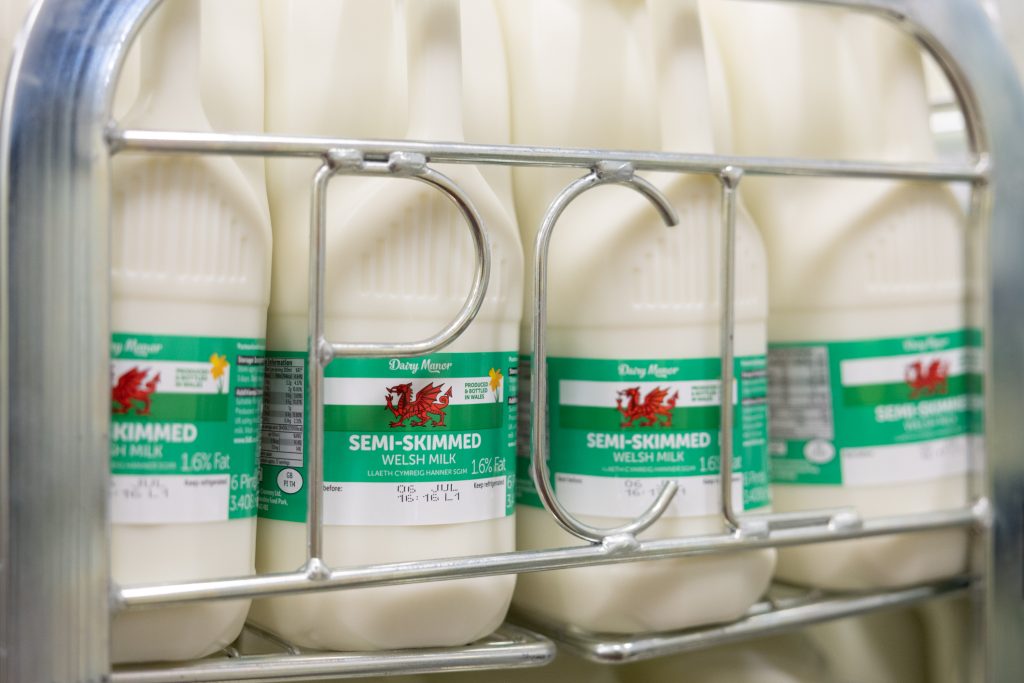
Pembrokeshire Creamery, which officially opened last month with the creation of around 80 new jobs, has the capacity to bottle more than a million litres of milk a week. With recently announced new investment in the facility, when the dairy reaches full capacity, it will be able to supply around two million litres of milk a week.
It has already announced major deals to supply own-branded milk to Asda and Lidl stores across Wales and has launched its own Blas y Tir branded milk.
Mark McQuade, managing director of Pembrokeshire Creamery said: “We are on a mission to support local farming communities and want to be able to source all of our milk as locally as possible. We’ve been pleased with the level of interest from dairy farmers in signing up with us – but we still have some capacity and we see the Pembrokeshire County Show as a great platform to build new relationships.

“We’d encourage any dairy farmers who might be interested in supplying the Creamery to call in for a tea or coffee and have a chat with us at our stand,” he said.
By removing the need for Welsh milk to be transported to bottling plants in England, Pembrokeshire Creamery is reducing food miles, increasing supply chain efficiency, creating new skilled jobs, and supporting local farmers.
The development of the £20m Pembrokeshire Creamery has been supported by the Welsh Government and Pembrokeshire County Council. Additional funding support has also been provided by HSBC.


WELSH CONSERVATIVES have called on the Welsh Government to explain who knew what, and when, about reported delays to Tata Steel’s new electric arc furnace at Port Talbot.
Shadow Economy, Energy and Planning Minister Janet Finch-Saunders MS raised the issue in the Senedd during an emergency statement following the recent fire at the steelworks.
While much of the focus has been on the fire, reports have suggested that separate concerns about delays to the electric arc furnace may have been known for several weeks.
It was reported on June 7 that Tata Steel had discussed potential delays linked to National Grid connectivity issues with “investors” during a conference call around a month earlier.
Mrs Finch-Saunders is now seeking clarity on whether those investors included the UK Government, which is investing £500m towards the £1.25bn project.
The previous UK Conservative Government also established an £80m transition fund to support workers at risk of losing their jobs. The Welsh Conservatives say they want clarification on whether any of that funding remains available if delays create further financial pressure for affected workers.
Mrs Finch-Saunders said: “If UK Government Ministers were aware of the issue a month ago, were Welsh Government Ministers informed?
“If Welsh Government Ministers were not informed, why not? If they were informed, why did the Economy Minister tell the Senedd that he only became aware of the delay on Monday?
“We now need a clear timeline setting out exactly when concerns first emerged and who was told.

“Port Talbot workers and their families deserve answers.”

NEW figures have revealed a sharper fall in Welsh business activity, with firms cutting jobs at the fastest rate since September 2020.
The latest NatWest Wales Growth Tracker showed that while the decline in new orders eased for the second month running, overall output fell more quickly in May as businesses faced higher costs, weaker demand and growing uncertainty.
The headline Wales Business Activity Index fell to 45.8 in May, down from 47.9 in April. Any reading below 50 indicates contraction.
The drop was the sharpest since September 2025 and placed Wales among the weakest-performing UK areas, with only the East Midlands and Northern Ireland recording faster falls in output.
JOB CUTS DEEPEN
Welsh private sector firms also reported a further fall in staffing levels, with the rate of job shedding the steepest in almost six years and the sharpest of all 12 UK nations and regions monitored.
Businesses said lower new order intakes and the higher cost of employment were behind the reduction in headcounts.
Backlogs of work also continued to fall, suggesting weaker demand was allowing firms to clear outstanding orders more quickly.
ORDERS STILL FALLING
New sales fell for the fourth month running, although the rate of decline eased and was only slight.
NatWest said part of the improvement may have reflected temporary stockpiling by customers amid higher prices and supply challenges, rather than a sustained recovery in demand.
Business confidence also weakened, although firms remained generally optimistic that output would rise over the next 12 months.
INFLATION PRESSURE
The report said input costs rose at the sharpest pace since November 2022, driven by higher fuel, energy and material costs.
Welsh firms also increased their selling prices at a faster rate, with charge inflation reaching its highest level for more than a year.

Jessica Shipman, Chair of the NatWest Cymru Board, said: “May data indicated a softer decline in new orders at Welsh firms, however, some of the uplift in the seasonally adjusted New Business Index stemmed from a temporary bout of stockpiling at customers amid higher prices and supply challenges.
“In fact, activity levels dropped at a sharper pace and employment contracted at a rate not seen since September 2020.
“Although still confident of output growth in the coming 12 months, spare capacity and greater uncertainty led firms to lower their expectations for the year-ahead outlook.”
She added that inflationary pressures were continuing to influence business and customer decisions, with the conflict in the Middle East pushing up material, fuel and energy costs.
EXPORT CONDITIONS IMPROVE
There was better news for exporters, with the Wales Export Climate Index rising from 50.7 in April to 51.1 in May.
That signalled the strongest improvement in export conditions for three months, supported by stronger output growth in Ireland and the Netherlands.
Activity also continued to rise in the United States, although Germany and France remained in contraction.
The NatWest Wales Growth Tracker is compiled by S&P Global from responses to questionnaires sent to Welsh companies in the manufacturing and services sectors.

PUBGOERS are being urged to leave their pint glasses behind this summer amid warnings that thefts are adding pressure to already struggling pubs.
The call comes after Jeremy Clarkson revealed that his Oxfordshire pub, The Farmer’s Dog, is losing up to 400 pint glasses a week.
Small business comparison site Bionic said the issue is not confined to one venue, with millions of adults admitting they have taken tableware from pubs, bars or restaurants.
Laura Court-Jones, Small Business Editor at Bionic, said: “Many people see taking a pint glass home as a harmless act, but the costs can quickly add up for pubs, bars and restaurants already facing rising expenses and tight margins.
“If you want to support UK hospitality and help your favourite venues thrive this summer, leave all pint glasses behind.”
Bionic said glass theft can also have consequences for customers.
Ms Court-Jones added: “Stealing glassware from a pub might seem like a minor offence, but it is still theft. Licensed premises have the right to refuse service and may bar individuals caught stealing.
“In some cases, the police may be called. While a prison sentence is unlikely for a minor offence, individuals may face a formal warning, a fine, or a criminal record.”
The company said pubs and bars can reduce losses by using CCTV, setting clear house rules, switching to unbranded glassware, and checking whether their insurance covers stolen or damaged stock.
Hospitality businesses across the UK have faced rising costs in recent years, including energy, staffing, food, drink and supplies, with many warning that even small losses can have a serious impact on margins.
Caption: Jeremy Clarkson at The Farmer’s Dog pub, where glass theft has reportedly become a major problem.



Crime8 hours ago
Man accused of six rapes including alleged Haverfordwest offence
A MAN has been sent to Crown Court accused of six rapes, including an alleged offence at a Haverfordwest campsite....


News9 hours ago
Childcare row erupts as Plaid faces questions over costs and delivery
Opposition parties clash over flagship pledge as Senedd debate exposes growing divisions PLAID CYMRU’S flagship promise to create what it...


Crime1 day ago
Farmers fined in bovine TB scandal face fresh court action
Hartt family members listed at Haverfordwest Magistrates’ Court over unpaid penalties linked to major cattle prosecution TWO PEMBROKESHIRE farmers convicted...


Crime1 day ago
Pembrokeshire child killer stabbed to death in prison cell, murder trial hears
Kyle Bevan, jailed for the murder of Haverfordwest toddler Lola James, was allegedly stabbed 25 times and left ‘as if...


News1 day ago
Pendine cliff fall victim recovering after major emergency response
A 22-YEAR-OLD man who suffered serious injuries after falling from cliffs overlooking Pendine Beach is recovering well following emergency surgery....


Community2 days ago
Commissioner launches free course to help tackle ageism in Wales
A NEW free learning course has been launched to help people across Wales recognise and challenge ageism. The Older People’s...


News2 days ago
First Minister challenged over jobs for student nurses
REFORM WALES has accused the First Minister of failing to guarantee jobs for student nurses in Wales, despite continuing pressure...

Crime2 days ago
Knife blankets call as school staff face rising violence fears
GMB says protective equipment should be considered where risk assessments show staff could face blades SCHOOL staff should be given...


News2 days ago
Claire Archibald secures review of Milford Haven train times
RURAL TRANSPORT CONCERNS RAISED WITH TFW CLAIRE ARCHIBALD MS has secured a review of train times between Milford Haven and...


Crime2 days ago
PCC review calls for stronger youth crime prevention work
REPORT MAKES 13 RECOMMENDATIONS A REVIEW into crime and anti-social behaviour services for young adults has called for stronger prevention...
-

 Crime6 days ago
Paddleboard company owner loses bid to cut sentence over Haverfordwest tragedy
-

 Crime5 days ago
Milford Haven man admits harassment and assault
-

 News5 days ago
Community appeal for privacy after serious emergency in Pendine
-

 Crime3 days ago
Sex offender in senior role at Tenby family hotel
-

 Community3 days ago
Forgotten wartime archive found in Pembroke Dock attic after 80 years
-

 Crime2 days ago
Haverfordwest pair accused of £80,000 rogue trading frauds
-
Crime2 days ago
Families condemn failed appeal by paddleboard boss jailed over Haverfordwest tragedy
-
Crime2 days ago
Knife blankets call as school staff face rising violence fears