


Community
Community concerns grow after MOD’s ‘shambolic’ radar consultations


PROTESTS erupted at the Ministry of Defence’s public engagement events in Solva and St Davids on September 13 and 14, with demonstrators criticising the proceedings as disorganised and insufficient.
The campaign group, PARC Against DARC, formed in May to oppose the installation of US military DARC radars at Brawdy, orchestrated significant turnout. Demonstrators maintained a consistent presence at the events, while PARC also hosted ‘The People’s Exhibition’ outside the venues, displaying objections to the proposed 27-dish radar array intended to enhance US military capabilities in space.

Attendees were equipped with ‘NO RADAR’ signs and many questioned the MOD representatives at the PR events. A PARC spokesperson reported widespread dissatisfaction among the public, describing the sessions as “utter shambles” where attendees received vague and conflicting responses from supposed experts. Concerns were amplified by an MOD official’s comment likening standing next to the radar to “putting my head in a microwave.”
Errors in local place names on invitation leaflets and non-committal responses regarding the construction’s impact, including potential increases in local traffic, further fuelled local unrest. Questions about the visual impact of the radars on the landscape were met with dismissive or uncertain answers.
The London PR firm Cascade, responsible for organising the events, was criticised for their handling of the consultations, with accusations of failing to adhere to the National Principles of Public Engagement in Wales. The firm was also unclear about their future public engagement strategy, asking for feedback on methods to employ, which raised questions about their preparedness and commitment to genuine engagement.


Amid the criticisms, the Ministry of Defence emphasised the strategic importance of the DARC project, known as the Deep Space Advanced Radar Capability. The initiative aims to secure long-term employment and enhance protection of essential satellite communication and navigation networks. According to the MOD, DARC will significantly benefit the AUKUS nations’ capacity to detect, track, and identify objects in deep space, thus bolstering safety and security in the Indo-Pacific region and globally.
However, not all attendees shared the negative sentiment. Jonathan Yaw Porter, who spent extensive time at one of the events, found the experience to be informative and reassuring. “I went wanting facts, and got them,” he said, acknowledging that while some aspects remain undecided pending planning permission, the information provided was largely satisfactory. “From the data provided, there is no evidence of increased health risks at the perimeter of the base,” he added, highlighting the use of electromagnetic radiation similar to that emitted by mobile phones and regulated under WHO standards.
Porter also noted the potential benefits of DARC for the local economy and the UK’s burgeoning space sector. “There looks to be many more positive aspects from such a development in the growing Welsh Space sector from the site, and the visual impact from the data provided is pretty limited,” he observed. His positive takeaways extended to the educational potential of the project, hoping it would inspire young people to pursue careers in engineering and aerospace.
Many felt however, that serious safety concerns were highlighted by unanswered questions regarding the radar’s radiation outputs and potential health implications, with nearly 4,000 studies cited by campaigners pointing to risks associated with high levels of radiofrequency radiation. Despite these concerns, the MOD withheld specific operational details, citing security reasons, with no assurance of public disclosure in future planning phases.

Further inquiries about necessary infrastructure upgrades, such as additional electricity pylons and the impact on local wildlife, were also left unanswered. The potential necessity for a new bypass road to support the project’s logistics was another point of contention, with community members doubting the feasibility of using current roads without significant disruption.
The MOD’s evasive responses have left many attendees dissatisfied, describing the consultation as rushed and confusing, with MOD representatives appearing defensive and at times dishonest. Critics argue that the MOD should replace Cascade with a Welsh organisation more in tune with local sentiment and capable of conducting thorough and transparent public engagement.
As the campaign against DARC intensifies, community members are encouraged to continue expressing their concerns and seeking accountability, with the aim of ensuring a more informed and considerate decision-making process by the MOD.













Haverfordwest student among those recognised as Wales celebrates rising talent
TALENTED learners from across Wales have been recognised for their skills and dedication at this year’s Skills Competition Wales awards – with Pembrokeshire among those celebrating success.
The awards ceremony, held at Rhyl Pavilion on Wednesday (Mar 18), saw 287 competitors honoured following months of regional contests. In total, 97 gold, 94 silver and 95 bronze medals were awarded, highlighting the strength of technical education across the country.
More than 1,100 learners took part in this year’s competition programme, which continues to expand in line with the needs of the Welsh economy. A total of 65 competitions were held – six more than last year – including new categories focused on sustainability, enterprise and inclusive skills development.
Participation also increased, with 1,168 learners competing overall. This included 223 learners in inclusive competitions – an 11.5% rise – alongside a 7% increase in mainstream entrants.
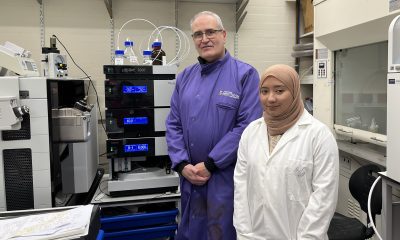
Among those recognised was Bethany Price, 17, from Haverfordwest (pictured), who achieved a Highly Commended award in Metal Fabrication (Lead Work).
Bethany, who studies at Pembrokeshire College, said the experience had boosted both her skills and confidence.
She said: “Taking part in skills competitions has given me so many skills I wouldn’t have gained otherwise – from the overall experience to the tips and techniques I’ve learned from my tutors.
“I’m already using those skills in my day-to-day work, and it’s helped me feel more confident when speaking to new people and working under pressure.
“Just taking part has been amazing and has given me a real edge on my CV. I’m really proud to have achieved a Highly Commended medal, especially as a full-time learner competing against apprentices.”
The competition is delivered through the Inspiring Skills Excellence in Wales project and funded by the Welsh Government. It provides a pathway for learners to progress to national and international stages, including WorldSkills UK, EuroSkills and WorldSkills International.
Paul Evans, Project Director, said the standard this year reflected growing strength across multiple sectors.
He said: “The depth of talent continues to grow year on year. From first-time competitors to those progressing to international pathways, learners across Wales are demonstrating real excellence.
“We’ve expanded the programme to include new categories and more inclusive formats, ensuring learners of all abilities have the opportunity to showcase what they can achieve.”
Welsh Government Minister for Culture, Skills and Social Partnership, Jack Sargeant, added: “These competitions highlight the strength of Wales’ skills system and its close links with industry.
“They help learners develop not only technical ability, but also teamwork, confidence and problem-solving skills – all of which are essential for the workplace.”
Applications for WorldSkills UK 2026 close on Thursday (Mar 27), with Welsh competitors also in contention to represent the UK at the international finals in Shanghai later this year.
For more information, visit inspiringskills.gov.wales.


REFORM UK has gained its first county council seat in Pembrokeshire following a seven-way battle for a ward made vacant following the death of veteran councillor Mike Stoddart.
Cllr Mike Stoddart, who passed away in January, represented Milford Haven’s Hakin ward, and had been a county councillor for more than two decades, having first been elected in 2004, with wife Vivien and daughter Tessa Hodgson also having county seats, Hubberston and Lamphey respectively, with Tessa also serving as Cabinet Member for Adult Social Care.
The late Cllr Stoddart was well-known as an outspoken councillor, critical of failings and injustices, as he had been when he set up the Milford Mercury newspaper with his family before he became a councillor.
In later years, Cllr Stoddart also held an often-critical mirror to council and councillor activities through his popular Old Grumpy website.
Following his death a by-election was held for the Hakin ward, with the count taking place on March 17, initially with an eight-way fight for the seat.
That eight-way fight was reduced to seven when Labour candidate Nicola Harteveld, who set up charity foundation the Megan’s Starr Foundation, withdrew her candidacy after allegations a family member was harassed during her campaigning.
Those standing for the ward included parties the Welsh Liberal Democrats, Welsh Conservatives, Reform, the Green Party, and three independents.
Results for the ward, which saw a 32.7 per cent voter turnout were: Derrick William Charles Abbott, Independent, 11 votes; Samuel Robert Booth, Wales Green Party, 85; Lee James Bridges, Independent, 106; Duncan Ritchie Edwards, Independent, 52; Brian Kelvin Taylor, Welsh Conservative Party, 144; Samuel Warden, Welsh Liberal Democrats, 57; Scott Michael Thorley, Reform UK, 179.
Nicola Catherine Harteveld, Welsh Labour, who withdrew her candidacy, still attracted 27 votes.

Winner Scott Thorley had previously unsuccessfully stood as a Reform candidate for the Prendergast Haverfordwest ward seat made vacant following the resignation of local county councillor Andrew Edwards.
He was later co-opted on to Haverfordwest Town Council.
Speaking after his Hakin ward win, the-now Cllr Thorley said: “It was a massive honour to win last night and I’m more than aware I’ve got some massive shoes to fill in Hakin.
“I’ve already started work this morning and have responded to four residents first thing.
“People in Hakin just want the basics done right and someone they can reach out with any issues they have; I will be that person.”

A PUBLIC consultation on the early stage of plans to secure community allotments in a north Pembrokeshire village through a community group share purchase is to be held later this month.
Community Benefit Society, St Dogmaels Growers CBS, is holding the meeting at St Dogmaels Church Hall on March 28, 10-4pm.
It said St Dogmaels Road Allotments, alongside the river between St Dogmaels and Cardigan, and were set up by a handful of people who got together to find some land in St Dogmaels to establish allotments for the community.
The site, Keewaydin Field, was leased from the owner Paul Welch, who having moved away from the area, was keen that the community should develop allotments on his field.
Fifteen years later, there are currently 67 plot-holders working the land, from across both Pembrokeshire and Ceredigion.

“Paul sadly died in a tragic accident in 2021, and the land was inherited by his two sons. Understandably, no longer living in the area, they have decided to put the land up for sale, in late spring 2026, in the hope that the purchasers will continue to fulfil their father’s wishes,” St Dogmaels Growers CBS said.
“Our goal is to raise funds to purchase the land, not only to ensure the established allotments are secured for the future, but to preserve this beautiful green space for the wider community, and generations to come, and ensure that Paul’s dream continues to flourish.
“As a newly formed Community Benefit Society, St Dogmaels Growers CBS, we will be launching a community share offer later this year, with our main objective being to purchase the land on which the allotments are situated, along with the surrounding area which is currently overgrown and cluttered with debris. Once cleared, we hope to invite community groups to share our space.”
The group added: “From the monoculture of an agricultural field, Keewaydin Field has evolved into a mosaic of amazing habitats, across a patchwork of plots, bordered by a meadow orchard, mature hedgerows, woodland and mature riverbank trees.

“We not only grow healthy organic food, but we have created a thriving interconnected ecosystem, between the urban settlements of St Dogmaels and Cardigan.
“At the meeting, we will be displaying our short, medium and long-term aims for our project, along with heart-felt testimonials of all those that have benefited from the peace and tranquillity of this special location.
“We would really appreciate hearing your views, to establish what the community needs and how we can work together to meet those needs. We have already started preparing a dedicated community food plot where we will be growing donations for local food projects.”
It finished: “We started off as just a small village allotment group, but with the help of our community, together, we could preserve this precious space for the future.”



Health2 hours ago
NHS waiting list falls — but cancer delays and diagnostic backlog worsen
Record progress claimed by Welsh Government as critics warn key targets are still being missed THE NHS in Wales has...


Crime1 day ago
Rapist jailed after ‘abhorrent’ attacks on woman and children
Haverfordwest man told police “women won’t have sex without force” A HAVERFORDWEST man who raped a woman and a young...


News1 day ago
Reform secures first Pembrokeshire councillor in Hakin by-election win
Late Reform candidate takes seat as independent surge and Labour withdrawal shape contest REFORM UK candidate Scott Thorley has won...


News2 days ago
Scott Thorley elected as Pembrokeshire’s first Reform councillor
REFORM UK candidate Scott Thorley has won the Hakin by-election after securing 179 votes. The full result is as follows:...


News2 days ago
Police confirm man has died after being recovered from River Cleddau
Major emergency response in town centre after concerns raised for man in water A MAN has died after being recovered...


Community2 days ago
Davies and Kurtz urge groups to seek employability funding
Community organisations in Pembrokeshire encouraged to apply for new grants supporting skills and job access LOCAL Senedd Members Samuel Kurtz...


News2 days ago
Emergency services flood Haverfordwest after reports of person in river
Town centre sealed off as multi-agency response continues A MAJOR emergency response is underway in the centre of Haverfordwest after...


News2 days ago
Detectives receive surge of new information in bid to identify man found at Powys reservoir
Public response follows release of facial image as officers pursue fresh lines of enquiry DETECTIVES investigating the identity of a...


News2 days ago
Senedd committee urges next Welsh Government to prioritise Wales–Ireland links
A SENEDD committee has called on the next Welsh Government to continue prioritising Wales’s relationship with Ireland, describing it as...

Education3 days ago
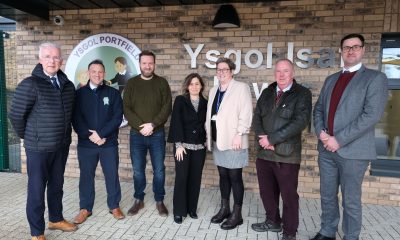
New facilities open at Portfield School as redevelopment reaches key milestone
THE FIRST phase of a major redevelopment programme at Portfield School in Haverfordwest has been completed, marking a significant step...
-

 Health6 days ago
Welsh Ambulance Service to host bi-monthly Board meeting
-

 News5 days ago
Rayner and Lammy visit Wales to discuss justice and community safety
-

 News4 days ago
Fishguard linked to allegations in Many Tears Animal Rescue investigation
-
News2 days ago
Emergency services flood Haverfordwest after reports of person in river
-

 Charity7 days ago
Many Tears Animal Rescue visited by inspectors as police attend in support role
-

 Crime7 days ago
New rural and wildlife crime strategy aims to boost patrols and community engagement
-
 Local Government5 days ago
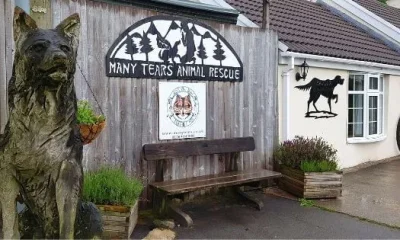
Investigation confirmed after inspectors visit Many Tears Animal Rescue
-

 Farming6 days ago
Plea to remove decades old ‘unviable’ planning conditions from property