


Crime
Parc Prison now much more stable, says Welsh Social Justice Minister


A SOUTH Wales prison where 10 inmates have died this year has made “considerable progress” in its management, according to a Welsh government minister.
Jane Hutt, the Social Justice Minister, stated that HMP Parc in Bridgend, which houses man prisoners from Pembrokeshire, is now “much, much more stable.” The prison, operated by security company G4S, has faced allegations of drug misuse but maintains it has a “zero-tolerance policy towards drugs.”
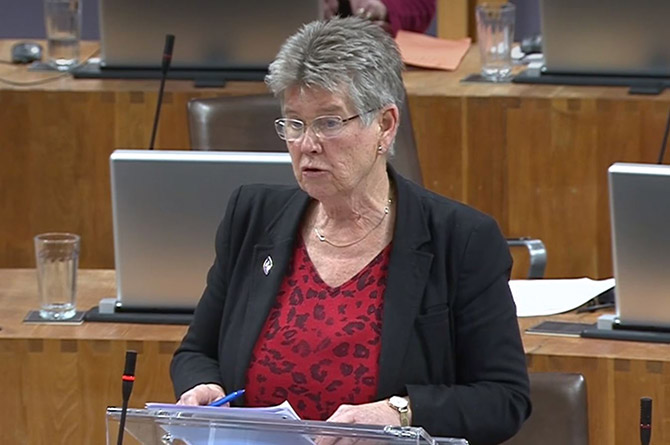
Minister Hutt said she received reassurances from Ian Barrow, who oversees the management of Welsh prisons, that there had been significant improvements at Parc following the appointment of a new director in June.
The minister announced plans to visit Parc later this month alongside the UK government’s prisons minister, Lord Timpson.

Will Styles was appointed as the new director of Parc after Heather Whitehead stepped down. Styles, who has been with G4S for a year managing HMP Five Wells in Northamptonshire, took over the role following Whitehead’s departure. G4S stated that her immediate exit in August 2023 was “not in response to one single incident.”

Since February, 10 inmates have died at the prison, with at least four of the deaths believed to be drug-related. In June, three prisoners were also hospitalised following disorder at the facility.
South Wales Police reported in March that a synthetic opioid, Nitazene, had been identified in connection with all four drug-related deaths, with another synthetic drug, Spice, also identified in two of the cases. G4S reiterated its “zero-tolerance policy towards drugs” in response to these findings.
The deaths have sparked protests from the families of inmates who died while in custody. In May, they demonstrated outside the prison, demanding answers from authorities regarding claims of drug misuse within the facility.
At the Social Justice Questions session in the Welsh Parliament on Wednesday, Conservative Senedd member Altaf Hussain expressed concerns about healthcare at Parc. In response, Jane Hutt extended her thoughts to the staff and families affected by the “deeply concerning” deaths in custody earlier this year.

Hutt stated that she met Ian Barrow last month and received “reassurances on the progress made at Parc” since the new director’s appointment. “My understanding from that meeting is that Parc has made considerable progress since the spring,” she added. “It’s now much more stable.”
She confirmed her upcoming visit to the prison with Lord Timpson on 30 September.
However, the minister’s comments have been met with criticism. Zack Griffiths, a former inmate of Parc Prison who was first sent there in 2016 after being found guilty of conspiracy to supply Class A drugs, has spoken out. Griffiths now runs the HMP Prisons’ Justice Group UK Facebook page, which has over 6,000 members, including many families of those who have died at Parc or have loved ones currently incarcerated there.

In a statement to The Pembrokeshire Herald, Griffiths challenged the minister’s assessment of the situation:
“In response to the misleading statements made by Jane Hutt, the Social Justice Minister, regarding the stability of HMP Parc, I must state that her view is not only inaccurate but appears to be intentionally so. The HMP Prisons Justice Group continues to receive daily reports of significant issues, including drug abuse, corruption, and widespread harm inflicted upon inmates by both staff and senior management of the prison.

“I urge the Minister to engage directly with the prison’s management and visit a unit within the prison to speak with the inmates themselves. It is crucial that she seeks the truth from those living this reality, rather than presenting a false impression to the public.
“It is utterly unacceptable that the Minister fails to acknowledge the 27 families who have lost their loved ones under the care of G4S. Both she and G4S should hang their heads in shame for their negligence and lack of accountability.”
Griffiths’ statement suggests a disconnect between the official narrative presented by the government and the experiences reported by inmates and their families. This tension highlights ongoing concerns about the prison’s management and the challenges faced in ensuring the safety and well-being of those incarcerated at HMP Parc.
HMP Parc is one of the UK’s largest category B prisons, housing convicted male adult and young offenders, as well as convicted sex offenders or those awaiting trial for sex offences.



Court orders no contact with woman and bans him from address ahead of sentencing
A FISHGUARD man has admitted assaulting a woman and damaging property during an incident earlier this year.
Peter Bromley, aged 50, of Parc y Chwarel, Fishguard, appeared before magistrates at Haverfordwest Magistrates’ Court for a first hearing.
He pleaded guilty to assault by beating and criminal damage.
The court heard that on January 13, 2026, at Fishguard, Bromley assaulted a woman by beating her.
During the same incident, he also damaged crockery belonging to her.

Magistrates adjourned the case for sentencing to allow a pre-sentence report to be prepared.
Bromley was remanded on conditional bail and must return to Haverfordwest Magistrates’ Court on Thursday, February 26 at 12:00pm.
Strict bail conditions were imposed. He must not contact the complainant directly or indirectly and must not attend her address in Fishguard.
Sentencing will take place later this month.

Court imposes strict bail conditions and bans contact with named individuals ahead of sentencing
A PEMBROKE DOCK man has admitted sending a message threatening serious violence and has been remanded on conditional bail while the court prepares a pre-sentence report.
Charles Bianchy, aged 37, of Pembroke Street, Pembroke Dock, appeared before magistrates at Haverfordwest Magistrates’ Court.
He pleaded guilty to making a communication conveying a threat of serious harm, contrary to Section 181 of the Online Safety Act 2023.
The court heard that on September 16, 2025, at Pembroke Dock, Bianchy sent a message to a woman, threatening to hack that woman’s head off with a sword, intending, or being reckless as to whether, the recipient would fear the threat would be carried out.
Magistrates adjourned the case for sentencing to allow for the preparation of a pre-sentence report.
Bianchy was remanded on conditional bail and must attend the next hearing at Haverfordwest Magistrates’ Court on Thursday, February 26 at 10:00am.
Strict bail conditions were imposed. He must not contact the alleged victim and one other witness to the case, directly or indirectly, and must not attend at a specified address in, Pembroke Dock.
He is also prohibited from entering any data, or permitting any data to be entered, onto any electronic network referencing the complainant .
The case will return to court later this month for sentencing.

(Image: File photo)

Walters fined and ordered to complete rehabilitation programme after admitting breach of court-imposed restrictions
A NARBERTH man has been handed a community order after admitting breaching a Sexual Harm Prevention Order.
John Walters, aged 61, Townmoor, Narberth, appeared before magistrates at Haverfordwest Magistrates’ Court for sentence on Tuesday (Feb 4).
The court heard that between December 5 and December 7, 2025, Walters breached the terms of a Sexual Harm Prevention Order which had been imposed by Swansea Crown Court in June 2022.
Walters indicated a guilty plea at an earlier hearing.
Magistrates imposed a community order running until August 3, 2027. As part of the sentence, he must complete the Building Choices Programme, consisting of 21 sessions, and comply with up to 15 days of rehabilitation activity at the direction of a responsible officer.
The court also fined him £200, stating the penalty was set as a punitive element.
Walters was ordered to pay £85 prosecution costs and a £114 victim surcharge. A collection order was made for the money to be deducted from benefits at a rate of £20 per month.
Sexual Harm Prevention Orders are designed to restrict behaviour and protect the public. Breaching the terms of such an order is a criminal offence and can lead to further penalties, including imprisonment.



Crime1 day ago
Pembroke Dock man admits threatening to hack woman’s head off with sword
Court imposes strict bail conditions and bans contact with named individuals ahead of sentencing A PEMBROKE DOCK man has admitted...


Crime1 day ago
Teenager remanded after teacher injured in knife incident at Milford Haven school
Fifteen-year-old charged with Section 18 grievous bodily harm and possession of a bladed article appears before Swansea magistrates A FIFTEEN-YEAR-OLD...


Crime2 days ago
Police confirm teacher was stabbed at school as teenager appears in court
15-year-old charged with Section 18 GBH with intent and possession of a bladed article on education premises POLICE have confirmed...


Crime2 days ago
Man arrested for murder following death of pensioner in Pembroke Dock
Officers called to Hawkstone Road property as investigation continues and residents urged to come forward DYFED-POWYS POLICE officers have launched...


Crime2 days ago
Teacher discharged as Milford School to reopen Monday after serious assault
Deputy head praises ‘calm and professional’ staff and pupils during lockdown A TEACHER injured in a serious incident at Milford...


Crime3 days ago
Teacher discharged as police step back from Milford Haven school after assault
Teenager remains in custody as school closes and patrols increased to reassure community POLICE have confirmed they are no longer...


Crime3 days ago
Teacher injured and teenager arrested for attempted murder at Milford Haven School
Lockdown triggered as pupil allegedly attacks staff member with weapon – boy, 15, held on suspicion of attempted murder A...


international news4 days ago
Pembrokeshire women conquer Atlantic in epic 3,000-mile row
PEMBROKESHIRE’S all-female rowing crew Merched y Mor have completed one of the hardest endurance challenges on the planet after crossing...


Crime4 days ago
Sex offender jailed after living off grid in Pembrokeshire and refusing to register
Man walked into police station after months avoiding authorities A CONVICTED sex offender who told police he intended to live...


Crime5 days ago
More rape and sexual assault survivors to get right to challenge dropped cases
New review scheme to be rolled out across CPS Cymru-Wales following successful pilot SURVIVORS of rape and serious sexual assault...
-

 Health3 days ago
Health board targets rise in steroid and gym drug use across west Wales
-
Crime4 days ago
Sex offender jailed after living off grid in Pembrokeshire and refusing to register
-

 News6 days ago
Princess of Wales visits historic Pembrokeshire woollen mill
-
Crime3 days ago
Teacher injured and teenager arrested for attempted murder at Milford Haven School
-

 Crime5 days ago
Hakin man’s appeal delayed again as Crown Court seeks guidance on insurance law
-

 Crime6 days ago
Arrest made after Carmarthen park stabbing investigation
-
Crime6 days ago
Man guilty of threatening to kill Herald editor
-

 Business2 days ago
Six-figure negligence victory leaves retired builder trapped in divorce limbo