


Politics
Dismay as gender-equal Senedd plan dropped

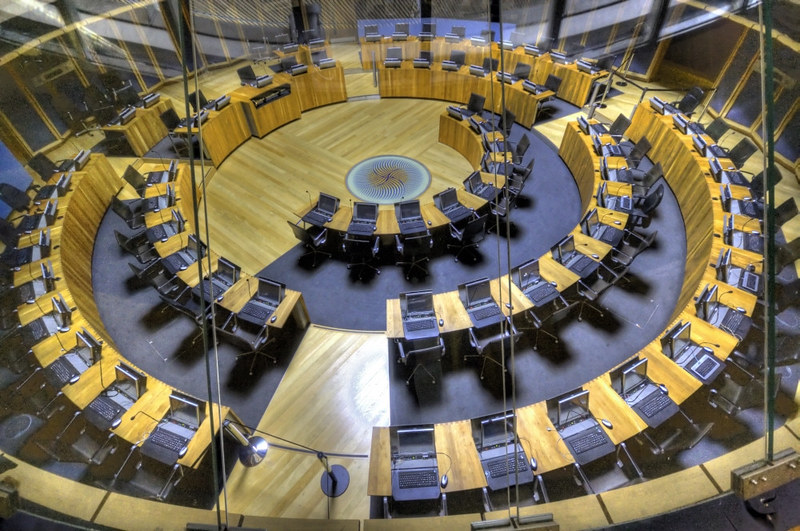
SENEDD members voted to scrap plans for gender quotas in Welsh Parliament elections despite concerns about “false hope” and taxpayers’ money being wasted.
Labour, Plaid Cymru, Liberal Democrat and Conservative politicians all raised concerns about the Welsh Government’s abandoned plans to ensure half of candidates are women.
Joyce Watson was deeply disappointed, warning that the gender quota bill was introduced while it was questionable whether the Senedd had the necessary powers.
The Labour backbencher said: “I will ask the government in future – any government in future – not to do what I believe we’ve done and that is: raise false hope.”
Describing the u-turn as shameful, Plaid Cymru’s Sioned Williams criticised Wales’ first female First Minister for “binning the very bill that would ensure women have an equal voice”.

Jane Dodds, the Lib Dems’ leader in Wales, was similarly bitterly disappointed, saying: “We spent time, we spent money, and it’s just been thrown down the drain.”
Darren Millar, the Conservatives’ shadow constitution minister, told the Senedd his party has never had a problem with the aim of improving diversity.
“We have had a beef as to the means to achieve that,” he said, arguing the bill was outside the Senedd’s powers and criticising the focus on one element of diversity.
Mr Millar pointed to a YouGov poll that showed people in Wales opposed gender quotas as he raised concerns about spending on the “futile” legislation.
He said: “It is very, very disappointing that millions of pounds – and it is millions of pounds – and lots of time, lots of energy has been spent.”
Mr Millar, who represents Clwyd West, added: “I’m pleased to see the back of this legislation. I hope it never returns because we don’t have the competence to deliver it.”
Heledd Fychan warned Wales’ democracy will suffer as she emphasised Plaid Cymru’s disappointment at the Welsh Government for “turning its back” on the bill.

She said the first gender-balanced Senedd in 2003 received international attention, stressing that the same parity has not been achieved in the 21 years since.
Ms Fychan told the debating chamber of Siambr: “For the first time in our history, a First Minister who is a woman – an important milestone in this Senedd.
“But how disappointing to see that one of the first actions of the government led by the new First Minister is to withdraw a bill that would help other women to achieve that same role.”
Accusing ministers of lacking ambition, she said: “This isn’t good enough. This bill would have made a positive difference … it would have been a historic step.”
Labour’s Julie Morgan said it was a shame to see reforms shelved.
“When the Senedd started, in the Labour Party, we had a twinning exercise,” said the Cardiff North MS. “There was blood on the floor but it was very successful and we have consistently since then … had more women than men in our group.”
Sian Gwenllian, who chairs the cross-party group on women, warned that creating a Senedd without equality at its heart in legislation is a serious error.
“It is an unacceptable sign that gender equality, somehow, doesn’t matter,” she said.
Former Plaid Cymru leader Adam Price described the moment as profoundly depressing, claiming the UK and Welsh Labour are at loggerheads.
He suggested the UK party would not support an order, under section 19 of the 2006 Government of Wales Act, to bring the bill within the Senedd’s scope.
Jane Hutt, the member in charge of the bill, which was delayed four years before being scrapped, urged political parties to take voluntary steps to ensure equal representation.
Pressed by Senedd members asking “what changed?”, she said ministers reflected over the summer on the difficulties of passing the bill before the next election in 2026.
The social justice secretary told the Siambr that the Elections and Elected Bodies (Wales) Act, which was passed this year, will improve diversity in Welsh politics.
Reiterating calls for positive action, Ms Hutt, who was first elected in 1999, said she did not think she would be a Senedd member today had it not been for Labour’s twinning process.
Senedd members voted 40-12 to withdraw the bill.


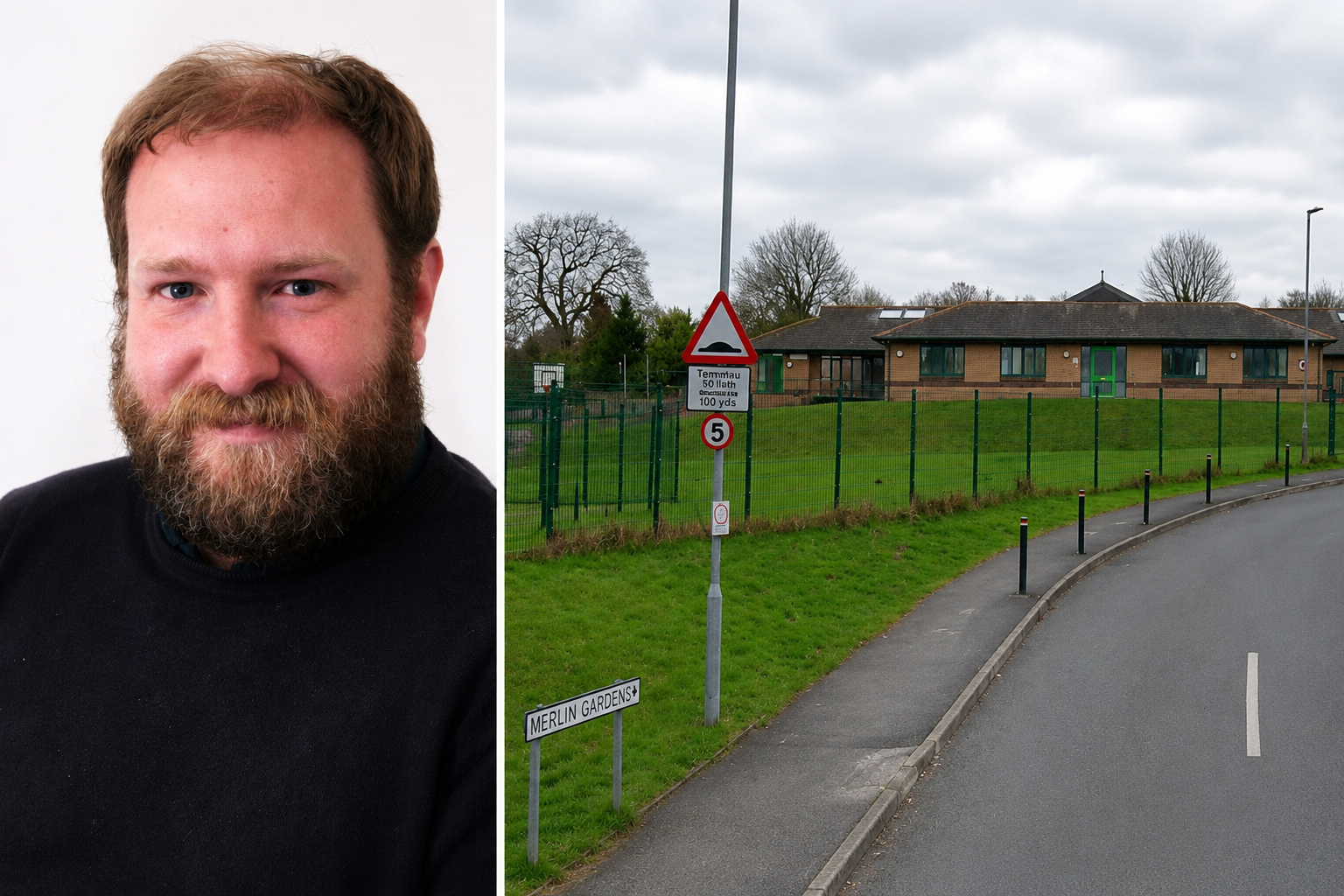
PEMBROKESHIRE COUNTY COUNCIL’S Deputy Leader has launched a major bid to halt controversial plans to close Stepaside School.
Cllr Paul Miller, who took over responsibility for education on May 15, has submitted a motion asking councillors to rescind two previous decisions which authorised officers to begin statutory consultation on closing Saundersfoot and Stepaside schools and replacing them with a single 3-11 primary school on the Saundersfoot site.

The proposal, backed by council in December 2025 and reaffirmed in March 2026, would have seen consultation begin in September.
But in a significant change of direction, Cllr Miller has now told members he no longer believes the proposal to discontinue Stepaside School is “the right one”.
In an email sent to all county councillors, he said he had reviewed the council’s school modernisation and reorganisation plans since taking on the education portfolio.
He said the authority’s work to date had focused mainly on surplus places, which he described as an “interesting estates and facilities metric” but one which “tells us very little about the educational experience of the children inside those buildings”.
Cllr Miller said he accepted that very small schools could become unviable, not only financially but educationally, because of pressures on leadership, staff capacity, mixed-age classes, peer groups and pupil wellbeing.
However, he said Stepaside was in a “materially different position” from schools with exceptionally low pupil numbers.
With around 100 pupils on roll, he said the school was “substantially larger than schools previously deemed unviable”.
He added that decisions affecting larger schools required a broader assessment of educational sustainability, leadership capacity, workforce resilience and pupil experience before closure could be justified.
Cllr Miller also raised the possibility of alternatives, including shared leadership arrangements or formal federation, which he said could strengthen the sustainability of both schools.
He further noted that the planned temporary full decant of Tenby VC School may use a significant proportion of existing surplus places at Saundersfoot School, potentially weakening the case for closing Stepaside as a response to surplus capacity in the Tenby cluster.
His motion asks council to rescind its decisions of December 12, 2025 and March 5, 2026 and to discontinue the proposed statutory consultation process relating to the closure of Saundersfoot and Stepaside schools.
He has asked for the motion to be dealt with at July’s full council meeting, describing it as the final ordinary meeting before the planned September consultation.
The move is likely to be welcomed by campaigners and parents who have opposed the closure of Stepaside School, but it also raises fresh questions about the future of the wider Saundersfoot proposal and the council’s school modernisation programme.
The Herald has previously reported strong local concern over the plans, with parents and residents arguing that Stepaside remains a viable village school and plays an important role in the community.

Pembrokeshire County Council has consistently said school reorganisation must take account of pupil numbers, surplus places, Welsh Government guidance, building condition, long-term sustainability and the need to provide high-quality education.
If accepted onto the agenda, Cllr Miller’s motion could force councillors to revisit one of the most sensitive education decisions currently facing the authority.
South Pembrokeshire MP Henry Tufnell welcomed the development, describing it as “absolutely fantastic news” and “a massive victory for our community”.
He said the council had listened following serious concerns raised by local parents, residents and community representatives.
Mr Tufnell added: “When a community stands together, raises its voice, and refuses to be ignored, this is exactly what can be achieved.”
He also thanked those who attended meetings, backed the campaign and spoke up for the future of local children.
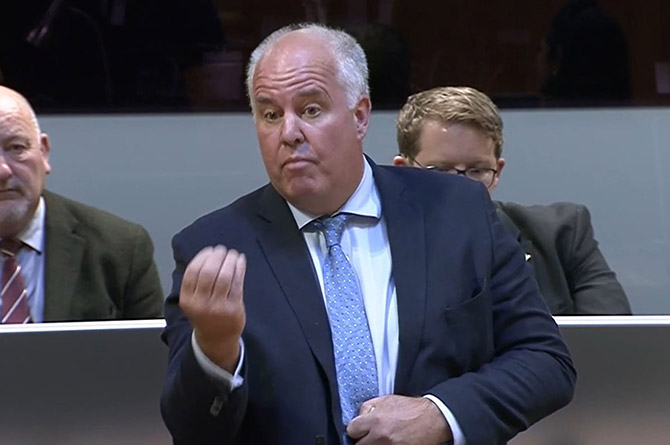
ANDREW RT DAVIES has accused the new Plaid Cymru Welsh Government of backtracking on a pledge to hold a Wales-specific Covid inquiry.
The Conservative Senedd member for the Vale of Glamorgan and Bridgend challenged ministers in the Senedd this week, asking whether the Government’s proposed examination of Wales’s pandemic response would be a full public inquiry under the Inquiries Act 2005.
Such an inquiry would have statutory powers, including the ability to compel witnesses and evidence.
Mr Davies said Plaid had repeatedly called for a Wales-specific inquiry while in opposition, but claimed ministers were now using the language of a “review” instead.
Speaking in the Senedd, he asked Trefnydd and Culture Minister Heledd Fychan to clarify whether the process would be an inquiry under the 2005 Act.
He said: “In his statement last week, he referred constantly to the Covid review rather than the Covid inquiry that the Government promised when they were in opposition.
“It was quite clear that, when you were in opposition, you were voting for an inquiry.
“Can we have clarity, please, via a statement, to understand the Government preparations in putting this together and that it will be an inquiry under the Inquiries Act 2005?”
Ms Fychan did not directly confirm whether the process would be statutory, but said Plaid would stand by its manifesto commitment and continue working with families affected by the pandemic.
She told the Senedd: “I will refer the Member to the Plaid Cymru manifesto, where it was clear, and the commitment that was made in working with Covid bereaved families, in terms of what we would commit to.
“Certainly there will be an update when that work does progress.
“He will also know that we stood shoulder-to-shoulder and have been calling for lessons to be learned. And that’s what needs to happen here: lessons should be learned, so that preparations are better for the future.”

Responding afterwards, Mr Davies said the answer suggested Plaid was watering down its previous position.
He said: “Plaid Cymru’s first weeks in power have been marred by broken promises.
“Their failure to commit to a Covid inquiry with full statutory powers suggests they’re backtracking on this too.
“The cynical way in which many politicians fail to keep their pledges is the reason public trust in politics has collapsed.”
The dispute matters because there is a significant difference between a statutory public inquiry and a non-statutory review.
A statutory inquiry can compel documents and witnesses. A review may be quicker and cheaper, but its powers depend on the terms set by ministers.
Plaid’s position has developed over time. While in opposition, the party was among the strongest voices calling for Wales-specific scrutiny of the pandemic response. In November 2025, following the publication of the UK Covid Inquiry’s report into core decision-making, Heledd Fychan said a Plaid Government would conduct a dedicated “gap inquiry” to examine Welsh Government decisions.
However, Plaid’s 2026 manifesto promised to “establish a review of Wales’s Covid response, its legacies and lessons for the future within the first year of the next Senedd term, with a targeted focus on Wales-specific matters and questions not covered by the UK-wide inquiry.”
That wording is likely to be central to the political row now developing in Cardiff Bay.
The UK Covid Inquiry has already considered aspects of Wales’s pandemic response. Module 2B focused on core political and administrative decision-making in Wales, including decisions taken by the First Minister and Welsh Ministers between early 2020 and the lifting of remaining restrictions.
The inquiry has also published reports on resilience and preparedness, decision-making, healthcare systems, and vaccines and therapeutics. Further reports are expected on procurement, social care, test and trace, children and young people, economic support, and the wider impact of the pandemic.
For many families in Pembrokeshire and across Wales, the issue remains deeply personal rather than political.
Pandemic decisions affected care home visits, hospital appointments, school closures, business support, funeral arrangements, access to GPs and the rules governing daily life. In rural areas such as west Wales, the impact was felt by older residents, tourism businesses, farming families, pupils, carers, NHS staff and people who lost loved ones in difficult and often isolated circumstances.
Covid Bereaved Families for Justice Cymru has continued to call for a Wales-specific statutory public inquiry. The group has argued that Wales does not need simply to repeat the UK-wide inquiry, but does need a short, focused and economical process capable of answering questions specific to Wales.
The Welsh Government says it remains committed to learning lessons from the pandemic and has pointed to its manifesto commitment to a targeted review.
The key question now is whether that review will have the legal force demanded by opposition politicians and bereaved families, or whether ministers will opt for a narrower process intended to report more quickly.
The Herald has asked the Welsh Government whether the planned Covid review will be established under the Inquiries Act 2005, whether it will have powers to compel evidence and witnesses, when its terms of reference will be published, and how bereaved families in Wales will be involved.

Darren Millar calls for assurances that Welsh cases will be properly examined, as first local investigations are named in England
WELSH victims of group-based child sexual exploitation must not be left on the margins of the national grooming gangs inquiry, the Leader of the Welsh Conservatives has warned.
Darren Millar MS has called on the Welsh Government to seek urgent assurances that cases from Wales will be properly examined by the statutory inquiry chaired by Baroness Anne Longfield.
The inquiry formally covers England and Wales, but the first named local investigations are London, Oldham, Bradford and Keighley. No Welsh area has yet been listed as one of the first local investigation sites.
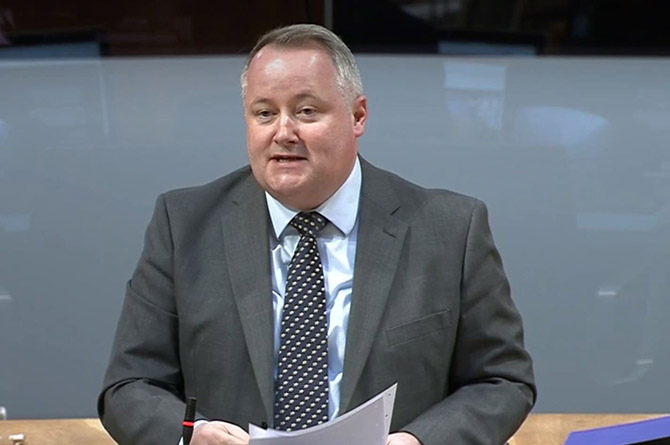
Mr Millar said that has raised serious questions about whether Welsh victims and survivors will be given the same level of scrutiny, particularly where devolved public services may have failed to identify or protect children at risk.
He said schools, councils, social services, health boards and safeguarding partnerships in Wales must be prepared to answer difficult questions about what was known, what was missed and whether vulnerable children were properly protected.
Mr Millar said: “The grooming gangs scandal was not confined to a handful of towns in England.
“We know organised child sexual exploitation happened in Wales, Welsh victims suffered appalling abuse and there are serious questions about whether public bodies did enough to protect vulnerable children.
“Victims deserve confidence that no stone will be left unturned in uncovering the truth.
“If the UK inquiry is not going to investigate Wales, then the Welsh Government must establish a Wales-specific inquiry into the role of devolved public services, including schools, health boards and local authorities.
“There is evidence that vulnerable children have been failed by the very institutions that should have protected them. It is unforgivable that warnings were ignored and victims were dismissed because people avoided having uncomfortable conversations that could have raised the alarm about safeguarding concerns.
“Lessons must be learned to ensure these horrific crimes can never happen again.”
The call comes amid renewed UK-wide scrutiny of group-based child sexual exploitation and the repeated failure of public bodies to act on warnings from victims, families and frontline professionals.

The statutory inquiry was established after Baroness Louise Casey’s national audit into group-based child sexual exploitation and abuse. It will examine how children were targeted, how institutions responded and whether public bodies failed to act because of poor practice, weak leadership, cultural sensitivities, or a failure to treat victims with credibility and care.
The inquiry has powers to compel evidence and require witnesses to give testimony. It is expected to look at failures by local authorities, police, health services, schools and other public bodies.
Although Wales is included in the formal England and Wales remit, the inquiry has made clear that it will not investigate every area where abuse may have taken place. Victims and survivors outside the named local investigation areas are still able to share evidence.
That distinction is now central to the political argument in Wales.
The Welsh Conservatives say it is not enough for Wales to be technically covered by the inquiry if Welsh cases are not examined in detail. They argue that Welsh victims need public confidence that the inquiry will follow the evidence into Welsh institutions where necessary.
The issue is especially sensitive because child protection, education, social services, health boards and safeguarding arrangements are devolved responsibilities in Wales. Policing and criminal justice remain largely reserved to Westminster, meaning any proper examination of Welsh failures would need to look at how devolved and non-devolved bodies worked together.
Wales has already featured in previous national scrutiny of child sexual exploitation. The Independent Inquiry into Child Sexual Abuse included Swansea as one of its case study areas when it examined child sexual exploitation by organised networks.
That inquiry found concerns around the way cases were identified, recorded and understood. It said examples of exploitation by networks or groups should have been identified by police and the local authority.
The Welsh Government has previously argued that an England and Wales inquiry is the best way to examine the issue, rather than setting up a separate Wales-only process. It has also published a 10-year strategy for preventing and responding to child sexual abuse in Wales.
That strategy is intended to improve prevention, strengthen professional responses, support children and families, and provide help for adult survivors.
However, the Welsh Conservatives say a safeguarding strategy cannot replace accountability for historic failures.
They argue that victims need answers about whether warnings were missed, whether agencies failed to share information, whether children in care were properly protected, and whether professionals wrongly dismissed victims instead of recognising exploitation.
Campaigners and specialist support organisations have also warned that any inquiry must remain focused on victims and survivors rather than becoming a party-political row.
They have stressed that child sexual exploitation can take many forms, including online grooming, trafficking, abuse by groups or networks, criminal exploitation, familial abuse and abuse by people in positions of trust.
Mr Millar said Welsh victims must not be treated as an afterthought.
The Herald has asked the Welsh Government whether it has sought assurances that Welsh evidence will be considered by the inquiry, and whether Ministers would support a Wales-specific investigation if no Welsh area is selected for detailed examination.


Health17 hours ago
Wales begins early NHS winter planning after long waits and ambulance pressure
Ministers say health boards and councils must act now to ease pressure on hospitals, ambulances and social care before winter...


Crime2 days ago
Judge calls pensioner a ‘dirty old man’ as he avoids jail for exposing himself to women
Judge says 75-year-old Stewart Laugharne behaved ‘disgracefully’ as he avoids jail but is ordered to sign sex offenders register A...
Health2 days ago
Stroke services consultation reaches halfway point as public urged to have say
HYWEL DDA University Health Board is urging people to take part in its consultation on the future of stroke services,...


Business2 days ago
Welsh firms eye share of £5bn defence drone boom
WELSH defence and aerospace firms could be in line for a share of billions of pounds in new military spending...


Community4 days ago
Thousands line Cardigan streets for Lord Rhys homecoming parade
THOUSANDS of people lined the streets and quayside in Cardigan on Saturday as the town marked 850 years since Lord...


Crime5 days ago
Dyfed-Powys Police rated only ‘Adequate’ in organised crime inspection
A WATCHDOG has rated Dyfed-Powys Police only “Adequate” in its response to serious and organised crime, despite praise for the...


News5 days ago
Two taken to hospital after aircraft ditches in Cardigan Bay
Coastguard helicopter spotted two casualties after light aircraft came down off west Wales coast TWO people were taken to hospital...


Sport6 days ago
Long Course Weekend gets underway in Tenby as thousands head for county
Three days of swimming, cycling and running begin with The Wales Swim at North Beach THOUSANDS of athletes and supporters...


Climate6 days ago
Welsh waters, Westminster profits: Crown Estate row reignited in Wales
PLAID CYMRU has renewed calls for the Crown Estate to be devolved to Wales after figures showed income linked to...

News6 days ago
Reform MS: ‘I felt like shouting get out of the water’
Paul Marr says children playing in streams at Pembrokeshire beaches deserve better protection from pollution risks REFORM UK MS Paul...
-

 Crime7 days ago
Police appeal after reported rape at Young Farmers rally
-
Crime5 days ago
Dyfed-Powys Police rated only ‘Adequate’ in organised crime inspection
-

 Entertainment6 days ago
Torch cuts children’s cinema tickets to £5.25 for summer
-

 News3 days ago
Biker dies and woman seriously injured in Black Mountain crash
-

 Farming7 days ago
Farmers urged to protect themselves as heatwave brings health risks
-
Health7 days ago
Senedd backs call to rule out hospital downgrades after heated NHS debate
-
Climate6 days ago
Welsh waters, Westminster profits: Crown Estate row reignited in Wales
-

 Crime6 days ago
Former Swansea Prison inmate died 48 hours after release