


Education
‘State-of-the-art’ energy transition skills hub opened by Pembrokeshire College


Opening on the college site in Haverfordwest, the Energy Transition Skills Hubs is one of three being launched. It will focus on providing people with the skills and knowledge to find employment in energy projects through an immersive and interactive learning experience.
More than 50 representatives from local industry joined Anthony Harte (Head of Social Impact for Shell UK), Paul Davies (MS), Sam Kurtz (MS), Simon Ames (Managing Director Dragon LNG and Dragon Energy), and College and Dragon LNG apprentice Kelly Williams, as they officially opened the Hub.
During the opening Anthony Harte, Head of Social Impact, Shell UK commented: “We want as many people as possible to benefit from the energy system of the future. And we’ve seen this coming to life in Pembrokeshire with the first new energy transition skills hub. This is part of our ambition to support 15,000 people into jobs with a focus on the energy transition by 2035. It is the latest important step to ensure the energy transition is an opportunity for everyone.”
Shadow Minister for Economy and Energy Sam Kurtz added: “The opportunities offered to students by the Energy Transition Skills Hub match the ambitions that Pembrokeshire has in the green and renewable energy sector. This is an exciting investment and a statement of commitment from Shell UK, Dragon Energy and Pembrokeshire College into developing the skilled workforce of today and the future.”
“Pembrokeshire College has quickly become a real centre of excellence, and I congratulate everyone for flying the flag proudly for our part of the world.”


The aim is to train 600 people by July 2026, this will supply Pembrokeshire with an expanse of talent that will have the knowledge and experience of control systems needed for projects such as offshore floating wind farms and the Haven hydrogen power plants.
Current Dragon LNG apprentice Kelly Williams brought the learner perspective to the opening: “The past four years of my apprenticeship have been nothing short of amazing. Whilst on site I have had the privilege of working with some of the most experienced and talented professionals in the industry and spent one day a week in College where the lecturers are just as passionate and inspiring. The blend of practical, hands-on work and theoretical learning through my qualifications has been incredibly rewarding.”
“Today, having toured this incredible new process control simulator, and experimented with the software, I can’t help but feel excited about the future. This facility is truly state-of-the-art, and it’s going to further elevate an already outstanding programme in the energy sector. I can’t wait to make the most of this space as I continue to learn and grow in my field.”
“The suite will undoubtedly play a crucial role in shaping the next generation of engineers, equipping us with the skills needed to meet the challenges of tomorrow.”
College Principal, Dr Barry Walters added: “This cutting-edge Skills Hub will enable training in control systems for a wide range of sectors including: Offshore Floating Wind; Hydrogen Plant; Solar PV; Tidal/Marine and gas power stations and comes at an important time for the energy sector.
“We would like to thank Shell UK, Dragon LNG, the Swansea Bay City Deal Skills and Talent Fund and City and Guilds along with industry partners and local Members of the Senedd, Paul Davies and Sam Kurtz for supporting this important facility which will not only train college learners and industry professionals but will also support the local community and schools by giving them the opportunity to understand more about how energy transition will impact the way we live and work in the future.”
Welsh Secretary Jo Stevens added: “I’m delighted that UK Government funding, via the Swansea Bay City Deal, is being used for such a great facility. Pembrokeshire has an important part to play in achieving our mission for clean energy by 2030.”

“This training facility will mean that local people will be able to gain the skills they need to access the good jobs of the future.”
#PoweringProgress















PEMBROKESHIRE councillors have backed the closure of a small rural school which has left campaigners “heartbroken” and “let down by those elected to represent them”.
At its March meeting, Pembrokeshire County Council members backed a recommendation that Director of Education be authorised to publish a Statutory Notice to discontinue Ysgol Clydau, Tegryn.
Councillors had previously heard here has been a significant decline in the school’s pupil population during the period 2015-2025, with no indication that this will be significantly reversed during the next five-six years.
The statutory notice followed a consultation on the proposals, and a hearing of a petition opposing the potential closure, which had generated 648 responses on the council’s own website, with impassioned pleas to keep the school open.
Ysgol Clydau has been described as “more than just a school; it’s a hub for community life, offering a safe and welcoming space for children, families and residents of all ages,” with those opposing closure warning: “Its closure will isolate our community, leading to a decline in population and a weakening of our social fabric.”
At a special extraordinary council meeting held on June 15, members of Pembrokeshire County Council were asked to consider a report on a summary of 126 objections received in respect of the proposal to discontinue Ysgol Clydau, which included an option to halt the closure.
However, it was recommended, in a report present by deputy leader Cllr Paul Miller, who now also has responsibility for education, for the discontinuation be proceeded with.
The decision for Ysgol Clydau followed an earlier agenda item where members backed a recommendation to discontinue Manorbier school in the south of the county.

At the meeting, local member Cllr Iwan Ward – who has championed the fight to keep Ysgol Clydau open – questioned the value of the consultation, saying it was “supposed to be an opportunity to listen and reflect on alternative viewpoints,” adding: “They deserve to know their voices matter.”
He said viable alternatives to closure had “not been fully explored,” adding: “This decision will have consequences that last longer than any council term; today we have an opportunity to send a message that rural communities matter, and that Welsh education matters, and that rural schools matter.”
Cllr Huw Murphy, whose ward is nearby said he would find it difficult to attend this year’s national Eisteddfod which is being held close to Tegryn, knowing a Welsh language school had been closed, before quoting the Manic Street Preachers rock band lyrics: “If you tolerate this then your children will be next.”
Cllr Miller stressed alternative Welsh language provision for the pupils, with the longest any pupil would have to travel was just over three miles.

Members voted by 32 votes to 21, with one abstention, to back the recommendation to discontinue Ysgol Clydau.
Speaking after the meeting, campaign group Save Ysgol Clydau – Cadw Clydau yn Gardarn said: “Many of us feel that those making this decision spoke about budgets, statistics and percentages, but failed to understand what Ysgol Clydau truly is.
“It is not simply a school. It is a community. It is the heart of a Welsh-speaking rural area. It is a place where children felt safe, supported, understood and valued. Today, that has been taken away.”
It added: “What happened today should concern every rural community in Wales. If it can happen here, it can happen elsewhere. This is bigger than Ysgol Clydau. It is about the future of rural schools, rural communities and the Welsh language.”
It ended by saying: “Today we are grieving. Today we are heartbroken. Today many people feel let down by those elected to represent them.
“But history will record that this community fought with dignity, passion and determination for its children. And we will continue to speak up for rural communities and rural schools, because what happened today should never become normal.”


TWO MORE rural schools in west Wales could close by the end of the year after Carmarthenshire County Council published statutory notices proposing the closure of Ysgol Meidrim and Ysgol y Fro.
The move follows growing concern over the future of small rural schools across the region, after The Herald reported yesterday on separate school closure proposals in Pembrokeshire.
Carmarthenshire County Council confirmed on Tuesday (Jun 16) that statutory notices had been issued under the School Standards and Organisation Act 2013.
Members of the public now have 28 days to object, with the deadline set for July 14, 2026.
Objections can be submitted through the council’s online surveys for Ysgol Meidrim and Ysgol y Fro, by emailing [email protected], or in writing to Owain Lloyd, Director of Education and Leisure, County Hall, Carmarthen, SA31 1JP.
Cabinet decision
The decision to issue the statutory notices was agreed by Carmarthenshire County Council’s Cabinet on Monday, June 1.
If the proposals are approved, both closures would take effect from December 31, 2026.
From January 1, 2027, pupils currently attending Ysgol Meidrim would be expected to attend either Ysgol Griffith Jones or Ysgol Hafodwenog, depending on parental preference and the council’s admissions arrangements.
The catchment area of Ysgol Gynradd Meidrim would also be re-designated and absorbed into the existing catchment areas of Ysgol Griffith Jones and Ysgol Bancyfelin.
Under the proposals for Ysgol y Fro, pupils would attend Ysgol y Dderwen from January 1, 2027, again subject to parental preference and admissions arrangements.
Its catchment area would be re-designated and included within the existing catchments of Llangunnor Primary School, Llanddarog VC Primary School, Ferryside VC Primary School, Gwynfryn Primary School, Ysgol Gymraeg Gwenllian, Ysgol Gynradd Mynyddygarreg and Ysgol y Castell.
Rural school concern
The council says both schools have been identified under viability criteria set out in its Modernising Education Programme, which was approved by Cabinet on November 18, 2024.

The publication of statutory notices marks a formal stage in the closure process and gives parents, residents, governors and other interested parties the opportunity to object before a final decision is made.
The proposals come amid wider concern about the future of small rural schools, with communities across west Wales warning that closures can have a lasting impact on village life, Welsh-language education, transport arrangements and young families.
The council has said objections received during the statutory notice period will be considered before any final decision is taken.

THE FINAL decision to close fire-ravaged Manorbier school has been given the go-ahead, despite a heartfelt last-minute plea by local councillor Phil Kidney to keep it open.
Back in March, Pembrokeshire County Council members backed a recommendation that the Director of Education at Pembrokeshire County Council be authorised to publish a statutory notice to discontinue Manorbier Church in Wales voluntary controlled school.
Manorbier Church in Wales VC School and its adjoining schoolhouse was severely damaged by a fire in October 2022, which broke out in the school roof space.
After that, a ‘school from school’ was set up in Jameston Village Hall.
It had been hoped the school would be rebuilt, but last year councillors backed a report of the School Modernisation Working Group which, amongst other recommendations, included a statutory consultation on proposals to discontinue Manorbier Church in Wales Voluntary Controlled School.
The decision attracted strong local opposition, with more than 1,500 people signing a petition on the council’s own website calling for the school to be rebuilt.
The formal consultation for the discontinuation of Manorbier closed last December.
However, many of the council’s figures, especially on the level of surplus places at the school, have been strongly disputed.
At a special extraordinary council meeting held on June 15, members were asked to consider a report on a summary of 62 objections received in respect of the proposal to discontinue Manorbier VC school, which included options to end that discontinuation or to launch a fresh consultation.
However, it was recommended, in a report present by deputy leader Cllr Paul Miller, who now also has responsibility for education, for the discontinuation be proceeded with.
At the meeting, local councillor Phil Kidney, who has been a staunch supporter of the keeping the school open, thanked the campaigners who fought for it and the dedication of the staff, including headteacher Sharon Davies.
Cllr Kidney said: “The way this authority has treated her and the staff is quite frankly amazing; we have all let these good people down.


“We’ve all let these people down, the way this council has handled this situation is appalling; from day one not one of the executives came up to see these children, no-one came out; if that was Haverfordwest or Tenby they’d be all over the place.”
He said the wording of the consultation had seen more mentions of St Florence [ the alternative school for pupils in the event of a discontinuation] than Manorbier, describing it as “like a brochure for St Florence”.
He also warned the Diocese of St Davids, which had always pressed for the school to be rebuilt, would not allow the council to “walk away from our liabilities lightly”.
“We’ve been promised by two leaders and the chief executive: ‘Don’t worry we’ll rebuild,’ sometimes you’ve got to be big enough an honour your promises; do the right thing today, vote for Manorbier and keep it open.”
Members later heard the diocese had, in a letter received by councillors, made “damning accusations the council is being biased against voluntary controlled schools,” with Cllr Jamie Adams saying the council administration should be “ashamed of this debacle”.
Cllr Miller said his only consideration was “the future welfare of the children,” adding: “I do not think 20 children educated in a welfare centre in Jameston is the best for them.”
He said that no pupils would have to travel more than 2.1 miles for their education as a result of a closure, Cllr Kidney disputing that figure more like 3.5 miles.
Cllr Miller said the wording in from the letter from the diocese “which had a dog in the fight” was a one-sided legal argument, adding the council had actually opened VC schools.
Cllr Aled Thomas, chair of the working group which had presented the proposals in the first place, said: “The whole thing is an omnishambles, a total mess of how it’s been handled, but we are where we are.
“The important thing to remember is the future for these children, there will be kids in that school that have never been taught in a classroom setting. Tough decisions are never going to be easy; not a single one of us got elected wanting to be in this position.
“I’m no friend of the administration but we need to look at it holistically.”
Members, by 30 votes to 23, with four abstentions, supported the final steps to close the school.
Posting after the decision, the Friends of Manorbier School said: “Today is a difficult day, as the final decision to close Manorbier Primary School has now been made.
“There were some heartfelt comments and statements during the council meeting. The children, staff, parents and wider community have been waiting far too long for a decision. While this outcome was not unexpected, it is still hard to hear those final words spoken aloud.”
It added: “There are still questions that need to be asked, but the fight to keep the school open has come to an end. Our focus must now be on supporting the children and their families as they prepare for the transition ahead. The staff, too, finally have an answer.”



News14 hours ago
Brexit at 10: How Britain was sold a dream that cost us dearly
A decade after the referendum, the promised benefits remain hard to find while the economic costs are increasingly difficult to...


Crime15 hours ago
Worcestershire man jailed after violent attack on woman in Tenby
Defendant was already serving a suspended sentence when serious assault took place A WORCESTERSHIRE man has been jailed for more...


Climate17 hours ago
Offshore wind ‘could bring new generation of jobs to Milford Haven’
Pembrokeshire ports and Celtic Sea projects placed at centre of Wales’ green energy ambitions MILFORD HAVEN and Pembroke Dock could...


Community2 days ago
Police officer hailed hero after midnight sea rescue in Milford Haven
PC swam 100 metres offshore to save distressed woman heard calling for help in darkness A DYFED-POWYS POLICE officer has...


Local Government2 days ago
Security privately arranged by Mayor at Beating of the Bounds
HAVERFORDWEST TOWN COUNCIL has confirmed that security personnel seen at this year’s Beating of the Bounds were privately arranged and...


Business3 days ago
Celtic Freeport five-year plan puts Milford Haven at centre of green energy future
Strategy promises investment, skilled jobs and new supply chains, but major barriers remain over grid connections, planning and delivery THE...


Education3 days ago
Closure of Ysgol Clydau approved after emotional council debate
COUNCILLORS WARNED RURAL COMMUNITIES WILL REMEMBER DECISION PEMBROKESHIRE councillors have voted to close Ysgol Clydau following an emotional debate over...


Education3 days ago
Manorbier school closure process to continue after narrow council vote
Questions remain over insurance, rebuilding costs and possible legal action by Diocese PEMBROKESHIRE councillors have voted to press ahead with...

Community3 days ago
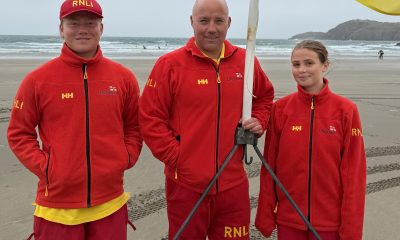
The father, son and daughter lifeguard trio saving lives in Pembrokeshire
A FATHER, son and daughter are preparing to help keep beachgoers safe on the Pembrokeshire coast this summer as part...


Charity3 days ago
Children turn to Childline as loneliness cases rise
CHILDREN and young people struggling with loneliness are increasingly turning to Childline for support, new figures show. The NSPCC-run service...
-

 Community4 days ago
Pembrokeshire Chess Club crowned Welsh champions
-
Local Government2 days ago
Security privately arranged by Mayor at Beating of the Bounds
-

 Crime7 days ago
Pembroke Dock teenager sentenced over train strangulation attack
-

 Education6 days ago
Diocese threatens legal action as Manorbier school closure battle intensifies
-

 Crime7 days ago
Man accused of six rapes including alleged Haverfordwest offence
-

 Crime2 days ago
Man wanted by court after failing to attend hearing over alleged shop thefts
-

 Local Government6 days ago
Taxi suspended after county-wide licensing checks
-
 Crime2 days ago
Man banned from roads after drink-driving offence