


News
Court date set for council’s action against landfill operators


The County Council’s civil action against the operators of the Withyhedge Landfill site is set to have its first hearing on Monday, 21st October.
The hearing will be held at the Swansea Civil Justice Centre and will be broadcast via video link due to the considerable public interest in the case.
Introducing a progress report on Thursday’s Council meeting on efforts to reduce the stench and public nuisance emanating from the site, Councillor Rhys Sinnett outlined the steps the Council has taken, in partnership with other agencies, to address the persistent issues.
Significant engineering works are ongoing, Cllr Sinnett told the meeting, particularly regarding the problematic waste cell, identified as cell number 9. He added that the site had been closed to waste, pending the completion of these works.
Cllr David Bryan sought clarification on the continued presence of Atlantic Recycling lorries travelling to and from the site. In response, Deputy Chief Executive Richard Brown explained that, while the site had been closed to waste for several months, the lorries were transporting thousands of tonnes of clay and soil to reseal and line the problematic cell and prepare an additional one.

During the discussion of air pollution readings, Cllr Alan Dennison questioned the value of ongoing monitoring given the low levels detected. In response, Council CEO Will Bramble stated that the readings adhered to limits set by the World Health Organisation (WHO). He added that, despite low concentrations, the odour from the site still exceeded the WHO’s minimum threshold.
Mr Bramble also noted that the prevailing south-westerly winds were most affecting the nearby community of Spittal, while northerly winds had an adverse impact on Crundale.
Addressing the public and Council members’ concerns, particularly in light of the public outcry, Mr Bramble emphasised that the Council was committed to tackling the issue seriously. Cllr Dennison had previously led a wave of criticism regarding the Council’s handling of the matter.
Cllr Mike John inquired about the costs associated with air quality monitoring and whether the Council intended to recover these expenses from the site operator. Mr Bramble said he could not yet provide a cost estimate, and depending on legal advice, recovering the costs might involve further legal proceedings.

Cllr Alistair Cameron praised Council officers, Cllr Sinnett, and other Cabinet members for addressing local concerns on such a complex issue.
Councillors overwhelmingly voted to note Cllr Sinnett’s report on the Withyhedge situation.
The case now moves to its next stage at Swansea Civil Justice Centre on Monday, 21st October.



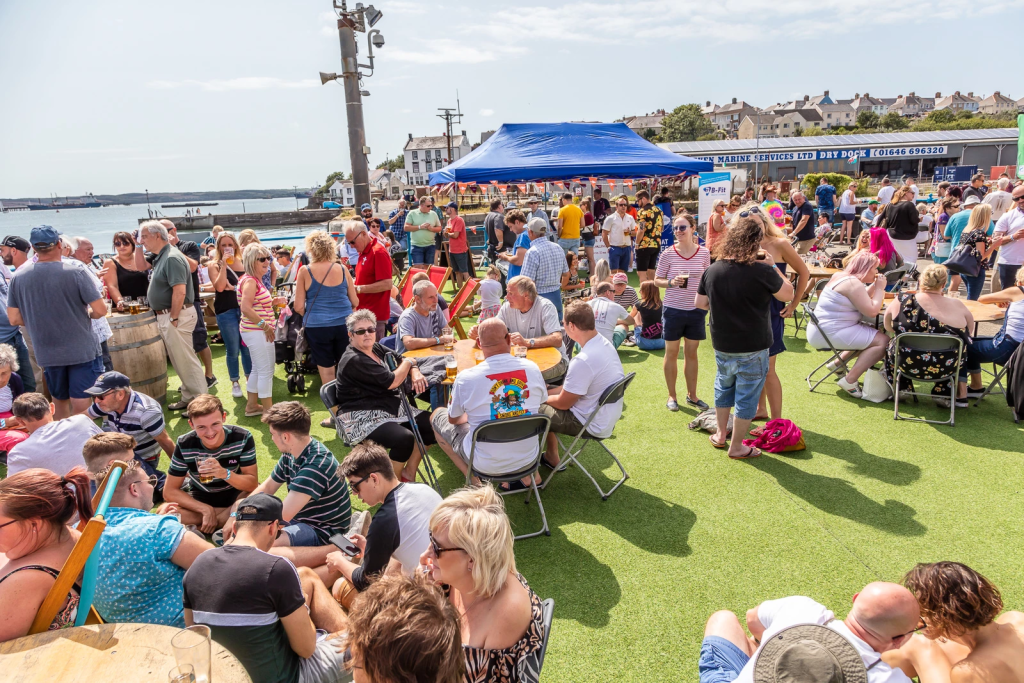
Festival promises live music, Welsh ales and community spirit at the waterfront
MILFORD HAVEN Beer Fest is set to return later this month, with organisers promising another packed day of live music, craft drinks and festival atmosphere.
The popular annual event will take place at Milford Waterfront on Saturday, May 23, inside the Ascona Group Marquee, with doors opening at 12:00pm.
Organisers say no advance tickets will be available, with entry operating on a first come, first served basis. Another sell-out is expected and early arrival is strongly advised.

A wide range of Welsh breweries and drinks producers will be represented, including Tenby Harbwr Brewery, Bluestone Brewing Company, Gethin’s Cider, Mantle Brewery, Gower Brewery and Core of the Poodle.
Tiny Rebel Brewery will also be serving lagers, IPAs and its new stout, Coal Drop, while Barti Rum will showcase its latest canned drinks. Prosecco and Pimm’s will also be available.

Entertainment throughout the day will be hosted by Pure West Radio, with headliners 4th Street returning to the waterfront.
The line-up also includes a DJ set from former Welsh rugby international and British and Irish Lion Josh Navidi, alongside performances from Steve Bartram, Big Chicken, Jake Taylor, Function 22 and Natalie O’Brien.
Festivalgoers will also be able to enjoy a street food zone featuring Grub Tacos, Junkyard Dogs and Reeves BBQ.
Community support
Nathan Rees, chairman of Milford Haven Round Table said: “The Beer Festival is a huge highlight for us – not just for the atmosphere, but for the impact it has.

“Every penny raised goes back into the community, funding events like our Carnival and Fireworks and supporting local causes.
“We’re also incredibly grateful to The Ascona Group for their continued sponsorship and to the Port of Milford Haven for their ongoing support as our Major Events Partner, as well as all the Beer Festival sponsors for 2026.”
Ticket information
Entry costs £25 and includes four drink tokens, a festival cup and live entertainment throughout the day.

Additional drink tokens will cost £2.50 each, with cash and card accepted.
The event is strictly over-18s only.
Organisers say there will be a 100 per cent bag search policy, with visitors strongly advised not to bring bags. Free water will be available, and dogs will not be allowed.

SHOP NOW OPEN SEVEN DAYS A WEEK AFTER EXPANSION INTO ADJOINING UNIT
A CHARITY shop in Pembroke Dock has expanded into a neighbouring unit to help raise more money for local hospice care.
Paul Sartori Hospice at Home has completed a knock-through at its shop in Bierspool, London Road, creating a larger retail space and allowing the charity to offer a wider range of items, including furniture.
The expanded shop was officially opened on Friday (May 1) by the outgoing Mayor of Pembroke Dock, Cllr Michelle Wiggins.
The shop team, led by Kelly Elliot and supported by volunteers, worked for several weeks to prepare the new-look store for customers.
Head of Retail Julia Brady welcomed guests at the opening, while the charity also thanked staff, volunteers and supporters who helped decorate and prepare the premises.
Special thanks were given to Gill at Pembroke Dock Tesco for donating treats for customers and staff on the day.
Paul Sartori Hospice at Home operates nine retail shops and an eBay department. Income from donations and sales helps fund the charity’s clinical teams, who provide free specialist palliative care to patients and families across Pembrokeshire.
The charity says it costs £3,600 every day to deliver its free clinical services. Around 30% of that cost is funded through Hywel Dda Health Board, with the remainder raised through retail income, fundraising and community support.
The Pembroke Dock shop is now open seven days a week, giving people more opportunities to shop, donate and support local hospice care.
Paul Sartori Hospice at Home was established in memory of Father Paul Sartori, a much-loved local priest who recognised the need for hospice care before his death from cancer at the age of 39.
The charity provides care for people with any life-limiting condition, not only cancer, and supports patients of all faiths and none. It operates an open referral system, with referrals accepted from patients, families, friends and healthcare professionals.
Paul Sartori Foundation Ltd operates under the name Paul Sartori Hospice at Home. The charity was registered in 1982 and will celebrate its 45th anniversary during 2027/2028.


UNDER-18 SIDE LIFTS WRU PLATE AFTER HARD-FOUGHT FINAL AT RODNEY PARADE
YSGOL BRO TEIFI’S under-18 rugby team are celebrating national success after winning the WRU Schools and Colleges Plate Final at Rodney Parade.
The Ceredigion side travelled to Newport to face Ysgol Maes y Gwendraeth in a fast, physical and closely contested final.
Bro Teifi made a strong start, with tries from Elis Evans, Llew Thomas and Jack Brown giving them an early advantage. Dafydd Nichols-Evans added the extras from the kicking tee as the team went into half-time 19-14 ahead.
The second half proved even tighter, with Ysgol Maes y Gwendraeth applying sustained pressure and forcing Bro Teifi to defend with discipline and determination.
A late try gave Bro Teifi breathing space before Nichols-Evans held his nerve in the closing stages, landing a crucial penalty to seal a 27-19 victory.
The school said the win reflected the hard work, commitment and talent of the players, as well as the support of staff, parents and fans throughout the season.
Headteacher Gareth Evans said: “This game is the culmination of a tough season for the boys as they beat much bigger schools on the way to the final.
“It also builds on the school’s reputation in sport, with numerous successes this year across a range of sports and age groups.
“I would like to thank all the school staff for their tireless work in ensuring these experiences for our pupils, and the parents for their support.”
Photo caption: Plate winners: Ysgol Bro Teifi’s under-18 rugby team celebrate their national success at Rodney Parade.



Community4 hours ago
Rescue bid planned for lambs stranded below Stack Rocks cliffs
Tree surgeon preparing 150ft descent after live firing delayed rescue attempt A MAJOR rescue operation is being planned this afternoon...


News6 hours ago
Bishop’s report reveals major renewal challenge at St Davids Cathedral
Formal Visitation highlights financial, structural, leadership and spiritual pressures at one of Wales’ most important religious sites ST DAVIDS CATHEDRAL...


Crime23 hours ago
Farming company fined £19,000 for damaging protected wildlife site
A CARDIGAN farming company has been ordered to pay almost £20,000 after recklessly damaging a Site of Special Scientific Interest....


News1 day ago
Baby in critical condition after Fishguard emergency
Teenagers arrested as police investigate circumstances A BABY remains in hospital in a critical but stable condition after being taken...


Community2 days ago
Tenby phone signal crisis goes national as businesses warn of summer disruption
TRADERS SAY CARD PAYMENTS, TAXIS AND VISITOR SAFETY ARE BEING HIT BY ‘DEAD ZONE’ COVERAGE TENBY’S long-running mobile phone signal...


News2 days ago
Final poll puts Plaid and Reform level ahead of Senedd vote
Labour faces historic setback as new modelling points to a hung Senedd PLAID CYMRU and Reform UK are projected to...

News3 days ago
West Wales coracle fishermen raise alarm over suspected sewage pollution
A CENTURIES-old fishing tradition on the River Towy could be under threat after coracle fishermen reported suspected sewage pollution entering...


Community4 days ago
Scooter rally brings colour and nostalgia to Tenby
TENBY is buzzing with the sights and sounds of classic scooters this Bank Holiday weekend as the Welsh National Scooter...


Entertainment4 days ago
Haverfoodfest returns to Haverfordwest town centre today
HAVERFORDWEST town centre is expected to be busy today as Haverfoodfest 2026 returns for a full day of food, drink,...


Crime5 days ago
70-year-old denies assault and restraining order breach
A PENSIONER from Pembroke Dock has denied breaching a restraining order and assaulting another man. Henry Howlett, 70, of Market...
-
News1 day ago
Baby in critical condition after Fishguard emergency
-

 Crime7 hours ago
Job loss threat for convicted Pembrokeshire drug-driver
-

 Crime7 hours ago
Milford motorist disqualified for drug-driving
-

 Community6 days ago
Dogs removed after welfare concerns at Milford Haven property
-

 Crime6 hours ago
Police tip-off leads to driving ban for Milford motorist
-
Crime23 hours ago
Farming company fined £19,000 for damaging protected wildlife site
-
Community2 days ago
Tenby phone signal crisis goes national as businesses warn of summer disruption
-

 Crime6 days ago
Two men bailed after Fleming Crescent burglary report