


Business
UK Government Invests in Gigabit Broadband for South West Wales


THE UK GOVERNMENT has announced a further investment in Project Gigabit, aiming to deliver high-speed broadband to hard-to-reach areas across Britain. Rural towns and villages in South West Wales are among the latest to benefit, as part of a wider effort to achieve near-total gigabit coverage by 2030.
The programme, a key pillar of the Government’s Plan for Change, is designed to stimulate economic growth and remove barriers to opportunity. The latest rollout will bring some of the fastest broadband speeds available to remote communities, enhancing access to essential services such as healthcare, remote education, and video communication. It is also expected to support business growth and improve job opportunities for young people.
Welsh leaders welcome investment
Cllr Hazel Evans, of Carmarthenshire County Council, welcomed the announcement, saying: “This is a much-needed boost as we strive to improve digital connectivity across Carmarthenshire. Further investment will help ensure our rural communities continue to prosper as we transition towards a more digital society.”
Rob Stewart, Leader of Swansea Council and Chair of the Swansea Bay City Deal’s joint committee, also praised the initiative:

“This is fantastic news for the rural communities in our region. The Swansea Bay City Deal fully supports initiatives that improve the lives of people and businesses. This investment in digital infrastructure will create social and economic opportunities for communities that would otherwise be left behind.”
£289 million boost for broadband expansion
The announcement forms part of four new contracts worth over £289 million, aimed at delivering gigabit-capable broadband to approximately 131,000 homes and businesses across England and Wales.
Unlike traditional copper-based networks, gigabit connections provide faster and more reliable service, even during peak times. Households and businesses will no longer need to compete for bandwidth, as these high-speed networks allow multiple devices to operate seamlessly.
Welsh Secretary Jo Stevens highlighted the significance of the investment: “Powered by this UK Government funding, thousands more people and businesses across Wales will gain access to ultra-fast broadband. Our priority is to drive sustained economic growth, and to achieve this, we must ensure every part of Wales has full digital coverage as quickly as possible.”
Implementation and next steps
The Digital Infrastructure Programme is working closely with Building Digital UK (BDUK) and Openreach to deliver Project Gigabit. Further regional updates are expected in the coming months, outlining timeframes and specific locations set to benefit.

Upgrading and expanding existing networks is a complex process, requiring technical surveys and coordination between commercial providers and local authorities, including planning and highways departments. As a result, implementing gigabit-capable broadband can take time.
For further details about broadband plans in your area, residents are encouraged to contact their Digital Champion for more information.


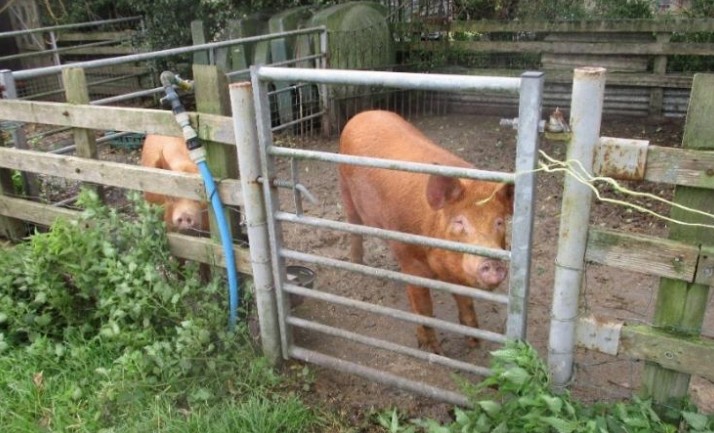
A CALL to allow a Pembrokeshire farm to keep welfare facilities to care for rare breed breeding Tamworth pigs has been given the go-ahead.
In an application to Pembrokeshire County Council, Sharron Nicolas, through agent Hayston Developments & Planning Ltd, sought a certificate of lawfulness permission for the creation of a welfare flat within a previously-approved agricultural building, plus a rear lean-to extension and the erection of two further sheds at Fairybank Fields Farm, Bethesda, near Clynderwen.
An application for a certificate of lawfulness allows an applicant to keep a development if they can provide proof of occupancy or use, without any enforcement taking place, over a prolonged period.
The previous agricultural building application was granted back in 2003.
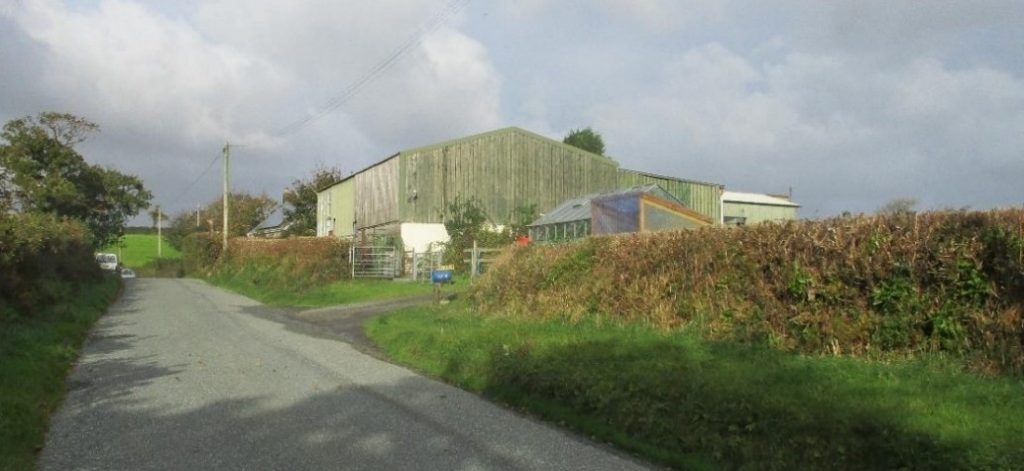
A supporting statement accompanying the application said the two-level welfare unit in the 2003-granted shed “contains the necessary elements to allow overnight stays which are essential when the pigs are farrowing.”
It added: “Mr Allan and Mrs Sharron Nicholas have been owners of Fairybank Fields since 1998. Unfortunately, Mr Nicolas died in February 2025. Although managing the farm at Bethesda, they lived at Pleasant View, Cold Blow, Narberth meaning a round trip of some 12 miles per visit – a visit which was required on a daily basis because of the need to feed and generally care for their animals – which were and still are rare breed pigs together with a number of beef cattle.
“It is essential that the pigs require continuous care when farrowing or when there are other pressures on animal health. When such occasions occurred, it was the practice of Mr Nicholas to spend the night at the farm and to use the welfare provision.”
It said Mr Nicholas would have spent approximately three months’ worth of nights (circa 90 nights) staying over at Fairybank Fields – a period of some 12 years when the bedroom above had been created to late 2024 when his brother assisted Mrs Nicholas in caring for the pigs as Mr Nicholas was too ill.
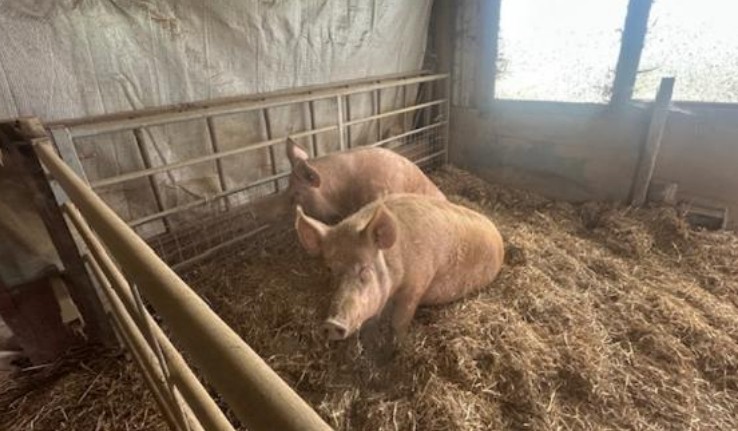
It went on to say: “Whilst the principal activity at the Farm is the breeding of the rare breed, the Tamworth Pig of which there are only currently 290 breeding sows in the UK, Mr and Mrs Nicholas also have had beef cattle on their farm and Mrs Nicholas intends to re-start that element in 2026.”
An officer report recommending approval said a site visit had been undertaken finding no evidence of the unit being occupied as a separate residential dwelling, nor as a primary residence.
It said a range of evidence was submitted in support of the application, including a detailed timeline, aerial imagery and multiple witness statements “which consistently indicate that the rear extension to Building 1 was constructed circa 2008, Shed 2 was completed in September 2012 and Shed 3 was erected in 2015”.
It said historic aerial photographs and witness statements demonstrated “on the balance of probability, that the operational development was substantially completed well in excess of four years prior to the submission of the application and has not been subject to any material interruption,” considered to be lawful by virtue of immunity from enforcement action.
It was granted approval on that basis.
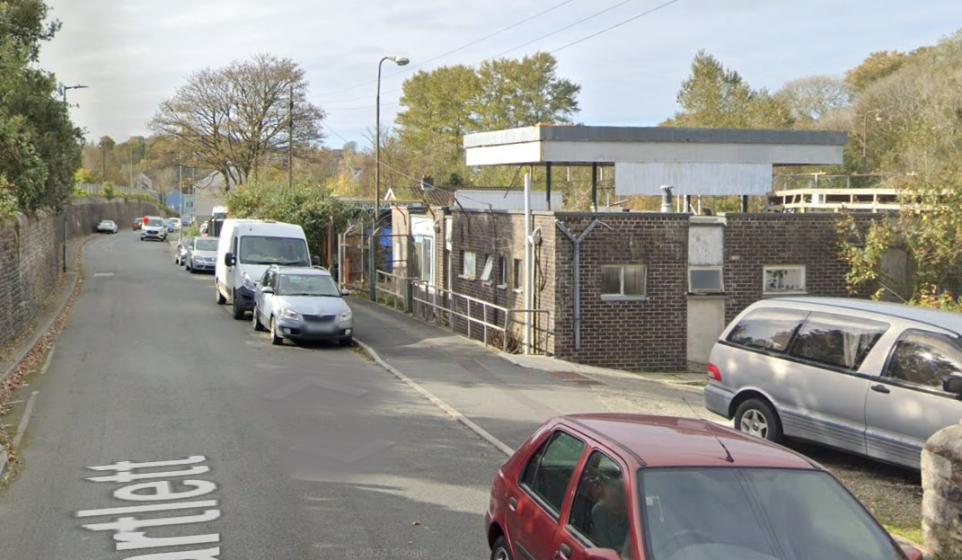
A FRESH call to allow the retrospective conversion of office space to a chocolate factory, a beauty salon and laundrette has been submitted after a previous refusal.
In an application refused by Pembrokeshire County Council in March, Mr M Williams, through agent Preseli Planning Ltd, sought retrospective permission for the subdivision of an office on land off Scotchwell Cottage, Cartlett, Haverfordwest into three units forming a chocolate manufacturing, a beauty salon, and a launderette, along with associated works.
A supporting statement, for the chocolate manufacturing by ‘Pembrokeshire Chocolate Company,’ as part of the scheme said: “The operation comprises of manufacturing of handmade bespoke flavoured chocolate bars.
“Historically there was an element of counter sales, but this has now ceased. The business sales comprise of online orders and the delivery of produce to local stockist. There are no counter sales from the premises.”
It said the beauty salon “offers treatments, nail services and hairdressing,” operating “on an appointment only basis, with the hairdresser element also offering a mobile service”.
It said the third unit of the building functions as a commercial laundrette and ironing services known as ‘West Coast Laundry,’ which “predominantly provides services to holiday cottages, hotels and care homes”.
The application was refused on the grounds it represents an unjustified out of centre use with regard to the salon and nail bar, “insufficient information has been provided to justify the loss of B1 employment floorspace,” and “the introduction of a hairdressing salon and nail bar, uses typically found within established shopping centres, into this out of centre location would undermine the strategic role, vitality, and viability of Haverfordwest town centre”.
Since then, a resubmitted application aimed at addressing the reasons for refusal has been lodged.
A supporting statement with that resubmitted application says it has “included additional evidence in terms of a sequential assessment, financial viability and client needs to justify the mixed-use unit having an out-of-town centre location, which is of a scale that would not undermine the vitality and viability of the town centre and has a saturation of similar services being offered”.
It adds: “The application has also provided additional evidence to justify the loss of 70 square metres of a B1 unit not being harmful to employment land provision in the settlement, where adequate alternative provision remains.”
It says the scheme “would represent a suitable re-use of the building, which would not undermine the vitality and viability of the town centre or result in harmful loss of employment land,” and would not “result in any significant harmful impacts upon neighbouring amenity or the character of the area”.
The latest application will be considered by county planners at a later date.

A POPULAR Pembrokeshire music shop is changing the way it operates, with Main Street Music confirming it will no longer trade as a retail shop from September 1.
The business said there will be an immediate 15% sale on all stock, but stressed that Main Street Music is not disappearing completely.
The owner said the decision had been made “with a heavy heart”, adding that the shop’s closure as a retail outlet would be a loss for Pembrokeshire as the county’s last professional guitar dealership.
He said his long-term passion had always been making musical instruments, something he had done since his teenage years, later receiving scholarships and a fellowship for his studies.
After college, he was given the opportunity to buy the business at the age of 24.
He said: “I have had an amazing time running this shop, giving it everything I’ve got, met some wonderful people and sold some incredible guitars.”
Although the business itself remains successful, he said tighter retail margins, dealership pressures and rising costs had made it difficult to grow in a way that would allow him to employ others and spend more time in the workshop.
The shop will eventually reopen as an appointment-only workshop and showroom for handmade guitars and repairs.
Current repair work will continue on a case-by-case basis by appointment only.
Main Street Music thanked customers for their support over recent years, saying the owner was proud of where the shop had been taken.
Caption:
Main Street Music will close as a retail shop from September 1, but will continue as an appointment-only workshop and showroom for handmade guitars and repairs.




Community23 hours ago
Thousands line Cardigan streets for Lord Rhys homecoming parade
THOUSANDS of people lined the streets and quayside in Cardigan on Saturday as the town marked 850 years since Lord...


Crime2 days ago
Dyfed-Powys Police rated only ‘Adequate’ in organised crime inspection
A WATCHDOG has rated Dyfed-Powys Police only “Adequate” in its response to serious and organised crime, despite praise for the...


News2 days ago
Two taken to hospital after aircraft ditches in Cardigan Bay
Coastguard helicopter spotted two casualties after light aircraft came down off west Wales coast TWO people were taken to hospital...


Sport3 days ago
Long Course Weekend gets underway in Tenby as thousands head for county
Three days of swimming, cycling and running begin with The Wales Swim at North Beach THOUSANDS of athletes and supporters...


Climate3 days ago
Welsh waters, Westminster profits: Crown Estate row reignited in Wales
PLAID CYMRU has renewed calls for the Crown Estate to be devolved to Wales after figures showed income linked to...


News3 days ago
Reform MS: ‘I felt like shouting get out of the water’
Paul Marr says children playing in streams at Pembrokeshire beaches deserve better protection from pollution risks REFORM UK MS Paul...


Health4 days ago
Senedd backs call to rule out hospital downgrades after heated NHS debate
Reform UK amendment passes as West Wales hospital fears remain central political issue THE SENEDD has backed a call for...


News4 days ago
Coastguard callout payments axe sparks fears for coastal communities
VOLUNTEER coastguards across the UK are set to lose callout payments, prompting concern over the future resilience of emergency cover...


Farming4 days ago
Rural Wales ‘left out’ of net zero debate, warns carbon entrepreneur
A WELSH carbon entrepreneur has warned that rural Wales risks being left behind in the national conversation about net zero....


Local Government5 days ago
Tenby Spectacular row continues as organisers say key question remains unanswered
Round Table says legal clarity over pedestrian access is still holding up event plan TENBY ROUND TABLE has welcomed Pembrokeshire...
-

 Crime5 days ago
Milford man threatened to smash parents’ windows, court hears
-

 Crime4 days ago
Police appeal after reported rape at Young Farmers rally
-

 Crime5 days ago
Woman sentenced over neglect of child at Haverfordwest property
-

 Crime5 days ago
Haverfordwest father stole groceries amid cost-of-living struggle
-

 Crime5 days ago
Dock woman given mental health treatment order after supermarket thefts
-

 Crime5 days ago
Grandmother banned after cocaine drug-drive offence
-

 Crime5 days ago
Hakin man stole Tesco goods to fund drink and gambling addictions
-

 Charity7 days ago
Sea shanties and street food bring crowds to Cardigan RNLI festival