


Crime
The antisemitic kidnapping in West Wales: The motives behind the crime


THE SENTENCING of three men for an antisemitic kidnapping in Carmarthenshire has reignited concerns about the rise of hate crimes in the UK. The attack, which saw an Israeli music producer lured to a remote location under false pretenses before being assaulted and detained, has been widely condemned. The case raises significant questions about the intersections of racial hatred, criminal opportunism, and law enforcement’s ability to curb such incidents before they escalate.

What sets this case apart is not just the brutality of the attack but the underlying motivations. As revealed in court, the perpetrators—Mohammad Comrie, 22, Faiz Shah, 22, and Elijah Ogunnubi-Sime, 20—were driven by a mix of financial gain and racial hatred. Using a fictitious music production company, they tricked the victim into traveling to Wales before launching their assault.

The court found that all three men had specifically targeted the victim due to his Jewish identity, making this a case of both opportunistic crime and hate-driven violence. The victim later described his experience as his “personal October 7th,” referencing the 2023 Hamas attack on Israel, underscoring the deep psychological impact of the ordeal.
A growing trend of antisemitism
The case is not an isolated event but part of a wider pattern of increasing antisemitic incidents. Between October 2023 and September 2024, the Community Security Trust (CST) recorded 5,583 antisemitic incidents in the UK—a 204% rise from the previous year. This surge has heightened concerns about the safety of Jewish individuals across the country.
Experts have pointed to a combination of factors fueling this rise. Geopolitical tensions, the spread of extremist ideologies through social media, and a broader trend of rising hate crimes across Europe have all contributed to the problem. The rise of online radicalization has played a significant role in fostering antisemitic sentiments, creating an environment where individuals feel emboldened to act on their prejudices.



Legal fallout and sentencing
On March 14, 2025, Swansea Crown Court sentenced Comrie, Shah, and Ogunnubi-Sime to eight years and one month each. Their guilty pleas on the first day of trial indicated a case so clear-cut that mounting a defense proved impossible. The sentencing, while providing a sense of justice, has left many questioning whether such punishments serve as an effective deterrent.
Hate crime laws in the UK have evolved over the years, but many campaigners argue they still do not go far enough. Calls for harsher penalties for racially motivated crimes have grown louder, with some urging for mandatory minimum sentences for hate-related offenses. Others believe that law enforcement needs greater resources to tackle hate crime networks before they escalate into violent incidents.
The role of law enforcement and community response
Dyfed-Powys Police acted swiftly in apprehending the suspects, aided by a police helicopter and ground units. However, the incident raises broader concerns about law enforcement’s role in preventing hate crimes before they happen. Investigations into the trio’s online activity could shed light on whether they were influenced by extremist content or whether they had connections to wider hate groups.

The CST has since provided security advice and psychological support to the victim, but the community remains on edge. The response from Jewish organizations has been one of renewed vigilance, with many calling for increased security measures at synagogues, schools, and cultural centers.
Mark Gardner, CST Chief Executive, summed up the gravity of the case: “The combination of criminality and anti-Jewish hatred could easily have resulted in a far worse, perhaps even fatal, outcome.”
The psychological and societal impact
Hate crimes do not just affect individual victims—they send shockwaves through entire communities. This incident has left the Jewish community in the UK feeling increasingly vulnerable.
Psychologists have long studied the effects of hate crimes on victims, noting that targeted attacks based on race or religion often lead to more profound and lasting trauma than random acts of violence. Victims of hate crimes frequently report heightened levels of anxiety, difficulty trusting others, and a lasting sense of insecurity. The fear that such an attack could happen again compounds the trauma, making recovery even more difficult.

Beyond the Jewish community, cases like this can have a corrosive effect on social cohesion. Hate crimes fuel division, create fear, and weaken the bonds that hold communities together. Experts warn that unless action is taken to address the root causes of antisemitic hate crimes, they will continue to rise.
The bigger picture
This case underscores the evolving nature of antisemitic threats—no longer limited to verbal abuse or vandalism but now involving calculated acts of violence. It serves as a stark warning that tackling hate crime requires more than just police intervention; it demands a societal shift in attitudes, stronger legal deterrents, and increased vigilance from both authorities and the public.
Ultimately, preventing hate crimes requires a multi-faceted approach. Education campaigns aimed at combating antisemitism, stronger enforcement against online hate speech, and greater community outreach efforts are all essential steps. The UK has long prided itself on being a multicultural and inclusive society, but incidents like this show that there is still much work to be done.



A SPITTAL man is to stand trial accused of assaulting a man and causing actual bodily harm.
Robert Hedley, 41, of Wesley Way, Spittal, Haverfordwest, is charged with assaulting Liam Morley-Trivett at St Clears on August 30, 2025.
The case was before Haverfordwest Magistrates’ Court on Thursday (Jun 18).
Hedley was granted unconditional bail and is due to stand trial at the same court on Monday, June 29.
The trial is listed for 10:00am and has been given a time estimate of twenty minutes.

Repeat offender stole from Tesco, Home Bargains, Food Warehouse and petrol stations in wave of offences
A MILFORD HAVEN woman who admitted a series of shop thefts committed over a matter of weeks has been handed a suspended prison sentence by magistrates.
Marion Picton, aged 46, of Hawthorn Path, Milford Haven, appeared before Haverfordwest Magistrates’ Court on Wednesday (Jun 18) and pleaded guilty to eight theft offences and a drugs-related offence.
The court heard that Picton carried out a string of thefts at stores across Milford Haven between April and June this year.
Among the offences, Picton admitted stealing meat from Food Warehouse on Apr 23, food worth £60 from Victoria Filling Station on May 29, groceries from Home Bargains on Jun 7 and Jun 8, food from Victoria Filling Station on Jun 7 and Jun 9, groceries and non-food items worth £51.09 from Tesco on Jun 16, and food worth £32.50 from Food Warehouse on the same day.
She also admitted failing to attend an initial drugs assessment after testing positive for Class A drugs, including cocaine and opiates.
Magistrates were told the offences represented persistent repeat offending and had been committed while Picton was already subject to a court order.
The bench imposed an eight-week prison sentence, suspended for 18 months.
As part of the order, Picton must complete up to 15 rehabilitation activity days under the supervision of the Probation Service.
The court ordered her to pay compensation to several of the businesses affected, including Tesco, Home Bargains, Food Warehouse and Victoria Filling Station.
In sentencing, magistrates said the offences were serious enough to justify immediate custody but suspended the sentence because there was a realistic prospect of rehabilitation and Picton appeared motivated to address her addiction issues.
Picton was warned that any further offending during the 18-month suspension period could see the prison sentence activated.

A CARMARTHENSHIRE man has appeared before magistrates accused of making a bomb hoax and assaulting police officers.
Anthony Mold, 38, of Sandy Road, Llanelli, appeared before Llanelli Magistrates’ Court on Thursday (Jun 18).
Mold is charged with communicating false information by alleging that a bomb or other explosive substance was present at Dafen Police Station.
The allegation relates to an incident on May 6 this year.
The defendant also faces charges of assaulting two police officers, damaging a police vehicle, and breaching a Community Protection Notice.
Court records show the damage charge relates to a Dyfed-Powys Police vehicle.
Mold entered guilty pleas to the offences before the court.
District Judge M Layton remanded him in custody for the preparation of reports ahead of sentencing.
The case was adjourned until Thursday, July 2, when Mold is due to be sentenced at Llanelli Magistrates’ Court.



Community43 minutes ago
The gentle giant behind the tattoos
Pembrokeshire security worker Josh Davies praised for professionalism, kindness and proving first impressions can be wrong JOSH Davies is hard...


Charity1 day ago
Toy Story fans fill charity toy box at Haverfordwest cinema
Donations pour in for SNAP Specialist Play as families embrace Toy Story 5 launch A TOY STORY-themed charity appeal at...


Community1 day ago
Lord Rhys emerges from the mist in St Davids
Giant puppet begins historic journey marking 850 years since the first Eisteddfod MIST swirled around St Davids Cathedral on Friday...


News2 days ago
Tragic tribute paid to Haverfordwest man after A4075 collision
FAMILY REMEMBERS “KIND AND LOVING” CALLUM HANSON THE FAMILY of a 22-year-old man from Haverfordwest who died following a road...


News3 days ago
Motorcyclist, 22, dies in A4075 crash in Pembrokeshire
A 22-year-old woman remains in hospital after two-vehicle collision A MOTORCYCLIST has died following a serious two-vehicle crash on the...

Community3 days ago
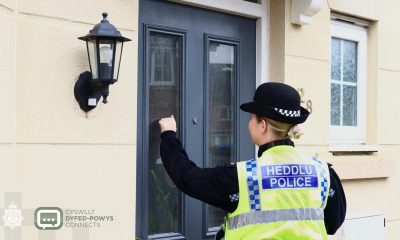
Why police will be visiting every home in Pembrokeshire
New operation aims to knock on more than 257,000 doors across Dyfed-Powys over the next three years DYFED-POWYS POLICE has...


Crime3 days ago
Prisons at breaking point: MPs warn Wales is paying the price of a failing system
Frozen healthcare budgets, overcrowded jails, homelessness on release and mounting pressure on staff are undermining rehabilitation across Wales, according to...


News4 days ago
Brexit at 10: How Britain was sold a dream that cost us dearly
A decade after the referendum, the promised benefits remain hard to find while the economic costs are increasingly difficult to...


Crime4 days ago
Worcestershire man jailed after violent attack on woman in Tenby
Defendant was already serving a suspended sentence when serious assault took place A WORCESTERSHIRE man has been jailed for more...


Climate4 days ago
Offshore wind ‘could bring new generation of jobs to Milford Haven’
Pembrokeshire ports and Celtic Sea projects placed at centre of Wales’ green energy ambitions MILFORD HAVEN and Pembroke Dock could...
-

 Community7 days ago
Pembrokeshire Chess Club crowned Welsh champions
-

 Crime3 days ago
Milford Haven man jailed for breaching domestic violence protection order
-

 Local Government5 days ago
Security privately arranged by Mayor at Beating of the Bounds
-

 News3 days ago
Crash on Freeman’s Way causes school-run chaos across Haverfordwest
-

 Crime5 days ago
Man wanted by court after failing to attend hearing over alleged shop thefts
-
 Crime5 days ago
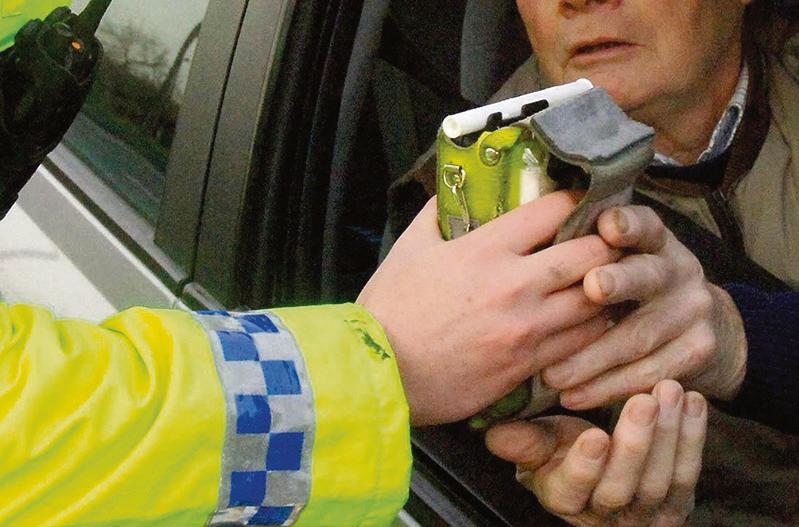
Man banned from roads after drink-driving offence
-

 Crime5 days ago
Man jailed after admitting strangulation and assaults
-

 Crime5 days ago
Man sentenced over stalking campaign and lock knife offence