


Politics
Pembrokeshire 28-day camping rule could be changed in May

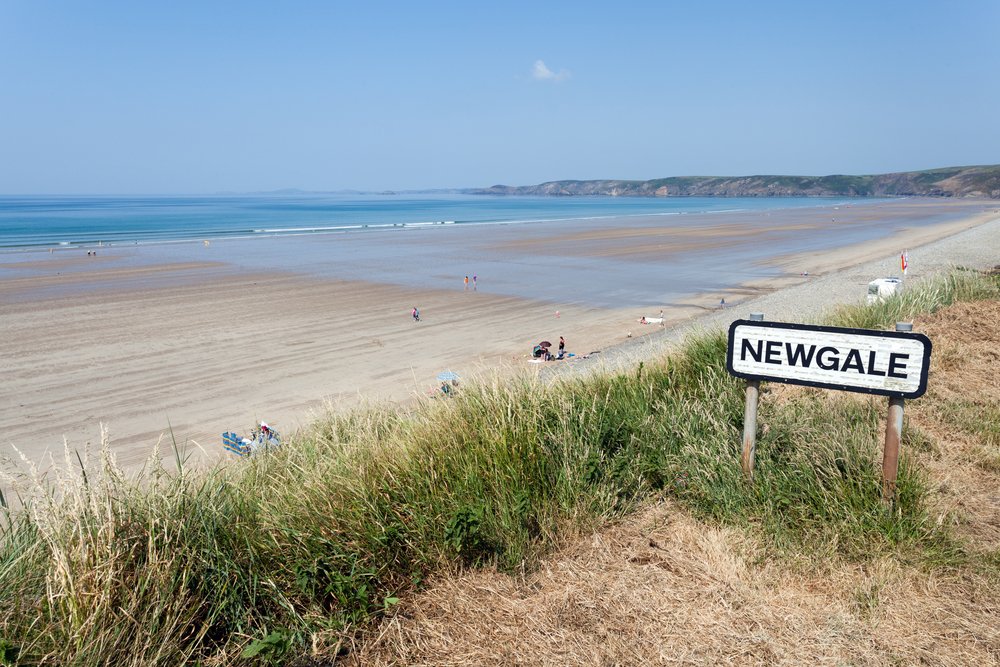
NATIONAL park members have issued a clarification statement to tackle “inaccurate social media information” on the Article 4 direction to remove permitted development rights for 28-day rule camping ahead of a formal decision in May.
In December, members of Pembrokeshire Coast National Park approved the making and publicising of an Article 4 (1) Direction to remove permitted development rights for 28-day rule camping, caravans and/or mobile homes across the whole of the National Park, with non-immediate effect.
This was followed by an opportunity for formal representations to be made, which closed in mid February, members of the March meeting of the national park heard.
A formal decision, along with a full report, is to be received at the May 7 meeting of the authority.
A report for members stated: “During this period the Authority has received a number of inquiries about how an Article 4 (1) Direction would operate. There has also been a degree of inaccurate information circulating on social media.”

It added: “Members of the Authority will be asked to take a formal decision on whether to confirm the notice of the Article 4(1) Direction along with a full report of consultations at the May 2025 National Park Authority meeting. However, ahead of this meeting Officers consider that it would be helpful to clarify the parameters that any Article 4 (1) Direction would operate within. This clarification has also been requested from some businesses operating within the National Park.
“The National Park Authority will consider in full the responses to the consultation on Article 4 (1) Direction in its May meeting, however following questions raised during the consultation, Officers consider that it would be helpful to provide clarification in advance of that meeting on how any Article 4 (1) Direction would operate if confirmed in May.”
The clarification statement says the proposed restrictions “will apply only to 28-day camping, caravan, and mobile home sites”.
It adds: “Other temporary 28-day uses – including filming, temporary car parks, and mobile saunas – will not be affected. Additionally, exempted certificate sites and bodies operating under exemption certificates will continue to operate as usual.”

The statement also says that “camping and caravan use connected to other permitted temporary events, such as weddings, festivals, filming, or agricultural shows, will not require additional planning permission,” adding: “In assessing whether camping is ancillary to an event, the Authority will consider factors such as licensing, advertising, site usage proportions, and event duration.
“To assist landowners and site operators, the Authority will offer a free pre-application service for those seeking to submit planning applications under the Article 4 (1) Direction. The clarification note also provides guidance on the information required for planning applications.”
Members unanimously backed the publication of the clarification ahead of the May meeting.



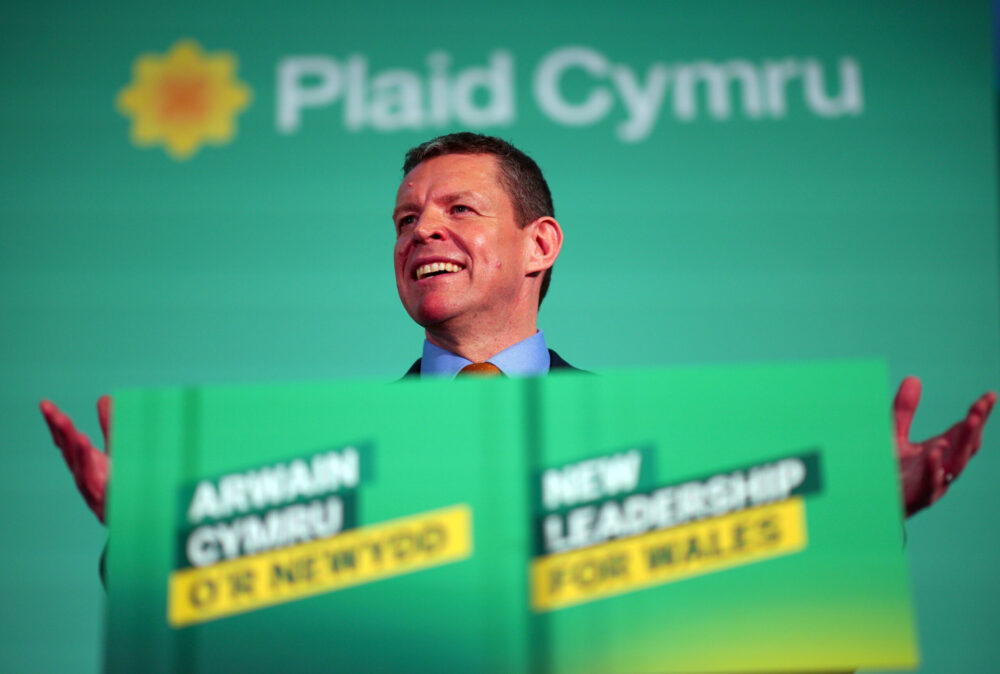
PLAID CYMRU TAKES POWER AFTER HISTORIC SENEDD VOTE
PLAID CYMRU leader Rhun ap Iorwerth has become Wales’ new First Minister following a historic vote in the Senedd today, marking one of the biggest political changes since devolution.
Ap Iorwerth secured 44 votes in the chamber, defeating Reform UK Wales leader Dan Thomas, who received 34. There were nine abstentions.
The result confirms Plaid Cymru’s move into government after the party emerged from the Senedd election as the largest group in the expanded 96-member parliament.
It is the first time Plaid Cymru has held the top job in Welsh politics, ending Labour’s long dominance of the Welsh Government since the start of devolution in 1999.
The vote followed days of intense political manoeuvring after an election which transformed the balance of power in Cardiff Bay.
Plaid Cymru won the largest number of seats but fell short of an overall majority, meaning ap Iorwerth will now lead a minority administration.
Reform UK’s Dan Thomas also put himself forward for the role of First Minister after his party’s major breakthrough at the election.
However, ap Iorwerth won the Senedd vote with support from outside his own party, while Labour members abstained.
The result leaves Reform UK as the main opposition party in the Senedd, with Labour reduced to a much smaller role after more than two decades in control of Welsh Government.
Ap Iorwerth, a former BBC journalist and broadcaster, has represented Ynys Môn in the Senedd since 2013 and became Plaid Cymru leader in 2023.
He now faces the task of forming a government and setting out his cabinet, with pressure expected immediately on health, the economy, farming, housing, transport and public services.
The change comes after the first Senedd election held under the new voting system, with 96 Members elected across larger multi-member constituencies.

For Wales, the vote marks a political turning point.
For Plaid Cymru, it is the moment the party has sought for a century: the chance to lead the Welsh Government.
Welsh Labour interim leader has congratulated Plaid Cymru leader Rhun ap Iorwerth on his appointment as First Minister.
Speaking following the vote in this afternoon’s first meeting of the Seventh Senedd, in which Welsh Labour abstained, Mr Skates said: “I look forward to being an effective opposition, scrutinising and holding Rhun and his colleagues to account where necessary to improve legislation. I hope as a Minister I demonstrated to Plaid members how collaboration and challenge are mutually beneficial and we will be focused laser-like on serving the people of Wales. No games, no nonsense, just a determination to make the lives of those we serve better
“Be assured that we will not let the party of government off the hook at any time – as they, quite rightly, did not with us.”

TEN YEARS after the UK voted to leave the European Union, researchers at Aberystwyth University are launching an ambitious project to build the most detailed map yet of how communities voted in the referendum.
The team is appealing to campaigners, party activists and referendum observers to search old files, emails and campaign folders for informal tallies known as “boxcounts”.
These were unofficial figures recorded when ballot boxes were opened on referendum night, before the formal count began.
Official results from the 2016 referendum were published only at local authority level, giving a broad picture of Leave and Remain support across the UK.
But researchers say those figures do not show the more detailed patterns within towns, villages, suburbs and neighbourhoods.
The project, led by Professor Michael Woods at Aberystwyth University’s Centre for Welsh Politics and Society, aims to uncover those hidden local voting patterns.
Professor Woods said: “The EU referendum was the defining event in recent British politics and has shaped our political landscape for the last decade.
“We often talk about ‘Leave areas’ and ‘Remain areas’, but we don’t really know how communities voted beneath the level of local authorities.
“By bringing together boxcounts from across the UK, we can build a much more detailed picture of where support for Brexit was strongest, where it was weakest, and how these patterns relate to different types of places.
“As boxcounts from the referendum are unofficial no one has collected them together, but they will still be saved on people’s computers or archived in old campaign folders. We’re urging anyone who recorded or collated them to dig them out and send them to us.”
The team says it has developed a process to check the material and correct for potential bias, as well as safeguards to ensure privacy requirements are met.
Anyone with boxcounts from the 2016 referendum can find details on how to submit them via the Rural Spatial Justice Substack.

The study is part of the wider Rural Discontent, Spatial Justice and Disruptive Politics project, funded by the UK Frontier Research Guarantee, which is examining links between rural discontent and disruptive politics around the world.
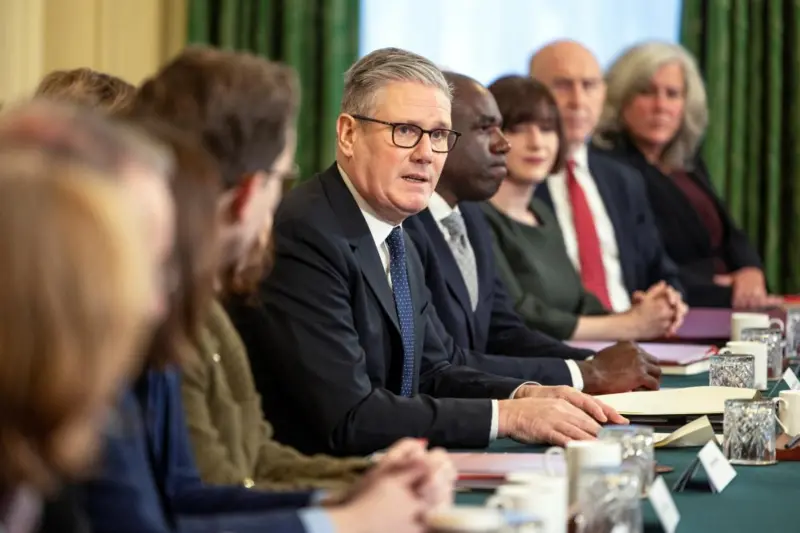
Cabinet split, ministers resign and MPs revolt as pressure mounts on Prime Minister after disastrous election losses
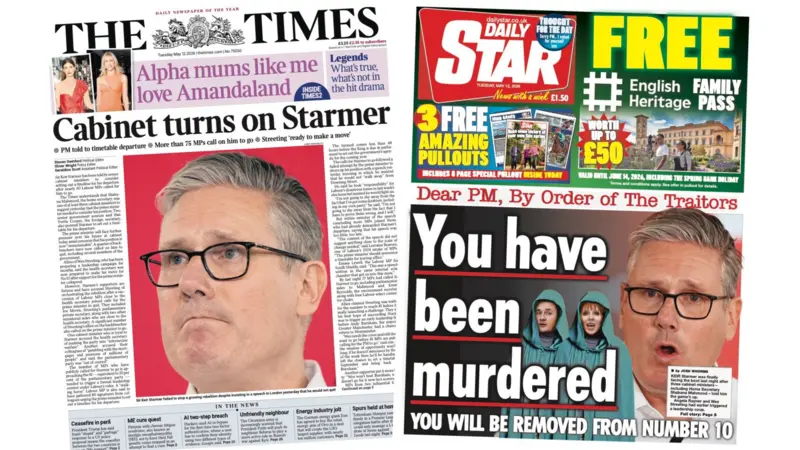
KEIR STARMER is facing the biggest political crisis of his premiership as Labour descends into open civil war, with cabinet ministers divided, MPs publicly revolting and speculation mounting over who could replace him.
The Prime Minister entered a crucial cabinet meeting on Tuesday morning under extraordinary pressure after Labour’s disastrous local election performances across England, Scotland and Wales triggered a wave of panic inside the party.
By mid-morning, at least 78 Labour MPs had publicly called on Starmer either to resign immediately or set out a timetable for departure — almost one in five of Labour’s parliamentary party.
The situation worsened overnight when six ministerial aides quit their roles, forcing Downing Street into a late-night reshuffle to replace them.
The political turmoil is now so severe that financial markets have started reacting nervously, with UK government borrowing costs climbing amid fears of instability at the heart of government.
Cabinet tensions explode
Tuesday morning’s cabinet meeting was supposed to focus heavily on the escalating Middle East crisis.
Instead, Labour’s internal collapse dominated Westminster.
BBC political editor Chris Mason reported that Starmer’s cabinet is now openly split on the most fundamental question in government:
whether the Prime Minister should remain in office.
Some ministers are urging him to fight on.
Others are reportedly telling him privately that he should announce a timetable for departure.
The most damaging intervention came from Home Secretary Shabana Mahmood, who is understood to have urged Starmer to prepare for an orderly transition.
Despite the growing pressure, the Prime Minister attempted to project calm and authority during cabinet discussions.
According to political correspondent Harry Farley, Starmer told ministers:
“As I said yesterday, I take responsibility for these election results and I take responsibility for delivering the change we promised.
“The past 48 hours have been destabilising for government and that has a real economic cost for our country and for families.
“The Labour Party has a process for challenging a leader and that has not been triggered.
“The country expects us to get on with governing.”
However, few in Westminster now believe the crisis can simply be contained.
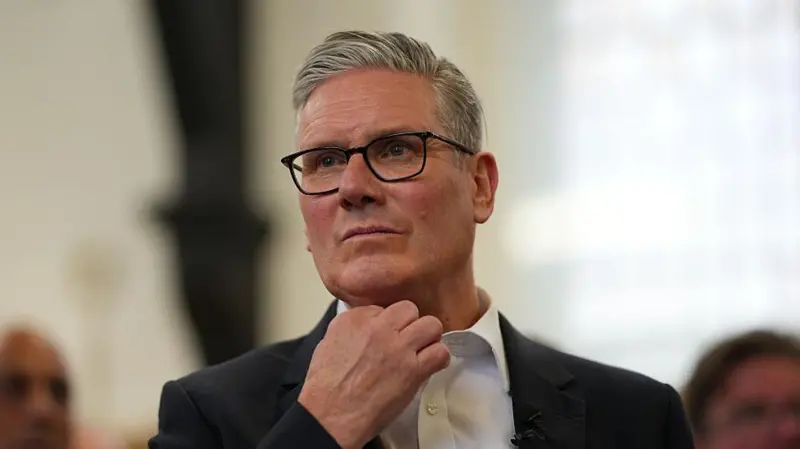
First minister resigns
The first ministerial resignation came from Communities Minister Miatta Fahnbulleh, who delivered a devastating blow to Starmer’s authority.
In a resignation letter published online, she wrote:
“The public does not believe that you can lead this change — and nor do I.”
Fahnbulleh accused the government of failing to govern with sufficient “vision, pace and ambition”.
She also criticised controversial decisions including winter fuel payment changes and cuts affecting disabled people.
Her resignation is politically significant because she is regarded as a close ally of former Labour leader Ed Miliband.
Importantly, Fahnbulleh did not demand Starmer leave immediately.
Instead, she called for: “An orderly transition so that a new team can deliver the change we promised the country.”
That wording is already being interpreted inside Westminster as an attempt to create time for potential successors — particularly Greater Manchester Mayor Andy Burnham — to position themselves.
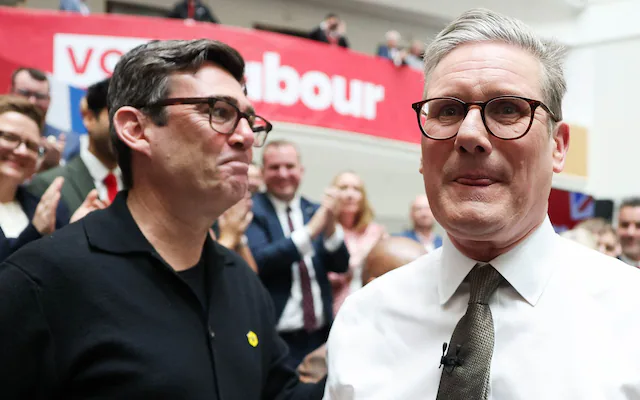
Burnham speculation grows
Speculation surrounding Andy Burnham intensified dramatically throughout Tuesday morning.
Burnham, currently Mayor of Greater Manchester, is seen by many Labour activists and MPs as one of the few figures with strong electoral appeal outside Westminster.
However, he is not currently an MP, meaning he would need to return to Parliament through a by-election before he could formally contest the Labour leadership.
Senior minister Darren Jones attempted to shut down the speculation during a difficult round of BBC interviews.
Asked whether Burnham could return to frontline politics, Jones dismissed the idea as:
“Fantasy politics.”
He insisted Labour should focus on governing rather than leadership plotting.
Jones also criticised the public nature of Labour’s internal warfare, saying:
“It’s right to have challenging conversations internally — as opposed to in public.”
However, notably, Jones repeatedly avoided explicitly guaranteeing that Starmer would lead Labour into the next general election.
That omission fuelled further speculation that even some loyalists are preparing for change behind the scenes.
Two rival camps emerging
Westminster insiders now believe Labour is beginning to split into two broad leadership camps.
One group is thought to favour an “orderly transition” which would potentially allow Burnham time to re-enter Parliament before a contest begins.
Another faction — reportedly involving allies of Health Secretary Wes Streeting — is believed to favour a faster leadership contest that would effectively prevent Burnham entering the race.
Streeting himself has remained publicly loyal so far, but his name is increasingly being discussed as a potential successor.
Other names circulating include:
– Angela Rayner
– David Lammy
– Rachel Reeves
– Yvette Cooper
At present, no formal challenger has declared.
But the atmosphere inside Westminster is deteriorating rapidly.
One Labour MP reportedly described the situation as: “Complete meltdown.”
Rebellion spreads across Labour
Several Labour MPs openly attacked Starmer during broadcast interviews on Tuesday morning.
Labour MP Yuan Yang said she no longer believed the Prime Minister could lead the party into the next election.
She urged Starmer to:
“Take control and set out an orderly timetable.”
Meanwhile Gower MP Tonia Antoniazzi said Starmer was:
“Not cutting through” with voters.
She warned that Nigel Farage and Reform UK were increasingly dominating public debate while Labour appeared directionless.
Jonathan Hinder, Labour MP for Pendle and Clitheroe, delivered one of the most brutal assessments.
Speaking on BBC Newsnight, he said: “No prime minister can survive this number of MPs losing confidence in him.”
He added: “Keir Starmer has never been an electoral asset.”
Economic warning signs emerge
The political instability is now beginning to have real-world economic consequences.
UK government borrowing costs rose sharply on Tuesday morning, with yields on 10-year government bonds climbing above five per cent.
Economics editor Dharshini David warned that investors fear a change in Labour leadership could lead to:
– Looser control of public spending
– Increased borrowing
– Higher inflation
– Rising mortgage costs
The UK already faces growing debt interest payments, with roughly one pound in every ten spent by government now going towards servicing debt.
Analysts warned prolonged political instability could further damage confidence in Britain’s economic outlook.
Timing could hardly be worse
The crisis comes at an extraordinary moment politically.
On Wednesday, the King is due to deliver the State Opening of Parliament, outlining the government’s legislative plans for the coming year.
Traditionally, the monarch repeatedly refers to “My Government” throughout the speech.
Yet as ministers arrived at Downing Street on Tuesday morning, journalists openly shouted questions including: “Is it all over for Keir Starmer?”
Deputy Prime Minister David Lammy smiled and waved at reporters but ignored questions about whether Starmer should resign.
Chancellor Rachel Reeves also declined to answer questions as she entered Downing Street.
Meanwhile, political commentators noted the surreal contrast between the pageantry of constitutional government and the growing sense that the Prime Minister may be politically mortally wounded.
What happens next?
Under Labour Party rules, 20% of Labour MPs — 81 MPs — are required to formally trigger a leadership contest.
Public opposition is now approaching that threshold.
Attention will now focus on:
– Whether further ministers resign
– Whether cabinet ministers publicly break ranks
– Whether leadership camps begin organising openly
– Whether Starmer offers concessions or timetables
– Whether markets continue reacting negatively
For now, Starmer insists he will not “walk away”.
But inside Westminster, many Labour MPs increasingly believe the question is no longer whether he goes — but when.


News10 hours ago
Rhun ap Iorwerth becomes Wales’ new First Minister
PLAID CYMRU TAKES POWER AFTER HISTORIC SENEDD VOTE PLAID CYMRU leader Rhun ap Iorwerth has become Wales’ new First Minister...

News13 hours ago
Hotel was hit during a Luftwaffe bombing raid
THE COMMEMORATION, held on Tuesday (May 12), marked the anniversary of the wartime attack, with members of the community gathering...


News15 hours ago
Starmer fights for survival as Labour civil war erupts
Cabinet split, ministers resign and MPs revolt as pressure mounts on Prime Minister after disastrous election losses KEIR STARMER is...
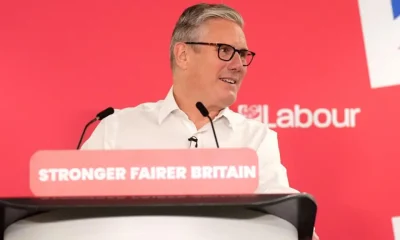

News2 days ago
Starmer accused of ignoring Wales in major ‘reset’ speech
Prime Minister pledges EU reset, British Steel nationalisation and youth jobs guarantee — but critics say Wales was left out...

Community2 days ago
Concern grows after child hospitalised following Tenby sea swim
PARENT SAYS BOY BECAME SERIOUSLY ILL AFTER SWIMMING DURING FAMILY VISIT CONCERN is growing in Pembrokeshire after a parent claimed...
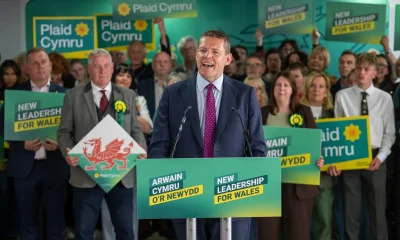

News2 days ago
Rhun prepares for clash with Starmer as Plaid eyes power in Cardiff Bay
PLAID CYMRU leader Rhun ap Iorwerth has signalled he is ready for confrontation with Prime Minister Keir Starmer after the...
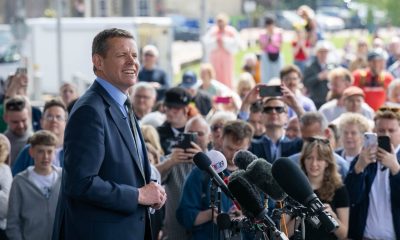

News3 days ago
Plaid Cymru celebrates historic victory as Rhun ap Iorwerth arrives at Cardiff Bay
CROWDS gathered outside the Senedd as Plaid Cymru leader Rhun ap Iorwerth arrived in Cardiff Bay following his party’s historic...


Crime3 days ago
Police standoff ends after four-hour incident in Pembroke Dock
ELIZABETH COURT SCENE STOOD DOWN AFTER DOMESTIC INCIDENT A FOUR-HOUR police standoff in Pembroke Dock has ended with a 21-year-old...


Crime4 days ago
Teen denies attempted murder of Milford Haven teacher
TEENAGER REMANDED AHEAD OF JULY TRIAL A 15-YEAR-old boy has denied attempting to murder a teacher during a stabbing incident...

News4 days ago
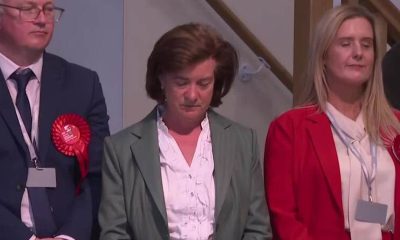
Catastrophe for Labour as Plaid and Reform reshape Welsh politics
ELUNED MORGAN LOSES SEAT AS OLD CERTAINTIES ARE SWEPT AWAY THE VOTERS of Wales have delivered one of the most...
-
 News7 days ago
Former housing officer admits drink-driving in Pembrokeshire retail park
-

 Crime7 days ago
Job loss threat for convicted Pembrokeshire drug-driver
-
 Crime7 days ago
Milford motorist disqualified for drug-driving
-

 Crime7 days ago
Police tip-off leads to driving ban for Milford motorist
-

 Crime5 days ago
Racial abuse suspect barricaded himself inside Johnston lodge
-

 Crime7 days ago
Delivery driver caught twice over legal drink-drive limit
-

 Community7 days ago
Sixth-former firefighter balances schoolwork with saving lives
-

 Local Government5 days ago
Tenant says botched wetroom repair left her fearing flooding