


Health
Welsh public want NHS, cost of living and infrastructure prioritised


Report highlights top concerns and calls for long-term vision
THE WELSH public want the government to prioritise improvements to the NHS, tackle the cost of living, and invest in infrastructure, according to Deloitte’s latest State of the State report.
The 2025 report, published in partnership with the independent think tank Reform, reflects the views of both public sector leaders and the people who use public services.
For the third consecutive year, the state of the NHS and the cost of living were the most pressing concerns for people in Wales, with both issues cited by 75% of those surveyed. Social care for the elderly and vulnerable adults followed, mentioned by 48%.
Jobs and the economy (47%) and affordable housing (43%) were also high on the public’s list of priorities. One of the most notable increases was in concern about infrastructure—roads, railways and broadband—with 42% calling for improvements, a rise of six percentage points on last year.
When asked about the biggest drivers of future growth, respondents in Wales chose improving the nation’s health (45%), boosting education and skills (44%), and increased investment in infrastructure (39%).

Despite these priorities, most people were pessimistic about the outlook. Some 75% expected the NHS to stay the same or get worse, while 74% said the same about infrastructure.
Council chief executives interviewed for the report stressed that government infrastructure spending would be key to future growth. Other public sector leaders highlighted progress in Welsh transport, crediting a clear vision and strong partnership working for recent successes.
The biggest challenge facing public services, according to respondents, was a lack of funding, with 66% citing it as a concern. A further 55% expressed fears about a loss of trust in public services.
While trust in the Welsh Government remains higher than in the UK, Scottish or Northern Irish governments, the public remain sceptical about delivery. Some 63% said they had low trust in its ability to deliver major projects on time and on budget, while 61% doubted it could deliver outcomes people want.
On the question of taxation, Welsh public opinion was divided. Some 31% supported higher taxes and public spending, while 37% preferred lower taxes and reduced spending. Nearly half (47%) said they expected higher taxes and spending regardless of their preference.
Deloitte’s interviews with senior public sector leaders revealed ambitious long-term goals, including frictionless digital interaction with government services, improved collaboration between agencies, place-based planning for integrated transport and healthcare, and a shift toward long-term, commercially aware decision-making.
Dave Tansley, Deloitte’s senior partner for the South West and Wales, said: “The State of the State 2025 report shows the Welsh public remain concerned about the cost of living and the NHS. But our survey also found heightened interest in infrastructure, more so than in other parts of the UK, suggesting the public recognises the importance of connectivity to economic growth.”

He added: “Infrastructure investment supports jobs, housing, roads and rail—but more importantly, it provides the platform for long-term economic resilience. With public finances under pressure and the 2026 Senedd election approaching, the next administration faces difficult choices and the chance to deliver transformational change.”
Ian Howse, Deloitte’s senior partner for Wales, said: “Public sector leaders want bold reform—services that are joined-up, citizen-focused and tech-driven. While the Welsh Government is addressing immediate pressures, our research points to the need for a long-term vision. Leaders report growing urgency to deliver ahead of the next election, especially on economic growth, which is a positive sign for the future.”


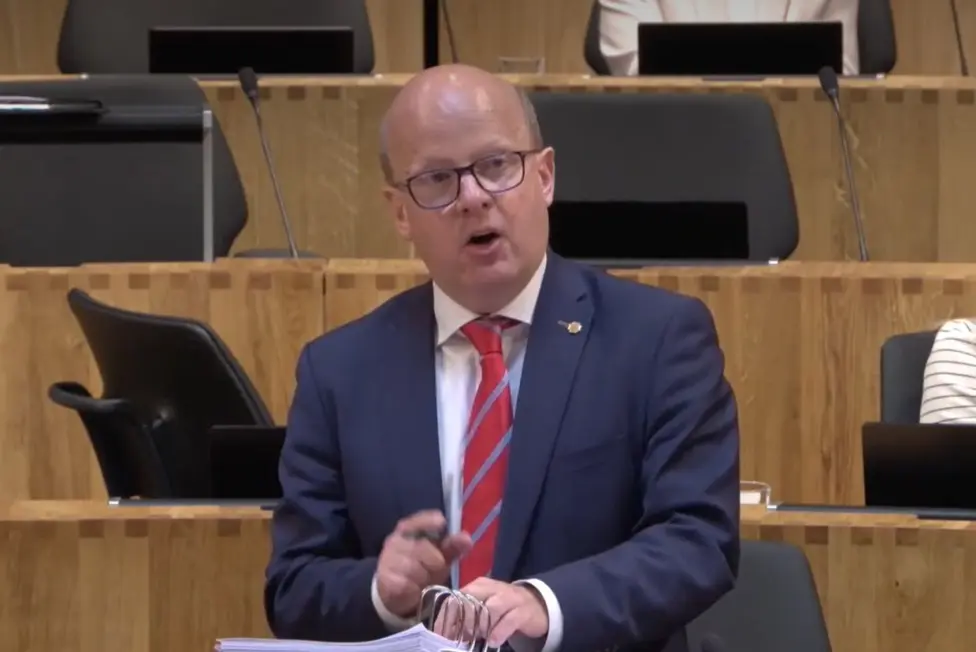
SENEDD Members clashed over plans to review Wales’ funding formula, following the Welsh Government’s defeat in its pursuit of change.
Constitution minister Dafydd Trystan Davies defended the Welsh Government’s stance amid Reform calls for the plans to be abandoned.
On Tuesday July 14, Reform’s Cai Parry-Jones said Plaid Cymru had experienced a “crushing defeat” last week when they were “refused” permission from the Senedd to argue for a different funding model for Wales.
He said: “Reform, with the support of Labour and the Conservatives, potentially saved £1.5 billion annually for the Welsh Government’s budget. You’re welcome.
“Now that the Senedd has spoken, will you abandon your plans to argue for a change for the funding model for Wales?”
Responding with a simple “no”, Dr Trystan Davies said: “What has become very clear in assessing the financial situation facing Wales is that we need fair funding for Wales and funding that reflects the needs of the population. Wales has nothing to fear from a review of that kind.”
Reform’s shadow finance and government efficiency minister pointed to Plaid’s manifesto promises – much of which Mr Parry-Jones described having “hinged on an optimistic change of the funding model”.
He said: “Now that the Senedd has rejected your calls to change the funding model, what changes have you made to your programme for government?”

Dr Trystan Davies responded: “I hope that colleagues across this Senedd will work to ensure that the Welsh Government and the public sector in Wales work at their most effective and that we, over the next four years, can identify more funding that can be invested in the priorities of the people, to support childcare, to support the economy, to support the health service.”
Huw Thomas – Labour’s spokesperson for finance and democracy – questioned the minister on Plaid’s funding formula review.
The former Cardiff Council leader revealed he had received a written response from local government minister Sian Gwenllian, who said that as part of the government’s funding formula review it is “reviewing the data on primary indicators” such as “those relating to deprivation and sparsity of population”.

Mr Thomas said there are “huge concerns” in parts of Wales that Plaid will “copy what Rishi Sunak did in England and redistribute funding via the funding formula away from poorer urban areas towards relatively wealthier rural ones.”

The Caerdydd Penarth MS asked the minister what issues he has identified in the “underlying data and indicators” that have prompted this review.
In response, Dr Trystan Davies said: “As with all official statistics, the government keeps a close eye on the accuracy and effectiveness of that data to ensure that they are clearly and accurately reflected in the formulas.
“The spokesperson himself [Mr Thomas] comes from Aberystwyth and he knows full well that there are areas of significant poverty in rural Wales as well as industrial Wales.”
He continued: “Setting those communities against each other is a disappointing approach from the spokesperson, I would suggest.”
Mr Thomas noted in response that he “didn’t hear” the minister share “what figures had pushed [him] to hold that review.”
Calls for a Welsh Covid inquiry came from both the Reform and Conservative benches in Tuesday’s plenary.
Following his questions on Plaid Cymru’s plans to argue for a change to the funding model for Wales, Mr Parry-Jones pressed the minister to confirm what actions his government will take to bring about a Welsh Covid review.
He said: “Responding to the Covid inquiry’s fifth report today, the First Minister rather vaguely said that Plaid remains committed to reviewing the Wales Covid response.
“In March, Plaid said it would hold a short, sharp and focused review of the Welsh Government’s Covid response, a far cry from the full-fat all-Wales inquiry Plaid previously called for for years, including during your 2024 manifesto.
“Now, following that u-turn, nobody knows what your review actually is – not when it’s happening, not for how long, not even what elements of the Covid response it would focus on.
“Surely, Minister, now is the time to make it clear to bereaved families what actions exactly your government is going to take.”
Dr Trystan Davies said the government is committed to conducting a Covid review. He said: “That’s what we said in our manifesto and that’s what we intend to do.
“I’m pleased to say that I have already been in correspondence with the Covid Bereaved Families on our intentions and hope to arrange a meeting with them soon, because it’s important that the voices of those who have suffered are part of that discussion and feed in to the work of government.”
Andrew RT Davies, Welsh Conservative MS for Pen-y-Bont Bro Morgannwg, also pressed the minister on his inquiry plans.

Mr Davies said it was “vital” the government “sticks to their commitment” and “enacts a Covid inquiry – not a review”.
He called on the minister to confirm that “the government’s thinking, whatever emerges, will be set up under the Inquiries Act 2005, which would compel witnesses to come before that inquiry and give evidence”.
Dr Trystan Davies reiterated that work is “progressing” on the government’s Covid review and noted he will be “liaising closely” with the bereaved families.
The Conservative MS thanked the minister for his “warm words” but described the response as of “little substance”.
Mr Davies said: “The reality is that we found out, with the Covid committee that was set up in the previous Senedd term, that unless witnesses were compelled to give evidence, that committee was thwarted in its endeavours to get to the truth.
“Today, for example, the Covid inquiry reports that, on the FFP3 respirator masks that we were told Wales was well stocked with prior to the Covid pandemic in its emergency allocation, there wasn’t a single mask in Wales available for the health service to use.
“These are the things we need to get to the core of as to what was not provided, what was mislaid, what was deliberately not ordered to save money, and what was not acted on on the emergency planning trials that were held prior to the Covid pandemic.”
He called on the Welsh Government to “stick to your guns, stick to your morals, stick to the votes that you made prior to the Senedd election and have a full-blown inquiry that gets to the truth and, ultimately, prepares Wales for any future pandemic.”
Responding, Dr Trystan Davies said: “Reading the most recent module report on Covid brings home the sobering impact of Covid right across this country.
“Those lessons must be learnt, and the review that we are committed to undertaking must have the ability to address those precise issues that you have set out and that is what we will seek to do.”
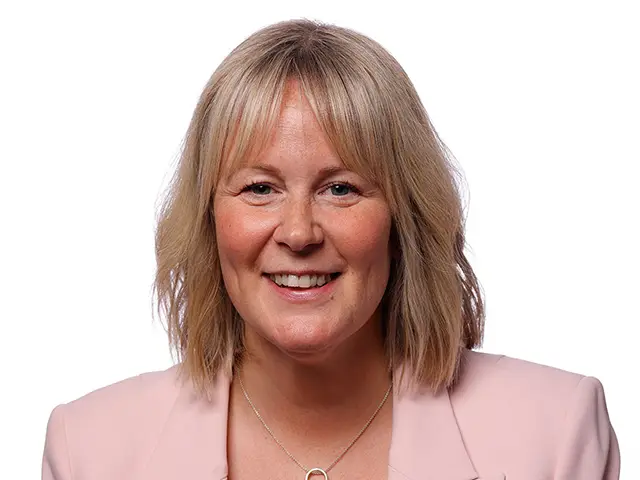
SENEDD Members have questioned the Welsh Government over a new £8 million obesity strategy, tightening restrictions on youth vaping, and regional inequalities in cancer screening.
Deputy Minister for Public and Preventative Health, Nerys Evans, confirmed Public Health Wales has secured the funding through the obesity pathway innovation programme.
The funding will be used to develop new NHS treatment models for obesity, viewing it as a chronic condition rather than a short-term issue.
The announcement on Tuesday July 14 followed a speech to the Senedd, where Ms Evans outlined her preventative healthcare priorities and drew on the words of Aneurin Bevan: “The victories won by preventive medicine are much the most important for mankind.”
Emphasising the importance of prevention in healthcare, Ms Evans said: “The need to make this change is not new. What has been missing is the determination to deliver it.
“For too long, our models, processes and ways of working have been built around responding to crises, rather than preventing them and helping people to live healthier and happier lives.
“This changes now. Under this government, success will be measured not by the number of hospital admissions, but by the number of people who stay healthy enough to avoid hospital altogether.”
Ms Evans told Senedd colleagues that providing healthy environments, better access to sustainable and nutritious food, and addressing vaping amongst young people were among her top priorities as minister.
Concluding her speech she said: “We firmly believe that building a healthier population is not only a moral imperative, particularly in tackling deep-rooted inequalities, but is also fundamental to improving the wider prosperity and resilience of our nation.”
Facing questions from the opposition benches, Ms Evans took questions on funding for weight loss jabs, screening and vaccinations, and vaping and smoking.
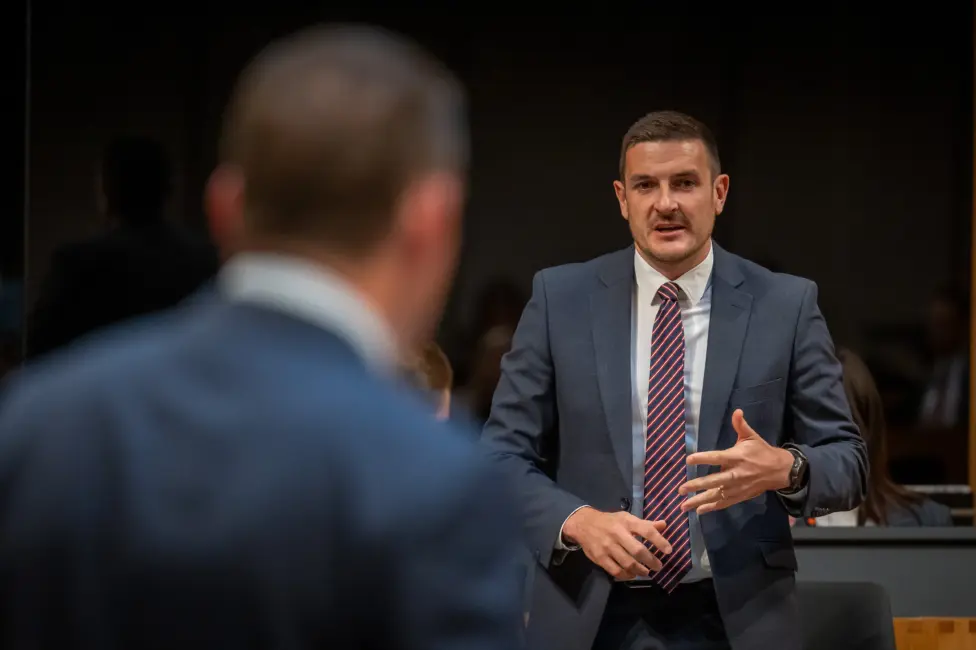
Reform’s James Evans pressed the deputy minister on the longer term impacts of weight loss medication.
He said: “I think one thing we have to be careful with, with weight-loss medication, is that, yes, it is changing lives, but it’s not changing lifestyles.

“It cannot be seen as a silver bullet to losing weight long term, because we do know about the longer term health impacts, with osteoporosis in women, with people with cardiovascular problems emerging from these jabs”.
Mr Evans asked his opposite number if she will be working with primary care, gyms, and leisure providers to ensure people on weight loss medication are also making lifestyle changes.
“If you don’t, it’s just a vicious circle,” Mr Evans explained. “You’ll come off it, you’ll put weight back on again, and you’re back on the jabs and then end up in A&E with longer term problems, and that’s no way to help our health service.”
The deputy minister agreed, adding that it is about “creating that system of support around individuals for those lifestyle choices”.
Ms Evans revealed Public Health Wales has recently been successful in co-ordinating a Wales-wide bid for funding through the obesity pathway innovation programme.
She said: “That’s £8 million of funding in order to look at these issues, to develop and test approaches that could form part of that delivery model going forward.
“We want to be looking at treating obesity as a chronic condition, and, obviously, the changes that would mean in terms of how the NHS would respond to that would be key.”

Drawing attention to the national lung cancer screening programme that was introduced by Welsh Labour, Jayne Bryant quizzed Ms Evans on her plans to encourage participation in screenings and vaccination programmes.
Ms Bryant – who is Labour’s spokesperson for public and preventative health – also acknowledged the HPV vaccine, noting that since its introduction in 2008 the vaccine has “reduced cervical cancer rates by almost 90% in women in their 20s”.
She also highlighted the importance of cervical screenings, but said work needs to be done to make them more accessible Wales-wide.
The Labour spokesperson called for Ms Evans to share how the Welsh Government will encourage participation in vaccines and screenings.
The deputy minister said: “One of the things that worries me is the differences within our deprived communities in terms of screening and vaccine uptake.”
She spoke of making sure Public Health Wales, in its efforts to boost screening and vaccinations, understands what the barriers are to uptake.

Ms Evans also faced questions on her plans for preventing smoking and vaping among children and young people by Conservative MS Natasha Asghar.
Ms Asghar, of Casnewydd Islwyn, told the Siambr that Wales sees almost 4,000 preventable deaths each year because of smoking.
She acknowledged the deputy minister has already launched a consultation on vaping as part of the four-nation approach to prevent children from smoking, but called for clarity on what other actions will be taken.
Ms Evans said that tackling the increasing number of children vaping is a “key priority” for her as minister.
She urged the public to take part in a consultation into vaping, which is looking at changing vape product packaging to be more like tobacco packaging – and less attractive to young people.
Ms Evans also confirmed she has asked officials to provide an outline of what other powers the Welsh Government has to tackle tobacco and vaping.
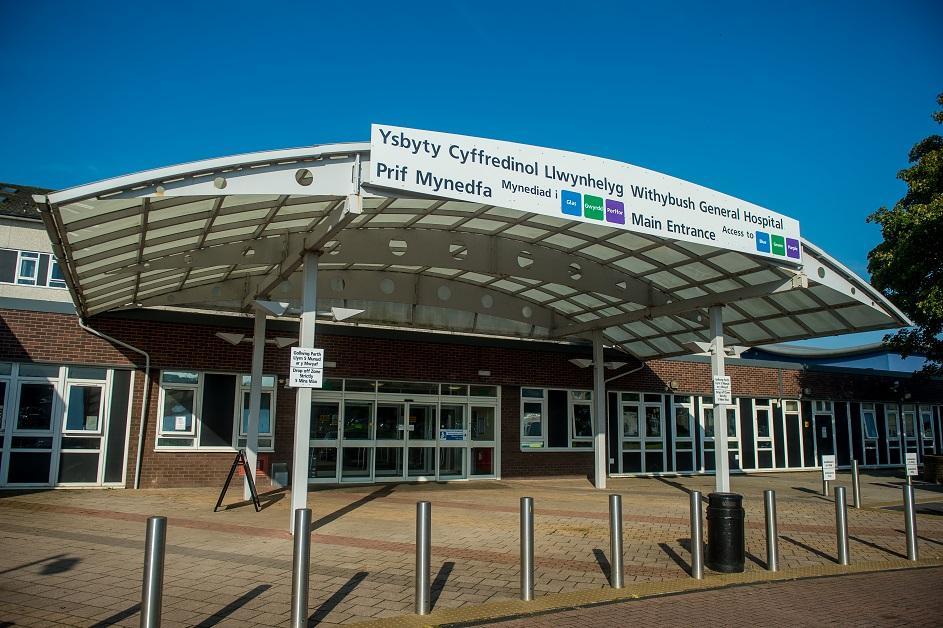
Six of Wales’ seven health boards failed to balance their books as funding fell in real terms
NHS WALES recorded an annual deficit of £199 million last year, despite receiving what Audit Wales described as record investment in the health service.
The watchdog’s audit of NHS bodies’ accounts for 2025-26 found that six of Wales’ seven health boards again failed to meet their legal duty to break even over a rolling three-year period.
The combined three-year deficit across NHS Wales increased to £506 million, up from £457 million the previous year.
NHS Wales received £11.76 billion in revenue funding during 2025-26, an increase of £198 million compared with 2024-25 and around £2 billion more than it received in 2021-22.
However, once inflation was taken into account, funding was 1.5% lower in real terms than in the previous financial year.
Audit Wales said increasing demand, rising pay and other day-to-day costs meant financial pressures were not being brought under control.
The annual deficit was £75 million higher than the £124 million shortfall recorded in 2024-25.
The accounts of all 12 NHS bodies were found to present their financial positions fairly. However, the Auditor General qualified his regularity opinion for the six health boards that failed to break even because they had exceeded their legal authority to spend.
Cwm Taf Morgannwg University Health Board was the only health board to meet its three-year break-even duty.
However, the Auditor General issued a separate qualified regularity opinion for the health board because one senior officer had been paid above remuneration levels set by the Welsh Government.
All three NHS trusts met their three-year break-even duty.
The two special health authorities, Health Education and Improvement Wales and Digital Health and Care Wales, are required to break even annually and both did so.

Agency spending falls sharply
Audit Wales highlighted a significant reduction in spending on agency staff.
Agency expenditure fell to £128 million in 2025-26, representing a 61% reduction compared with its peak in 2022-23.
Around 73% of agency spending was used to cover staff vacancies, while approximately 15% supported additional activity aimed at meeting demand for services.
NHS bodies reported making £256 million in savings during the year, just £3 million more than in 2024-25.
However, Audit Wales warned that recurring savings had fallen and had been outweighed by increased reliance on one-off measures.
One-off savings can include delaying projects or expenditure, while recurring savings result from permanent changes such as more efficient working practices or securing goods and services at lower prices.
The watchdog said the NHS remained too dependent on savings that could not be repeated in future years.
It warned that the current savings profile was not enough to stem the tide of rising demand and other cost pressures, including staff pay.
Most health boards unable to produce balanced plans
Health boards and NHS trusts are also required to prepare Welsh Government-approved three-year plans setting out how they will deliver services within the funding available.
Only one health board, Cwm Taf Morgannwg, had its plan approved, doing so for the second consecutive year.
All three NHS trusts also secured approval for their plans.
Audit Wales said the inability of most health boards to produce financially balanced plans meant the overall NHS deficit was unlikely to improve in the near future.
It warned that continuing financial pressure could push NHS organisations towards short-term decisions aimed at managing the immediate annual position rather than delivering longer-term reform.
The watchdog called for greater emphasis on prevention, whole-system change and long-term planning to safeguard the financial future of the health service.
Auditor General Adrian Crompton said the accounts showed financial pressure within the NHS was continuing despite repeated increases in cash funding.
He said: “The picture painted by those accounts is of financial pressure on the NHS that is not being contained, let alone reversed.
“That has been a persistent pattern during my eight-year term, compounded by the effects of the COVID-19 pandemic and rising demand.
“As I have pointed out previously, this is despite the Senedd passing the NHS Finance (Wales) Act 2014, more than a decade ago, to set the financial and planning duties that NHS bodies are expected to meet.
“Turning the tide on NHS spending will not be easy, but turn it must.
“For the NHS, as for public services in general, a much sharper and relentless focus on the delivery of value for money is needed, alongside a mindset shift to one focused on prevention and the longer term.”
Audit Wales has also published an updated NHS Wales Finances Data Tool containing further details about the financial performance of individual NHS organisations.



Community7 hours ago
84-year-old man rescued after falling overboard near Tenby
A MAYDAY call sparked a major nighttime rescue after an 84-year-old man fell from a tender and was swept towards...

Crime1 day ago
Jury hears final arguments in Milford Haven teacher stabbing trial
Defence says there was no motive or intention to kill as judge reviews competing accounts of classroom knife incident SPECIAL...

News2 days ago
Andy Burnham becomes Labour leader and prepares to enter No 10
Former Greater Manchester mayor promises an ‘unashamedly Labour’ government after completing extraordinary return to Westminster ANDY BURNHAM has been formally...


News2 days ago
Motorcyclist dies following collision near Narberth
Police appeal for witnesses and footage after fatal crash on B4313 at Redstone A MOTORCYCLIST has died following a collision...


Local Government2 days ago
Stepaside school saved as council abandons closure proposal
Governors welcome decision but maintain original plans were based on outdated information STEPASIDE Community Primary School will remain open after...

Crime2 days ago
Footballer given 200 hours’ unpaid work for eye-gouging assault during match
Magistrates heard Robert Hedley put an opposing player in a headlock before gouging at his eyes during a match in...


Community3 days ago
Tenby Summer Spectaculars brought to an end after harbour licence revoked
Round Table says it was willing to make major safety changes but could not secure the access controls needed to...
Local Government4 days ago
Catapult attacks suspected after wildlife deaths at Pembroke Mill Pond
Wildlife Crime Officers are investigating after the town council said around five animals showed signs of deliberate injury WILDLIFE found...


Crime4 days ago
Narberth retailer speaks of shoplifting toll after ‘collectable bear’ stolen
Independent shop owner said rising costs meant businesses could not afford to absorb losses caused by theft A NARBERTH retailer...


Crime4 days ago
Teen accused of attempting to murder teacher says she lied about stabbing
Defendant accepts teacher was terrified and that a knife wound to the head could kill, but denies deliberately attacking her...
-
Community7 hours ago
84-year-old man rescued after falling overboard near Tenby
-
Crime2 days ago
Milford Haven teacher ‘fought for her life’ during alleged knife attack
-
Crime1 day ago
Jury hears final arguments in Milford Haven teacher stabbing trial
-

 Crime19 hours ago
Fears wildlife at Mill Pond beauty spot being targeted by catapults
-
News2 days ago
Andy Burnham becomes Labour leader and prepares to enter No 10
-
 News1 day ago
Historic budget defeat exposes divisions in Welsh politics
-
 Education2 days ago
St Davids headteacher says emotional goodbye after 37 years in education
-
 Education1 day ago
Pupils and governors vow to fight removal of Cilgerran school’s Church status