


Community
Welsh Water warns against dangers of unauthorised swimming in reservoirs


WELSH WATER warns against dangers of unauthorised swimming in reservoirs: Llys y fran-36
With the Easter holidays upon us, Welsh Water is warning people not to risk their lives by unauthorised swimming in its reservoirs.
Every year in Wales, hundreds of individuals and families visit reservoirs and take to the water to swim, paddle, or use inflatables, putting their lives and the lives of others at risk, but unauthorised access to the water at reservoirs can kill and is never allowed.
Statistics show there is an average of 45 water related fatalities in Wales every year and the rate of accidental drowning in Wales is almost double that of the UK as a whole.
Reservoirs can be full of hidden dangers, including automatic machinery in the water that can operate at any time, and incredibly strong currents, that can pull under even the strongest swimmers. That’s why it’s best to only swim at the permitted reservoir sites.
The water also has freezing temperatures which can send swimmers into cold-water shock and there is a reduced chance of rescue in some areas due to the remote location of many reservoirs, often with little or no mobile reception.

The last few weeks have seen dry weather with plenty of spring sunshine, conditions that tempt some to take the plunge at reservoirs without realising the dangers involved.
Welsh Water’s Rangers patrol the company’s reservoirs, ensuring everyone is safe and dissuading unauthorised swimming in the water.
Maddy Rawlings, Head Ranger at Llandegfedd said: “We want everyone to enjoy the reservoir safely – which is why it’s important that any access to the reservoir only takes place during planned and life guarded activities or swim sessions. During my time as a Ranger at Llandegfedd, I have had countless encounters and incidents in which I have had to ask members of the public to leave the water due to the dangers involved, many of which they are unaware of. We aren’t here to spoil anyone having fun – we’re here to keep the public safe.’’
Private security companies have also been hired to help with this work.
Welsh Water do offer safe, supervised, and accredited open water swimming sessions at some Visitor Attraction sites across Wales. It also offers water sports, including paddle boarding and kayaking.
Jack Bailey, Activity Manager at Lisvane & Llanishen Reservoirs in Cardiff said: “We know that open water swimming has great benefits for physical and mental wellbeing – but unauthorised swimming can pose serious risks. Always prioritise safety over spontaneity and book an organised open water swimming or cold water dipping session at one of our Welsh Water visitor attractions sites. We provide a safe way to enjoy the water, nature and the benefits they can bring.”
Welsh Water is part of Water Safety Wales, a group made up of organisations committed to working on water safety and drowning prevention in Wales.

Chris Cousens, Chair of Water Safety Wales said: “With the lovely weather we’ve been seeing, we know how tempting it can be to cool off in beautiful reservoirs. But even the strongest of swimmers can go into cold water shock and this can lead to drowning. We’re asking everyone to stay safe this summer by keeping out of the reservoirs. If you are in difficulty in the water, Float To Live – this means to relax and float on your back with your ears submerged in the water until the effects of cold water shock pass. You can them swim to safety or shout for help.
“If you see someone else in difficulty in the water in a reservoir, call 999 or 112 and ask for the Fire Service, tell the person in the water to Float To Live and throw them something that floats. Never go into the water to attempt a rescue yourself.”

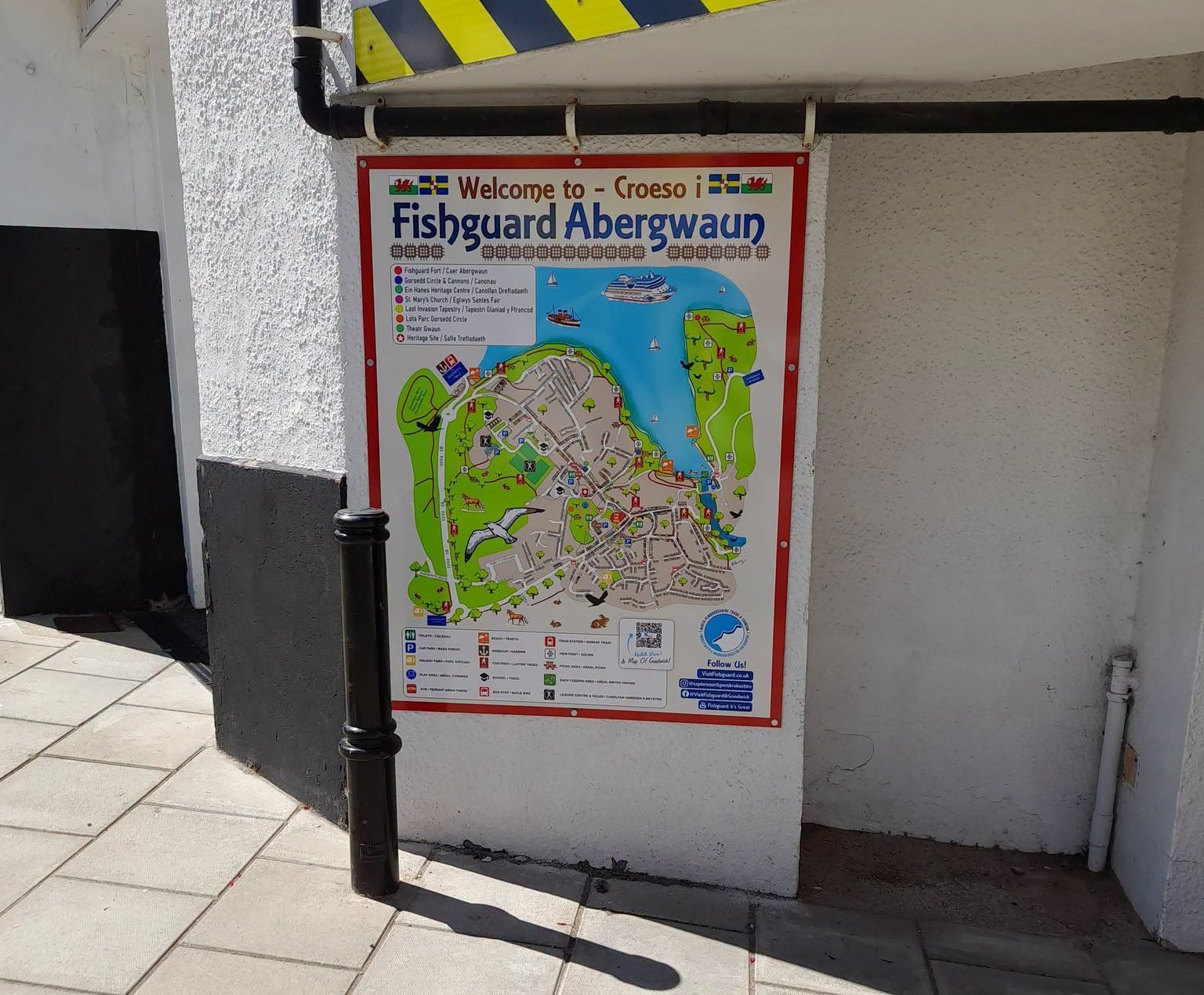
A NEW town map has been installed in the heart of Fishguard to help residents and visitors discover more of what the area has to offer.
The map, created by Visit Fishguard & Goodwick’s in-house graphic designer, has been placed on the Abergwaun Hotel tunnel, near Offshore Surfwear’s new shop.
The group said it was “incredibly proud” of the finished result and thanked the building owner for allowing the map to be installed on the premises.
Visit Fishguard & Goodwick is now hoping to create a similar map for Goodwick and is asking for help from a centrally located building owner who may be willing to host it.
Anyone who can help, or knows of a suitable location, is being asked to get in touch with Visit Fishguard & Goodwick.

Organisers say popular charity events cannot safely go ahead without clear powers to control crowds
TENBY ROUND TABLE has announced that this summer’s Tenby Summer Spectacular events have been cancelled until further notice amid a dispute with Pembrokeshire County Council over crowd control at the harbour.
The events, which were due to take place on Sunday, August 16 and Sunday, August 30, have been a major feature of Tenby’s summer calendar for decades, drawing large crowds to the harbour for entertainment, food, drink and fireworks.
In a statement, Tenby Round Table said the decision had been made “with enormous sadness” and claimed it had been forced on organisers because of unresolved issues over the safe management of pedestrian access.
The organisation said it needed the council’s Public Realm department to use statutory powers to temporarily restrict pedestrian access through the event area when capacity is reached.
Organisers said the matter had first been raised with the council in September 2025 and again formally in writing in May 2026.
They said volunteers had attended meetings, commissioned professional health and safety consultants and worked on Event Management Plans, but claimed the council had still not provided a clear answer.
Tenby Round Table said: “PCC’s Public Realm department has had nine months to answer one question on safe and controlled access to the harbour. It has not done so.”
The group also alleged that recent written responses from the council contained factual inaccuracies and misleading statements about the relevant legislation.
It added that the council’s legal advice was understood to be provisional and still under internal review.
The cancellation is currently described as provisional, with organisers giving the council a final deadline of June 25 to provide what they describe as a clear, accurate and legally grounded answer.
Tenby Round Table said that if this is provided, it will do everything possible to reinstate the events.
The group said the Summer Spectacular had raised hundreds of thousands of pounds for local charities, sports teams, community groups and worthy individuals since it began.
It said the cancellation would be a devastating blow to those who benefit from the funds raised.
The statement added that organisers are still working with Dyfed-Powys Police and other relevant authorities ahead of a council licensing committee meeting in July, which is expected to consider whether the event licence should be renewed, amended or withdrawn.
The Herald has asked Pembrokeshire County Council for comment.

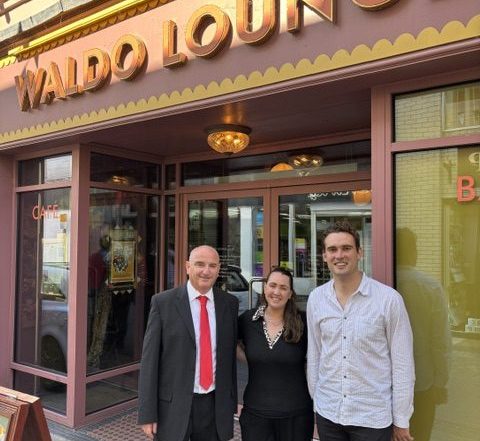
A HAVERFORDWEST venue has been praised for raising more than £2,600 for local charities through a series of community events.
Castle Ward county councillor Thomas Tudor visited The Waldo Lounge in Haverfordwest with Henry Tufnell MP, where they met manager Stephanie Davies.
Cllr Tudor said Stephanie had “truly embraced” her role in the community, organising events including a duck race, sports quiz, Mad Hatter’s tea party for Little Loungers, a bake sale and a drag night show.
Together, the events have raised £2,637 for local good causes.
Charities to benefit include The VC Gallery, Tŷ Hafan and Adam’s Bucketful of Hope Cancer Support Centre.
Cllr Tudor said: “It was lovely to introduce Henry Tufnell MP to Stephanie Davies, manager of The Waldo Lounge in Haverfordwest.
“Stephanie has truly embraced her role in the community of Haverfordwest, running many exciting initiatives and raising a staggering £2,637 for local charities.”
The fundraising continues this week, with Rock ’n’ Roll Bingo and a Wild West country and western night featuring a rodeo bull.
Caption: Community support: Thomas Tudor, Stephanie Davies and Henry Tufnell MP outside The Waldo Lounge in Haverfordwest.



Community7 hours ago
Tenby Summer Spectacular cancelled amid council row over harbour access
Organisers say popular charity events cannot safely go ahead without clear powers to control crowds TENBY ROUND TABLE has announced...


News12 hours ago
Motorcyclist dies after four-vehicle crash on A40 in Carmarthenshire
A MOTORCYCLIST has died following a four-vehicle collision on the A40 between St Clears and Whitland. Dyfed-Powys Police said the...


News13 hours ago
Rhun ap Iorwerth urges new deal for Wales after Starmer quits
First Minister says next Prime Minister must focus on greater powers, fair funding and respect for Wales’ democratic mandate FIRST...


News13 hours ago
How Labour’s landslide victory unravelled in just two years
Prime Minister announces resignation after losing support within his own party as Andy Burnham emerges as overwhelming favourite to take...


News1 day ago
Long Course Weekend set to bring thousands to Pembrokeshire
Three days of swimming, cycling and running will once again transform Tenby into one of the UK’s biggest endurance sporting...


Community1 day ago
The gentle giant behind the tattoos
Pembrokeshire security worker Josh Davies praised for professionalism, kindness and proving first impressions can be wrong JOSH Davies is hard...


Charity2 days ago
Toy Story fans fill charity toy box at Haverfordwest cinema
Donations pour in for SNAP Specialist Play as families embrace Toy Story 5 launch A TOY STORY-themed charity appeal at...


Community3 days ago
Lord Rhys emerges from the mist in St Davids
Giant puppet begins historic journey marking 850 years since the first Eisteddfod MIST swirled around St Davids Cathedral on Friday...


News3 days ago
Tragic tribute paid to Haverfordwest man after A4075 collision
FAMILY REMEMBERS “KIND AND LOVING” CALLUM HANSON THE FAMILY of a 22-year-old man from Haverfordwest who died following a road...

News4 days ago
Motorcyclist, 22, dies in A4075 crash in Pembrokeshire
A 22-year-old woman remains in hospital after two-vehicle collision A MOTORCYCLIST has died following a serious two-vehicle crash on the...
-

 Crime5 days ago
Milford Haven man jailed for breaching domestic violence protection order
-

 Local Government6 days ago
Security privately arranged by Mayor at Beating of the Bounds
-

 News4 days ago
Crash on Freeman’s Way causes school-run chaos across Haverfordwest
-

 Crime6 days ago
Man wanted by court after failing to attend hearing over alleged shop thefts
-
 Crime6 days ago
Man banned from roads after drink-driving offence
-

 Crime6 days ago
Man jailed after admitting strangulation and assaults
-

 Crime6 days ago
Drug trafficker must repay £33,000 after court rules he made nearly £500,000
-

 Crime6 days ago
Man sentenced over stalking campaign and lock knife offence