

Education
Call for release of ‘sex choking’ lesson slides as council insists claims misleading


Bridgend Council says pupils were never taught it was okay to choke during sex
THE WELSH CONSERVATIVE have intensified pressure on Bridgend County Borough Council over reports that pupils were taught about “sexual choking” during PSHE lessons—despite the council’s insistence that the claims are based on outdated and inaccurate materials.
Shadow Education Cabinet Secretary Natasha Asghar MS has now written to the leader of the council requesting copies of both the original and updated versions of a PowerPoint presentation developed by domestic abuse charity ASSIA, which was used during a single session in one Bridgend school in 2024.
Ms Asghar said: “I remain appalled that anyone involved in educating our children would consider including references to such a dangerous and risky act in educational materials.
“There appears to have been no attempt to explain the risks associated with choking, but merely a focus on ensuring the act is consensual. The leadership of Bridgend Council claims they requested that this presentation be altered before being shown to pupils. However, this does not disguise the fact that those responsible for creating the content initially deemed it appropriate.
“I am requesting both versions of the presentation be made available to me, and I am calling on Bridgend Council to reconsider their relationship with ASSIA. It is clear that by even considering the inclusion of such shocking content, their values do not align with what most decent people would reasonably expect to be taught in our schools.”

Council: Claims based on misinformation
Bridgend County Borough Council has pushed back strongly against what it calls “a classic example of how misinformation can generate headlines.” It insists that pupils were not taught to accept dangerous or illegal sexual behaviour.
The council says the slide that referenced choking with consent was part of a draft presentation that was never shown in schools. That content, they say, was deleted or corrected prior to delivery, and the final version made it clear that non-fatal strangulation is a criminal offence under the Domestic Abuse Act 2021.
Developed in response to real questions from older pupils, the presentation was intended to support teachers navigating complex topics around consent and harmful behaviour. The final version was vetted before being offered to schools as part of a pastoral programme. Only one school accepted the offer, and the material was delivered to an audience of 15–17 year olds in October 2024.
Councillor Martyn Jones, Cabinet Member for Education and Youth Services, said: “The suggestion that older pupils have been taught to consent to damaging sexual behaviour is simply not true. All pastoral advice used by local schools is carefully designed to be age-appropriate, and to encourage teenagers who are maturing into young adults to develop healthy, respectful relationships where there is no abuse of any kind.”
Cllr Jones added that the original draft may have been shared with the media by someone acting in good faith but who misunderstood the situation.
“It appears that inaccurate information from a draft version of a presentation was shared with the media by individuals who had the best of intentions as they thought it had already been used in classrooms. However, the truth of the matter is that the slides in question had been deleted and updated long before the final version of the presentation was ever delivered,” he said.

The council reiterated its commitment to safeguarding and said it monitors all educational materials used with children and young people to ensure they remain appropriate and compliant with legislation.
Next steps
Ms Asghar has also written to the Welsh Government’s Cabinet Secretary for Education, calling for a broader review into how topics such as pornography and violent sexual behaviours are addressed in schools across Wales.
Bridgend Council has yet to confirm whether it will release the full versions of the presentation as requested.


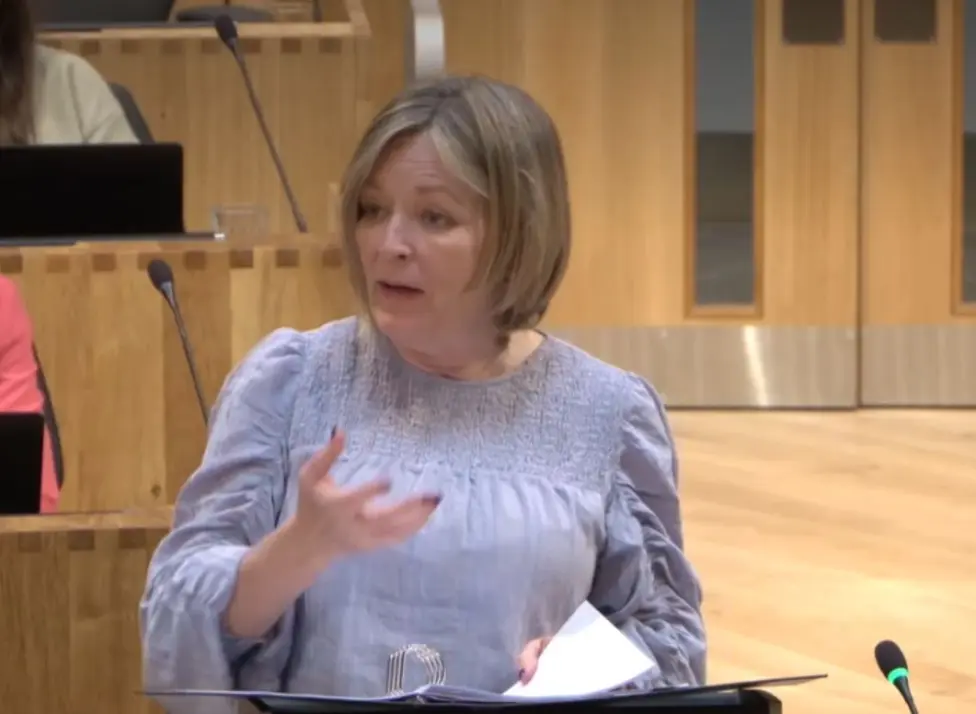
THE WELSH language is “one of our biggest success stories as a small nation on the world stage”, according to the minister responsible for the language.
Education and Welsh language minister Anna Brychan told the Senedd on 7 July that “language does not live solely through policy, but through people and through use.”
Sharing how the language has influenced her life, Ms Brychan said: “My personal story is a bilingual one. My mother learned Welsh as an adult. Today, Welsh and English intertwine in my family at home in Grangetown, and several other languages can be heard around us, and that’s a good thing.”
Concluding her speech, Ms Brychan said: “This is our opportunity to ensure that our two languages drive our future – in the community, digitally, in education and in the economy, and with the Welsh language contributing to making a welcoming, confident bilingual and multilingual country for us all.”
Reform’s deputy leader in Wales, Helen Jenner, described her parents’ decision to send her to a Welsh-medium school as one of “the most precious gifts” they could have given her.
Ms Jenner shared the story of her grandfather, Silgwyn Weston, who didn’t speak any English until he was around eight years old.
She told the Siambr how having received advice from his sister, who attended university in London, her grandfather decided the best way to provide opportunities to his children was for them to speak English at home, meaning her mother did not have the chance to speak Welsh.
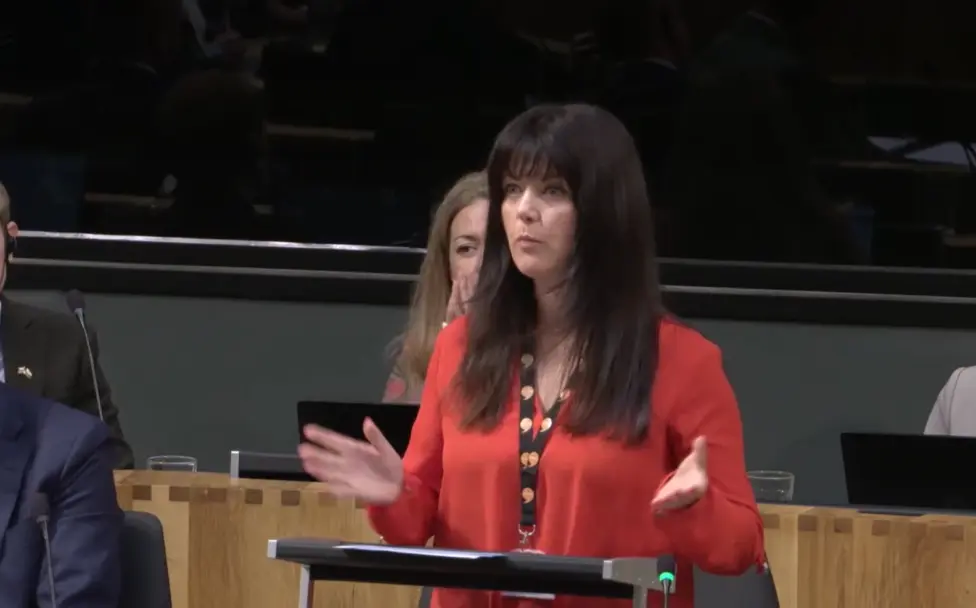
She said: “There was something very special between myself and my grandfather. We were the only two members of the family who could hold a natural conversation in Welsh.
“Silgwyn Weston was a very proud Welshman and in his final years, there was one constant – his hearing was somehow always better if the conversation was about rugby or if someone spoke Welsh to him.”
Reform’s deputy leader agreed with Ms Brychan that language sits at “the heart” of Welsh culture, but criticised the government’s plan to use legislation and targets to secure the language’s future.
She said: “We can’t force people to love a language. We can’t legislate for enthusiasm. We can’t create Welsh-speaking communities through targets alone. The Welsh language flourishes when people choose to use it at home, in the workplace, in the pub, on the rugby pitch and on the street.”
Ms Jenner also welcomed the minister’s commitment to strengthening the Welsh language in digital and AI, adding that if Welsh is not available in these technologies there is a risk of it being “left behind”.

She asked how the government will measure an increase in the daily use of the language and what practical steps will be taken to help learners use Welsh once they have left school.
Responding, Ms Brychan said: “People shouldn’t have to look for opportunities to use the Welsh language.”
She noted importance of including Welsh outside of education, in areas such as “technology, workplaces, sport, culture, planning, research, and leadership in our communities”.

Also sharing his experiences with the Welsh Language, Labour’s Huw Thomas told the Siambr that he himself “couldn’t speak a word of English” until he was around 7.
Discussing the Welsh Government’s target of a million Welsh speakers by 2050, former Cardiff Council leader Mr Thomas called for further details on how the Welsh language will be pushed through childcare and the education system.
He asked Ms Brychan how many Welsh-medium childcare settings will need to be developed to reach the target of free childcare from nine-months-old and how the Welsh Government plans to ensure Welsh-speaking staff will be available to meet demand.
Ms Brychan acknowledged the challenges in terms of developing the necessary workforce, but said there’s “a plan in place” to address this.
The Labour spokesperson for the Welsh language then noted the importance of Welsh in technology and the workforce.
He urged the minister to work with trade unions to promote the Twf Charter, which was developed to promote Welsh in the workplace.
Mr Thomas also questioned what measures the government will be taking to introduce more Welsh-medium apprenticeships.
Ms Brychan revealed she has numerous upcoming meetings on technology, and said the Welsh language is at the forefront of her discussions with such companies.
She also said she’s “always” willing to speak to unions to get their views and expertise.

Conservative Paul Davies voiced his and his party’s support for the Welsh Government’s target of one million Welsh speakers by 2050, but questioned Ms Brychan on Welsh-medium education and socialising through the Welsh language.
Mr Davies highlighted that currently only 21% of children are in Welsh-medium schools, according to the latest schools survey.
He suggested that work could be done in terms of learner travel to help reduce barriers to Welsh language education.
The Conservative spokesperson called on Ms Brychan to reveal whether she will review the Learner Travel (Wales) Measure 2008 to see if more “can be done” to allow children access to Welsh-medium education. However, Ms Brychan did not mention learner travel in her response.
Mr Davies also spoke of the importance of socialising in Welsh in cultural settings, referring to events such as Tafwyl, which took place in Cardiff last month.
He said: “These events and many other community events are held by organisations like the mentrau iaith and others, of course, that do so much in our communities with little resource.”
Mr Davies called on the Welsh Government to consider how it can support community organisations “more effectively” in the future.
Ms Brychan replied: “In terms of socialising through the medium of Welsh, that takes me back to the point that I was making that we need to create the environment where people don’t have to look for opportunities to use the Welsh language.
“As you mentioned, the opportunities provided through the mentrau iaith are key to ensure that those opportunities are available.”
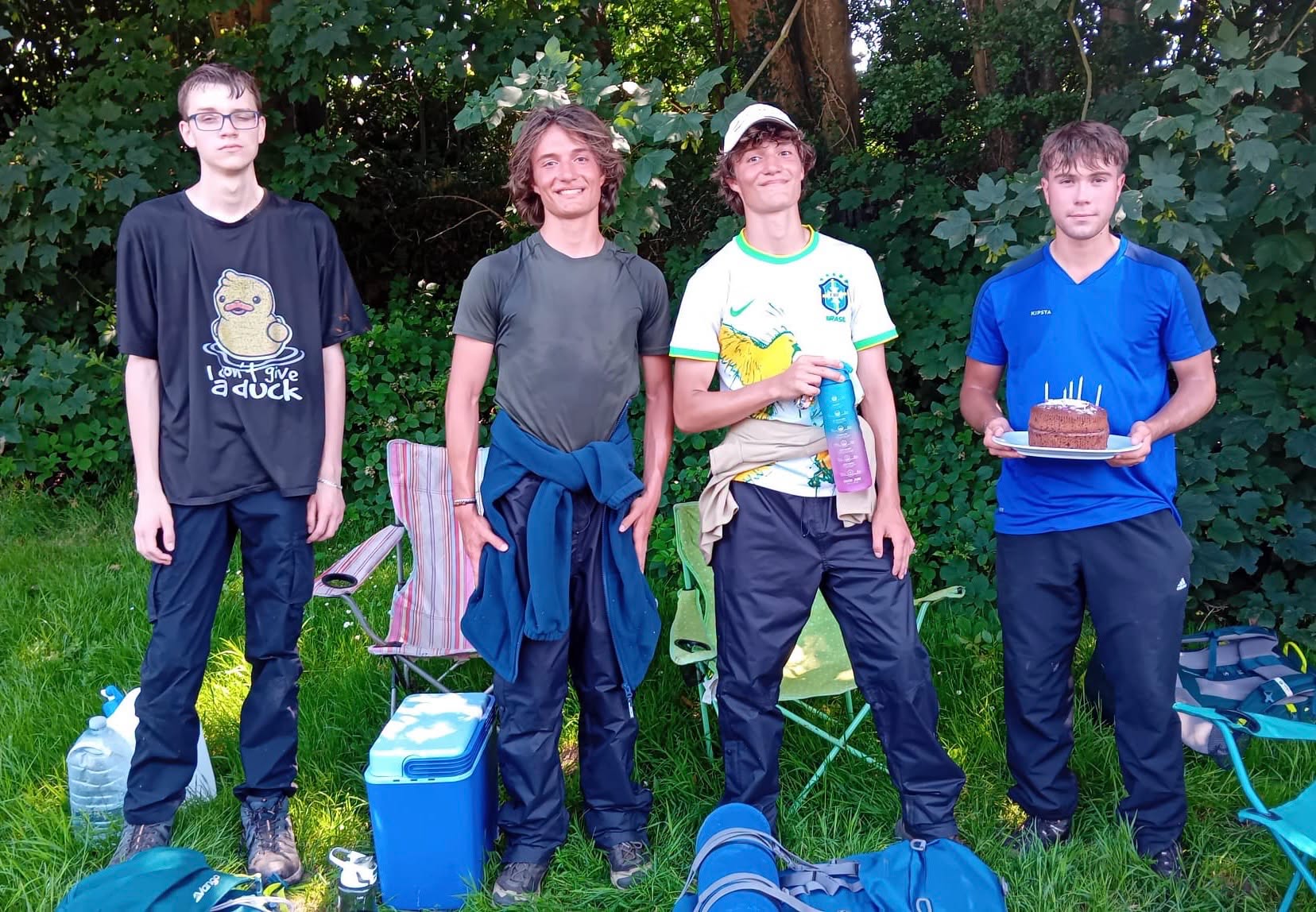
PEMBROKESHIRE COLLEGE students have been congratulated after completing a challenging three-day expedition in sunny Pembrokeshire.
The group spent three days carrying all their own kit while navigating across the county using maps and compasses.
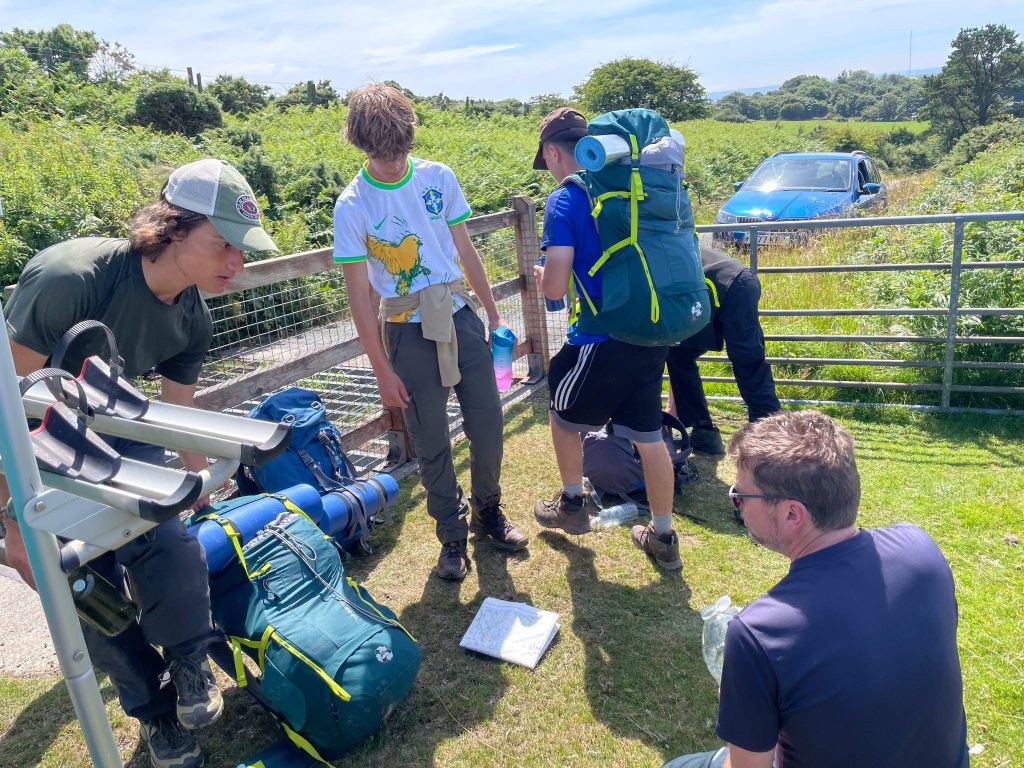
Simon and David have now successfully completed their Silver Awards, while Mason and Makenzie are close behind, with just one more expedition to complete before securing theirs.
There was also a birthday celebration along the way, with Mason spending his special day out on expedition.
A Pembrokeshire College spokesperson said: “What an achievement. Three days in sunny Pembrokeshire, carrying all their kit and navigating with maps and compasses, and the hard work has paid off. Congratulations to Simon and David, who have now completed their Silver Awards. Mason and Makenzie are almost there too, with just one more expedition to go.”


New pilot scheme aims to strengthen Welsh-medium childcare and support the next generation of Welsh speakers
CHILDCARE workers across Wales are set to receive expanded Welsh language training as demand for bilingual childcare continues to grow.
The National Centre for Learning Welsh is launching a new pilot scheme aimed at strengthening Welsh language skills across the childcare sector and increasing the number of settings able to offer Welsh-medium support.
The scheme builds on the Centre’s existing work with the childcare workforce, which has been running since 2017. More than 5,000 childcare workers have already benefited from Welsh language training through the programme.
With childcare identified as a key priority for the new Welsh Government, the pilot is also designed to support the Welsh Language and Education (Wales) Act by helping to create stronger foundations for future Welsh speakers.
The new scheme will focus on increasing workforce capacity across Wales, including in nurseries, childminding settings, out-of-school childcare and Flying Start provision.
It will include a Learn Welsh programme for childcare students in further education colleges and apprenticeships, as well as Learn Welsh tutors working directly with childcare settings, nurseries and individual childminders.
Tutors will also work with playworkers in out-of-school childcare provision in specific areas, while Welsh language training will be made available to Flying Start workers who support young children and families in targeted communities.

Deputy First Minister for Wales, with responsibility for childcare, Sioned Williams, said the Welsh Government was committed to expanding Welsh-medium childcare as part of its wider childcare plans.
She said: “We are delivering a transformational childcare offer that will be the most generous in the UK, giving every child the best start in life.
“Investing in childcare is one of the most powerful things we can do for our economy, for living standards, and for children’s futures.
“We are working with providers and partners to expand Welsh-medium childcare as a core part of our universal offer, so more children can access it from their earliest years, strengthening the pathway into Welsh-medium education throughout Wales.
“Reaching at least one million Welsh speakers by 2050 and ensuring every child has the opportunity to become a confident Welsh speaker are central to this Government’s vision.

“This new pilot scheme from the National Centre for Learning Welsh will build the Welsh language skills of our childcare workforce, helping to create the Welsh speakers of the future from the very earliest stage of their lives.”
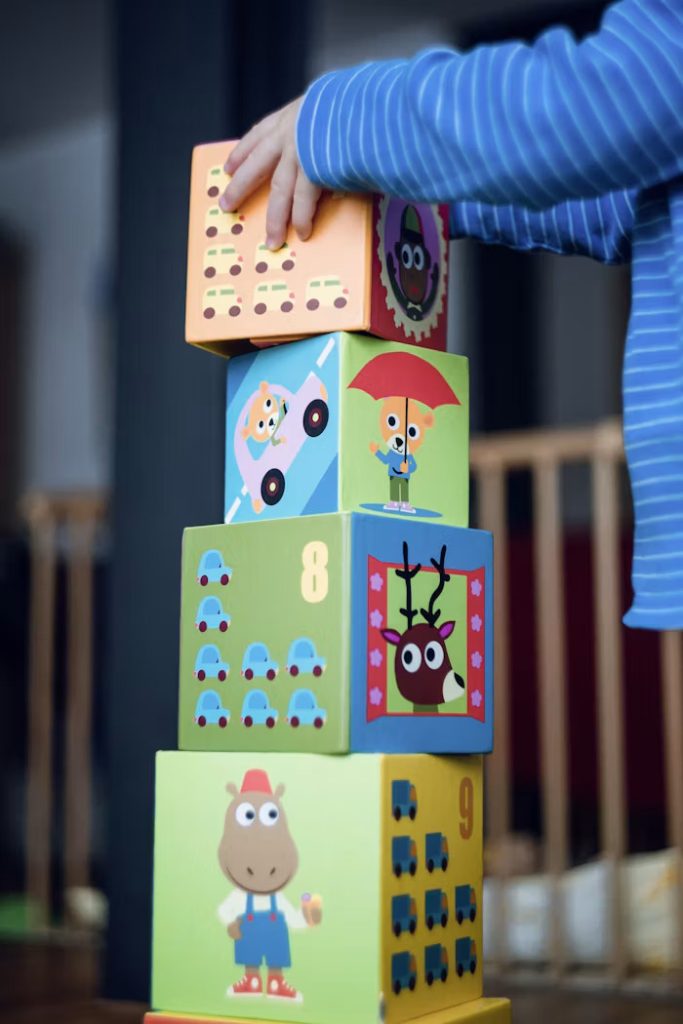
Jane O’Toole, Chief Executive Officer of Clybiau Plant Cymru Kids’ Clubs, welcomed the pilot and said it would help more children and families use Welsh naturally through play.
She said: “Out of School Childcare settings are well placed to make Welsh part of children’s everyday experiences.
“By investing in playworkers and childcare professionals, this partnership will build sector confidence and capacity, supporting a Wales where Welsh belongs to everyone.”
Dona Lewis, Chief Executive of the National Centre for Learning Welsh, said the early years were a crucial stage in a child’s language journey.
She said: “Those working in the sector play a key role in nurturing and supporting the bilingual skills of the future.
“This new pilot scheme will draw on the Centre’s expertise in language learning and acquisition, along with its long-standing partnerships, to build capacity within the sector, ensuring more children and families have opportunities to use Welsh in their everyday lives.”



Crime19 hours ago
Teacher stabbing trial: The first week of evidence
Jury hears accounts of alleged planned classroom attack, teacher’s fear she was dying, and boy’s words after leaving school A...


Community21 hours ago
Haverfordwest Castle refurbishment reaches new heights as roof goes on
Major milestone reached in project to transform historic gaol building into flagship visitor attraction A MAJOR milestone has been reached...


Business2 days ago
Pembrokeshire lands £98m share of Wales marine energy boom
New industry report says county has received the second highest level of marine energy investment in Wales, supporting more than...
Crime2 days ago
First aider tells jury teacher was “crying, shaking” after classroom stabbing
A SCHOOL first aider has told a jury that teacher Vicki Williams was “crying, shaking” and in “complete shock” after...


Crime3 days ago
Teacher feared she was dying after Milford Haven classroom stabbing
A TEACHER allegedly stabbed in the head at Milford Haven Comprehensive School told a jury she feared she was dying...


News3 days ago
Farage to resign as MP and fight Clacton by-election amid finance row
NIGEL FARAGE has announced he will resign as MP for Clacton and stand again in the by-election he intends to...
Crime3 days ago
Teacher tells jury there were ‘no issues’ with accused pupil hours before ‘stabbing’
Milford Haven teacher gives evidence as trial of 15-year-old continues at Swansea Crown Court A TEACHER allegedly stabbed at Milford...


News3 days ago
Major incident stood down after fire at Impala Terminal in Milford Haven
Fire involved decommissioned oil tank containing residual crude oil and around 60 cylinders A MAJOR incident declared during a fire...


News4 days ago
Large fire breaks out at Impala Terminal in Milford Haven
Black smoke seen for miles as emergency services respond to incident at former Puma Energy site A LARGE fire has...
Crime4 days ago
Prosecution outlines ‘planned attack’ as Milford Haven teacher stabbing trial opens
Jury hears teenager allegedly brought kitchen knife into school before teacher was stabbed in the head THE JURY in the...
-
 Education7 days ago
Education secretary vows to tackle ‘root causes’ of antisocial behaviour in schools
-

 Education7 days ago
Ysgol Glannau Gwaun celebrates prestigious Gold Active Travel award
-
 Community7 days ago
Closure-threatened Stepaside school expected to remain open
-

 Farming3 days ago
Pembrokeshire slaughterhouse given urgent improvement rating after audit failure
-
News4 days ago
Large fire breaks out at Impala Terminal in Milford Haven
-

 Entertainment2 days ago
Swing and big band classics heading to Torch Theatre
-
 Education4 days ago
Council failed Welsh language standards over school closure
-

 Charity7 days ago
New weekly palliative care support service launched at Withybush Hospital