


Community
Pembrokeshire beaches best in Wales with 17 Coast Awards


County scoops highest number of accolades in national environmental honours
PEMBROKESHIRE has been officially named home to the best beaches in Wales, securing a record-breaking 17 Wales Coast Awards in 2025—more than any other part of the country.
The results, released today (Thursday) by environmental charity Keep Wales Tidy, recognise coastal locations across Wales for exceptional environmental standards, excellent water quality, and a commitment to education and sustainability.
Out of the 49 beaches honoured across Wales, Pembrokeshire claimed 10 of the 21 Blue Flag Awards, including well-known locations such as Tenby South and North, Poppit Sands, Broad Haven (North), Newgale, Dale, Whitesands and Coppet Hall.
Saundersfoot and Tenby Castle beaches are also celebrating their 25th consecutive year holding Blue Flag status—an international mark of environmental quality administered by the Foundation for Environmental Education (FEE). All of Pembrokeshire’s Blue Flag beaches have successfully retained their awards from last year.
In addition to its Blue Flag successes, Pembrokeshire also leads Wales in the number of Green Coast Awards, which are given to more remote, unspoilt beaches with high environmental standards. Of the 13 Green Coast Awards presented this year, seven went to Pembrokeshire beaches: Aberiddy, Freshwater East, Manorbier, Penally, Caerfai, Druidstone and West Angle Bay.

The Green Coast Award celebrates lesser-known, “hidden gem” beaches that offer natural beauty alongside excellent water quality and environmental care.
Keep Wales Tidy has managed the Wales Coast Awards for over 20 years. The awards play a vital role in protecting the Welsh marine environment and are internationally recognised as a symbol of quality. To qualify, beaches must meet rigorous criteria on water quality, public information, environmental education, safety, and site management.
In addition to the Blue Flag and Green Coast accolades, 15 beaches across Wales earned the Seaside Award—a UK-only honour that signifies clean, attractive, and well-managed stretches of coastline. This year’s Seaside Award winners include Aberystwyth South and North, New Quay Harbour, Aberavon in Neath Port Talbot, and Whitmore Bay and Jackson’s Bay in Barry Island.
Owen Derbyshire, Chief Executive of Keep Wales Tidy, praised Pembrokeshire’s outstanding performance.

“The Wales Coast Awards are a fantastic celebration of Wales’ beautiful and diverse coastline,” he said.
“They are testament to the huge effort of staff and volunteers at sites across Wales. Thank you to everyone who works so hard to protect and preserve our natural landscape in the face of increasingly challenging circumstances.”
Cllr Rhys Sinnett, Cabinet Member for Residents’ Services at Pembrokeshire County Council, said: “We are incredibly proud to once again receive the highest number of Wales Coast Awards.
Pembrokeshire is rightly recognised as being home to some of the world’s best beaches, but it takes hard work and year-round commitment to maintain these standards and secure prestigious awards like the Blue Flag and Green Coast.”
“We look forward to welcoming both residents and visitors to our outstanding beaches this summer.”

A full list of this year’s award-winning beaches is available on the Keep Wales Tidy website.

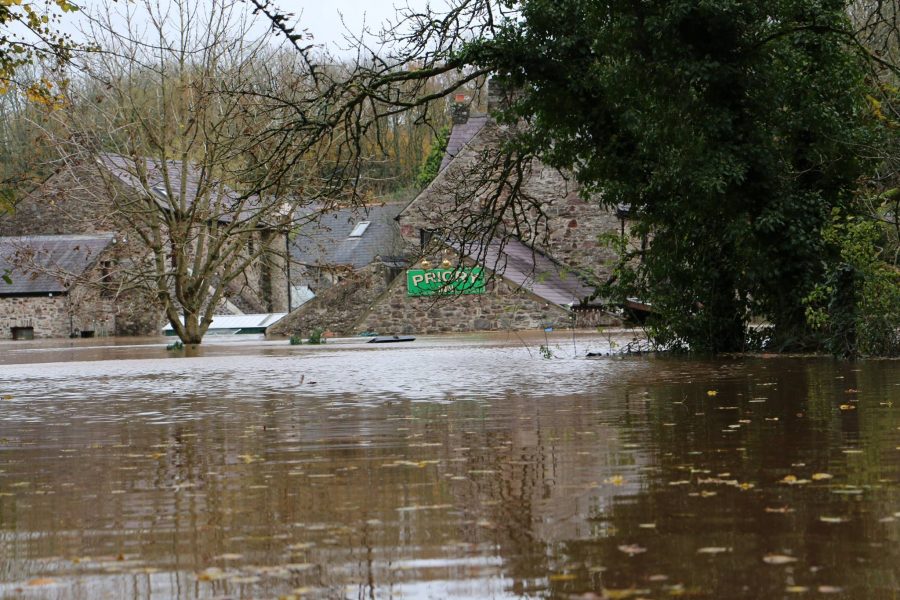
AROUND 31,000 properties across Mid and West Wales are at risk of flooding, according to figures released as part of a new fire service response strategy.
Mid and West Wales Fire and Rescue Service has completed a major engagement process to shape how it deals with future flooding incidents.
The work brought together operational crews, partner agencies and community representatives through a series of “Flooding Balanced Room” workshops.
The service said the aim was to make sure all voices were heard equally while developing practical options for prevention, response and recovery.
Nearly 24,000 properties in the service area are at risk from river flooding, while more than 7,000 are at risk from tidal flooding.

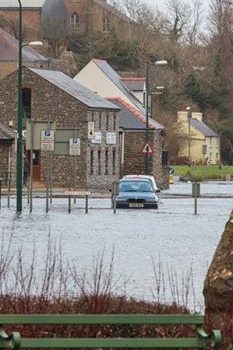
The service attends around 300 water rescue and weather-related flooding incidents each year.
Officials say flooding is becoming more frequent and more serious because of climate change, including heavier rainfall and prolonged weather events.
Recent data also shows a clear seasonal pattern, with the highest number of flooding incidents taking place between October and February.
The third quarter of 2025/26 was the busiest for flooding incidents since 2017/18, while February 2020 and November 2025 recorded the highest monthly levels of flooding activity.
The workshops produced four key priorities: prevention first, collaboration and partnership, enhanced specialist capability, and learning and continuous improvement.
Eleven initial options were narrowed down to five main areas.
These include better public education, community flood groups, improved flood messaging with partner agencies, more staff training, improved welfare and PPE for firefighters, better vehicles and technology, and stronger post-incident support for communities.

Proposals include using flood awareness in home fire safety checks, improving training scenarios, increasing the number of qualified water incident managers, expanding drone use, and using climate data to plan future fleet and equipment needs.
The options have now been assessed, with recommendations presented to the service’s Executive Leadership Team.
The plans will feed into the service’s future flooding strategy and its Community Risk Management Plan 2040.
Iwan Cray, Deputy Chief Fire Officer for Mid and West Wales Fire and Rescue Service, said: “The Flooding Balanced Room process has highlighted the importance of collaboration.
“By listening to our staff, partners, and communities, we’ve created practical, forward-thinking solutions that will strengthen our ability to prevent and manage flooding in Mid and West Wales.
“Together, we can build a safer, more resilient Wales.”

FIFTY-three vintage tractors left Pembroke Dock Ferry Port on Saturday (May 2) as part of a long-running tractor tour to Ireland.
The group boarded the ferry for the latest stage of an exchange which has been running since 2011, when the National Vintage Tractor Run was held in Pembrokeshire.
Organiser Alun Mason said: “The Tour of Ireland has been ongoing since 2011, when the National Vintage Tractor Run was held in Pembrokeshire.
“A large contingent travelled from Ireland and continue to do so every other year, with our visit this weekend and the Irish tractors due to visit in 2027.”
Some of the tractors taking part travelled from as far as Burry Port, Bridgend, Llandrindod Wells, Llandovery and Ceredigion before gathering at the ferry port.
The event brought together vintage tractor enthusiasts from across Wales ahead of the crossing to Ireland.
Pictured are organisers Jo Richards and Alun Mason, and the group waiting to embark at Pembroke Dock Ferry Port.

Vintage tour: Jo Richards and Alun Mason with tractors at Pembroke Dock Ferry Port (Pic: Martin Cavaney).
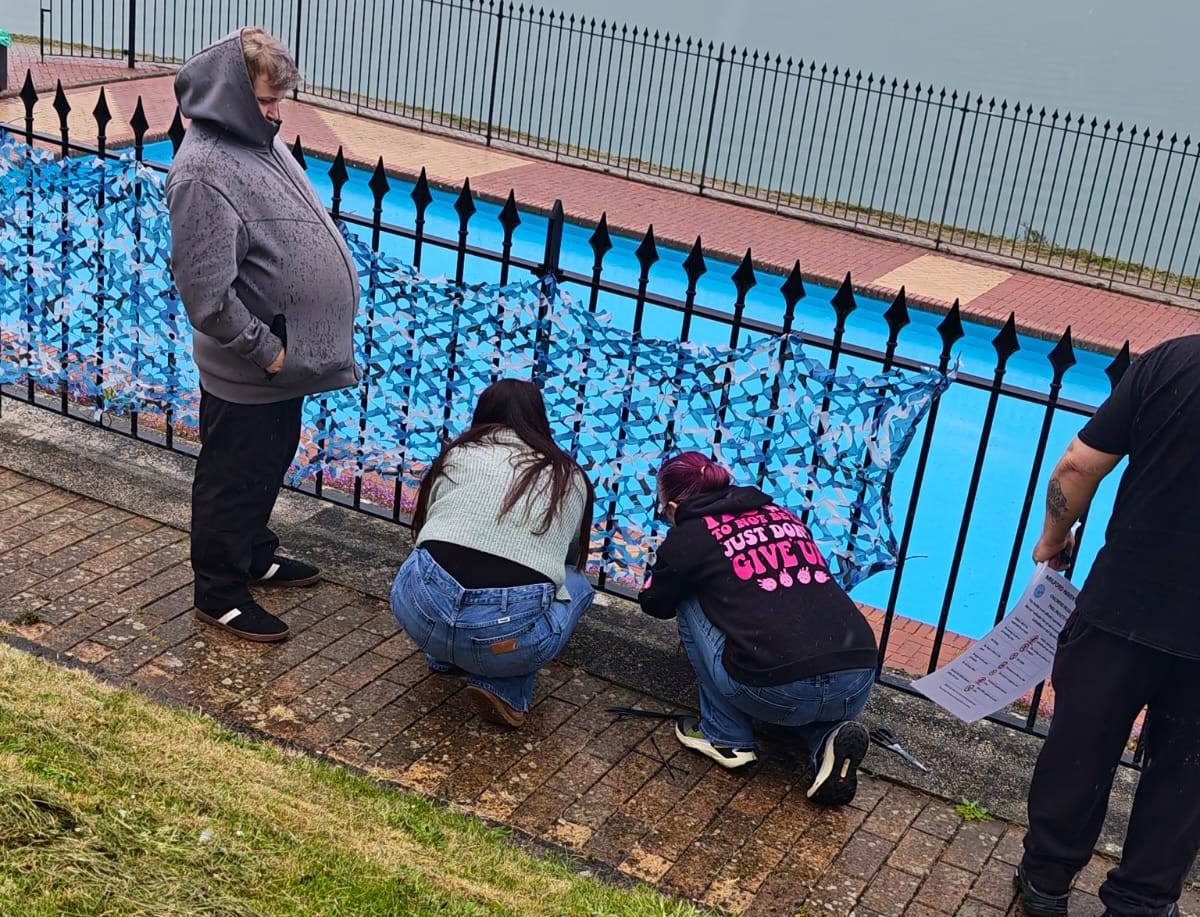
Questions raised over new netting as community pitches in to prepare popular spot
VOLUNTEERS have been praised for their efforts to get Milford Haven’s Rath paddling pool ready for summer – but a new addition has sparked debate among locals.
A group of residents, including Caroline Jones, Derek Abbott, Jordy, Tina Hawkins and Isla, were pictured this week installing colourful netting along the fence surrounding the pool.
The work forms part of ongoing efforts by the community to clean, maintain and improve the popular splash area ahead of the warmer months.
Caroline explained the netting had a practical purpose as well as an aesthetic one.
She said: “It’s partly to try and prevent some of the grass cuttings getting into the pool but also to brighten the area up.”

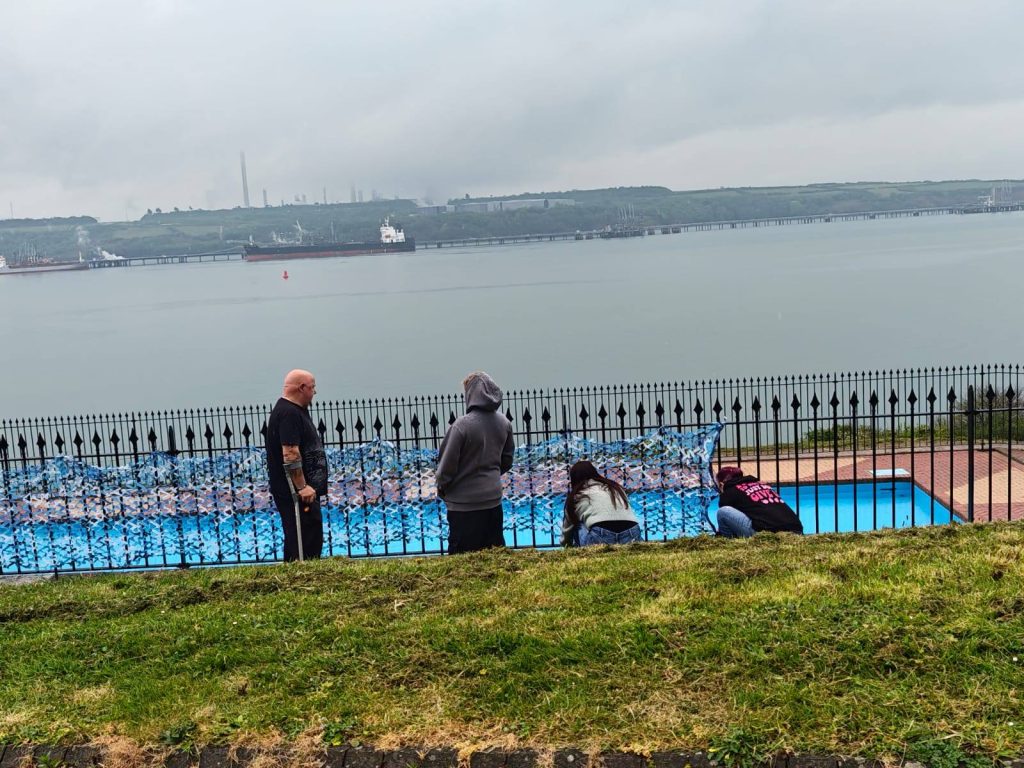
Others suggested it could also help reduce the amount of litter blowing into the water – an issue that has been raised in previous summers.
The efforts were widely welcomed online, with many residents thanking those involved for giving up their time.
One commenter wrote: “A bit of praise for these volunteers who give our little ones a bit of enjoyment at the paddling pool. Well done all.”
Another added: “Well done and thank you everyone.”
Some questioned the need for the netting, with one resident saying: “I don’t understand the netting around the pool. It looked lovely as it was.”
The Rath paddling pool is a well-used facility during the summer months, particularly by families with young children, and relies heavily on volunteer support to keep it clean and operational.
Local groups, including TipTop Wheelies, are understood to be involved in helping prepare the site for the season.

Despite mixed views on the netting, the overwhelming response has been one of appreciation for those working behind the scenes to keep the facility open.



Crime7 hours ago
Farming company fined £19,000 for damaging protected wildlife site
A CARDIGAN farming company has been ordered to pay almost £20,000 after recklessly damaging a Site of Special Scientific Interest....


News10 hours ago
Baby in critical condition after Fishguard emergency
Teenagers arrested as police investigate circumstances A BABY remains in hospital in a critical but stable condition after being taken...


Community1 day ago
Tenby phone signal crisis goes national as businesses warn of summer disruption
TRADERS SAY CARD PAYMENTS, TAXIS AND VISITOR SAFETY ARE BEING HIT BY ‘DEAD ZONE’ COVERAGE TENBY’S long-running mobile phone signal...


News1 day ago
Final poll puts Plaid and Reform level ahead of Senedd vote
Labour faces historic setback as new modelling points to a hung Senedd PLAID CYMRU and Reform UK are projected to...

News2 days ago
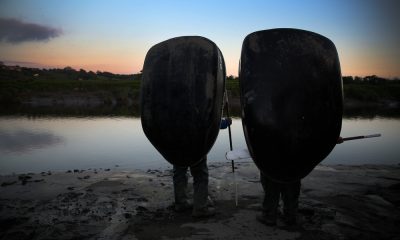
West Wales coracle fishermen raise alarm over suspected sewage pollution
A CENTURIES-old fishing tradition on the River Towy could be under threat after coracle fishermen reported suspected sewage pollution entering...


Community3 days ago
Scooter rally brings colour and nostalgia to Tenby
TENBY is buzzing with the sights and sounds of classic scooters this Bank Holiday weekend as the Welsh National Scooter...


Entertainment3 days ago
Haverfoodfest returns to Haverfordwest town centre today
HAVERFORDWEST town centre is expected to be busy today as Haverfoodfest 2026 returns for a full day of food, drink,...


Crime4 days ago
70-year-old denies assault and restraining order breach
A PENSIONER from Pembroke Dock has denied breaching a restraining order and assaulting another man. Henry Howlett, 70, of Market...


News5 days ago
Conservatives target two seats in new Ceredigion Penfro constituency
Paul Davies and Sam Kurtz say health, farming and transport are key as they seek return to the Senedd CONSERVATIVE...


Community5 days ago
Milford Haven Beer Fest returns to waterfront this May
EVENT WILL FEATURE 34 DRINKS, LIVE MUSIC AND STREET FOOD MILFORD HAVEN is preparing to raise a glass as Beer...
-
News10 hours ago
Baby in critical condition after Fishguard emergency
-

 Community5 days ago
Dogs removed after welfare concerns at Milford Haven property
-

 Crime6 days ago
Pembrokeshire hairdresser avoids prison after pub assault
-

 Crime7 days ago
Pembrokeshire man charged with making hundreds of indecent images of children
-

 Business6 days ago
Handcrafted garden furniture built to last across Pembrokeshire
-

 Charity6 days ago
Row erupts at Spitfire museum after Reform poster displayed at charity premises
-

 Community6 days ago
Cancer patients targeted with parking fines outside Haverfordwest support centre
-
Community1 day ago
Tenby phone signal crisis goes national as businesses warn of summer disruption