


News
Welsh conservationists on mission to help save endangered African vultures

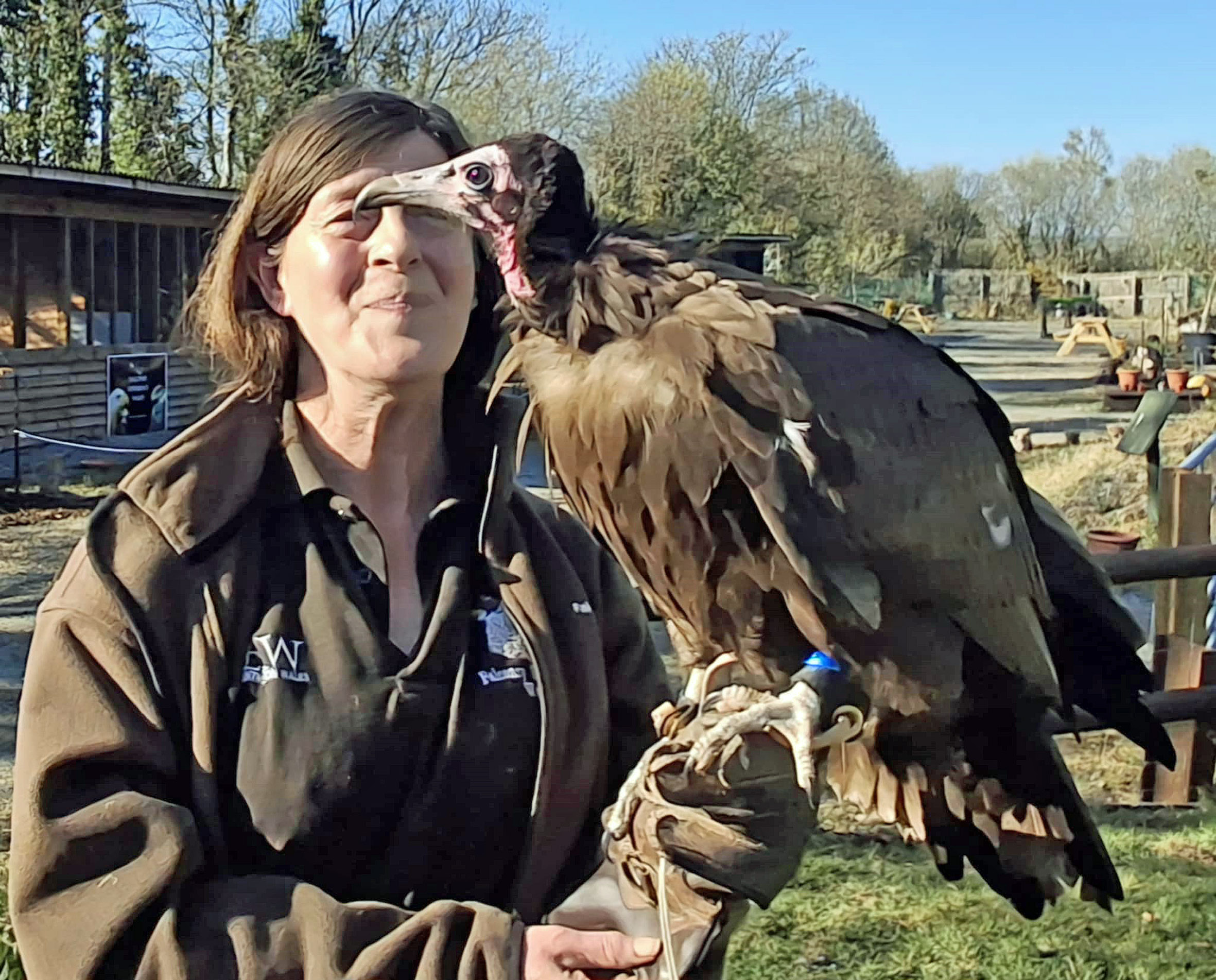
CONSERVATIONISTS in rural Wales could be set to play a crucial role in saving endangered vultures thousands of miles away in Africa.
The Horstmann Trust in Carmarthenshire has been breeding vultures for more than 40 years, while Falconry Experience Wales at Adfa, near Newtown, Powys welcomed their first two Hooded Vultures two years ago.
Barry Macdonald and Luce Green, owners of Falconry Experience Wales, an award-winning raptor conservation and education attraction, hope to start breeding their two-year-old Hooded Vultures, Togo and Hope, within the next four years.
It’s hoped that their chicks will eventually be part of the wider conservation programme and also released into the wild in Africa, should the situation improve there.
The Welsh conservation work could be crucial to the survival of vulture species. In the last 20 years, vulture populations have crashed by up to 99.9% and nearly 70% of the 23 vulture species are now threatened with extinction.

Of the 16 African and European vulture species, 11 are facing extinction. Globally, of the 23 species, 14 are threatened with extinction, including the largest of all the flighted birds, the condors.
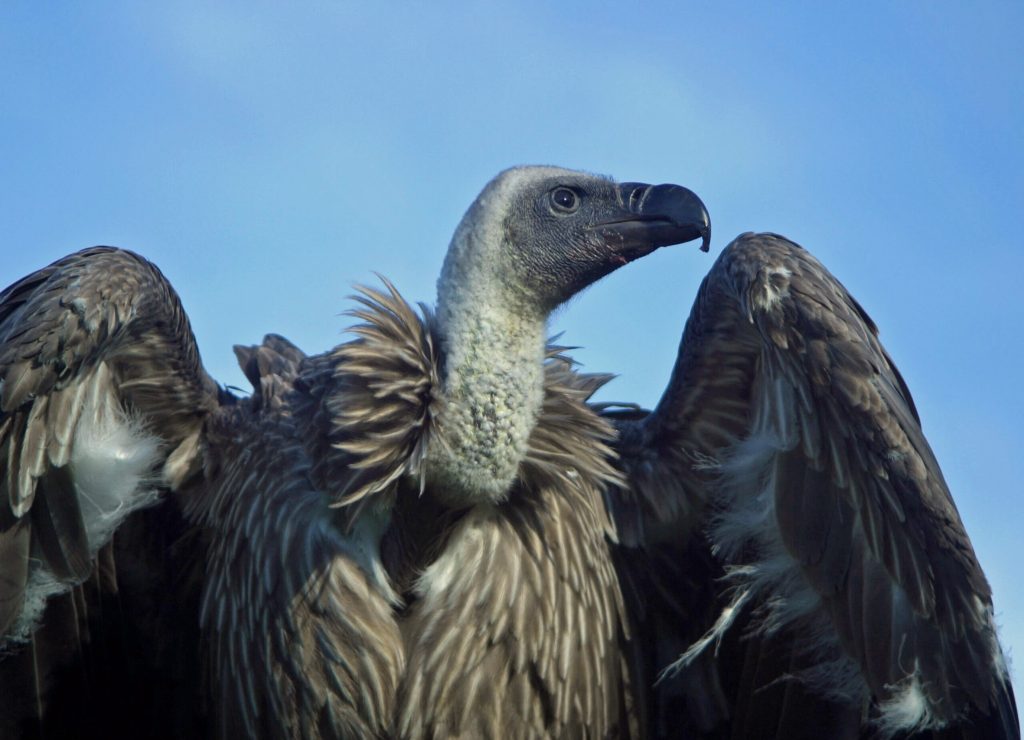
Falconry Experience Wales also owns Vinnie, an African White-Backed Vulture, the population of which has plummeted by 95%, as part of its collection.
The plight of species in South Africa was brought into sharp focus last week when 123 of – 102 White-Backed Vultures, 20 Cape Vultures and one Lappet-Faced Vulture, all listed as endangered or critically endangered – were poisoned in the Kruger National Park.
Poachers increasingly use agricultural toxins to target high-value species – not just vultures, but also lions whose body parts are in growing demand for traditional medicine.
The UK’s only dedicated vulture breed for release conservation charity, The Horstmann Trust is home to some of the world’s largest known captive populations, including Hooded, Egyptian and bearded vultures and Andean condors.
The trust focuses on conservation breeding of vultures and scientific research into their health and incubation. Its work directly supports other vulture conservation organisations around the world.
Vultures are the ultimate agents of balance in the ecosystems and are nature’s waste disposal experts. They clean up animal carcasses quickly and efficiently to limit the spread of bacteria, viruses and other pathogens including rabies, anthrax and cholera.

The direct and indirect actions of people are the largest single contributing factor to the dramatic decline in vulture numbers. Poisoning, poaching, powerlines, use in faith based medicine and loss of habitat are just a few examples.
Poachers often poison vultures because they signal to rangers when an elephant, rhino or lion has been illegally killed.
Barry and Luce are collaborating with the Horstmann Trust, who manage the European Endangered Species Program (EEP) for Hooded vultures, and hope that their pair and future offspring will play an important role within that programme.
“We have been aware of the persecution of vultures for years, but the situation has become much more critical,” explained Barry. “If it deteriorates to a point where these vultures are almost extinct in Africa, then the birds bred in captivity will be the only population to help the breed recover.”
Falconry Experience Wales has raised more than £5,000 to pay for GPS trackers to be attached to four Hooded Vultures in West Africa, so that researchers can monitor their movements for up to five years. They continue to raise funds for up-to-date surveys, ongoing vital research and poison response action kits.
The specially made trackers are attached to a harness on the birds and Barry plans to fly to Africa with a Spanish colleague, hopefully early next year, to fit them on the host Hooded Vultures.
Despite the crisis in Africa, he says there is hope. Asia saw a 99% decline in the vulture population a few years ago, as a result of a drug given to cattle which poisoned the birds when they fed on carcasses.
The loss of vultures is believed to have directly contributed to the deaths of half a million people due to the spread of diseases. However, the Asian vulture population is recovering now that people understand their vital eco-cleansing role.
Replacing vultures in the wild is not a quick fix. Barry explained that vultures don’t begin breeding until aged five to seven years and only raise one chick if successful.
“We have never bred birds before at Falconry Experience Wales, so this will be a new venture for us,” he added. “It’s only because of the threat of extinction that we have become involved.
“Our pair of Hooded vultures were bred in captivity in the UK but their ancestry is Guinea in West Africa.”
In addition to the vultures, Barry and Luce have also recently welcomed a Steller’s Sea Eagle, one of the world’s largest eagles which is classified as vulnerable by The International Union for Conservation of Nature (IUCN) red list.
The declining population is believed to be between 3,600 and 4,670 mature individuals, including 1,900 breeding pairs. The Steller’s Sea Eagle breeds in Russia and over-winters in Northern Japan.
Falconry Experience Wales is a member of MWT Cymru, an organisation representing more than 600 tourism and hospitality businesses across Powys, Ceredigion and Southern Eryri (Snowdonia).
Picture at top of page:
Luce Green with Hooded Vulture Togo at Falconry Experience Wales

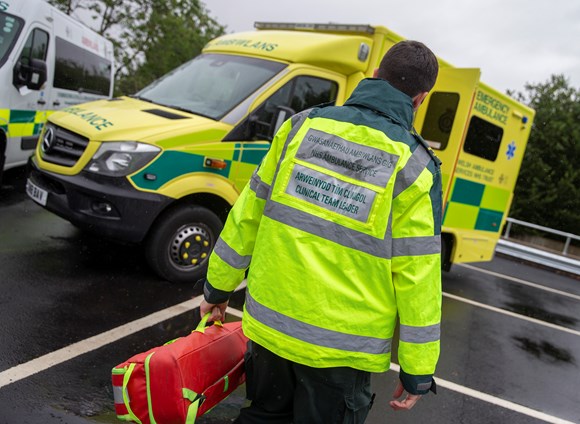
THE WELSH AMBULANCE SERVICE has stood down the critical incident declared on 26 June following three days of sustained pressure linked to the extreme heat.
The service said demand has now begun to reduce, although it remains under significant pressure.
Members of the public are still being urged to call 999 only in serious or life-threatening emergencies.
For less urgent health concerns, people are being asked to use NHS 111 Wales or the online Albot service for advice and support.
The Trust thanked staff, volunteers, partner organisations and the public for their patience, professionalism and support during what it described as an exceptionally challenging period.
Former Greater Manchester mayor promises radical devolution agenda after sweeping Makerfield victory
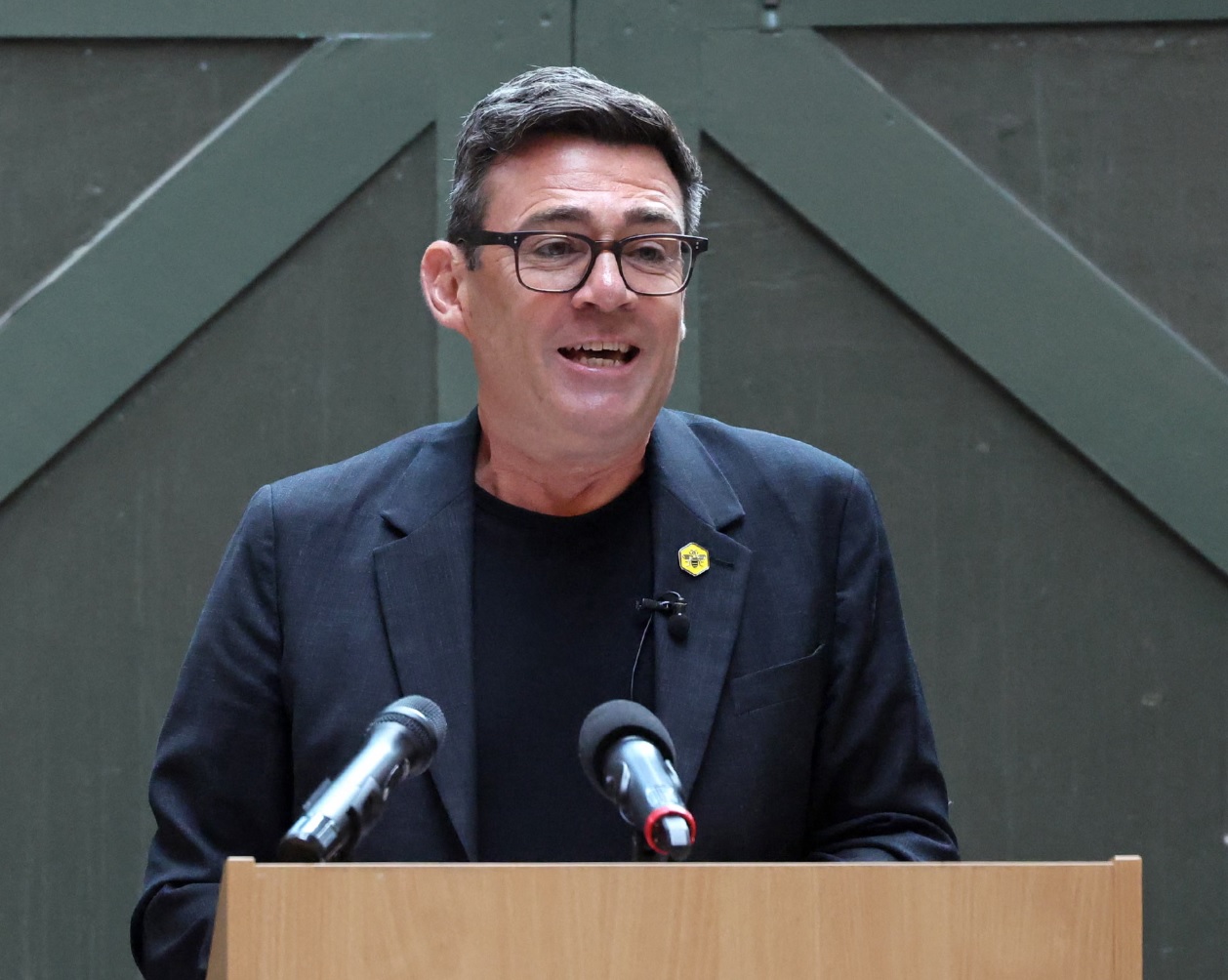
ANDY BURNHAM has used his first major policy speech since returning to Westminster to set out a blueprint for government, promising the biggest transfer of power away from Whitehall in modern times and unveiling plans for a new “No 10 North” in Manchester.
Speaking at the People’s History Museum on Monday, Burnham presented himself as the politician capable of breaking what he described as Britain’s cycle of economic stagnation, political division and over-centralised government.
The speech is widely being seen as his opening pitch to the country ahead of his expected move into Downing Street next month.
Burnham enters the contest from a position of strength after winning the Makerfield by-election earlier this month with a landslide majority. The result marked his return to Parliament and cleared the way for his challenge to succeed Keir Starmer.
At the heart of the speech was a promise to deliver “good growth in every postcode”, with Burnham arguing that Britain can no longer rely on decisions being made almost exclusively in London.
He said the UK remained one of the most centralised countries in the developed world and claimed the current system was failing the north, the south, London and the wider regions alike.
“The whole country suffers when the regions and nations are not meeting their potential,” he said.
Burnham argued that economic growth should be driven from communities and regions rather than directed from Whitehall, promising what he called “the biggest rebalancing of power our country has seen”.
The headline announcement was the creation of a permanent northern operation for the Prime Minister’s Office.
Burnham said a new No 10 North would be based in Manchester, but insisted it would not simply move power from London to one city.
“The job of No 10 North will be to make power flow into the Midlands, into the South West, into the East of England and yes, into London,” he said.
Burnham used the speech to outline what he calls “Manchesterism” — an approach shaped by his years running Greater Manchester.

The model combines sound public finances, local leadership, infrastructure investment, housing, universities, business, public services and trade unions working together to drive growth.
He said his time in Greater Manchester had shown that a different style of politics was possible, based on “place first, not party first” and “problem solving, not point scoring”.
Burnham also attacked Westminster culture, saying Parliament had become increasingly fragmented and disconnected from the communities MPs represent.
He promised a more collaborative style of government and said MPs should be allowed to be “authentic representatives” rather than being controlled by fear of the whipping system.
He also said local government had been left “threadbare”, with councils struggling to meet basic responsibilities while national government had grown larger since the pandemic.
The speech was quickly attacked by Conservative leader Kemi Badenoch, who dismissed Burnham’s proposals as “more public control, more regulation, more taxes”. Reform UK figures also criticised him for not taking questions from journalists after the speech.
For Wales, the speech will be watched closely because of its focus on devolution, regional growth and shifting power away from Westminster.
His argument that decisions should be taken closer to communities is likely to resonate with ongoing debates about transport, healthcare, economic investment and local government powers in Wales.
With Labour’s leadership transition expected to conclude within weeks, Burnham’s Manchester speech offered the clearest indication yet of how he intends to govern: less power concentrated in Whitehall, more influence for regions and nations, and a long-term focus on rebuilding local economies and living standards.
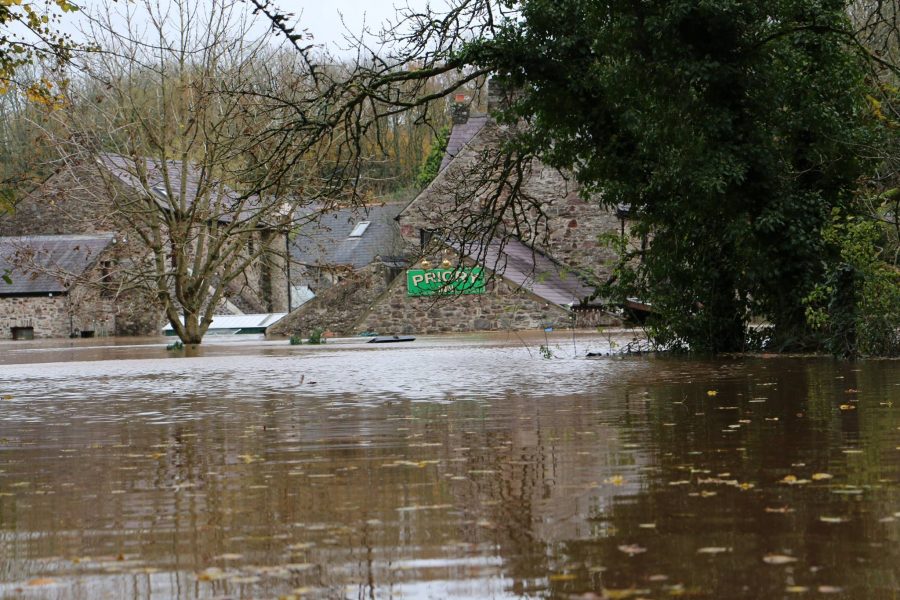
RESIDENTS and businesses in Milford Haven will have the chance to learn more about a major flood defence project next month as plans for the Havens Head and Lower Priory Flood Alleviation Scheme move forward.
Pembrokeshire County Council has announced a community information event to give local people an opportunity to view the proposed works and speak directly with members of the project team before construction begins.
The scheme, which is being delivered in partnership with the Port of Milford Haven, Walters UK and WSP, is funded by the Welsh Government and aims to reduce the risk of flooding to homes, businesses and key infrastructure in the Havens Head and Lower Priory areas of Milford Haven.
According to the council, the project is designed not only to reduce flood risk but also to strengthen the community’s resilience to future flooding events.
Residents will be able to examine plans, ask questions and discuss the proposals with engineers and project representatives at a drop-in event taking place on:
Tuesday, July 7, 2026
9:00am to 5:00pm
The Atrium, Milford Haven Port Authority, Sybil House, The Docks, Milford Haven, SA73 3AA
In an invitation circulated to stakeholders, Coastal, Rivers and Drainage Team Manager Angharad Llewelyn said the event would allow members of the public to learn more about the project and speak directly with the team before works commence.
The Havens Head and Lower Priory area has experienced flooding concerns in the past, with the new scheme forming part of wider efforts to protect vulnerable parts of Milford Haven from the increasing threat posed by extreme weather and rising flood risks.
Anyone interested in the project is encouraged to attend the event at any time during the day to view the proposals and discuss the plans with those involved in delivering the scheme.



Community19 hours ago
Thousands line Cardigan streets for Lord Rhys homecoming parade
THOUSANDS of people lined the streets and quayside in Cardigan on Saturday as the town marked 850 years since Lord...


Crime2 days ago
Dyfed-Powys Police rated only ‘Adequate’ in organised crime inspection
A WATCHDOG has rated Dyfed-Powys Police only “Adequate” in its response to serious and organised crime, despite praise for the...


News2 days ago
Two taken to hospital after aircraft ditches in Cardigan Bay
Coastguard helicopter spotted two casualties after light aircraft came down off west Wales coast TWO people were taken to hospital...


Sport3 days ago
Long Course Weekend gets underway in Tenby as thousands head for county
Three days of swimming, cycling and running begin with The Wales Swim at North Beach THOUSANDS of athletes and supporters...


Climate3 days ago
Welsh waters, Westminster profits: Crown Estate row reignited in Wales
PLAID CYMRU has renewed calls for the Crown Estate to be devolved to Wales after figures showed income linked to...

News3 days ago
Reform MS: ‘I felt like shouting get out of the water’
Paul Marr says children playing in streams at Pembrokeshire beaches deserve better protection from pollution risks REFORM UK MS Paul...

Health4 days ago
Senedd backs call to rule out hospital downgrades after heated NHS debate
Reform UK amendment passes as West Wales hospital fears remain central political issue THE SENEDD has backed a call for...

News4 days ago
Coastguard callout payments axe sparks fears for coastal communities
VOLUNTEER coastguards across the UK are set to lose callout payments, prompting concern over the future resilience of emergency cover...

Farming4 days ago
Rural Wales ‘left out’ of net zero debate, warns carbon entrepreneur
A WELSH carbon entrepreneur has warned that rural Wales risks being left behind in the national conversation about net zero....


Local Government5 days ago
Tenby Spectacular row continues as organisers say key question remains unanswered
Round Table says legal clarity over pedestrian access is still holding up event plan TENBY ROUND TABLE has welcomed Pembrokeshire...
-

 Crime4 days ago
Police appeal after reported rape at Young Farmers rally
-

 Crime5 days ago
Milford man threatened to smash parents’ windows, court hears
-

 Crime5 days ago
Woman sentenced over neglect of child at Haverfordwest property
-

 Crime5 days ago
Haverfordwest father stole groceries amid cost-of-living struggle
-

 Crime5 days ago
Grandmother banned after cocaine drug-drive offence
-

 Crime5 days ago
Hakin man stole Tesco goods to fund drink and gambling addictions
-

 News7 days ago
Rhun ap Iorwerth urges new deal for Wales after Starmer quits
-
 Charity7 days ago
Sea shanties and street food bring crowds to Cardigan RNLI festival