


Farming
Soil Association responds to Welsh Sustainable Farming Scheme announcement


THE WELSH GOVERNMENT is set to unveil key details of its long-awaited Sustainable Farming Scheme, due to launch in 2026 with a transition period leading up to the withdrawal of the Basic Payment Scheme (BPS) by 2030. Following a period of extensive co-design through Ministerial Roundtables and Cabinet discussions, the Deputy First Minister will formally announce the scheme on Tuesday.
Responding to the development, Soil Association Head of Policy (Wales), Andrew Tuddenham, said: “After years of debate and design, the time for delay has passed. The environmental challenges and threats to food resilience we face are more urgent than ever, and pressures on public finances are intensifying.
“The Universal layer of the Sustainable Farming Scheme, based on a ‘whole farm’ approach to sustainable food production, is both ambitious and pioneering—not just for Wales, but for the UK as a whole. It is a promising foundation.
“To succeed, the scheme must sustain and strengthen nature-friendly farming in Wales. That means the Welsh Government must now commit to robust funding for the Optional and Collaborative layers and support farmers in accessing these opportunities.
“We welcome the inclusion of requirements to help farmers assess their carbon balance and protect soils from damage due to high-risk cropping and management. We’re also pleased that support for organic farmers will continue in 2026 through the Optional layer, alongside funding for organic conversion.

“However, there remains uncertainty. We await further details from the Welsh Government later this year on the budget and payment structure for Optional and Collaborative actions—an area of real concern for those who are ready to go further now.”

Ceredigion Penfro MS says disease is placing severe emotional and financial pressure on farming families
Paul Davies MS has urged the Welsh Government to use every available measure to tackle bovine tuberculosis and work towards eradicating the disease in Wales.
The Ceredigion Penfro Senedd Member raised the issue during a Senedd debate, warning that bovine TB continues to have a devastating impact on farmers, their families and rural communities.
Mr Davies called for a science-led and comprehensive strategy that addresses every potential source and route of infection.

He said farmers across west Wales needed clear leadership from the new Welsh Government and greater confidence that ministers were prepared to take effective action.
Mr Davies said: “Bovine TB continues to have a huge impact on farmers, their families and rural communities across Wales.
“It places enormous emotional and financial pressure on farming businesses and remains one of the most significant challenges facing our agricultural industry.
“Farmers and the wider rural community are looking to the new Welsh Government to provide leadership by introducing a holistic approach that addresses all routes of transmission.
“The Welsh Government must do everything it can to eradicate this appalling disease.
“I will continue to raise this issue on behalf of farmers in west Wales and press the Welsh Government to use every lever available to tackle bovine TB.”


A RETROSPECTIVE call for amendments to a previously granted building and slurry lagoon at a 700-herd Pembrokeshire dairy farm has been given the go-ahead by county planners.
In an application to Pembrokeshire County Council, Bill Ridge of Vaynor Farm Ltd, Bethesda sought retrospective permission for a replacement agricultural building for cattle housing, the retention of a slurry lagoon as built and associated works at Talybont Farm, Llawhaden.
A supporting statement through agent Cynllunio RW Planning Ltd said: “Bill Ridge farms at Vaynor Farm, trading as Vaynor Farm Ltd. The farm is a 645-acre farm compromising of owned and rented land, this supports a dairy herd of circa 700 cows. The dairy system is an extensive grass-based spring calving system.
“The application is made following receipt of a letter from the local authority planning enforcement department stating that the replacement agricultural building which had recently been erected required planning permission and that the lagoon also recently built seemed not to be in line with the approved plans of [the 2022 application] recently approved on site for the lagoon.
“Therefore, this application seeks retrospective planning permission for the retention of the building as built and the lagoon as built.”
It said the 22.72 by 13.33-metre agricultural building “will house the farm’s dairy replacement heifers as a replacement to the previous building on site,” and the lagoon is of a similar size, depth and capacity to the previously approved one, other than slight changes in positioning and orientation, providing 4,500square metres of slurry storage, which in combination with the existing store of 6,900cubic meters at Vaynor will provide over 170 days’ storage.
It went on to say: “All development is reasonably required for the purpose of agriculture. The applicant does not intend to increase the farm’s stocking rate as a result of this development.”
An officer report recommending approval said the application had been amended since being submitted to improve the proposed green infrastructure, adding: “Information has been provided during the course of the application that proposal is not intended to result in, or support, an increase in the herd numbers of the agricultural enterprise.”
It concluded: “Based upon the information provided within the application, it is considered that the development would be reasonably necessary for the purpose of agriculture.”
The application was conditionally approved.
Farmers urged to review dry cow nutrition as grazing shortages and heat stress increase pre-calving risks
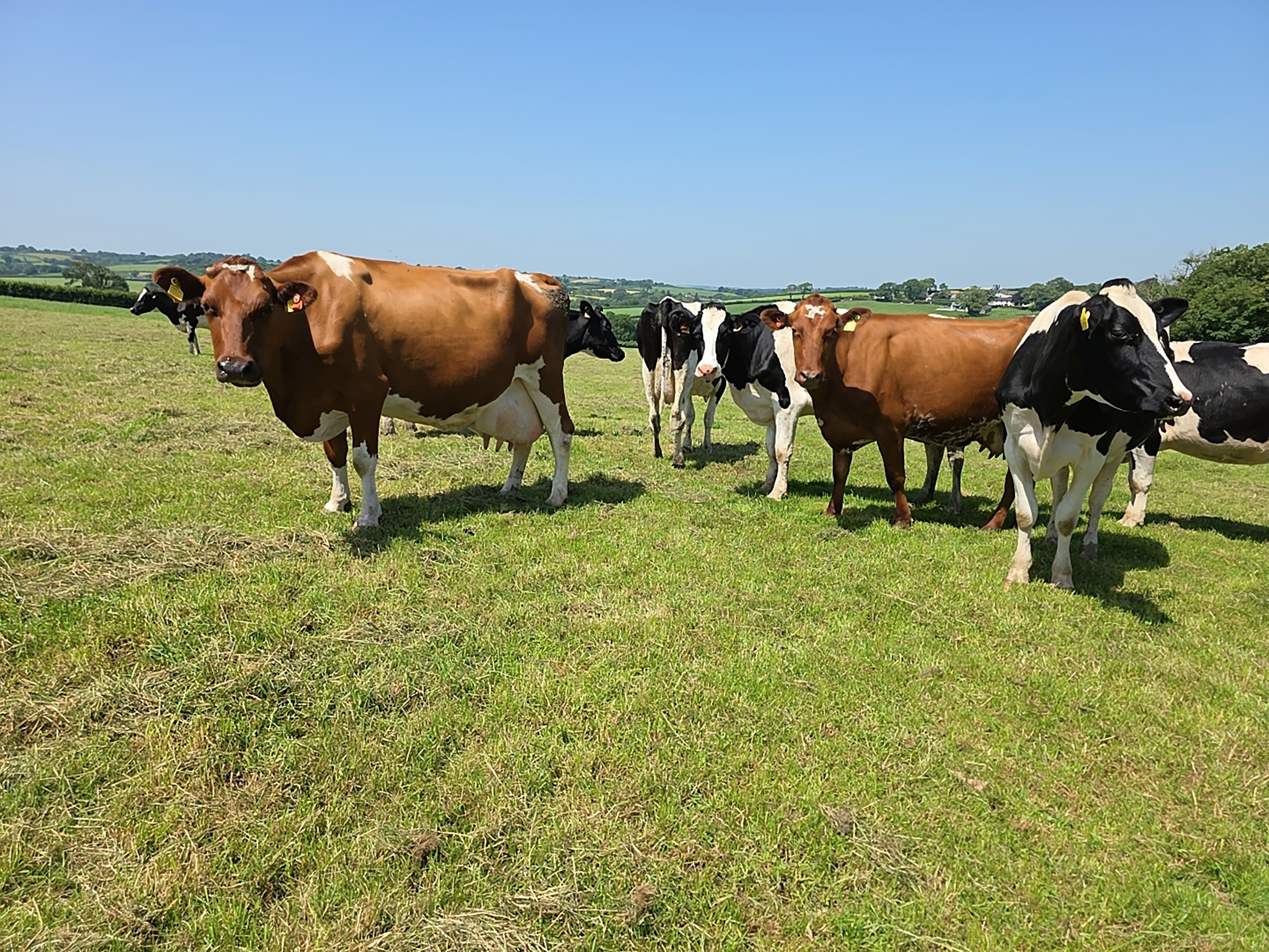
DAIRY farmers preparing autumn-calving cows are being urged to pay close attention to pre-calving nutrition as prolonged hot and dry weather reduces grazing availability and increases the risk of heat stress.
Dr Alison Bond, Technical Services Manager at Rumenco, said the six to eight weeks before calving were particularly important, with farmers needing to maintain suitable body condition and address any nutritional deficiencies.
She said: “Milking cows will naturally be front of mind when farmers are assessing grazing and rationing, but it is important not to forget the dry cows.
“Farmers should assess body condition during late lactation and adjust drying-off dates where necessary. Cows in poorer condition may need to be dried off earlier, with the aim of calving at around body condition score three and in optimum health.”
Where grass is limited, Dr Bond said farmers may need to consider housing dry cows and feeding a ration based on good-quality silage with appropriate supplements.
Careful nutrition during the dry period can help cows make a smooth transition from pregnancy into lactation and reduce the likelihood of problems including difficult calvings, milk fever, mastitis and retained placentas.
It can also affect fertility after calving and the quality of colostrum provided to newborn calves.
Dr Bond said: “Good-quality colostrum is essential during the calf’s most vulnerable period. It helps to prime the immune system and provides protection against challenges such as scour and respiratory disease.
“With the added pressure of heat stress and possible disruption to forage supplies, closer attention to the needs of dry cows will be particularly important this year.”
Farmers who have moved cattle indoors are advised to provide good-quality forage and, where possible, have it analysed for its mineral and trace element content so that any deficiencies can be identified.
Dr Bond said shortages of forage, or changes in its quality, could leave cows more vulnerable to deficiencies in minerals and trace elements during the weeks before calving.
Rumenco recommends using a specialist pre-calving supplement where necessary. The company produces LIFELINE Pre-Calver, available as a mineral bucket or crumb, which is designed to supply vitamins, minerals and trace elements to cows before calving.

The company says the product contains a low-calcium and high-magnesium balance intended to reduce the risk of milk fever and difficult calvings.
Rumenco also says trials have shown improvements in colostrum quality of up to 20 per cent, although farmers should seek independent nutritional or veterinary advice when deciding what supplementation is appropriate for their herd.
Dr Bond added: “Ensuring cows receive the nutrition they need is recommended best practice, particularly when they are facing additional stresses such as extreme heat and reduced grazing.
“Taking action before calving can support the health of the cow, improve calf vigour and help protect future fertility and milk production.”



Local Government3 hours ago
Stepaside school saved as council abandons closure proposal
Governors welcome decision but maintain original plans were based on outdated information STEPASIDE Community Primary School will remain open after...

Crime3 hours ago
Footballer given 200 hours’ unpaid work for eye-gouging assault during match
Magistrates heard Robert Hedley put an opposing player in a headlock before gouging at his eyes during a match in...


Community7 hours ago
Tenby Summer Spectaculars brought to an end after harbour licence revoked
Round Table says it was willing to make major safety changes but could not secure the access controls needed to...

Local Government2 days ago
Catapult attacks suspected after wildlife deaths at Pembroke Mill Pond
Wildlife Crime Officers are investigating after the town council said around five animals showed signs of deliberate injury WILDLIFE found...


Crime2 days ago
Narberth retailer speaks of shoplifting toll after ‘collectable bear’ stolen
Independent shop owner said rising costs meant businesses could not afford to absorb losses caused by theft A NARBERTH retailer...


Crime2 days ago
Teen accused of attempting to murder teacher says she lied about stabbing
Defendant accepts teacher was terrified and that a knife wound to the head could kill, but denies deliberately attacking her...


Local Government4 days ago
Calls grow for independent investigation into Manorbier school closure
Councillor alleges misleading figures, inadequate insurance and poor treatment of staff CALLS for an independent investigation into the controversial closure...


Community4 days ago
Neyland Carnival hailed a huge success after streets fill with colour and crowds
NEYLAND CARNIVAL organisers have thanked the community, volunteers and local businesses who helped make this year’s event a memorable success....


Community4 days ago
Tenby Summer Spectacular: Anger grows over ‘disaster waiting to happen’ warning
A growing backlash has followed police calls for the event’s licence to be revoked, with supporters questioning why authorities failed...


Charity5 days ago
RSPB secures ‘missing link’ to reconnect wildlife habitats in Carmarthenshire
RSPB CYMRU has purchased a 96-hectare upland site in Carmarthenshire, describing it as a vital step towards reconnecting one of...
-

 Crime2 days ago
Letterston footballer guilty of eye-gouging assault during match
-

 Health6 days ago
Hospital ward closed after highly contagious scabies outbreak
-

 Charity6 days ago
Lifesaving charity could get over £60,000 from Snowdon hike
-

 Crime6 days ago
Ann Widdecombe: Welsh politicians pay tribute as murder probe launched
-

 Business6 days ago
Call to expand nature retreat with more lodges, a sauna and padel courts
-

 News6 days ago
Solardo pulls out of Haverfordwest show as organisers offer full refunds
-

 News6 days ago
Milford Haven Coastguard coordinates rescue of injured paddleboarder
-

 Education6 days ago
Saundersfoot graduate secures teaching job before completing degree