


Comment
Cllr Huw Murphy: Labour’s 25-year grip on Wales ‘is slipping fast’


Councillor Murphy argues the failures of both Labour and Conservatives are paving the way for Reform and Plaid in 2026
THE ROMAN EMPIRE lasted 1,200 years. The British Empire, 200. But Welsh Labour? A little over 25.
Labour’s demise is the result of its failure to deliver what the people of Wales deserve. But let’s be clear: the Conservatives will not be winning in Wales in 2026 either. Fourteen years of austerity, the chaos of Liz Truss, and the disgrace of Boris Johnson’s COVID party-gate are not forgotten.
Wales falling behind
Wales sits at the bottom of the UK league tables in educational attainment. Our economy is stagnating, overly reliant on the public sector, which in turn impacts our Barnett formula settlement.
The NHS in Wales is struggling to deliver the care residents deserve. A visit to Withybush A&E reveals the reality: ambulances queued outside, unable to offload patients because the department cannot cope.
And yet, Welsh Labour has found the money to subsidise Cardiff Airport, overpay for farmland in Powys, back the doomed “Circuit of Wales” project, and even fund an Instagram bridge in Haverfordwest. Ask the public whether that money would be better spent on education or social care, and the answer is obvious — but no one seems to listen.

Health care in crisis
Many people cannot get an NHS dentist. During a recent visit to Malta to follow Haverfordwest FC in Europe, I paid €80 for dental treatment that would have cost £300 here. In Wales, millions pay National Insurance, income tax, VAT and council tax, yet cannot get an NHS dentist, be seen in A&E within a reasonable time, or even secure a GP appointment.
In Pembrokeshire, GP practices are closing and Withybush Hospital is under constant threat of further downgrading.
My role as Independent Group Leader
In 2024 I became Leader of the Independent Group, giving me the opportunity to work for my Newport & Dinas ward while fighting for Pembrokeshire as a whole. We have saved public toilets from closure, reduced the council tax rise in March, and retained three-weekly refuse collection when four-weekly was proposed.
As part of my role, I listen to the views of all political parties. I have attended a Plaid Cymru conference in Aberystwyth, a talk by Mark Drakeford in Newport, and a Reform meeting in Carmarthen. I am not a member of any political party, but by listening, it is clear there is an appetite for change.

The mood on the ground
Across Wales, people are working hard but seeing little return for their taxes. Young people cannot afford to buy a home, the elderly cannot access quality social care, and farmers — working for minimal returns — are unfairly blamed for climate change. Immigration remains a key issue that both Labour and the Conservatives have failed to resolve.
Senedd 2026 will be a reset moment. Support for both Labour and Conservatives is collapsing. Lifetime voters are turning away from the two main parties. Reform and Plaid are the clear beneficiaries.
Predictions for 2026
If the vote were held today in Pembrokeshire and Ceredigion, and with no strong independent candidate, my prediction would be:

- 2 seats for Reform
- 2 seats for Plaid
- 1 seat for Labour
- 1 seat for the Liberal Democrats, with Sandra Jervis a credible contender in Ceredigion
The sixth seat would be wide open.
Labour’s failings after 25 years in power are well documented, and even with Eluned Morgan at the helm, the party is on course to lose its grip on Wales. Keir Starmer’s flip-flopping in Westminster will not help Labour in Cardiff Bay.
Why independence from party politics matters
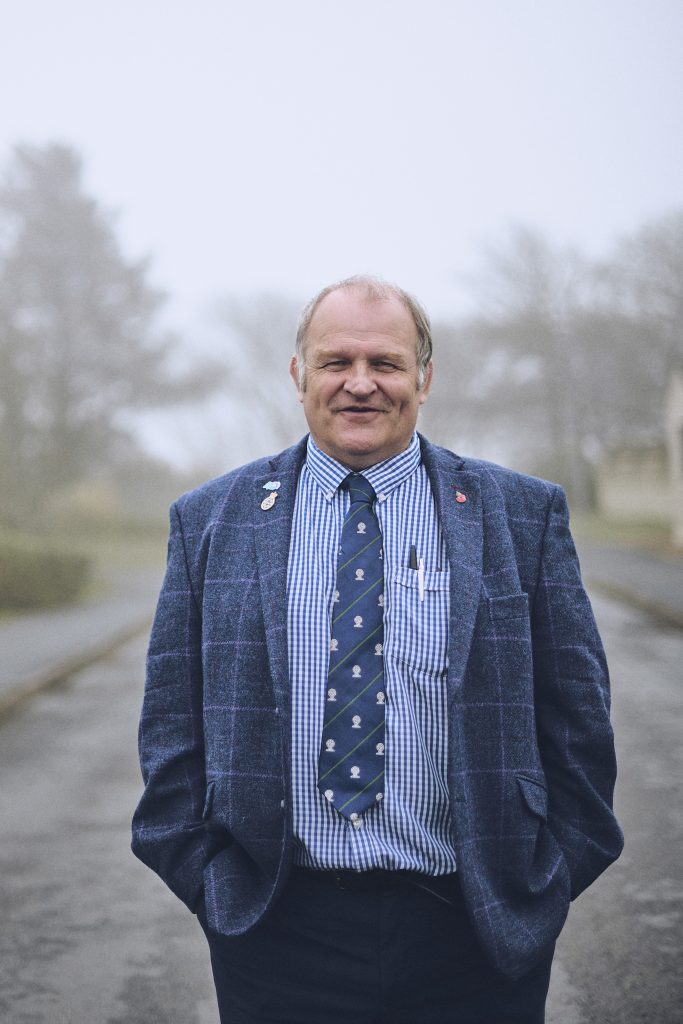
All administrations need strong opposition. In Pembrokeshire, the Independent Group provides that — not opposing for the sake of it, but challenging policies that harm residents and pushing for responsible use of taxpayers’ money.
The advantage of being an Independent is the freedom to represent the views of your community without party tribalism. Stephen Williams, an Independent councillor in Carmarthenshire, recently announced he will stand as an Independent for the Senedd. Perhaps Pembrokeshire and Ceredigion should consider doing the same.
This is an opinion piece by Cllr Huw Murphy, County Councillor for Newport & Dinas and Leader of the Independent Group on Pembrokeshire County Council.



This is not the time to turn our backs on jobs, security and our proud defence heritage
PEMBROKESHIRE is once again being asked a simple question: do we want to be a county that helps shape Britain’s future, or one that says no to opportunity when it matters most?
The growing row over the proposed DARC project at Brawdy has generated more heat than light in recent days. With Eluned Morgan now calling for the scheme to be paused because of Donald Trump, and campaigners demanding it be scrapped altogether, it is worth stepping back from the noise and looking at what is really at stake.
Of course people are right to be alarmed by some of Trump’s behaviour. His rhetoric, his antics, and his bizarre attempts to wrap politics in religious theatre deserve criticism, ridicule even. If politicians want to condemn that kind of behaviour, fair enough. But serious decisions about Pembrokeshire’s future cannot be based on one man’s latest stunt.
Trump will not be President forever. By the time DARC is fully built, operational and delivering benefits, he will almost certainly be long gone. To throw away a major long-term opportunity for Pembrokeshire because of short-term panic over a single US President would be a serious mistake.
What is being proposed at Brawdy is not some passing political gimmick. It is a major defence and infrastructure project that would help secure the future of an existing military base, create jobs during construction, support permanent roles once operational, and ensure Pembrokeshire continues to play a serious role in national security.

That matters.
For this county, DARC is not an abstract foreign policy argument. It is a chance to protect the long-term future of a strategic site that has served Britain for decades. It is a chance to keep Brawdy alive, relevant and useful in a changing world, rather than letting it slowly drift into uncertainty and decline.
It is also a jobs issue, however much opponents try to talk that down. Construction work means contracts, wages and money circulating in the local economy. Once complete, the site would still need to be run, maintained, secured and supported. In a county where stable, skilled jobs are never to be sniffed at, that should matter to every sensible politician.
And then there is the wider issue of safety.

We are living in a more unstable world. Space is no longer some distant science-fiction sideshow. It is central to communications, intelligence, navigation and defence. Any country that cannot see what is happening above it is leaving itself dangerously exposed. Supporting DARC is not warmongering. It is common sense. It is about readiness, awareness and protecting the systems modern life now depends on.
Much of the argument against the project has been emotional. We hear a great deal about appearance, about symbolism, about fears of what the radar might represent. But leadership means weighing those concerns against reality. Pembrokeshire cannot afford to reject every major development on the basis that change makes people uncomfortable.
There is an uncomfortable truth here for DARC’s opponents. Protecting Pembrokeshire is not just about preserving a postcard view. It is also about protecting livelihoods, maintaining strategic assets, and making sure this county does not become a beautiful but economically sidelined corner of Wales where every serious opportunity is driven away.
A live military base with a renewed purpose is better than a fading one with none.
A project that brings jobs, investment and national relevance is better than managed decline dressed up as moral virtue.
And a serious defence asset in west Wales is better than the slow erosion of infrastructure while politicians pretend symbolism pays wages.
This newspaper understands why people care deeply about Pembrokeshire’s landscape and identity. So do we. But we also understand that counties survive by adapting, by staying useful, and by having the confidence to back projects that serve both local and national interests.
DARC does all of those things.
It would bring construction jobs. It would help sustain long-term operational roles. It would preserve the use of an important military base. And it would place Pembrokeshire at the heart of a serious national security project at a time when the world is becoming less safe, not more.
What Pembrokeshire needs now is not panic, hedging, or election-time theatrics. It needs backbone.
If politicians want to criticise Donald Trump, they are welcome to do so. But they should not use him as an excuse to duck a decision that could benefit Pembrokeshire for decades to come.
Trump is temporary.
The opportunity for Pembrokeshire is not.

THE IMAGES from Golders Green this week should stop all of us in our tracks.
Ambulances, not symbols of power, not political offices, not even property tied to profit, but ambulances, vehicles dedicated to saving lives, were set alight in the early hours of the morning. Oxygen tanks exploded. Families were forced from their homes. Volunteers who give their time freely to help others were targeted.

If that does not cross a line, then we have lost sight of where the line is.
Police are treating the attack as antisemitic. It is hard to see it as anything else. And it should be said plainly: there is no cause, no grievance, no anger about events abroad that can justify targeting Jewish communities in Britain, least of all those providing emergency care.
But if we are honest, this did not come out of nowhere.
Across Europe, and yes, in parts of the UK, tensions linked to the Israel-Gaza conflict have been bleeding into our streets, our conversations, and increasingly, our behaviour. What begins as outrage about war risks mutating into something darker: collective blame, dehumanisation, and eventually violence.

We have seen this pattern before in history. It never ends well.
At the same time, we cannot pretend that outrage only travels in one direction. Reports from the West Bank of settler violence, homes torched, communities terrorised, are deeply disturbing. Innocent people are suffering there too, often with little protection and even less accountability.
These are different situations, with different causes and different responsibilities. But they are connected by one dangerous thread: the erosion of empathy.

When people stop seeing individuals and start seeing “sides”, everything becomes easier to justify.
Burning an ambulance becomes, in someone’s mind, an act of resistance.
Torching a home becomes, in someone else’s mind, a matter of security.
Both are wrong.
And both depend on the same lie, that the person on the receiving end somehow deserves it.
Britain now faces a choice.
We can import the hatred of a conflict thousands of miles away, allowing it to fracture communities that have lived side by side for generations. Or we can draw a firm line and say: not here.
That means something uncomfortable for everyone.
Those who stand with Israel must be willing to speak out when Palestinians are attacked unjustly. Silence in those moments undermines credibility and fuels resentment.
Those who stand with Palestine must be equally clear in condemning antisemitism, not hedging it, not contextualising it, not quietly ignoring it when it appears on “their side”.
Because once you start excusing hatred when it suits your position, you are no longer arguing for justice, you are just choosing your victims.
The attack in Golders Green is not just about four burnt-out vehicles. It is a warning sign.
If ambulances are fair game, what is not?
Britain has long prided itself on being a place where different communities can live together, disagree, protest, and still recognise each other’s humanity. That tradition is under strain.
The truth is, anger is easy. Outrage is easy. Social media makes both effortless.
Restraint is harder. Nuance is harder. Refusing to hate, especially when confronted with images of suffering, is one of the hardest things we can ask of people.
But it is also the only thing that prevents society from sliding into something far worse.
The flames in Golders Green were put out.
What matters now is whether we put out the ones that lit them.
WHEN I was studying law at university, constitutional law lectures were easily the most boring part of the course.
Dry cases. Ancient statutes. Endless discussion about parliamentary powers, constitutional conventions and obscure historical arrangements that seemed far removed from everyday life.
At the time, I thought it was all terribly dull.
Looking back now, I realise I had completely missed the point.
Constitutional law is not simply about legal rules. It is about the story of how Britain came to govern itself. Every institution, every convention and every reform is part of a long historical journey stretching back centuries.
This week marks one of those rare moments when that history visibly turns a page.
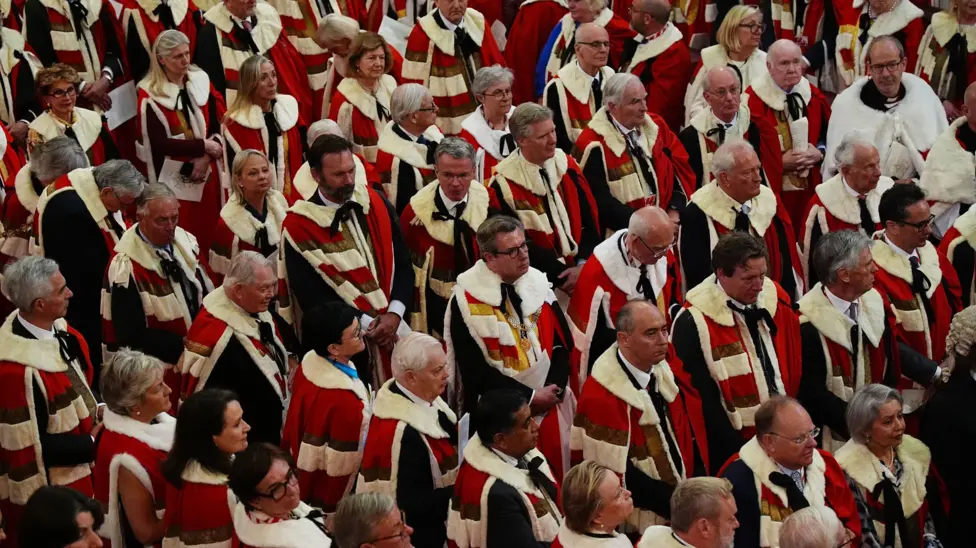
The remaining hereditary peers in the House of Lords are set to lose their automatic right to sit and vote in Parliament. When that happens, a constitutional principle that has shaped British law and government for more than seven hundred years will finally come to an end.
The origins of the Lords lie in the medieval councils summoned by Edward I of England, when nobles and bishops were called together to advise the Crown. Over time, attendance at Parliament became tied to noble titles, and those titles were inherited.
From that point onward, birth carried political power. If your family held a peerage, you could sit in Parliament and help shape the laws of the kingdom.
For centuries that arrangement formed one of the pillars of Britain’s constitutional structure. It survived civil war, revolution, reform acts and the expansion of democracy.
Even the great wave of reform in 1999 only reduced the number of hereditary peers rather than eliminating them entirely.
Now the final remnants of that system are set to disappear.
For critics, the change is long overdue. The idea that someone should help make the law purely because of who their parents were sits uneasily with modern democratic principles.
But the hereditary peers also represented something else — a direct and living connection to the deep historical roots of the British constitution.
Many of those who remained after the reforms of the late twentieth century became respected contributors to parliamentary scrutiny. They were part of the institutional memory of Parliament, carrying with them traditions that stretched back through generations.
The removal of hereditary membership will not fundamentally alter the role of the House of Lords. It will remain a revising chamber that scrutinises the work of the House of Commons.
But symbolically, something important is ending.
A constitutional principle that endured for more than seven centuries — longer than most political systems anywhere in the world — is finally passing into history.
Those constitutional law lectures I once found so dull were not just about dusty legal doctrines.
They were about the slow evolution of the British state itself.
And this week, that story takes another step forward.



Crime6 hours ago
Farming company fined £19,000 for damaging protected wildlife site
A CARDIGAN farming company has been ordered to pay almost £20,000 after recklessly damaging a Site of Special Scientific Interest....


News9 hours ago
Baby in critical condition after Fishguard emergency
Teenagers arrested as police investigate circumstances A BABY remains in hospital in a critical but stable condition after being taken...


Community1 day ago
Tenby phone signal crisis goes national as businesses warn of summer disruption
TRADERS SAY CARD PAYMENTS, TAXIS AND VISITOR SAFETY ARE BEING HIT BY ‘DEAD ZONE’ COVERAGE TENBY’S long-running mobile phone signal...


News1 day ago
Final poll puts Plaid and Reform level ahead of Senedd vote
Labour faces historic setback as new modelling points to a hung Senedd PLAID CYMRU and Reform UK are projected to...

News2 days ago
West Wales coracle fishermen raise alarm over suspected sewage pollution
A CENTURIES-old fishing tradition on the River Towy could be under threat after coracle fishermen reported suspected sewage pollution entering...

Community3 days ago
Scooter rally brings colour and nostalgia to Tenby
TENBY is buzzing with the sights and sounds of classic scooters this Bank Holiday weekend as the Welsh National Scooter...

Entertainment3 days ago
Haverfoodfest returns to Haverfordwest town centre today
HAVERFORDWEST town centre is expected to be busy today as Haverfoodfest 2026 returns for a full day of food, drink,...

Crime4 days ago
70-year-old denies assault and restraining order breach
A PENSIONER from Pembroke Dock has denied breaching a restraining order and assaulting another man. Henry Howlett, 70, of Market...

News5 days ago
Conservatives target two seats in new Ceredigion Penfro constituency
Paul Davies and Sam Kurtz say health, farming and transport are key as they seek return to the Senedd CONSERVATIVE...


Community5 days ago
Milford Haven Beer Fest returns to waterfront this May
EVENT WILL FEATURE 34 DRINKS, LIVE MUSIC AND STREET FOOD MILFORD HAVEN is preparing to raise a glass as Beer...
-
News9 hours ago
Baby in critical condition after Fishguard emergency
-

 Community5 days ago
Dogs removed after welfare concerns at Milford Haven property
-

 Crime6 days ago
Pembrokeshire hairdresser avoids prison after pub assault
-
 Crime6 days ago
Pembrokeshire man charged with making hundreds of indecent images of children
-

 Business6 days ago
Handcrafted garden furniture built to last across Pembrokeshire
-
 Charity6 days ago
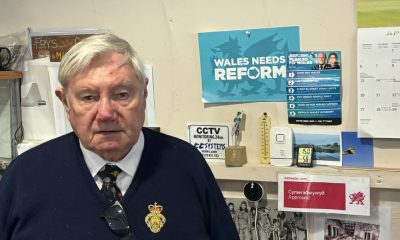
Row erupts at Spitfire museum after Reform poster displayed at charity premises
-
 Community6 days ago
Cancer patients targeted with parking fines outside Haverfordwest support centre
-
Community1 day ago
Tenby phone signal crisis goes national as businesses warn of summer disruption