


News
Junior Agri-academy fact-finding tour of Brussels



EU HQ: visited by Wales’ Junior Agri-Academy
FOURTEEN members of Wales’ Junior Agri-academy have taken the opportunity to meet EU politicians, senior commission officials and NFU lobbyists, during a recent study trip to Brussels, thanks to NFU Cymru and its team at the British Agriculture Bureau (BAB) in Brussels. The youngsters, aged 16 to 18, all with a strong interest in developing a career in Welsh agriculture, did a three day tour of Brussels, to gain an insight of the political workings of Europe and the interaction and impact it has on Welsh agriculture, as well as promoting the need for European policy to recognise and help the next generation access a profitable and growing industry.
During a packed few days the Junior Agri-academy members had dinner and a presentation with Welsh MEP, Derek Vaughan, had a guided tour of the European Parliament and visited the Welsh Office. They also received a presentation from senior officials on the links between Welsh Government and the European Commission and how the interests of both Welsh agriculture and wider industry are represented in Europe.
The group also attended and observed the agriculture committee. The group also met with the General Secretary of the European Council of Young Farmers, where they discussed and shared their vision and belief in the future of agriculture and learnt first-hand how youngsters from across the EU are represented and influencing future policy. John Mercer, NFU Cymru Director, also attended the trip. He said: “It was a fantastic few days and a real pleasure to take such an enthusiastic and knowledgeable group of youngsters to the heart of European politics.
“The group saw at first-hand how influential NFU Cymru is within Europe and how important it is for us to have an office and staff representing the interests of Welsh farmers in Brussels, which is based at the heart of the EU institutions.” The group had the opportunity to hear from Commissioner for Agriculture and Rural Development, Phil Hogan, on two occasions. Firstly, the group sat as observers at the Commissions Agriculture Committee meeting and then they sat in on and observed COPA Presidium with NFU Cymru, whilst visiting COPA COGECA headquarters.
On the second occasion the academy had the opportunity to meet Commissioner Hogan, who stressed that he believed there was a bright future for youngsters across Europe. He later wrote in his blog:“It was inspirational to meet a group of dynamic young farmers from Wales, who were there at the invitation of NFU Cymru.” Junior Agri-academy member, Sioned Davies, said: “European politics plays a significant role in how we farm in Wales today and how we’ll farm in the future. It was a fantastic experience and meeting Commissioner Hogan face-to-face and hearing his views on the future was a real bonus.

We are very grateful to NFU Cymru for giving us the opportunity to see the workings of EU policy making and to Derek Vaughan for sponsoring and helping arrange the visit to the European Parliament.” The final day of the trip saw the group return to London where they met the NFU Parliamentary team in the NFU London office, to learn about their Westminster lobbying role and activities. The group then toured the Houses of Parliament before finishing with a question and answer session with Roger Williams, the MP for the constituency of Brecon and Radnorshire.
Swansea NFU Cymru Group Secretary, Kate Miles,who also travelled with the group representing Wales YFC said: “We are incredibly grateful to Roger Williams for staying on an extra day in London to meet with the Junior Agri-academy members and answer their questions. For the group to see behind the scenes of both the European and Westminster Parliaments within three days is an amazing opportunity and an experience I am sure they will never forget. “This trip, combined with their previous visit to the Welsh Assembly and Welsh Government in Cardiff, has given the group an excellent understanding of the main political factors that shape our industry and this will undoubtedly help them in whatever career they develop and hopefully inspire them to stay within agriculture.”


THE GERMAN cruise ship AIDAsol returned to Fishguard today, bringing hundreds of passengers to north Pembrokeshire.
The large vessel was clearly visible from homes overlooking Fishguard Bay after arriving for what is understood to be her second visit to the town.
Passengers were expected to travel ashore by tender before exploring Fishguard, Goodwick and tourist destinations across Pembrokeshire.
Cruise ship visits provide a welcome boost for local shops, cafés, transport providers and visitor attractions, with organised excursions often taking passengers to locations including St Davids and the Pembrokeshire Coast National Park.
AIDAsol is operated by German cruise company AIDA Cruises and is instantly recognisable because of the distinctive eye and red lips painted across her bow.
The ship measures more than 250 metres in length and can accommodate more than 2,000 passengers, as well as hundreds of crew members.
Her arrival attracted attention from residents, with the impressive vessel photographed from several vantage points around Fishguard and Goodwick.
The visit comes during the busy summer tourism season and offers businesses another opportunity to showcase the area to overseas visitors.
AIDAsol was due to remain off the coast while passengers enjoyed their time in Pembrokeshire before continuing to the next destination on her itinerary.

Impressive arrival: AIDAsol pictured in Fishguard Bay today (Pic: Herald reader)
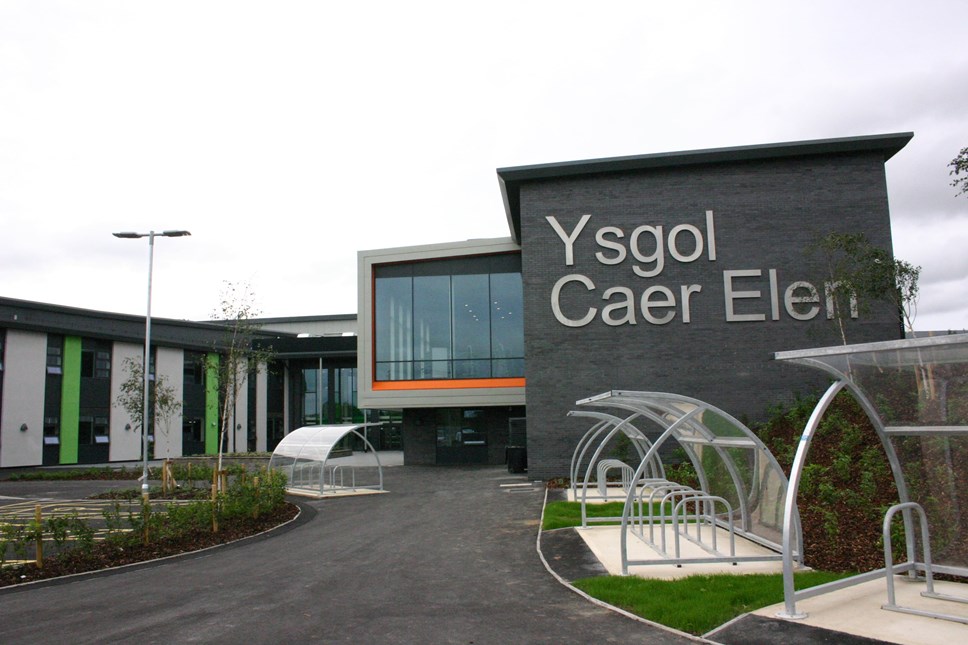
Ysgol Caer Elen could receive more than £1,000 to help pupils perform as Pembrokeshire hosts Wales’ biggest cultural festival
PUPILS from Ysgol Caer Elen are preparing to perform on one of Wales’ biggest cultural stages after Haverfordwest Town Council backed financial support for their visit to this summer’s National Eisteddfod.
The council’s Personnel, Policy and Finance Committee has recommended awarding the Haverfordwest school £1,065 towards transport and participation costs.
The National Eisteddfod, known this year as Eisteddfod y Garreg Las, will be held at Llantood, near Crymych, from August 1 to 8.
Councillors said the event would provide pupils with an exceptional opportunity to perform at a major national festival while it is being hosted in their home county.
Members also praised the school’s enthusiasm and its efforts to support local fundraising, including a concert and disco held on behalf of the Haverfordwest Eisteddfod Appeals Committee.
The proposed grant was considered to support several of the town council’s priorities, including the promotion of the Welsh language, culture and the arts, as well as creating educational opportunities for young people.
Ysgol Caer Elen provides Welsh-medium education for pupils aged from three to 16 and has played a significant role in the growth of Welsh-language education in Pembrokeshire.
This year’s festival also carries added historical significance, marking 850 years since the first recorded Eisteddfod was held at Cardigan Castle in 1176.
Councillors said the chance for local pupils to participate in such an important event was unlikely to come around again in the foreseeable future.
However, the committee stressed that its recommendation had been made because of the exceptional circumstances surrounding the Eisteddfod’s return to Pembrokeshire.
Members said the award should not be treated as setting a precedent for future applications, which will continue to be considered under the council’s usual grant criteria.
The recommendation must now be approved by the full town council before the funding is formally awarded.

Thousands of visitors are expected to travel to Pembrokeshire during the week-long festival, which will feature music, literature, theatre, visual arts, competitions and activities for families.
The National Eisteddfod is regarded as Europe’s largest travelling festival celebrating the Welsh language and culture.

WOMEN across the Dyfed-Powys area are set to benefit from improved access to specialist support following the opening of a new Women’s Centre Hub at Parc Dewi Sant.
Operated by The Nelson Trust, the hub forms part of the continued development of trauma-informed services for women experiencing multiple disadvantage.
It provides a safe and supportive environment where women can access practical advice, guidance and specialist help to address the challenges they face.
The Office of the Police and Crime Commissioner has worked alongside The Nelson Trust and partners from the Local Criminal Justice Board to support the development of the facility.
The project forms part of the board’s wider commitment to improving outcomes for women throughout the Dyfed-Powys area.
The hub was officially opened on Friday, July 3, bringing together organisations involved in delivering support and recognising the partnership work that helped establish the new service.
Peer support will also play an important role, with volunteers drawing on their own lived experiences to help women facing similar circumstances.
Referrals to the Dyfed-Powys service are currently made through the Community Rehabilitation Service via probation. The hub is not presently accepting self-referrals.
Police and Crime Commissioner Dafydd Llywelyn said: “Women experiencing multiple disadvantage deserve access to the right support at the right time.
“By working closely with our partners, we can help ensure that women across our communities are able to access the specialist services they need to address the challenges they face and build safer, more positive futures.
“This partnership demonstrates what can be achieved when organisations come together with a shared commitment to supporting vulnerable members of our communities.”



Community2 hours ago
‘Paying £29 to reach a cashpoint is absurd’: Narberth’s urgent ATM appeal
Residents, businesses and visitors are being urged to provide evidence after two High Street cash machines were removed, leaving the...


Crime18 hours ago
Haverfordwest man jailed for seven years for historic rape and sexual assault of girl
A HAVERFORDWEST man has been jailed for seven years after being convicted of raping and indecently assaulting a girl during...


News23 hours ago
Burnham more willing to listen on Welsh devolution, says First Minister
Rhun ap Iorwerth says he will press the new Prime Minister for powers over policing, railways and Wales’ natural resources...


Crime1 day ago
Women jailed after man chased through Milford home and attacked with knives
Kelly Rees receives further 27-month sentence while already serving prison term for notorious taxi robbery TWO women have been jailed...


Crime1 day ago
Mother headbutted and clawed police officers after threatening social worker
Court shown body-worn footage of violent confrontation at Goodwick property A COURT has been shown police body-worn footage capturing the...


Crime2 days ago
Man, 37, found dead following major police response in Pembroke Dock
Death not being treated as suspicious as police make statutory referral to IOPC following active investigation A 37-YEAR-OLD man has...


Community2 days ago
Household Cavalry drum horse returns home to Pembrokeshire for final farewell
Dyfed Willa Rose, who became Major Juno and the first mare to serve as a Household Cavalry Drum Horse, was...


News3 days ago
Jo Stevens out as Welsh Secretary as Burnham reshapes government
Cardiff East MP repeatedly visited Pembrokeshire to champion clean energy jobs, but her successor inherits unresolved questions over Milford Haven’s...


Crime3 days ago
Teen cleared of attempted murder but guilty of GBH after Milford teacher stabbed
Jury returns 11-1 majority verdict on charge of causing grievous bodily harm with intent, with sentencing set for September 3...


Community3 days ago
French troops march through Fishguard as Britain’s last invasion returns to life
Battle scenes, cavalry displays and a surrender procession brought one of Pembrokeshire’s most extraordinary stories back to the streets MUSKET...
-

 Crime1 day ago
Drunken rail passenger tried to headbutt police after being refused travel
-

 featured2 days ago
From a father-and-son project to an award-winning campervan business
-
Crime1 day ago
Women jailed after man chased through Milford home and attacked with knives
-
News23 hours ago
Burnham more willing to listen on Welsh devolution, says First Minister
-
Crime18 hours ago
Haverfordwest man jailed for seven years for historic rape and sexual assault of girl
-

 Entertainment2 days ago
Robin Hood: A magical show by young talent at The Torch Theatre
-
Crime1 day ago
Mother headbutted and clawed police officers after threatening social worker
-

 Local Government2 days ago
Consultation over electoral changes to eight Pembrokeshire community councils