


News
Latest Welsh energy conference reveals gap


 OVER 200 representatives of business, government, academia and a few community organisations crammed into a Cardiff conference to look ahead at energy in Wales on Monday (Dec 15). The overwhelming message was one of frustration at the widening gap between the amazing potential for renewable energy in Wales and its realisation. David Jones for Marine Energy Pembrokeshire flagged up the resource lying all around Wales that is currently untapped.
Our tides and waves could potentially power Britain and Pembrokeshire is among the best sources. Even a modest 30 MW installation could provide 2000 person years of employment and be operational in a few years. The meeting called often for vision and leadership quality from government. Lack of progress was also caused by a cobweb of regulations that choke progress in their dark embrace. Plaid Cymru assembly member Alan Ffred chairing the event, said that planning rules should insist on community benefit, as this would have cut through many of the complexities.
He said: “It is incomprehensible that community benefit was not included as a requirement, a tragic wasted opportunity.” The industry itself took a share of the blame for not getting communities on their side at the outset. “Wind is now toxic in Powys”, said the chair of Powys against Pylons. “I am not highly qualified like all the other speakers, I am just a fairly good dairy farmer, but I cannot get a wind turbine for my farm now, people are so hostile to them.” Examples of companies who had got their public relations right were also cited, such as Swansea Bay lagoon. They were the exceptions. This contrasted with public opinion.
Peter Davies, also from Pembrokeshire and chair of all things to do with sustainable futures at the Welsh Assembly reported on the million conversations exercise across Wales. He said: “People’s first concern with energy is cost, but climate is a high second when it comes to long term concerns. People like renewables and are against coal and fracking with mixed views on nuclear.” This feeling is shared in Pembrokeshire according to an online petition for the county to move to renewables.
A well known climate denier MP also spoke, and presented a barrage of unreferenced figures showing that climate change had stopped years ago, stating we have enough fossil fuels for hundreds of years, and the thing to do is to get on with fracking and coal mining in the UK as these produce cheaper energy. Gerwyn Williams for UK onshore Gas Group presented graphs showing vast sources of gas to frack. His company is seeking investment on the stock exchange without success.

Interestingly, both the climate denier and the gas chief were ignored by the rest of the meeting. Renewables were what everyone was interested in. Another huge barrier turned out to be the national grid. We heard that even a very modest 18kW community hydro cannot go ahead because there is no grid capacity. Mid Wales including Ceredigion and Powys are especially grid poor. All the capacity has been prebought up by giant solar farms which may or may not ever be built.
Maxine Frerk from Offgen who regulates the UK grid said this did not sound right and she would look into it. Plaid Councillor for Ceredigion, Alun Williams spoke to her afterwards and arranged to meet with her and Western Power, which is the grid operator blocking progress, to get to grips with the challenge. The conference was called because of the possibility to allow Wales to take control of power generation up to 350 megaWatts, which is up from the present 50MW.
This increase in powers is a result of the promises made to avert the Yes vote in the Scottish referendum. Conference speakers favoured this increase in powers, but with the right leadership. Welsh Labour Government Minister, Carl Sergeant spoke warmly about community renewables. He acknowledged we needed a Wales based planning inspectorate to cope with the increased powers. He refused to answer any questions with any detail, figures, dates or actions, much to the frustration of the waiting media.
The day had started with the coffee running out early. The prestigious attendees from governments and corporations queued in vain after their long journey for the expected cuppa. This, sadly, epitomised the lack of ability in Wales to rise to its potential. Alan Ffred, chair of the Environment Committee said: “Frustration is a word we are hearing a lot today.”




THE SALVATION Army is encouraging more people to get involved in their local communities as Volunteers’ Week marks its 42nd anniversary.
Volunteers’ Week runs from Monday, June 1 to Sunday, June 7, recognising the contribution made by volunteers across the UK.
Across Wales, volunteers play a vital role in The Salvation Army’s community services. They help run activities and classes in community centres, prepare and serve food at lunch clubs and community cafés, support charity shops, and provide meals for people who might otherwise spend Christmas Day alone.
Lyddia Kibaara, The Salvation Army’s Volunteering Manager said: “We’re incredibly privileged to have the support of so many dedicated, kind people who keep our community services running.
“Time is the only non-renewable resource we have, and our volunteers give it generously. Their time transforms the communities we serve.
“We have families who have volunteered with us through the generations, students who are looking for their first volunteering experiences, people who can cook for a crowd, help others with debt advice, or share their digital skills to make sure others aren’t left behind.”
A chance to help others
Anne Evans, 74, began volunteering at The Salvation Army shop in Newtown after retiring and looking for something worthwhile to do.
She said the experience had opened her eyes to the problems faced by people in her community, including poverty, loneliness, relationship breakdowns and employment issues.
Anne said: “I enjoy talking to people who pop into the shop as everybody has a different story to tell. It makes you realise that you don’t know how many problems people can face.
“They are glad to have someone who listens to them and takes an interest in their lives.
“Also, with the rising cost-of-living, people appreciate that we sell items at affordable prices. That’s such an important thing for people right now. Life is becoming more expensive.”
‘More than just a shop’
The Salvation Army supports some of the most disadvantaged people in communities across Wales, including those experiencing homelessness, older people, people affected by drug and alcohol addiction, and those looking to develop skills for work.

Gary Chapman, 43, volunteers at The Salvation Army charity shop in Llanelli.
After his marriage broke down, Gary experienced homelessness for a number of years. He said volunteering at the shop had changed his life and helped him support others.
Gary said: “We are more than just a shop. We are a meeting place. A focal point in the community.
“We offer support, love and care in so many ways, whether through a friendly chat, a listening ear over a cup of tea, or practical help in someone’s hour of need.
“There could be one person comes through the door who is really struggling. Hopefully I can be there for that person.
“I enjoy interacting with people and helping them if I can. That’s what we are here for in The Salvation Army. We are here to help people. We are here to listen to their concerns.”
How to volunteer
Volunteers’ Week is an opportunity to thank those who give their time, passion and skills so generously, while also encouraging others to get involved.
Anyone interested in volunteering with The Salvation Army can visit: www.salvationarmy.org.uk/volunteer
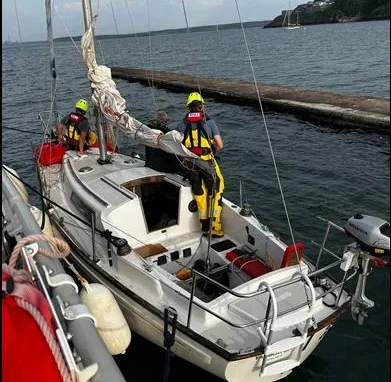
BOTH St Davids RNLI lifeboats were launched on Wednesday (May 27) after separate incidents involving a damaged yacht in St Brides Bay and a kayaker who had become separated from his craft in Ramsey Sound.
The all-weather lifeboat Norah Wortley was first tasked at 3:12pm to assist a yacht in St Brides Bay after its mast snapped and its sails were lost during gusts in a thunderstorm.
The lifeboat launched at 3:27pm and made its way to the scene, encountering patches of fog and thundery showers en route. Conditions were otherwise described as smooth to slight, with good visibility and winds of between three and five knots.
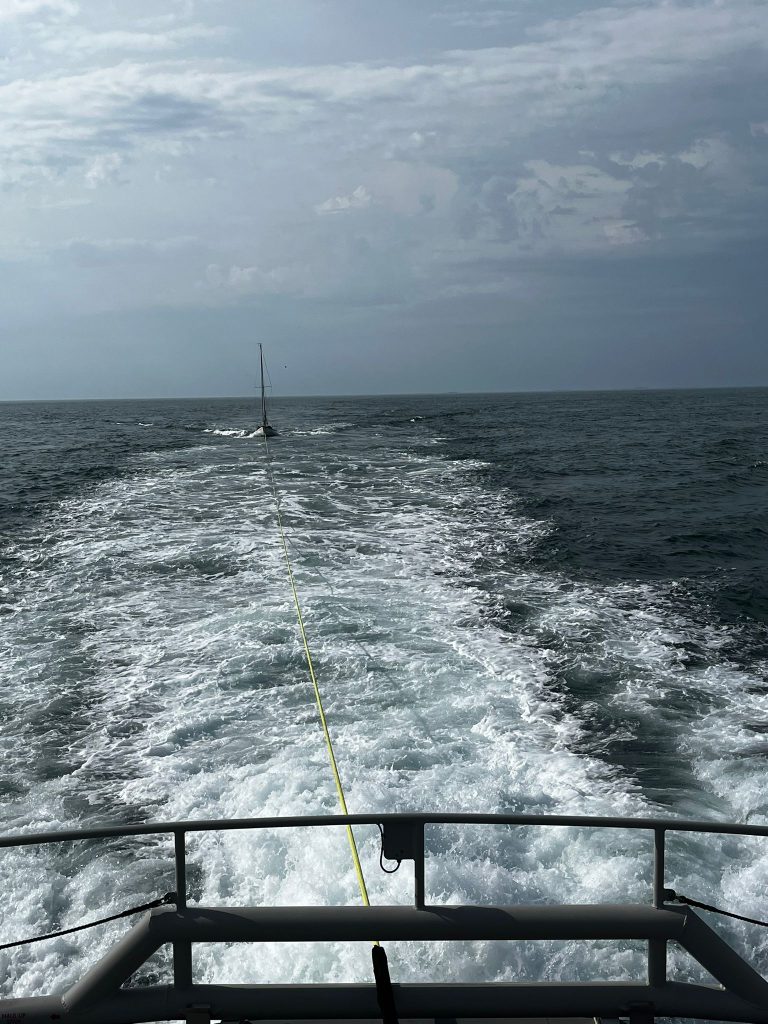
The volunteer crew arrived at 4:00pm and found the yacht had also lost engine propulsion. A tow was established and the vessel was taken safely to a mooring in Dale.
The yacht was secured to a buoy before the lifeboat departed at 7:00pm. The crew returned to station at 8:00pm and the boat was back on service by 8:15pm.
While the all-weather lifeboat was still at sea, St Davids’ inshore lifeboat was tasked at 5:18pm to a kayaker who had become separated from his kayak.
The crew launched at 5:35pm and headed to the south end of Ramsey Sound, off Treginnis Head. The casualty was located on Shoe Rock, where crew members helped him aboard and carried out a medical assessment.
The kayaker had been wearing a buoyancy aid and had a means of calling for help, allowing him to dial 999 and ask for the Coastguard after becoming separated from his kayak.
He and his craft were safely returned to Porthclais Harbour, and the inshore lifeboat returned to station, where it was back on service at 8:00pm.
RNLI inshore lifeboat helm Chris Limbert said: “This rescue was a brilliant example of why it’s so important to always wear a buoyancy aid and carry a means of contact.
“If the kayaker had been without a buoyancy aid, he may have struggled to stay afloat and get himself safely onto the rock.
“He was also carrying a mobile phone which allowed him to call 999 and ask for the Coastguard.

“Our crew of volunteers are on call 24/7 to go to people’s aid. Never be afraid to call for help.”
Pic: RNLI/Rosie Rees

Registered offender used library computers to hide social media accounts
A HAVERFORDWEST sex offender who used public library computers to exchange child abuse material and discuss the sexual abuse of minors has been jailed for 20 months.
Euwyn Draper, aged 22, of Hill Street, Haverfordwest, appeared at Swansea Crown Court after admitting four breaches of a sexual harm prevention order.
Recorder Greg Bull KC told him the courts had “bent over backwards” to assist him in the past, but said those efforts had failed.
He told Draper: “I’m not going to lecture you because I would be wasting my breath. You knew you had to comply with the order.”
Secret accounts
The court heard that Draper had been made subject to a 10-year sexual harm prevention order in 2024 after earlier convictions for possessing and distributing indecent images of children.
The order banned him from holding social media accounts in any name other than his own and required him to disclose relationships or friendships to police when asked.
Despite this, Draper secretly maintained accounts on a number of platforms, including X, formerly Twitter, Instagram, Snapchat and BlueSky. The BlueSky account had been registered under a false name.
His use of Snapchat was specifically prohibited because of the platform’s auto-delete function.
Library computers
Prosecutor Megan Williams said Draper’s latest offending came to light on May 5 this year during a routine meeting with his offender manager at Haverfordwest police station.
When asked about his internet use, Draper claimed he only went to the library to watch YouTube and listen to Spotify. He denied having any social media accounts or communicating with anyone online.
But as questioning continued, he became “flustered” and admitted he had been chatting to a male online and had an X account which had not been disclosed to police.
Officers attended the library with Draper the following day to examine his digital activity.

After he logged in using his library ID and opened his Google account, police reviewed his X profile and found sexually explicit conversations between Draper and another male in which the pair discussed sexual activity involving children aged five and above.
The court heard that explicit photographs had also been exchanged.
Police also discovered that Draper had reinstalled Instagram after previously deleting the account in front of officers.
Previous offending
Draper has three previous convictions for 14 offences.
In April 2024 he was given a suspended prison sentence and made subject to the sexual harm prevention order for possessing and distributing child sex abuse images.
Within months, he breached the order by maintaining an undisclosed social media account. In September 2024 he was jailed for 16 months for possession of further indecent images.
When interviewed about the latest breaches, Draper answered “no comment” to all questions.
‘Immature young man’
Alex Scott, defending, described Draper as an “immature young man” who lived an isolated life in rented accommodation and acted “impulsively” in relation to social media.
He said Draper had co-operated with police by accompanying officers to the library and recognised the need to address the underlying causes of his behaviour.
Jailed
Draper had previously pleaded guilty to four counts of breaching a sexual harm prevention order.
After giving him a one-third discount for his early guilty pleas, Recorder Bull sentenced him to 20 months in prison.
Draper will serve up to half of the sentence in custody before being released on licence to complete the remainder in the community.



Crime1 day ago
Haverfordwest sex offender jailed over child abuse material
Registered offender used library computers to hide social media accounts A HAVERFORDWEST sex offender who used public library computers to...


Local Government1 day ago
Milford Haven school redevelopment moves a major step closer
£141.6m scheme could transform education in the town A MAJOR step forward has been taken in the long-awaited Milford Haven...


Crime1 day ago
Castlemorris man spared jail after knife confrontation over council tax debt
A CASTLEMORRIS man has avoided immediate custody after threatening enforcement officers with a knife during an early-morning visit over unpaid...


News2 days ago
Lifeboats and helicopter join search for missing person off Broad Haven
SEARCH teams carried out a major operation at Broad Haven after reports of a missing person. Little and Broad Haven...

News3 days ago
Multi-agency rescue after child falls on rocks while coasteering
Child airlift requested after four-metre fall near Lydstep A CHILD was rescued from rocks near Lydstep after falling around four...


News3 days ago
Police investigate ‘arson’ after vehicle fire spreads to property in Pembroke
A VEHICLE is believed to have been deliberately set alight during an alleged arson in Pembroke in the early hours...

News3 days ago
Four rescued after dinghy deflates off Pendine
FOUR people were rescued off Pendine on Wednesday evening after Tenby’s all-weather lifeboat was launched to reports of an inflatable...


News3 days ago
Hundreds attend major Diocese of St Davids gathering
Churches across West Wales urged to take message of faith back into their communities HUNDREDS of people gathered at Carmarthenshire...

News3 days ago
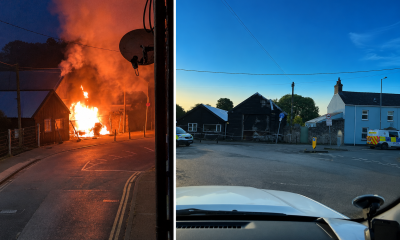
Vehicle destroyed in early morning fire in Pembroke
POLICE are investigating after a vehicle was destroyed in an early morning fire in Pembroke. The incident happened in the...


Climate4 days ago
Pembrokeshire named among Wales’ green economy hotspots
New analysis says the county’s net zero sector supports 1,600 jobs and accounts for 5.3% of local economic output PEMBROKESHIRE...
-

 Health3 days ago
Paul Davies warns health board over Withybush and Bronglais services
-
 Crime4 days ago
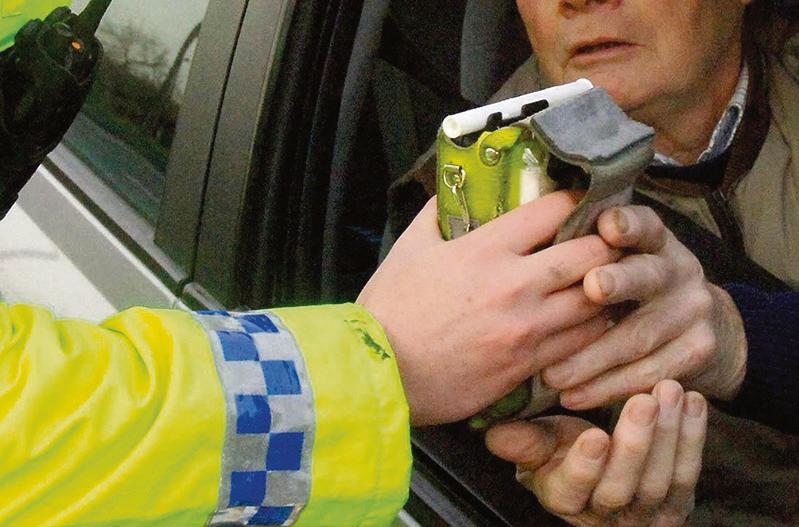
Police tip-off leads to drink-drive ban for Pembrokeshire pensioner
-

 Crime4 days ago
Steynton motorist banned after drink-drive collision
-
Crime3 days ago
Carmarthenshire man sent to Crown accused of 33 historic sexual offences
-

 Crime4 days ago
Warrant issued for man accused of taking wild goldfinches
-
 Crime4 days ago
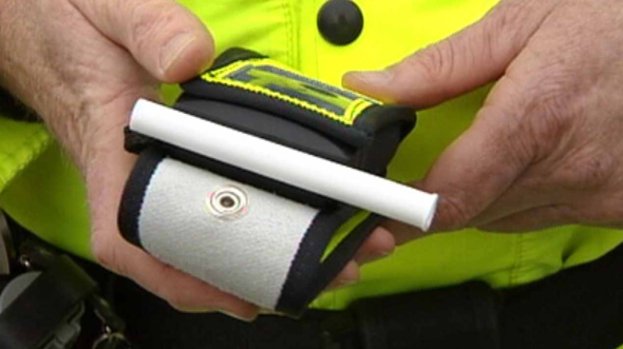
Dock man given suspended prison sentence for third drink-drive offence
-

 Crime4 days ago
Dock motorist fined £1,600 after four speeding offences
-

 Business7 days ago
Plaid energy policy challenged by Labour after Adam Price interview