


News
Butterflies in Wales fail to recover despite record summer heat


Pembrokeshire habitats remain under pressure as Big Butterfly Count reveals mixed results
BUTTERFLY numbers across Wales – including in Pembrokeshire’s coastal and upland habitats – remain under long-term pressure despite the hottest UK summer on record, new figures have revealed.
The results of Butterfly Conservation’s annual Big Butterfly Count show that while more insects were seen in 2025 than during last year’s record low, the overall picture remains bleak.
Across Wales, 7,704 people took part in the three-week survey, including nature enthusiasts, families and schools from Pembrokeshire. Together they counted 109,369 butterflies and moths, with an average of 12.2 butterflies per 15-minute count.
The most-seen species in Wales were the Large White (24,246), Small White (18,630), Red Admiral (14,978), Gatekeeper (12,202) and Meadow Brown (9,062). All are familiar sights in Pembrokeshire’s hedgerows, gardens and coastal grasslands.
Long-term decline

Dr Richard Fox, Head of Science at Butterfly Conservation, said the results underline a serious problem:
“We may feel like we’ve seen lots of butterflies this summer, but that’s only because last year was so awful. The figures suggest it’s actually been a pretty average year by modern standards.

“The 15-year Big Butterfly Count trends show that more than twice as many widespread species have declined significantly than have increased.”
While 2025’s warm summer helped boost numbers of some butterflies, species such as the Common Blue, Meadow Brown and Holly Blue fared badly. The Common Blue, a regular feature in Pembrokeshire meadows, recorded its third worst year on record.
Winners and losers

There were some bright spots. Both the Large White and Small White had their best ever Big Butterfly Count results. The Jersey Tiger moth, once largely restricted to the south-east of England but now spreading westward, had a record year and was spotted more widely than ever before.
But others struggled. The Small Tortoiseshell, which had its worst year on record in 2024, showed some improvement but remains in steep long-term decline – down 60% since 2011.
Pembrokeshire context
Local wildlife groups have long warned that Pembrokeshire’s butterfly populations are under stress from habitat loss, intensive farming practices, and pesticide use. The county’s diverse landscapes – from Preseli heathlands to the Pembrokeshire Coast National Park – remain crucial refuges for species that are disappearing elsewhere.
A spokesperson for Butterfly Conservation Wales said: “The results highlight why places like Pembrokeshire are so important. We need to protect meadows, hedgerows and coastal grasslands, as well as encourage wildlife-friendly gardening. Every action helps.”
Call to action
Butterfly Conservation has now launched a rescue mission for UK butterflies, urging retailers to stop selling unlicensed synthetic pesticides for domestic use. The charity has opened an online letter for members of the public to sign.

Dr Fox added: “Even when the weather is good, the environment can now only support far fewer butterflies than it used to. The time to act is now. Until we restore habitats and reduce pesticide use, we will not see a real recovery.”
The Big Butterfly Count will return in 2026, running between July 17 and August 9.


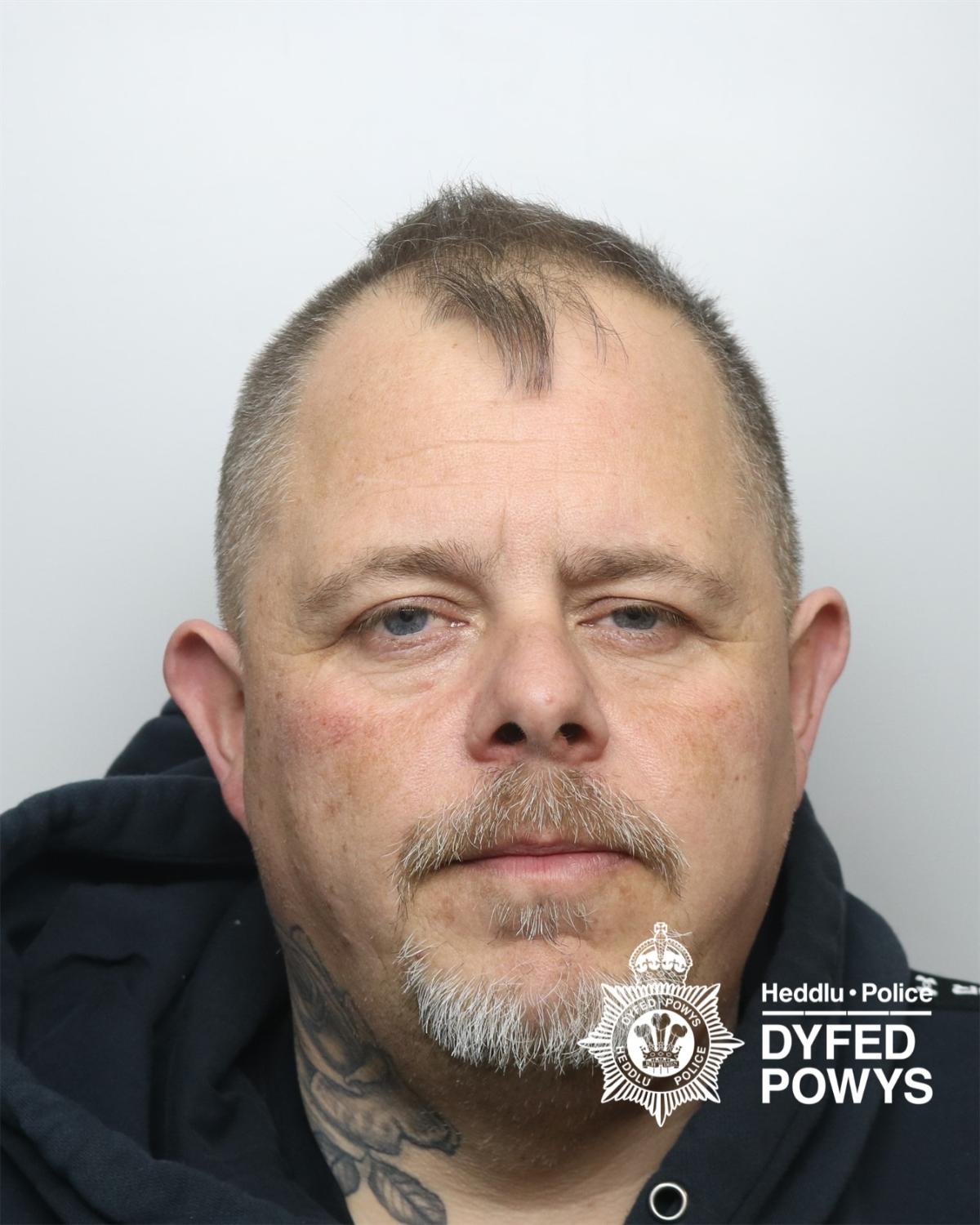
A PEMBROKESHIRE drug trafficker jailed after a major cocaine and cannabis seizure has been ordered to repay more than £33,000.
Dean Evans, 44, returned to Swansea Crown Court for a Proceeds of Crime Act hearing after prosecutors sought to recover money made through his offending.
The court heard it had been agreed that Evans benefited from criminal conduct by £496,533.94. However, his available assets were calculated at £33,337.37.
Judge Catherine Richards made a confiscation order for that amount and gave Evans three months to pay. If he fails to do so, he faces a further year in prison.
Evans, of St Clements Park, Freystrop, is already serving an eight-year sentence after admitting possession with intent to supply cocaine and cannabis.
He was caught after Dyfed-Powys Police’s Roads Policing Unit stopped his Seat Ateca on Holyland Road, Pembroke, at around 10:25am on January 2.
Officers searched the vehicle after Evans admitted they would find “stuff” inside.
They discovered around one kilogram of cocaine in a cardboard box in the boot, together with 5.4 kilograms of cannabis in a black bin bag. The cannabis had been split into ten vacuum-sealed bags.
Swansea Crown Court was previously told the drugs had a combined potential street value of up to £185,000, made up of around £125,000 of cocaine and cannabis worth up to £60,000.
A mobile phone seized from Evans revealed what prosecutors described as a “dealer’s list”, with dozens of names and sums believed to be owed. Messages also showed Evans directing dealers below him in the supply chain.
At the original sentencing hearing, the court was told Evans had 23 previous convictions for 62 offences, including rape and robbery. His previous drug matters had related only to possession.
Sarah John, mitigating, said he had pleaded guilty at the earliest opportunity and had stayed out of trouble for a “fairly lengthy period”, with his last conviction in 2016.

Jailing Evans for eight years, Judge Paul Thomas KC said: “You are clearly a man with few criminal boundaries.
“You ensnared users and low-level drug dealers into debt, dragging them into a vicious circle of criminality.”
After sentencing, DC Phill Jones, of Pembrokeshire’s Serious Organised Crime Unit, said illegal drugs brought misery to local communities and would not be tolerated.
He said: “This sentence should serve as a stark warning to any others who are tempted into the illegal drugs trade. You will get caught and you will go to prison.”
Photo caption: Drugs seized:
Dean Evans was caught with cocaine and cannabis worth up to £185,000 in his car (Pic: Dyfed-Powys Police).

MINISTERS have hailed the rollout of dozens of 4G mast upgrades across rural Wales, but recent concerns in Tenby show mobile coverage remains a live issue in Pembrokeshire.
The UK Government says a further 11 mast upgrades have been switched on in Wales this year through the Shared Rural Network, bringing the Welsh total to 55.
The scheme is aimed at improving mobile coverage in hard-to-reach rural areas, helping residents, businesses and visitors stay connected and access help more quickly in an emergency.
Areas benefiting from the latest upgrades include Nant Gwynant in Snowdonia, Capel y Ffin near Abergavenny, Manafon near Welshpool, and several locations across Powys.
Telecoms Minister Liz Lloyd said the programme was helping bring “every part of the UK into the digital age”, while Secretary of State for Wales Jo Stevens said reliable coverage was vital for rural communities and economic growth.
However, the announcement comes amid continuing concern about mobile phone coverage in Tenby, where residents and businesses have raised concerns about poor signal and mast-related issues.
Although the latest UK Government upgrades focus mainly on remote rural areas, the problems reported in Tenby highlight that connectivity remains a pressing issue in Pembrokeshire, particularly in coastal communities which see huge seasonal increases in visitor numbers.
Reliable mobile coverage is increasingly seen as essential for tourism businesses, delivery drivers, emergency services, residents and visitors who rely on phones for payments, bookings, navigation and safety.
The Shared Rural Network is a partnership between the UK Government and mobile network operators. Across Great Britain, more than 140 publicly funded 4G masts have now been activated.
The programme is due to continue until January 2027.
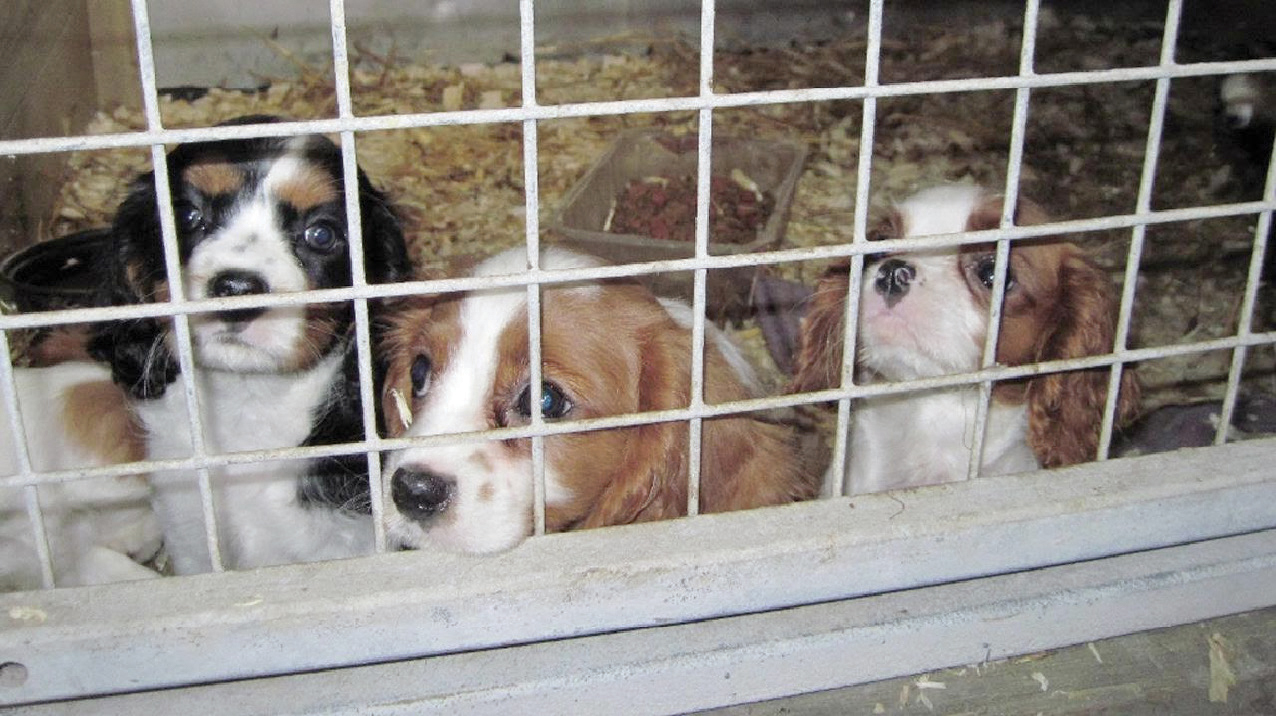
CARMARTHENSHIRE remains Wales’ puppy breeding hotspot, despite a fall in the number of investigations carried out by the county council last year.
New figures obtained by RSPCA Cymru under the Freedom of Information Act show that Carmarthenshire County Council undertook 46 dog breeding investigations in 2025, down from 59 in 2024.
The number of prosecutions in the county also fell sharply, from 12 in 2024 to three in 2025.
Across Wales, however, the picture is different. Local authorities carried out 210 investigations into suspected irresponsible or illicit puppy trading in 2025, compared with 144 the previous year — a rise of 46%.
RSPCA Cymru is now calling on the Welsh Government to review dog breeding laws and ensure councils have the resources needed to tackle illegal and hidden breeding activity.
Local authorities are responsible for licensing dog breeding establishments, checking compliance with licence conditions, investigating illegal breeding and bringing prosecutions where necessary.
Billie-Jade Thomas, Senior Public Affairs Manager for RSPCA Cymru said: “With the number of investigations having increased significantly in 2025, it is encouraging to see local authorities working hard to investigate complaints relevant to dog breeding made to them by members of the public.
“Traditionally, Carmarthenshire is known as one of the UK’s hot spots for dog breeding activity and we welcome all efforts made by the council to improve the enforcement of the relevant regulations in the county.
“Prosecutions are also significantly down, which could suggest signs of improvement across Wales as a result of the proactive and advice-led approach being undertaken by many local authorities.
“However, some cases from 2025 will still be progressing this year, and we always fear there are many underground sellers undertaking irresponsible breeding practices and providing poor care behind closed doors. It is important that these efforts continue.”
In November, Carmarthenshire County Council’s Cabinet endorsed a series of recommendations following a Task and Finish Group review into dog breeding.
These included working with local vets to ensure they understand the requirements placed on licensed breeders, improving public knowledge about dog breeding, considering a compulsory scoring system for licensed breeders, and reviewing licensing fees.

RSPCA Cymru took part in the council’s consultation exercise. The review also made recommendations at a national level, including a review of current legislation, a centralised microchipping database, consideration of a national scoring system for breeders, and whether a national body is needed to support dog breeders.
Billie-Jade added: “We were really pleased to engage with this review and are encouraged that the council is looking at how to ensure high and consistent standards are enforced to protect welfare.
“Working with local vets and the public to enhance knowledge about dog breeding licensing locally will help spread information, while a compulsory scoring system could give people added confidence when buying from a breeder.
“But some of the national recommendations are really important too, and we hope the Welsh Government will take these on board and commit to a review of Wales’ dog breeding regulations to ensure they protect animal welfare.”
Carmarthenshire County Council’s Cabinet Member with responsibility for Trading Standards, Cllr Aled Vaughan Owen said: “Carmarthenshire County Council remains committed in its proactive efforts to address illegal dog breeding.
“We consistently collaborate with local vets, licensed breeders and the public to raise awareness and drive improvements in standards, always placing animal welfare at the forefront of our actions.
“By adopting intelligence-led enforcement and prioritising early intervention, we strive to prevent poor practices and support responsible breeders.
“Our robust approach to licensing and inspection, together with strong partnership working, enables us to address hidden breeding activity, safeguard animal welfare and foster public confidence in our methods.
“The recent Task and Finish review undertaken by Carmarthenshire County Council’s Place, Sustainability and Climate Change Scrutiny Committee has provided valuable recommendations that are shaping our local strategy.
“Furthermore, we are open and willing to engage with any national review of dog breeding regulations should the Welsh Government decide to advance that recommendation.”
New dog breeding laws came into force in Wales in 2015. They require anyone keeping three or more breeding bitches, or breeding three or more litters of puppies a year and selling any of them, to obtain a licence from their local council.
The RSPCA says the scale of dog breeding in Wales, and the age of the current legislation, means the rules now need to be reviewed.
Animal Licensing Wales, led by Monmouthshire County Council on behalf of Trading Standards Wales, supports councils with inspections, investigations and enforcement work.
Project Manager Zoe Phillips said: “While prosecutions have fallen, the increase in investigations shows that concerns are being identified and acted on more effectively.
“In many cases, local authorities are now intervening earlier, using advice, compliance work and targeted enforcement to improve standards before issues escalate to court.
“It is also important to recognise that some cases may still be progressing through the courts this year which are not yet reflected in annual figures.”
The RSPCA is urging anyone concerned about suspected illegal puppy selling to contact their local trading standards team.
Anyone with dog welfare concerns can contact the RSPCA on 0300 1234 999.
The charity also advises prospective puppy owners to use the free Puppy Contract, available at www.puppycontract.org.uk, and says people should consider adopting a rescue dog where possible.


Community4 hours ago
Police officer hailed hero after midnight sea rescue in Milford Haven
PC swam 100 metres offshore to save distressed woman heard calling for help in darkness A DYFED-POWYS POLICE officer has...


Local Government10 hours ago
Security privately arranged by Mayor at Beating of the Bounds
HAVERFORDWEST TOWN COUNCIL has confirmed that security personnel seen at this year’s Beating of the Bounds were privately arranged and...


Business2 days ago
Celtic Freeport five-year plan puts Milford Haven at centre of green energy future
Strategy promises investment, skilled jobs and new supply chains, but major barriers remain over grid connections, planning and delivery THE...


Education2 days ago
Closure of Ysgol Clydau approved after emotional council debate
COUNCILLORS WARNED RURAL COMMUNITIES WILL REMEMBER DECISION PEMBROKESHIRE councillors have voted to close Ysgol Clydau following an emotional debate over...


Education2 days ago
Manorbier school closure process to continue after narrow council vote
Questions remain over insurance, rebuilding costs and possible legal action by Diocese PEMBROKESHIRE councillors have voted to press ahead with...

Community2 days ago
The father, son and daughter lifeguard trio saving lives in Pembrokeshire
A FATHER, son and daughter are preparing to help keep beachgoers safe on the Pembrokeshire coast this summer as part...


Community2 days ago
Beating of the Bounds brings music, boats and tradition to Haverfordwest
CENTURIES-OLD CEREMONY DRAWS FAMILIES TO THE RIVERSIDE HAVERFORDWEST’S historic Beating of the Bounds returned on Sunday (Jun 14), with boats,...


Community2 days ago
Milford Haven School pupil praised after stepping in during real-life emergency
A YEAR 11 pupil at Milford Haven School has been praised after putting his first aid training into action to...


Community3 days ago
River festival brings crowds to Haverfordwest
A CELEBRATION of the River Cleddau brought crowds into Haverfordwest on Saturday (June 13) as the town’s River Festival returned...


Charity3 days ago
Voices at the Castle hailed as unforgettable night after weather setback
Russell Watson headlines spectacular charity concert at Pembroke Castle A SPECTACULAR evening of live music at Pembroke Castle has been...
-

 Community2 days ago
Pembrokeshire Chess Club crowned Welsh champions
-

 Crime5 days ago
Pembroke Dock teenager sentenced over train strangulation attack
-

 Education4 days ago
Diocese threatens legal action as Manorbier school closure battle intensifies
-

 Crime6 days ago
Man accused of six rapes including alleged Haverfordwest offence
-
Local Government10 hours ago
Security privately arranged by Mayor at Beating of the Bounds
-

 Local Government5 days ago
Taxi suspended after county-wide licensing checks
-
 Crime6 days ago
Brothers found guilty of causing death of Welsh dad in ‘reckless’ race
-

 Crime5 days ago
Currys worker denies stealing £2,500 of store stock