


News
London march draws 110,000 as 5000 counter-protesters rally


“Whose streets? Our streets!” was the cry as thousands marched in the rain
TENS of thousands packed central London on Saturday (Sept 13) for the “Unite the Kingdom” march led by Tommy Robinson. The Metropolitan Police estimate around 110,000 people attended the march, with a counter-protest by Stand Up To Racism drawing about 5,000. The day was largely peaceful in its early hours but escalated into disorder later in the afternoon, with mounted police charging to hold lines, attempts to breach police cordons, and at least nine arrests.
Welsh flags were visible among the sea of Union Jacks and St George’s Crosses. Media outlets carried photographs of Welsh flags in the crowd alongside British flags. The marchers also displayed English, British, American and Israeli flags, wore MAGA hats, and carried slogans such as “send them home” and “we want our country back.”

Police operation, disorder and crowd dynamics
The Metropolitan Police deployed more than 1,600 officers across London, including about 500 from other forces such as South Wales Police. A “sterile area” was set up between the Robinson marchers and the counter-protesters to keep them apart, especially near Whitehall. Police said the march route could not accommodate the crowd and that overflow onto adjoining streets created difficulties. Efforts to stop people entering restricted areas led to clashes.
Objects including bottles, flares and traffic cones were thrown, and officers were punched and kicked as they tried to push back lines. Mounted units and horses were brought in to hold the cordons. Police confirmed nine arrests and said others may follow after evidence is reviewed. A statement from the force said: “We continue to see significant aggression directed at officers by Unite the Kingdom protesters.”

Counter-protest and speeches
The counter-protest organised by Stand Up To Racism remained largely peaceful, though tensions ran high. Counter-demonstrators carried placards reading “refugees welcome” and chanted “smash the far right” across the divide.

On stage, Tommy Robinson described the march as the “biggest demonstration in British history” and urged his supporters to remain calm when frustration grew among those who could not hear the speeches. Robinson and other speakers framed the protest as a defence of free speech, culture and heritage. Elon Musk addressed the rally by video link, calling for a change of government and accusing the political left of violence.
In Newtown, Powys, where rival demonstrations were also planned, Dyfed-Powys Police imposed a temporary flight restriction zone for drones from 9:00am to 6:00pm, making it an offence to fly unmanned aircraft below 2,000ft without police permission. A statement said: “A temporary ‘no-fly zone’ will be in place … it will be an offence for any unmanned aircraft to fly below 2,000ft … without the explicit permission of Dyfed-Powys Police.”
Crowd size: the numbers dispute
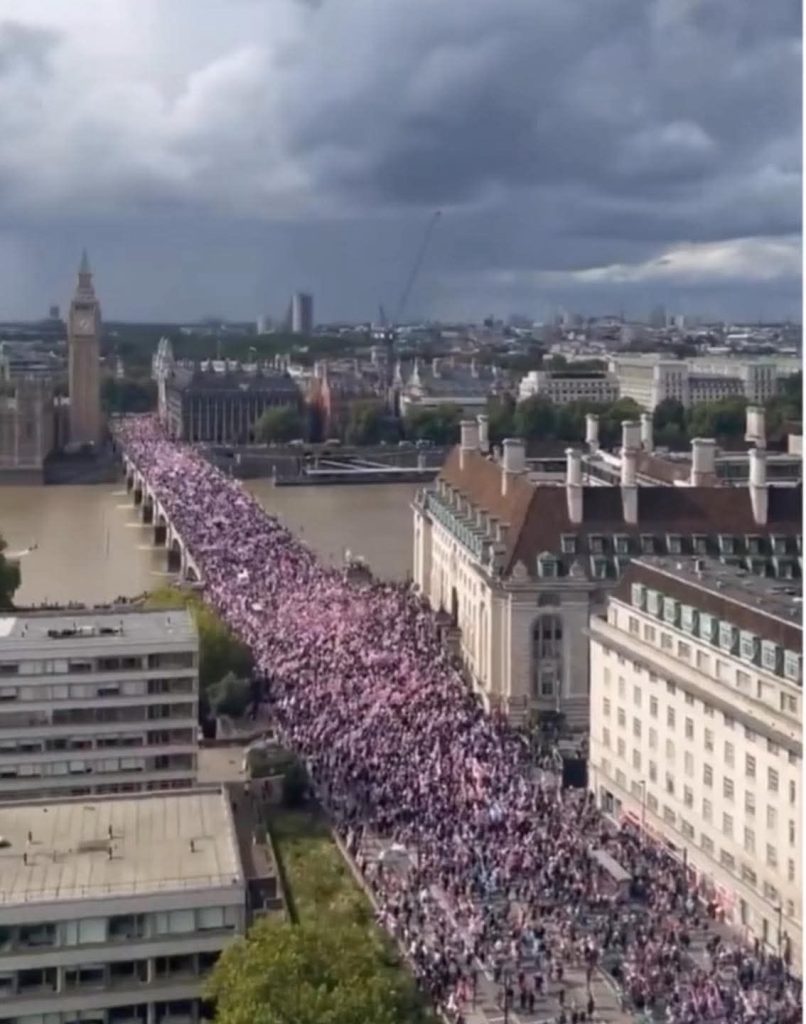
Police put Robinson’s march at 110,000 and the counter-event at 5,000, saying they used a combination of CCTV and helicopter footage to calculate attendance. Organisers claimed far higher figures, with Robinson calling it the “biggest protest in British history” and some supporters putting attendance in the millions. Independent media estimates did not support those claims.
Starmer silent and diverted

Prime Minister Keir Starmer has made no public comment on the protests. He was at the Emirates Stadium, about three miles away, watching Arsenal play Nottingham Forest. With central London roads closed and protest areas sealed, his motorcade had no choice but to take an alternative route to the stadium. His silence has already been described by commentators as loud, given that London witnessed one of the largest far-right mobilisations in recent years.

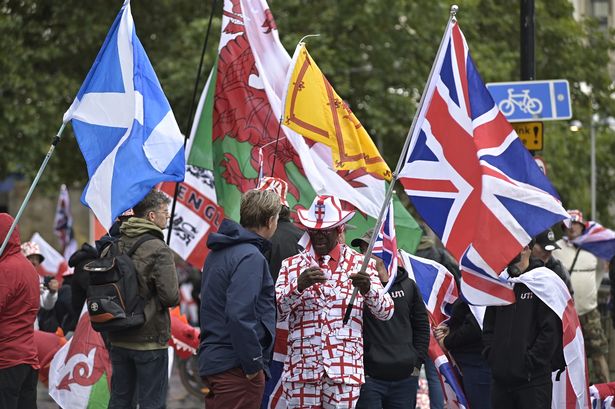
The march took place amid heightened public debate over immigration, with many protesters linking their grievances to Channel crossings and wider cultural issues. The presence of US and Israeli flags, MAGA hats, and references to the killing of US conservative activist Charlie Kirk showed the influence of international right-wing themes on the event. For observers, the scale of the demonstration marked one of the largest far-right mobilisations in recent times, fuelling debate over the direction of politics in Britain.








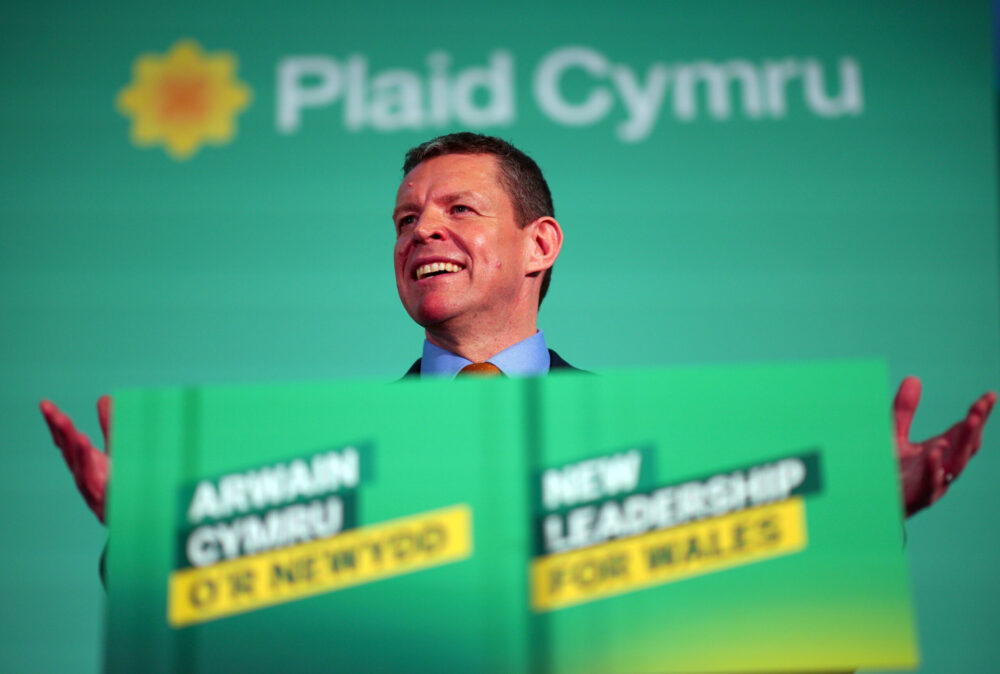
PLAID CYMRU TAKES POWER AFTER HISTORIC SENEDD VOTE
PLAID CYMRU leader Rhun ap Iorwerth has become Wales’ new First Minister following a historic vote in the Senedd today, marking one of the biggest political changes since devolution.
Ap Iorwerth secured 44 votes in the chamber, defeating Reform UK Wales leader Dan Thomas, who received 34. There were nine abstentions.
The result confirms Plaid Cymru’s move into government after the party emerged from the Senedd election as the largest group in the expanded 96-member parliament.
It is the first time Plaid Cymru has held the top job in Welsh politics, ending Labour’s long dominance of the Welsh Government since the start of devolution in 1999.
The vote followed days of intense political manoeuvring after an election which transformed the balance of power in Cardiff Bay.
Plaid Cymru won the largest number of seats but fell short of an overall majority, meaning ap Iorwerth will now lead a minority administration.
Reform UK’s Dan Thomas also put himself forward for the role of First Minister after his party’s major breakthrough at the election.
However, ap Iorwerth won the Senedd vote with support from outside his own party, while Labour members abstained.
The result leaves Reform UK as the main opposition party in the Senedd, with Labour reduced to a much smaller role after more than two decades in control of Welsh Government.
Ap Iorwerth, a former BBC journalist and broadcaster, has represented Ynys Môn in the Senedd since 2013 and became Plaid Cymru leader in 2023.
He now faces the task of forming a government and setting out his cabinet, with pressure expected immediately on health, the economy, farming, housing, transport and public services.
The change comes after the first Senedd election held under the new voting system, with 96 Members elected across larger multi-member constituencies.

For Wales, the vote marks a political turning point.
For Plaid Cymru, it is the moment the party has sought for a century: the chance to lead the Welsh Government.
Welsh Labour interim leader has congratulated Plaid Cymru leader Rhun ap Iorwerth on his appointment as First Minister.
Speaking following the vote in this afternoon’s first meeting of the Seventh Senedd, in which Welsh Labour abstained, Mr Skates said: “I look forward to being an effective opposition, scrutinising and holding Rhun and his colleagues to account where necessary to improve legislation. I hope as a Minister I demonstrated to Plaid members how collaboration and challenge are mutually beneficial and we will be focused laser-like on serving the people of Wales. No games, no nonsense, just a determination to make the lives of those we serve better
“Be assured that we will not let the party of government off the hook at any time – as they, quite rightly, did not with us.”

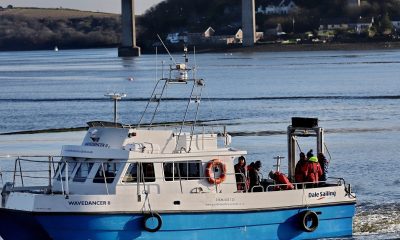
FREE accessible boat trips are being launched along the Pembrokeshire coastline as part of a new 12-month programme.
Blue Horizons CIC Surf Club has announced that its first trips will take place on Friday, May 22, with four sailings planned during the day.
The project has been made possible with support from the Port of Milford Haven and Dale Sailing Company Ltd.
Blue Horizons said the trips have been shaped alongside people with additional needs to create a more supportive and inclusive experience.
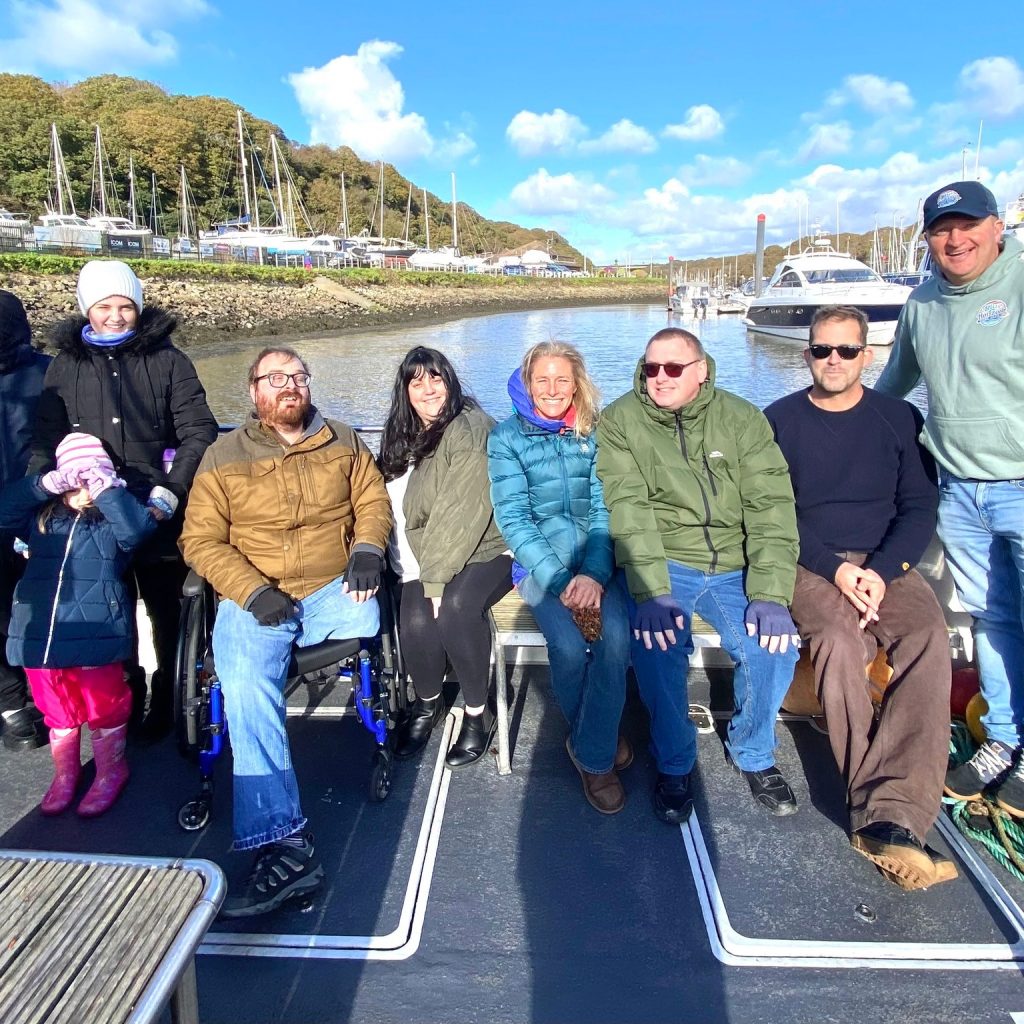
The organisation said accessibility was about more than simply getting onto a boat, but also about making sure people felt comfortable, supported and understood throughout the journey.
Its team members are DBS checked to work with children and vulnerable adults, first aid trained, experienced in supporting people with additional needs, and equipped with specialist adaptive and accessible equipment.
The trips will be free for Pembrokeshire residents.
A spokesperson for Blue Horizons said: “We know that everyone experiences the world differently. If the boat feels too fast, we slow things down. If someone needs a break or wants to turn around early, that’s absolutely fine.
“There’s no pressure and no judgement — because the people on the boat trip understand those challenges themselves.
“The coastline belongs to everyone and we can’t wait to welcome more people onto the water over the next year.”
Anyone interested can register here: https://forms.gle/WQjgsXSqhntS4zat7

TEN YEARS after the UK voted to leave the European Union, researchers at Aberystwyth University are launching an ambitious project to build the most detailed map yet of how communities voted in the referendum.
The team is appealing to campaigners, party activists and referendum observers to search old files, emails and campaign folders for informal tallies known as “boxcounts”.
These were unofficial figures recorded when ballot boxes were opened on referendum night, before the formal count began.
Official results from the 2016 referendum were published only at local authority level, giving a broad picture of Leave and Remain support across the UK.
But researchers say those figures do not show the more detailed patterns within towns, villages, suburbs and neighbourhoods.
The project, led by Professor Michael Woods at Aberystwyth University’s Centre for Welsh Politics and Society, aims to uncover those hidden local voting patterns.
Professor Woods said: “The EU referendum was the defining event in recent British politics and has shaped our political landscape for the last decade.
“We often talk about ‘Leave areas’ and ‘Remain areas’, but we don’t really know how communities voted beneath the level of local authorities.
“By bringing together boxcounts from across the UK, we can build a much more detailed picture of where support for Brexit was strongest, where it was weakest, and how these patterns relate to different types of places.
“As boxcounts from the referendum are unofficial no one has collected them together, but they will still be saved on people’s computers or archived in old campaign folders. We’re urging anyone who recorded or collated them to dig them out and send them to us.”
The team says it has developed a process to check the material and correct for potential bias, as well as safeguards to ensure privacy requirements are met.
Anyone with boxcounts from the 2016 referendum can find details on how to submit them via the Rural Spatial Justice Substack.

The study is part of the wider Rural Discontent, Spatial Justice and Disruptive Politics project, funded by the UK Frontier Research Guarantee, which is examining links between rural discontent and disruptive politics around the world.


News13 hours ago
Rhun ap Iorwerth becomes Wales’ new First Minister
PLAID CYMRU TAKES POWER AFTER HISTORIC SENEDD VOTE PLAID CYMRU leader Rhun ap Iorwerth has become Wales’ new First Minister...

News15 hours ago
Hotel was hit during a Luftwaffe bombing raid
THE COMMEMORATION, held on Tuesday (May 12), marked the anniversary of the wartime attack, with members of the community gathering...


News18 hours ago
Starmer fights for survival as Labour civil war erupts
Cabinet split, ministers resign and MPs revolt as pressure mounts on Prime Minister after disastrous election losses KEIR STARMER is...


News2 days ago
Starmer accused of ignoring Wales in major ‘reset’ speech
Prime Minister pledges EU reset, British Steel nationalisation and youth jobs guarantee — but critics say Wales was left out...

Community2 days ago
Concern grows after child hospitalised following Tenby sea swim
PARENT SAYS BOY BECAME SERIOUSLY ILL AFTER SWIMMING DURING FAMILY VISIT CONCERN is growing in Pembrokeshire after a parent claimed...


News2 days ago
Rhun prepares for clash with Starmer as Plaid eyes power in Cardiff Bay
PLAID CYMRU leader Rhun ap Iorwerth has signalled he is ready for confrontation with Prime Minister Keir Starmer after the...


News3 days ago
Plaid Cymru celebrates historic victory as Rhun ap Iorwerth arrives at Cardiff Bay
CROWDS gathered outside the Senedd as Plaid Cymru leader Rhun ap Iorwerth arrived in Cardiff Bay following his party’s historic...

Crime4 days ago
Police standoff ends after four-hour incident in Pembroke Dock
ELIZABETH COURT SCENE STOOD DOWN AFTER DOMESTIC INCIDENT A FOUR-HOUR police standoff in Pembroke Dock has ended with a 21-year-old...


Crime4 days ago
Teen denies attempted murder of Milford Haven teacher
TEENAGER REMANDED AHEAD OF JULY TRIAL A 15-YEAR-old boy has denied attempting to murder a teacher during a stabbing incident...

News4 days ago
Catastrophe for Labour as Plaid and Reform reshape Welsh politics
ELUNED MORGAN LOSES SEAT AS OLD CERTAINTIES ARE SWEPT AWAY THE VOTERS of Wales have delivered one of the most...
-

 News7 days ago
Former housing officer admits drink-driving in Pembrokeshire retail park
-
 Crime7 days ago
Job loss threat for convicted Pembrokeshire drug-driver
-
 Crime7 days ago
Milford motorist disqualified for drug-driving
-

 Crime7 days ago
Police tip-off leads to driving ban for Milford motorist
-

 Crime6 days ago
Racial abuse suspect barricaded himself inside Johnston lodge
-

 Community7 days ago
Sixth-former firefighter balances schoolwork with saving lives
-
 Crime7 days ago
Delivery driver caught twice over legal drink-drive limit
-
 Local Government6 days ago
Tenant says botched wetroom repair left her fearing flooding