


Education
Pembrokeshire learner represents UK at EuroSkills competition in Denmark


A TALENTED welding learner from Pembrokeshire College has represented Team UK at the prestigious EuroSkills competition in Herning, Denmark.
International stage
Luke, a welding learner at the college, joined competitors from across Europe in a series of challenging skills contests. EuroSkills is the continent’s largest vocational education and skills excellence event, often described as the “Olympics of vocational training.” It takes place every two years in a different European city and brings together the most skilled young apprentices, students, and professionals under the age of 25.
This year’s competition in Herning featured more than 700 competitors from over 30 countries, competing across 40 different skill areas ranging from traditional trades such as welding, plumbing and carpentry, to emerging industries like robotics, cyber security and renewable energy technology.

Local support
Haven Engineering showed their support at the opening ceremony and on the first day of the event. College Principal Barry Walters and Engineering Lecturer Daniel Williams travelled out to Denmark on day two, backing Luke and offering encouragement throughout the competition.

Proud moment
A spokesperson for Pembrokeshire College said the entire college community was “incredibly proud” of Luke’s achievement. “Huge congratulations to Luke and the entire Team UK for their outstanding efforts and dedication,” the spokesperson added.


Inspiring the next generation
The competition not only showcases technical excellence but also aims to raise the profile and recognition of skilled trades across Europe. By competing at this level, learners like Luke highlight the value of vocational training and demonstrate that young people in Pembrokeshire have the ability to perform on an international stage.
Pembrokeshire College said Luke’s journey would inspire other learners to aim high and consider representing their country at future competitions.


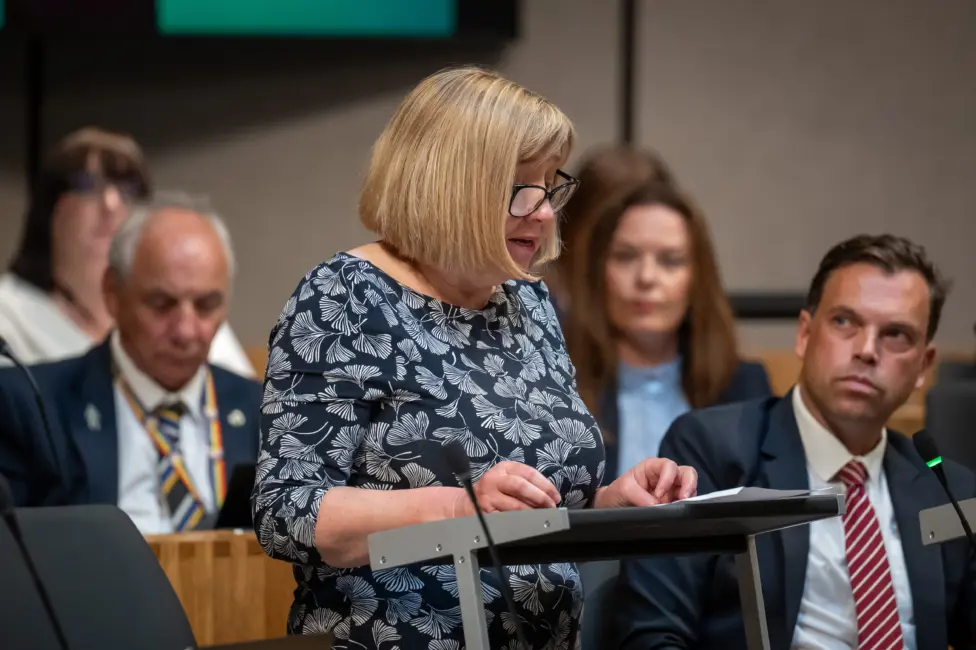
CALLS for a new negotiating body for school support staff, and an end to term-time only pay, has been backed in the Senedd.
A motion, put forward by Labour’s education spokesperson Lynne Neagle, was supported by Senedd Members on Wednesday June 10.
Ms Neagle said support staff “build strong relationships with children and young people, which are crucial for their wellbeing, so that they can learn and reach their potential”.
Pointing to the fact support staff are now the majority of the school workforce in Wales, Ms Neagle said: “Our schools simply couldn’t function without them. They are quite simply the glue that holds our schools together.”
The Sir Fynwy Torfaen MS highlighted the extent of in-work poverty facing support staff, referencing a Unison survey of more than 1,400 school support staff showing 8% of support staff take home less than £1,000 a month.
Ms Neagle also described it as an equality issue, noting more than 90% of support staff are women.
Concluding her speech to the Siambr, Ms Neagle called on the Plaid Cymru government to commit to bringing forward new legislation and to end term-time only pay for school support staff – a pledge featured in the Labour election manifesto.
She said: “Our calls are supported by the Welsh trade union movement, including Unison Cymru and the GMB. But valuing school support staff is not just the right thing to do for the staff; it’s the right thing to do for our schools, our communities and every learner in Wales.”
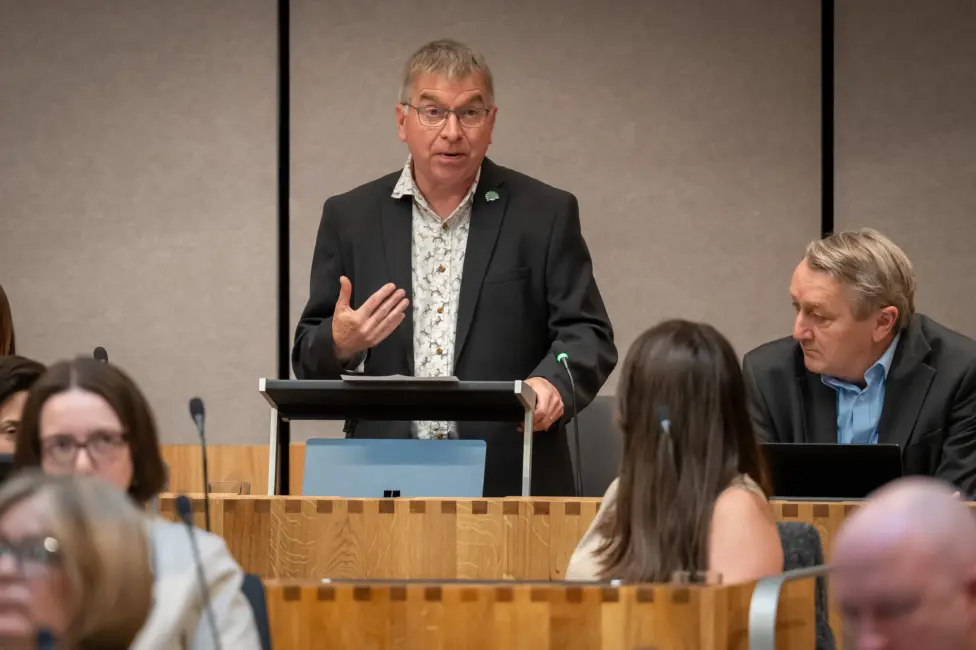
Paul Rock, Green Party MS for Caerdydd Fynnon Taf MS, supported the motion, and spoke of the “tireless dedication” provided by school support staff.

Mr Rock, whose wife works as a teaching assistant, said: “I don’t need to remind members of the important work that school support staff do: one-to-one interventions to support children with additional learning needs or children who are simply falling behind.
“They work with small groups, they cover for teachers and look after whole classes at a time, they run breakfast clubs and after-school clubs, they supervise children at lunch times and play times, they work unpaid overtime daily, and the pressures of the job mean they cannot always take the breaks they are entitled to.”
Mr Rock described this as an issue of “fairness, safety, and wellbeing” and said the lack of year-round pay is “directly contributing” to the gender pay gap in Wales.

He outlined his party’s commitment to treating school support staff fairly and ensuring they are “fully represented” in discussions about their pay.
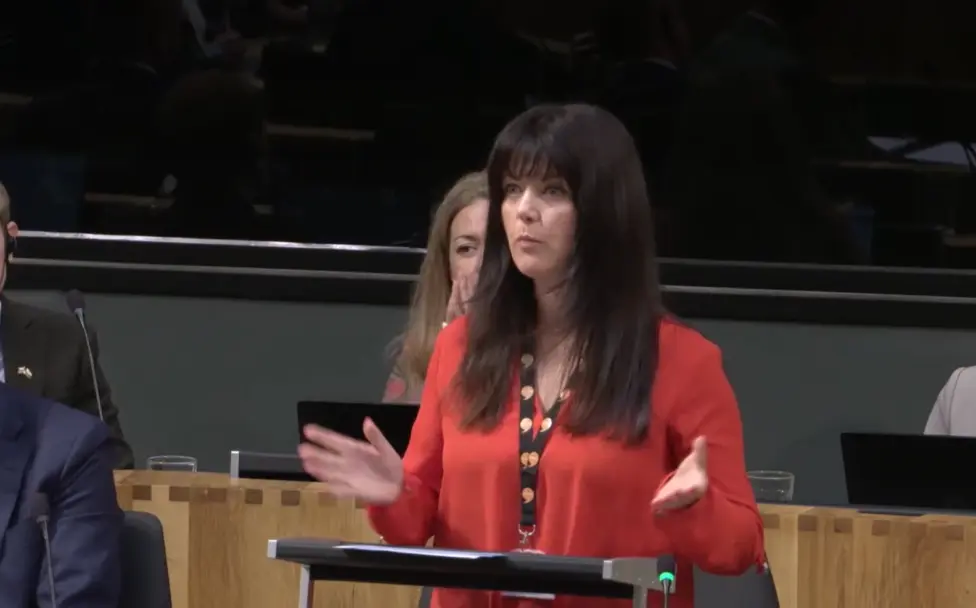
Reform’s deputy leader, Helen Jenner, said she recognised the importance of school support staff but opposed the creation of “yet another quango”.
She said: “We in Reform want to see quangos brought in-house to save taxpayers’ money and reduce the tax burden on Welsh people. We don’t want to see new ones created.
“While we have sympathy for the proposals for year-round pay for school support staff, there will, of course, be financial implications to implementing that policy and we would not like to see more money diverted from our schools.”

Sam Rowlands, the Conservative education spokesperson, also weighed in on the debate discussing the “inconsistency” built into the current system.
He said: “Pay and conditions can vary from one local authority to another quite significantly, even for staff doing very much the same roles. That means recognition and reward for their work depends too heavily on where they happen to be employed, rather than the value of what they do.”
Mr Rowlands also hit out at Welsh Labour and Plaid Cymru, saying: “This is not a new problem. It’s been developed over 27 years of Labour in government here in Wales, propped up by Plaid Cymru, during which these structural issues in our education workforce were allowed to persist.”
Describing the system as “fragmented, under pressure and increasingly reliant on goodwill rather than proper structure”, Mr Rowlands said it is “not credible” for Plaid and Labour to “now present themselves as discovering these problems for the first time or to claim ownership of a solution only once they are no longer solely responsible for fixing it.”

Education minister Anna Brychan began by recognising the “value and contribution” made by support staff in schools across Wales.
She said: “Teaching assistants, administrative officers, technicians, lunch-time supervisors, caretakers – roles that have been referred to by many of the contributors this afternoon – are the backbone of our schools across Wales, and I do recognise the crucial role of school support staff in Wales and very much appreciate their contribution to our education system as a whole. They are crucial and their contribution is priceless.”
Ms Brychan however then addressed the practicality of the motion.
The minister clarified the Welsh Government currently does not have the power to set the pay, terms and conditions for support staff, noting that this responsibility lies with local authorities or schools as the employers.
She acknowledged the benefits of introducing a statutory body for Welsh support staff, as is being introduced in England, but said this “would take time to establish” and said she is “eager” to see what can be done without legislation to make a difference more swiftly in the short term.
Concluding her response, the cabinet minister said: “I look forward to working with colleagues across this chamber to support and appreciate our school support staff.
“It is clear that there is support for and an understanding of their work across the chamber, and that is something valuable that we can build upon, and to help them give the best possible experience to our learners, as they already do, but also to provide an attractive career for them as individuals and as a profession too.”
The motion was agreed with 17 in favour, 74 abstentions, and none against.
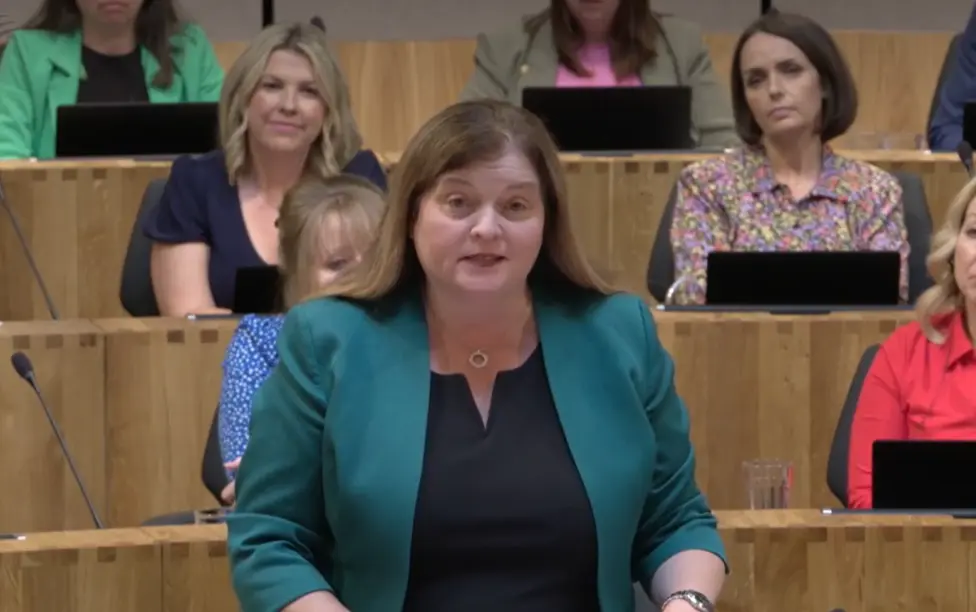
TRANSGENDER people “feel under siege”, Wales’ Deputy First Minister has said.
Sioned Williams faced questions on gender identity guidance in schools, and the implementation of single-sex spaces, during her first appearance at Questions to the Deputy First Minister.
Serving as both Deputy First Minister and cabinet secretary for social justice and equality, Ms Williams was questioned by opposition politicians on Wednesday June 10, about the Welsh Government’s response to the Cass Review, and the implementation of the Supreme Court’s ruling on single-sex spaces.
The session opened with questions from Blaenau Gwent Caerffili Rhymni’s Reform MS Catherine Cullen, who asked how the Welsh Government would work with education ministers to prioritise “objective, evidence-based safeguarding standards” in schools.

She said: “We sit here today with one non-negotiable duty: the absolute safety of Welsh children in schools.
“When the Cass review explicitly warned that social transition – that is, changing a child’s name, pronouns or uniform at school – is not a neutral act and carries severe psychological risks, Plaid Cymru voted against these recommendations.”
She continued: “[Plaid’s] manifesto demands a demedicalised self-declaration system that actively pushes gender identity theories through the school system.”
In response, Ms Williams said the Welsh Government remained committed to improving literacy and numeracy standards, and stressed the importance of creating a supportive environment in which all children can fulfil their potential.
She told members that education officials had developed draft guidance for schools on supporting transgender, non-binary and gender-questioning learners, and said the education minister recognised the need to proceed with “leadership and sensitivity”.
Questions then turned to the implementation of single-sex spaces following the Supreme Court’s ruling on the definition of sex under the Equality Act.
Reform UK MS Art Wright, of Casnewydd Islwyn, asked about the Welsh Government’s plans to implement single-sex spaces across Wales, while Conservative MS Natasha Asghar, of the same constituency, accused the previous Labour administration of “dragging its heels” in responding to the judgment.

Ms Asghar said she had received correspondence from a Welsh Government employee claiming staff were still working under policies that allowed “men who identify as women to use women’s single-sex spaces from the first day of self-identification”.

Reading from the email that was sent to her, she said: “A government cannot pick and choose which laws it follows, yet that is exactly what seems to be happening within the Welsh Government itself.”

Responding, Ms Williams said the Welsh Government respected the Supreme Court ruling and was working to ensure devolved policies and practices complied with the law.
“This work has to be done carefully and consistently, and across a range of devolved areas,” she said.
However, the Deputy First Minister also emphasised that the Equality Act continues to protect people with the protected characteristic of gender reassignment from discrimination and harassment.
She added: “This is a community that feels under siege at the moment, and we must be sensitive to that.
“We need to look at the practical steps that we can take whilst complying with the Supreme Court ruling, and then, in seeing the code of practice that will come forward, if it is passed in Westminster, we will need to consider how we do that.”
Ms Williams said work was continuing across government departments to ensure Welsh Government policies comply with the law while maintaining protections for transgender people.
Ms Williams, who represents the Brycheiniog Tawe Nedd constituency, also reaffirmed her support for universal free school meals during the session, after Senedd Members raised concerns about food poverty and access to nutritious food for children.
Huw Thomas, Labour MS for Caerdydd Penarth, drew attention to the work of the previous Labour government in introducing universal free school meals for primary school children across Wales.
Mr Thomas said: “For too many of our pupils, this is the only proper meal of the day that they have every day – hugely important – and yet we know that food costs have risen dramatically in recent years.
“So, my question is: when councils tell Welsh Government what the cost of supplying these meals are, will you accept and respect their advice and fund it, or else risk affecting the quality and provenance of the food served to our young people?”
Ms Williams agreed that free school meals play a vital role in supporting children and families.
She said the scheme “really does help”, allowing children to receive the “nutritious hot meal that they so desperately need”.
While noting that responsibility for free school meals sits within the education portfolio, the Deputy First Minister said she would ensure the concerns raised within government.
The discussion also turned to nutrition during pregnancy and early childhood.
Welsh Liberal Democrat leader Jane Dodds said access to nutritious food in a child’s earliest years is critical to healthy development.

She said: “We know how important nutritious food is in brain development in babies, both in pregnancy and in those first 1,000 days.
“Key nutrients such as vitamin D are absolutely essential, and if you are poor and you are not able to afford a full range of nutritious food, then that hampers that child’s development from the very, very early point.”
Ms Dodds asked what steps the Welsh Government was taking to ensure babies and young children have access to healthy food during their first 1,000 days.
Responding, Ms Williams said she “wholeheartedly” agreed about the importance of nutrition in the early years.
She pointed to the Healthy Start scheme, which provides support for low-income pregnant women and families with young children, describing pregnancy as a “crucial part” of ensuring lifelong health.
The Deputy First Minister also highlighted the nursery milk scheme, which provides children under the age of five in approved childcare settings with a free daily portion of milk.
Ms Williams said ensuring children have access to nutritious food from pregnancy through early childhood remains an important part of tackling inequality and improving long-term health outcomes in Wales.

Church says council could face judicial review over fire-hit school
A BITTER row over the future of Manorbier Church in Wales VC School has escalated dramatically, with the St Davids Diocese threatening legal action against Pembrokeshire County Council over plans to close the fire-damaged village school.
In an extraordinary intervention ahead of a Cabinet meeting on Monday (Jun 15), solicitors acting for the St Davids Diocesan Board of Finance (DBF) accused the council of running a “procedurally flawed” consultation and warned that councillors risk judicial review if they press ahead with proposals to discontinue the school.
The legal letter, sent by Carreg Law and marked “urgent”, claims the council is using the closure process to avoid responsibility for rebuilding the school following the devastating fire in October 2022.
The future of the school has been hanging in the balance since the blaze forced pupils to relocate to temporary accommodation at Jameston Community Hall.
Legal warning to council
The Diocese, in a letter from Bishop Dorrien Davies, has formally objected to the proposed closure and says the school should instead be fully reinstated.
Lawyers acting for the Church claim the council has failed to respond adequately to previous correspondence dating back to 2023 and warned that Pembrokeshire County Council could face legal claims arising from the handling of the fire and its aftermath.
The letter states: “Our client formally objects to the proposed closure, demands full structural reinstatement of the school premises and places Pembrokeshire County Council on notice that the statutory consultation on the proposed closure and decision-making process undertaken to date is procedurally flawed.”
The Diocese argues that the council has a statutory duty to maintain the school and says any insurance money arising from the fire should be used to restore the building to its pre-fire condition.
It also alleges the council’s actions have left the Diocese exposed to mounting costs because the school remains structurally compromised.
Claims of ‘pre-determination’
The legal challenge goes further, alleging the closure process was effectively decided before the consultation had finished.
Lawyers claim council human resources staff began redundancy consultations with school staff in February 2026, before elected members had formally decided the school’s future.
According to the Diocese, this suggests the public consultation was “a perfunctory exercise rather than a genuine consideration of alternatives”.
The Diocese also accuses the authority of withholding key financial information relating to rebuilding costs, despite repeated requests.
Community opposition highlighted
The intervention comes after council consultation figures showed overwhelming opposition to closure.
Of 252 responses received, more than ninety per cent opposed plans to shut the school.
Parents and campaigners have consistently argued that Manorbier School provides a nurturing environment for children, particularly those requiring additional support, and warned that closure would damage the wider community.
The issue sparked protests outside County Hall in Haverfordwest when councillors met on Thursday (Mar 5) to consider the proposal.
Demonstrators held placards urging the council to save the school, with many arguing that promises had been made to rebuild after the fire.
Church accuses council of discrimination
In one of the strongest claims contained in the letter, the Diocese alleges Pembrokeshire County Council is showing hostility toward Church in Wales education.
The DBF argues that the proposed closure of Manorbier, alongside separate issues affecting other faith schools, demonstrates what it describes as a “systemic pattern” of undermining faith-based education in Pembrokeshire.
Lawyers claim this could amount to discrimination under the Equality Act 2010 because religion and belief are protected characteristics.
The letter also criticises the council for allegedly failing to engage properly with the Diocese over the future of the site and says decisions should not be made without a full understanding of legal and financial liabilities.
Judicial review threat
The Diocese has urged Cabinet to halt the closure proposal and instead enter into negotiations over restoring the school building.
However, if councillors proceed with plans to discontinue the school, the Church says it is prepared to seek judicial review.
The letter warns: “Should the Cabinet proceed to ratify the statutory proposal to discontinue the school on what we say are illegal and discriminatory grounds, our client reserves its rights to pursue all available legal remedies including but not limited to an application for Judicial Review.”
Council officers have previously recommended moving forward with a statutory notice to discontinue the school, arguing that closure is the most sustainable option based on falling pupil numbers, spare capacity at nearby schools, the condition of the building and value for money.
But with legal action now looming, the battle over the future of Manorbier School appears far from over.
UPDATE:
Late on Friday (Jun 12), councillors were sent a further letter from the Diocese of St Davids urging them to think carefully before Monday’s vote. The Church questioned whether a required Community Impact Assessment had been properly undertaken or disclosed, argued Manorbier’s educational standards could not fairly be criticised following a positive Estyn report in 2023, and warned members to ensure they had been given ‘accurate and full information’ before making a decision. The letter also referenced Pembrokeshire County Council’s recent High Court defeat over its Article 4 direction, where judges found councillors had been presented with flawed and incomplete information



Local Government1 hour ago
Council admits 74 rights of way complaints remain unresolved
Key post vacant since February as walker raises safety concerns over paths near Llanteg and Amroth PEMBROKESHIRE COUNTY COUNCIL has...


Education24 hours ago
Diocese threatens legal action as Manorbier school closure battle intensifies
Church says council could face judicial review over fire-hit school A BITTER row over the future of Manorbier Church in...


Health1 day ago
Baby loss charity calls for urgent action after latest Wales figures published
Sands says Welsh Government must set clearer targets to reduce stillbirths and neonatal deaths A BABY loss charity has called...

Health1 day ago
Cancer delays worsening as west Wales hospitals struggle to recruit specialists
Health board admits standards are difficult to meet as doctors warn of “extremely dangerous” shortages PATIENTS in west Wales are...


News1 day ago
Rhun ap Iorwerth highlights first 25 days in office as First Minister
Plaid Cymru leader says government is moving quickly on NHS, farming and economic priorities FIRST MINISTER Rhun ap Iorwerth has...


Crime2 days ago
Man accused of six rapes including alleged Haverfordwest offence
A MAN has been sent to Crown Court accused of six rapes, including an alleged offence at a Haverfordwest campsite....


News2 days ago
Childcare row erupts as Plaid faces questions over costs and delivery
Opposition parties clash over flagship pledge as Senedd debate exposes growing divisions PLAID CYMRU’S flagship promise to create what it...


Crime3 days ago
Farmers fined in bovine TB scandal face fresh court action
Hartt family members listed at Haverfordwest Magistrates’ Court over unpaid penalties linked to major cattle prosecution TWO PEMBROKESHIRE farmers convicted...


Crime3 days ago
Pembrokeshire child killer stabbed to death in prison cell, murder trial hears
Kyle Bevan, jailed for the murder of Haverfordwest toddler Lola James, was allegedly stabbed 25 times and left ‘as if...


News3 days ago
Pendine cliff fall victim recovering after major emergency response
A 22-YEAR-OLD man who suffered serious injuries after falling from cliffs overlooking Pendine Beach is recovering well following emergency surgery....
-

 News7 days ago
Community appeal for privacy after serious emergency in Pendine
-

 Crime5 days ago
Sex offender in senior role at Tenby family hotel
-

 Crime4 days ago
Haverfordwest pair accused of £80,000 rogue trading frauds
-

 Community5 days ago
Forgotten wartime archive found in Pembroke Dock attic after 80 years
-

 Crime4 days ago
Families condemn failed appeal by paddleboard boss jailed over Haverfordwest tragedy
-
 Crime4 days ago
Knife blankets call as school staff face rising violence fears
-
Education24 hours ago
Diocese threatens legal action as Manorbier school closure battle intensifies
-
Crime2 days ago
Man accused of six rapes including alleged Haverfordwest offence