


Politics
Wales to ban greyhound racing by 2030


THE WELSH Government has introduced plans for a phased ban on greyhound racing by 2030, proposing to make it an offence to operate a track or organise races.
Wales’ last remaining track – the Valley Greyhound Stadium in Ystrad Mynach – faces closure after a draft law was introduced in the Senedd to prohibit the sport.
The prohibition of greyhound racing bill, published today (September 29), would make it an offence to operate a track or be involved in organising greyhound racing in Wales.
If ultimately passed by Senedd members as expected, the ban will be phased in – coming into force no sooner than April 2027 and no later than April 2030.
An implementation group, made up of industry and animal welfare officials, has been set up to advise on the transition, safeguarding greyhounds and mitigating economic impacts.

Huw Irranca-Davies, the deputy first minister, announced the introduction of the bill in a short written statement and will give more details in an oral statement to the Senedd tomorrow.

Mr Irranca-Davies said: “We have listened to the public, considered the evidence and are taking decisive action to prioritise animal welfare. The harm from greyhound racing can no longer be justified in a modern, compassionate Wales.”
In 2021, Hope Rescue submitted a 35,101-name petition to the Senedd, calling for a ban on greyhound racing and raising concerns about welfare at Wales’ single remaining track.
The petitions committee conducted an inquiry and its report, entitled The Final Bend?, was debated in the Senedd chamber in 2023, with a majority of members backing a ban.
More than 2,000 greyhounds died and nearly 18,000 injuries were recorded on licensed UK tracks, according to evidence from the Cut the Chase coalition of campaigning charities.
A counter-petition, which supported greyhound racing in Wales and raised concerns about the potential impact of a ban, received 10,601 signatures.
The Welsh Government agreed to introduce a ban as part of a deal to pass the 2025/26 budget – struck with Welsh Lib Dem leader Jane Dodds, the party’s sole Senedd member.


Ms Dodds previously said: “Make no mistake, greyhound racing exists for one single purpose: money. Money from the large amounts of bets placed on the suffering of these poor animals. We are a nation that cares for animals and sports like this have no place in Wales.”
The Greyhound Board of Great Britain (GBGB) regulates and licenses racing in England, Scotland and Wales, including at the Valley Greyhound Stadium which opened in 1976.
Wales would become the first nation of the UK to ban greyhound racing. In December, New Zealand announced similar plans for a ban due to injuries and the deaths of dogs.
GBGB disputed the figures provided by Cut the Chase and pointed to its annual, independently audited data that showed 1,100 track side deaths since 2017.
Mark Bird, GBGB’s chief executive, said: “Given the implementation group has not yet reported on the bill, it is concerning that the Welsh Government has decided to rush the introduction of this bill to the Senedd.
“It is disappointing that, despite providing details on the economic contribution the Valley makes, this has been blatantly disregarded in the published impact assessment.
“It remains clear that the Welsh Government’s move to ban greyhound racing continues to be entirely driven by politics, not by what is best for greyhound welfare.
“Meanwhile, welfare is absolutely paramount in licensed racing and all racing greyhounds in Wales continue to benefit from the strong GBGB regulations in place for their protection.”
Mr Bird continued: “With the livelihoods of so many at stake, we would have expected greater due diligence from the Welsh Government and the minister, who is still yet to visit the Valley.
“Our invitation remains open to all Welsh Government representatives so they can see for themselves how a licensed sport protects welfare and supports the local economy.”



Senedd statement urges action on rising costs, climate change, nature loss and insecure livelihoods
MORE than 240 organisations from across Wales have backed a Senedd call for urgent action to build a fairer, greener and more resilient nation.
The Statement of Opinion, tabled by Niamh Salkeld MS, supports the Cymru Together campaign and calls on the Welsh Government to respond to the linked crises of rising living costs, insecure livelihoods, climate change and nature loss.
Ahead of the 2026 Senedd election, more than 240 organisations signed an open letter under the Cymru Together banner, urging political parties to work together on Wales’ most pressing challenges.
The statement calls on ministers to invest in warmer homes and cheaper renewable energy, ensure renewable energy creates community wealth and supports workers, and restore nature by supporting farmers to produce food sustainably while making polluters pay.
It also says climate action in Wales can support communities around the world already facing the worst effects of climate change, while delivering practical improvements to everyday life at home.
Niamh Salkeld MS said: “For communities like mine in Blaenau Gwent Caerffili Rhymni, this is about fairness.
“We know that if we get this right, we can tackle the cost-of-living crisis, strengthen our communities and create a more secure future.
“We also know the cost of doing nothing is higher energy bills, more extreme weather and fewer opportunities for future generations.”
Bethan Sayed, Head of Politics at Climate Cymru, said Wales was at a “pivotal moment”.
She said: “Climate action is not a burden on Wales: it is an opportunity to build warmer homes, create good jobs, restore our natural environment, and deliver a fairer future for everyone who calls Wales home.”
Stan Townsend, Head of Policy at Climate Cymru, said the proposals were “practical priorities” that could make a real difference.
He said: “Investing in home efficiency cuts energy bills for households, community ownership of renewable energy gives us the chance to keep more wealth in our communities, and supporting farmers to farm sustainably protects the land and the livelihoods that depend on it.”
Cerith Griffiths, a former firefighter and FBU trade union official, said the campaign connected climate action with lower energy bills, good jobs and healthier communities.
Global Climate Justice Cymru said the statement recognised that “what Wales does matters beyond our borders”, while Race Council Cymru said the campaign showed how climate action could help reduce living costs and create new opportunities.
Cymru Together describes itself as a growing movement of more than 240 organisations calling for a fairer and healthier Wales.

SHADOW HEALTH SECRETARY Natasha Asghar MS has written to the Justice Secretary seeking assurances over the prison placement and official recording of convicted sex offender Paula Stanton.
Stanton, 62, was jailed after admitting an act outraging public decency at the University Hospital of Wales in Cardiff, where court proceedings heard NHS staff were forced to witness a sexual act while carrying out their duties.
The case has prompted renewed political scrutiny over how transgender offenders with histories of sexual offending are managed in custody, and how such offences are recorded in criminal justice statistics.
Ministry of Justice policy for England and Wales states that transgender women who retain male genitalia, or who have been convicted of sexual or violent offences, should not normally be held in the general women’s estate except in the most exceptional circumstances.
Ms Asghar said the immediate focus must be on the hospital staff affected.
She said: “This was a disgusting offence committed against NHS workers who were simply trying to do their jobs.
“NHS staff already face enormous pressure. They should not have to endure predatory or deeply distressing behaviour in their workplace, and they deserve proper protection and support.
“What makes this case even more concerning is Stanton’s significant history of sexual offending, including previous convictions for outraging public decency and indecent exposure.
“I have written to the Justice Secretary seeking assurances that Stanton is being held in a male prison, in line with Ministry of Justice policy on male-born sex offenders.
“I have also asked for confirmation that these offences will be recorded accurately in official crime and criminal justice statistics.
“The public are entitled to clear, accurate reporting of serious crimes. That is particularly important where offences involve male-pattern sexual offending.”
The case sits within a wider and often highly sensitive debate about the rights and safety of transgender prisoners, female prisoners, staff and victims.

Campaigners on one side argue that biological sex must be recorded clearly in cases involving sexual offending, particularly where victims are women or where offenders have male genitalia. Others stress that transgender prisoners can also be vulnerable in custody and must be treated lawfully, decently and safely.
Ms Asghar said her concern was not only about prison policy, but also about the working conditions of NHS staff.
She added: “Above all, my thoughts are with the NHS staff who were subjected to this appalling behaviour. They were the victims in this case and they deserve our full support.
“I have also raised the matter with the Cabinet Secretary for Health and Social Care to seek assurances about the safety of NHS staff.”

New plans aim to cut delays, reduce costs and stop house sales collapsing
THOUSANDS of homebuyers across Wales could save time and money under a major overhaul of the property-buying process announced by the UK Government.
The reforms are designed to tackle long-standing problems in the housing market, including lengthy delays, failed transactions and unexpected costs which can leave buyers and sellers out of pocket.
Ministers say the changes could reduce the average time taken to buy a home by around four weeks and save first-time buyers an average of £650.
Under the proposals, sellers and estate agents would be required to provide key information about a property when it is listed for sale. New “sales packs” would include details about a home’s condition, leasehold charges and the status of any buying chain.
The Government also plans to introduce earlier legally binding agreements between buyers and sellers to reduce the number of transactions which collapse late in the process.
A major part of the reforms will focus on replacing paper-based systems with digital property logbooks, electronic signatures, online identity checks and AI-assisted conveyancing.
Welsh Secretary Jo Stevens said: “Thousands of people across Wales will benefit from these reforms which will make buying a home faster, simpler and fairer.
“For too long the system has been difficult and complex. This government’s changes will save working people and families valuable time and money when they are buying their new home.”
Prime Minister Sir Keir Starmer said the current system leaves many families “in limbo” and makes home ownership more difficult than it should be.
Housing Secretary Steve Reed said buying or selling a home should not be “a drawn-out nightmare of delays, hidden costs, and failed deals.”
The Government says the reforms will be introduced in stages, with a new Code of Practice for property agents expected later this year.
From 2027, ministers plan to consult on mandatory qualifications for estate agents and the wider use of digital tools.

Legislation requiring sales packs, binding contracts and digital property information systems is expected before the end of the current Parliament.


News1 hour ago
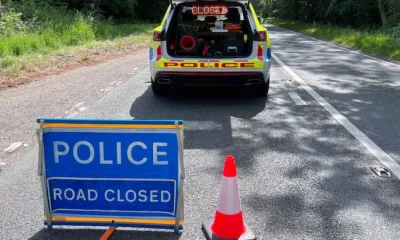
Motorcyclist, 22, dies in A4075 crash
A 22-year-old woman remains in hospital after two-vehicle collision A MOTORCYCLIST has died following a serious two-vehicle crash on the...

Community2 hours ago
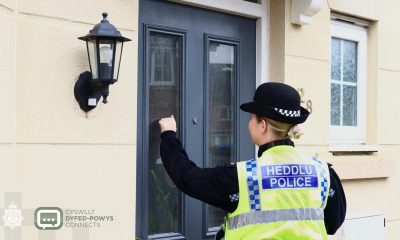
Why police will be visiting every home in Pembrokeshire
New operation aims to knock on more than 257,000 doors across Dyfed-Powys over the next three years DYFED-POWYS POLICE has...


Crime5 hours ago
Prisons at breaking point: MPs warn Wales is paying the price of a failing system
Frozen healthcare budgets, overcrowded jails, homelessness on release and mounting pressure on staff are undermining rehabilitation across Wales, according to...


News18 hours ago
Brexit at 10: How Britain was sold a dream that cost us dearly
A decade after the referendum, the promised benefits remain hard to find while the economic costs are increasingly difficult to...


Crime20 hours ago
Worcestershire man jailed after violent attack on woman in Tenby
Defendant was already serving a suspended sentence when serious assault took place A WORCESTERSHIRE man has been jailed for more...


Climate22 hours ago
Offshore wind ‘could bring new generation of jobs to Milford Haven’
Pembrokeshire ports and Celtic Sea projects placed at centre of Wales’ green energy ambitions MILFORD HAVEN and Pembroke Dock could...


Community2 days ago
Police officer hailed hero after midnight sea rescue in Milford Haven
PC swam 100 metres offshore to save distressed woman heard calling for help in darkness A DYFED-POWYS POLICE officer has...


Local Government2 days ago
Security privately arranged by Mayor at Beating of the Bounds
HAVERFORDWEST TOWN COUNCIL has confirmed that security personnel seen at this year’s Beating of the Bounds were privately arranged and...


Business3 days ago
Celtic Freeport five-year plan puts Milford Haven at centre of green energy future
Strategy promises investment, skilled jobs and new supply chains, but major barriers remain over grid connections, planning and delivery THE...


Education3 days ago
Closure of Ysgol Clydau approved after emotional council debate
COUNCILLORS WARNED RURAL COMMUNITIES WILL REMEMBER DECISION PEMBROKESHIRE councillors have voted to close Ysgol Clydau following an emotional debate over...
-

 Community4 days ago
Pembrokeshire Chess Club crowned Welsh champions
-
Local Government2 days ago
Security privately arranged by Mayor at Beating of the Bounds
-

 Crime6 hours ago
Milford Haven man jailed for breaching domestic violence protection order
-

 Education6 days ago
Diocese threatens legal action as Manorbier school closure battle intensifies
-

 Crime2 days ago
Man wanted by court after failing to attend hearing over alleged shop thefts
-

 Local Government6 days ago
Taxi suspended after county-wide licensing checks
-
 Crime2 days ago
Man banned from roads after drink-driving offence
-

 Crime6 days ago
Currys worker denies stealing £2,500 of store stock