


Community
Plans for more affordable housing in Pembrokeshire could be agreed soon


PEMBROKESHIRE council could have 10 more affordable homes in its housing stock within the year if a call before senior members is backed next week.
At the October meeting of Pembrokeshire County Council’s Cabinet, members are asked to back the purchase of the new build homes, a mixture of two and three-bed houses, currently under construction at Rose Haven, Rosemarket; the final agreement delegated to senior officers.
This follows the backing of the purchase between 37 and 41 houses agreed at the September meeting.
A report ahead of the October meeting says: “The council has a corporate priority that aims to increase the supply of affordable and social homes and is seeking to expand its housing stock and satisfy local housing need. These ‘off the self purchase’ opportunities would help towards both the council’s 300 new home target and also Welsh Governments 20,000 new homes target.
“In the context of housing development, an Off the Shelf purchase (OTS) consists of newly completed properties, offered on the open market by a contractor/developer for a fixed price on the basis of a single conveyancing contract.

“The OTS opportunity would provide the council with up to 10 properties built to a modern specification which are fossil fuel free and benefit from PV panels and air source heat pumps.
“The site will provide the opportunity for a mix of social and intermediate rent housing.”
It added: “Currently there is no match funding grant assigned to this potential acquisition however enquiries have been made with both the Social Housing Grant (SHG) and Transitional Accommodation Capital Programme (TACP) teams.
“If cabinet agreement is given, and subject to due diligence checks, it is hoped that acquisition of these 10 units could be completed within this financial year. Any purchase will be dependent on suitable SHG or TACP funding being secured with the match provided from the Housing Revenue Account.
“The need to provide additional affordable and social housing is a high priority for the council and if acquired, these new homes will be let at rents in line with the council’s rent policy, making the homes affordable for those in need.
It is recommended that Cabinet back the delegated decision on the purchase.
At the September Cabinet meeting, members backed the acquisition of up to 16 new build housing units as an off the shelf deal at Harcourt Close, Hook, and entering into a package deal arrangement for the purchase of 21 affordable homes, along with an option for four ‘intermediate’ affordable units on land at Sandyhill, Saundersfoot.




A PEMBROKESHIRE sailor is leading a team of non-professional crew members on the final ocean crossing of one of the world’s toughest yacht races.
Lou Boorman, from Haverfordwest, is skipper of Team Tongyeong in the Clipper 2025-26 Round the World Yacht Race.
Her team has now departed Washington, DC, and is heading across the North Atlantic to Oban in Scotland, marking the last major ocean crossing of the global race.
The Clipper Race is unusual because it takes people from all walks of life and trains them to become ocean racers. No previous sailing experience is required.

Each of the ten identical Clipper Race yachts is led by a professional skipper and first mate, with up to 22 non-professional crew members on board. The teams race around the clock for up to 30 days at a time, covering a global route of around 40,000 nautical miles.
Lou has been leading Team Tongyeong since the race began in Portsmouth last August. The team has been representing the South Korean city of Tongyeong throughout the competition.
Speaking ahead of the final Atlantic crossing, Lou said: “It doesn’t feel quite real that we’ve nearly sailed around the world and are one hop across the ocean to home waters!
“This is the hardest thing I’ve ever done. A huge challenge. We’ve had three podiums so far and are hungry for more.”
At the time of the release, Team Tongyeong was leading the current stage of the race.
The route from Washington, DC, to Oban is just over 3,000 nautical miles and will see crews face changing weather systems, strong Atlantic currents and the unpredictable conditions that make ocean racing so demanding.

Lou said the challenge had not only been about sailing, but also about leadership.
She said: “In addition to the sailing and the conditions, the challenging part has been about people management and leadership. I’ve had to be a strong leader. That’s what my team expects and needs from me. So the development in this race is incredible.”

She added: “I think it’s going to leave a big hole in my life, leaving this team and leaving the boat. I’m going to have to fill that gap in my life fairly quickly. I’ll miss it too much!”
After ten months at sea, and with just over three weeks of racing remaining, the arrival in Oban will mark a major milestone as the fleet returns to UK waters.
Oban is due to welcome the Clipper Race fleet from Friday, July 10, with a programme of public events allowing visitors to see the yachts and meet the race crews and professional skippers.
From Oban, the teams will race for the final time in the 2025-26 edition, finishing in Portsmouth on Saturday, July 25, where the overall leaderboard positions will be confirmed.
Applications are already open for the 2027-28 edition of the race, which is due to begin next summer.

Town council donation will support two of the town’s biggest community events, with further funding for Santa visit
MILFORD HAVEN TOWN COUNCIL has presented a £6,000 donation to Milford Haven Round Table to help support this year’s Milford Haven Carnival and Free Fireworks Extravaganza.
The cheque was presented by the Mayor of Milford Haven, Councillor Mark Woodward, at the Lord Nelson Hotel on Thursday, June 25.
The donation was agreed at a meeting of the full council on Monday, June 8, in recognition of the work carried out by Milford Haven Round Table in organising major community events for the town.
A further £500 will also be donated to the Round Table for its annual support with the Visit of Santa to Milford Haven.
Milford Haven Town Council said it was proud to support the Round Table and hoped the strong relationship between the two organisations would continue for many years to come.
The council added: “Thank you all so very much for giving up your time to put these fabulous events together for our beloved town.”

MILFORD HAVEN ROUND TABLE is asking residents in Hakin and Hubberston to help keep roads clear ahead of this Saturday’s Carnival Procession.
Organisers say the event is shaping up to be one of the biggest yet, with a large number of floats, lorries and support vehicles expected to make their way through Hakin before the procession begins at Waterloo Square.
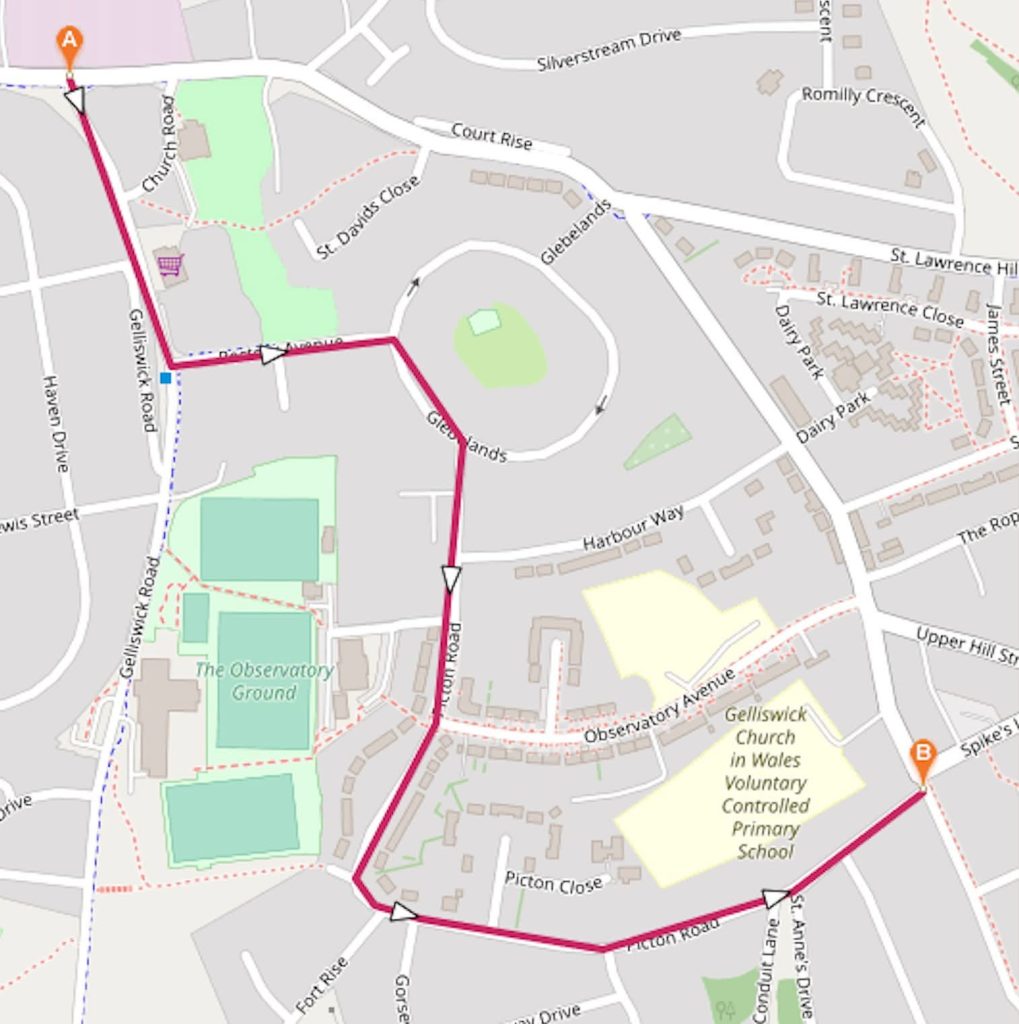
Residents living along Gelliswick Road, Rectory Avenue, Glebelands and Picton Road, particularly near the junction with Observatory Avenue, are being asked to avoid double parking or parking on pavements where possible between around 11.45am and 1.00pm.
The route being used by the floats and support vehicles is shown on the map.
Some of the vehicles involved are large, and organisers say keeping the roads as clear as possible for the short period will help ensure the procession reaches Waterloo Square safely and on time.
Milford Haven Round Table said the carnival “belongs to the whole community” and thanked residents for their continued support.
They added: “Your understanding and cooperation, even for this short time, will make a huge difference and help make this year’s Carnival another fantastic day for our town.”
Residents are also being encouraged to share the message with friends, family and neighbours who live along the affected roads.



Business4 hours ago
Pembrokeshire-based Ascona Group expands UK portfolio with Truckhaven acquisition
PEMBROKESHIRE-BASED Ascona Group has completed the acquisition of Truckhaven (Carnforth) Ltd, a major trunk road services area in Lancashire. The...


Health1 day ago
Wales begins early NHS winter planning after long waits and ambulance pressure
Ministers say health boards and councils must act now to ease pressure on hospitals, ambulances and social care before winter...


Crime2 days ago
Judge calls pensioner a ‘dirty old man’ as he avoids jail for exposing himself to women
Judge says 75-year-old Stewart Laugharne behaved ‘disgracefully’ as he avoids jail but is ordered to sign sex offenders register A...
Health2 days ago
Stroke services consultation reaches halfway point as public urged to have say
HYWEL DDA University Health Board is urging people to take part in its consultation on the future of stroke services,...


Business2 days ago
Welsh firms eye share of £5bn defence drone boom
WELSH defence and aerospace firms could be in line for a share of billions of pounds in new military spending...


Community4 days ago
Thousands line Cardigan streets for Lord Rhys homecoming parade
THOUSANDS of people lined the streets and quayside in Cardigan on Saturday as the town marked 850 years since Lord...


Crime5 days ago
Dyfed-Powys Police rated only ‘Adequate’ in organised crime inspection
A WATCHDOG has rated Dyfed-Powys Police only “Adequate” in its response to serious and organised crime, despite praise for the...


News5 days ago
Two taken to hospital after aircraft ditches in Cardigan Bay
Coastguard helicopter spotted two casualties after light aircraft came down off west Wales coast TWO people were taken to hospital...


Sport6 days ago
Long Course Weekend gets underway in Tenby as thousands head for county
Three days of swimming, cycling and running begin with The Wales Swim at North Beach THOUSANDS of athletes and supporters...


Climate6 days ago
Welsh waters, Westminster profits: Crown Estate row reignited in Wales
PLAID CYMRU has renewed calls for the Crown Estate to be devolved to Wales after figures showed income linked to...
-
Crime5 days ago
Dyfed-Powys Police rated only ‘Adequate’ in organised crime inspection
-

 Entertainment6 days ago
Torch cuts children’s cinema tickets to £5.25 for summer
-

 News3 days ago
Biker dies and woman seriously injured in Black Mountain crash
-

 News6 days ago
Reform MS: ‘I felt like shouting get out of the water’
-

 Crime6 days ago
Former Swansea Prison inmate died 48 hours after release
-
Climate6 days ago
Welsh waters, Westminster profits: Crown Estate row reignited in Wales
-

 Crime5 days ago
Swansea man jailed for 16 years after attacking vulnerable woman
-

 Community6 days ago
Working-class young people ‘shut out’ of marine conservation careers in Wales