


Politics
Pembrokeshire Coast National Park issues financial update


PEMBROKESHIRE’S national park is expected to have a far better financial situation than previously feared, with a current underspend of nearly £600,000, and an expected balanced budget at the end of the financial year.
At the November meeting of Pembrokeshire Coast National Park’s Audit & Corporate Services Review Committee, a report for members said, as of September 30, the half-way mark in the financial year, the authority’s revenue position showed a net surplus of £563,000 against an expected budget deficit of £371,000; £934,000 better than expected.
It said the overall income generated by the park is £577,00 higher than budget, with trading income £232,000 over budget, through higher centre admission fees (£86,000), café sales (£23,000) and car park income (£139,000).
“The good summer weather and increased admission prices has contributed to this result,” it said.
Other financial boosts include a one-off sum of £113,000 received as compensation for increased national insurance costs, £165,000 received for capital expenditure, a payment for the National Designated landscapes Scheme received in advance, and increased merchandising sales making an additional £68,000 of profit.

It said costs overall are £404,000 under budget, but the capital programme for the year has increased from the original budget of £1,675,000 to a revised budget of £1,979,000 due the inclusion of Phase 2 of the Traeth Mawr/Newport Sands redevelopment.
It says that, at the end of the financial year, the position is forecast to be even better, with a £591,000 surplus.
“However, this assumes there is no catch-up of underspends by departments,” the report says, adding: “If we do spend in accordance to budget, then we will continue to expect a net deficit which will be met out of earmarked reserves.
“The most realistic scenario is a balanced budget for the year buffered by the additional revenue funding of £1.4m received from Welsh Government in the prior year, carried forward as an EMR and used to balance the budget.
“No deficit is therefore forecast for 25-26. Note this is estimated, before the impact of pension reserve movements and depreciation adjustments. This forecast assumes income targets are achieved and costs remain under control.”
Speaking at the meeting, Chief Executive Tegryn Jones said: “From a medium to long term the financial situation is very bleak, however it’s been a fairly positive year for us.”
He said a two per cent increase in the settlement from Welsh Government was predicted for next year, equating to a £0.75m pressure.

Members agreed to note the report as well as noting and approving the movement in earmarked reserves and increased capital budget to date.


SEVEN candidates are to stand for a Pembrokeshire council seat made vacant following the death of veteran councillor Brian Hall, including a former councillor who was once barred from holding any form of public office for three years.
Before he passed away in April, Councillor Brian Hall had held the Pembroke Dock Market ward seat since 1996, and had many council roles over the years including the planning committee, on the Cabinet from its inception in 2002 until March 2007 and between 2012 and 2022, and had chaired several Overview and Scrutiny Committees including Environment, Services and Corporate.

Following Cllr Hall’s death, the-then leader of the council Cllr Jon Harvey said: “Brian was a council stalwart and had been working for, and demanding better, for his constituents for nearly 30 years.
“His enthusiasm for his home patch was unmatched and there was little of Pembroke Dock’s history that he could not tell you about. The loss of Brian from the chamber will be felt by all members of council across the board.”
Presiding Member of Pembrokeshire County Council, Cllr Simon Hancock said: “Brian was a larger-than-life character who was passionately devoted to Pembroke Dock and his constituents. He never let an opportunity pass without mentioning and advancing the interests of his hometown. We extend sincere condolences to his family.”
Since that seat became vacant, seven hopefuls have now put their names forward to represent the Market ward, with an election being held on July 9.
Those standing are: Hayley Wood (independent), Lee Herring (Welsh Liberal Democrats), Jamie Street (Welsh Conservative), Claire Francis-Boswell (independent), Chloe Louise Richards (Plaid Cymru), Ryan Morgan (Reform UK), and Paul Haywood Dowson (independent), but listed as a member of Restore Britain since March of this year.
Back in 2022, the-then Cllr Dowson, representing Pembroke Dock Central as a UKIP councillor, was barred from holding any form of public office for the next three years after being found guilty of bullying, providing fabricated evidence to the Ombudsman and of misleading the public at a case tribunal convened by the president of the adjudication panel for Wales.
Mr Dowson more recently stood as an independent candidate in this year’s Senedd elections for the new Ceredigion Penfro constituency, gaining 88 votes out of a total of 89,402 votes cast.
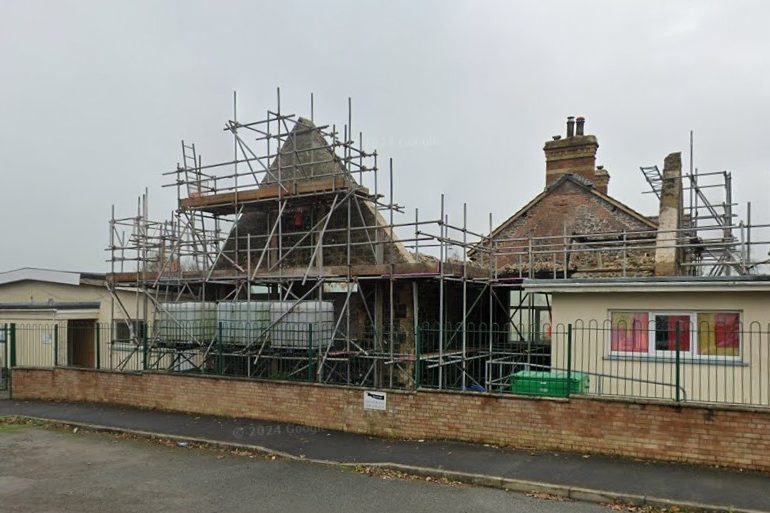
THE FINAL decision to close fire-ravaged Manorbier school has been given the go-ahead, despite a heartfelt last-minute plea by local councillor Phil Kidney to keep it open.
Back in March, Pembrokeshire County Council members backed a recommendation that the Director of Education at Pembrokeshire County Council be authorised to publish a statutory notice to discontinue Manorbier Church in Wales voluntary controlled school.
Manorbier Church in Wales VC School and its adjoining schoolhouse was severely damaged by a fire in October 2022, which broke out in the school roof space.
After that, a ‘school from school’ was set up in Jameston Village Hall.
It had been hoped the school would be rebuilt, but last year councillors backed a report of the School Modernisation Working Group which, amongst other recommendations, included a statutory consultation on proposals to discontinue Manorbier Church in Wales Voluntary Controlled School.
The decision attracted strong local opposition, with more than 1,500 people signing a petition on the council’s own website calling for the school to be rebuilt.
The formal consultation for the discontinuation of Manorbier closed last December.
However, many of the council’s figures, especially on the level of surplus places at the school, have been strongly disputed.
At a special extraordinary council meeting held on June 15, members were asked to consider a report on a summary of 62 objections received in respect of the proposal to discontinue Manorbier VC school, which included options to end that discontinuation or to launch a fresh consultation.
However, it was recommended, in a report present by deputy leader Cllr Paul Miller, who now also has responsibility for education, for the discontinuation be proceeded with.
At the meeting, local councillor Phil Kidney, who has been a staunch supporter of the keeping the school open, thanked the campaigners who fought for it and the dedication of the staff, including headteacher Sharon Davies.
Cllr Kidney said: “The way this authority has treated her and the staff is quite frankly amazing; we have all let these good people down.


“We’ve all let these people down, the way this council has handled this situation is appalling; from day one not one of the executives came up to see these children, no-one came out; if that was Haverfordwest or Tenby they’d be all over the place.”
He said the wording of the consultation had seen more mentions of St Florence [ the alternative school for pupils in the event of a discontinuation] than Manorbier, describing it as “like a brochure for St Florence”.
He also warned the Diocese of St Davids, which had always pressed for the school to be rebuilt, would not allow the council to “walk away from our liabilities lightly”.
“We’ve been promised by two leaders and the chief executive: ‘Don’t worry we’ll rebuild,’ sometimes you’ve got to be big enough an honour your promises; do the right thing today, vote for Manorbier and keep it open.”
Members later heard the diocese had, in a letter received by councillors, made “damning accusations the council is being biased against voluntary controlled schools,” with Cllr Jamie Adams saying the council administration should be “ashamed of this debacle”.
Cllr Miller said his only consideration was “the future welfare of the children,” adding: “I do not think 20 children educated in a welfare centre in Jameston is the best for them.”
He said that no pupils would have to travel more than 2.1 miles for their education as a result of a closure, Cllr Kidney disputing that figure more like 3.5 miles.
Cllr Miller said the wording in from the letter from the diocese “which had a dog in the fight” was a one-sided legal argument, adding the council had actually opened VC schools.
Cllr Aled Thomas, chair of the working group which had presented the proposals in the first place, said: “The whole thing is an omnishambles, a total mess of how it’s been handled, but we are where we are.
“The important thing to remember is the future for these children, there will be kids in that school that have never been taught in a classroom setting. Tough decisions are never going to be easy; not a single one of us got elected wanting to be in this position.
“I’m no friend of the administration but we need to look at it holistically.”
Members, by 30 votes to 23, with four abstentions, supported the final steps to close the school.
Posting after the decision, the Friends of Manorbier School said: “Today is a difficult day, as the final decision to close Manorbier Primary School has now been made.
“There were some heartfelt comments and statements during the council meeting. The children, staff, parents and wider community have been waiting far too long for a decision. While this outcome was not unexpected, it is still hard to hear those final words spoken aloud.”
It added: “There are still questions that need to be asked, but the fight to keep the school open has come to an end. Our focus must now be on supporting the children and their families as they prepare for the transition ahead. The staff, too, finally have an answer.”


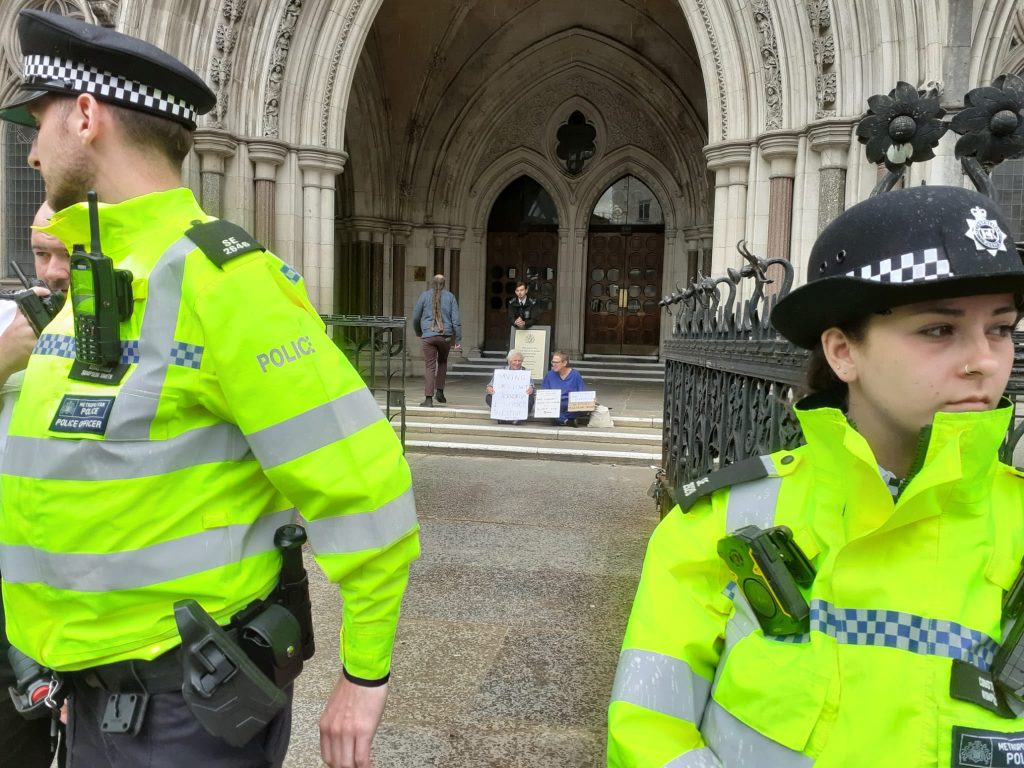
MID WALES peace activist Angie Zelter was arrested outside the Royal Courts of Justice in London after holding a placard in support of Palestine Action.
The 75-year-old campaigner, from Knucklas, Powys, was detained at around 12:20pm on the steps of the court, according to Radnor Palestine Links.
The group said Ms Zelter was arrested under Section 13 of the Terrorism Act 2000 after holding a sign which read: “Saving lives is not terrorism. I support Palestine Action.”
She was taken to Charing Cross Police Station and released around two hours later, the group said.
The arrest came as the Court of Appeal ruled in favour of the UK Government over its decision to proscribe Palestine Action under terrorism legislation.
The ruling overturned an earlier High Court decision which had found the ban unlawful. The Court of Appeal held that the Government’s decision was lawful and proportionate.
Palestine Action was banned after the Home Secretary moved to proscribe the group under the Terrorism Act 2000. Supporting or inviting support for a proscribed organisation can be a criminal offence.
Radnor Palestine Links said the protest formed part of an ongoing campaign against the use of counter-terrorism laws against peaceful demonstrators.
Ms Zelter, a long-standing peace and human rights campaigner, has been arrested more than 100 times worldwide during decades of non-violent direct action. She is also known as a founder of Trident Ploughshares.
Speaking after her arrest, Ms Zelter said: “I think it’s a terrible indictment of the criminal justice system that you are charging me with terrorism for holding a peaceful sign.
“We have to uphold the most important international laws. Peaceful, disruptive protest is absolutely essential to protect democracy.”
The Metropolitan Police has been asked to confirm the circumstances of the arrest, whether Ms Zelter was formally charged, and the conditions of her release.

Photo caption: Court protest: Angie Zelter outside the Royal Courts of Justice in London holding a sign in support of Palestine Action (Pic: Radnor Palestine Links).



Business1 day ago
Celtic Freeport five-year plan puts Milford Haven at centre of green energy future
Strategy promises investment, skilled jobs and new supply chains, but major barriers remain over grid connections, planning and delivery THE...


Education1 day ago
Closure of Ysgol Clydau approved after emotional council debate
COUNCILLORS WARNED RURAL COMMUNITIES WILL REMEMBER DECISION PEMBROKESHIRE councillors have voted to close Ysgol Clydau following an emotional debate over...


Education1 day ago
Manorbier school closure process to continue after narrow council vote
Questions remain over insurance, rebuilding costs and possible legal action by Diocese PEMBROKESHIRE councillors have voted to press ahead with...

Community1 day ago
The father, son and daughter lifeguard trio saving lives in Pembrokeshire
A FATHER, son and daughter are preparing to help keep beachgoers safe on the Pembrokeshire coast this summer as part...

Community2 days ago
Beating of the Bounds brings music, boats and tradition to Haverfordwest
CENTURIES-OLD CEREMONY DRAWS FAMILIES TO THE RIVERSIDE HAVERFORDWEST’S historic Beating of the Bounds returned on Sunday (Jun 14), with boats,...


Community2 days ago
Milford Haven School pupil praised after stepping in during real-life emergency
A YEAR 11 pupil at Milford Haven School has been praised after putting his first aid training into action to...


Community2 days ago
River festival brings crowds to Haverfordwest
A CELEBRATION of the River Cleddau brought crowds into Haverfordwest on Saturday (June 13) as the town’s River Festival returned...


Charity2 days ago
Voices at the Castle hailed as unforgettable night after weather setback
Russell Watson headlines spectacular charity concert at Pembroke Castle A SPECTACULAR evening of live music at Pembroke Castle has been...


Local Government3 days ago
Council admits 74 rights of way complaints remain unresolved
Key post vacant since February as walker raises safety concerns over paths near Llanteg and Amroth PEMBROKESHIRE COUNTY COUNCIL has...


Education4 days ago
Diocese threatens legal action as Manorbier school closure battle intensifies
Church says council could face judicial review over fire-hit school A BITTER row over the future of Manorbier Church in...
-

 Community2 days ago
Pembrokeshire Chess Club crowned Welsh champions
-
Education4 days ago
Diocese threatens legal action as Manorbier school closure battle intensifies
-

 Crime7 days ago
Haverfordwest pair accused of £80,000 rogue trading frauds
-

 Crime5 days ago
Man accused of six rapes including alleged Haverfordwest offence
-

 Crime5 days ago
Pembroke Dock teenager sentenced over train strangulation attack
-

 Local Government4 days ago
Taxi suspended after county-wide licensing checks
-

 Crime4 days ago
Currys worker denies stealing £2,500 of store stock
-

 Crime5 days ago
Brothers found guilty of causing death of Welsh dad in ‘reckless’ race