


Politics
Westminster standards chief urges Senedd to heed public on recall system


A NEW recall system allowing voters to remove misbehaving Senedd politicians between elections must command public confidence, the UK’s standards watchdog has stressed.
Daniel Greenberg, the UK parliamentary standards commissioner, gave evidence as the Senedd scrutinised plans for Wales to follow in Westminster’s footsteps.
Under the recall bill, the Senedd would adopt a similar system – with some tweaks due to differing electoral systems – to one introduced in the House of Commons in 2015.
Mr Greenberg, who investigates MPs, told the Senedd’s newly formed accountability committee that the public view is “absolutely key” to the success of the new system.
However, appearing before the committee today (November 25), he said he had seen no evidence that the Recall of MPs Act has improved the conduct of politicians.

In Westminster, a ten-day suspension leads to a recall petition but the Welsh bill includes no detail of the triggers other than a custodial or suspended sentence of 12 months or less. Sentences of more than 12 months already lead to disqualification.
Mr Greenberg said the proposed approach of leaving the detail to recall guidance, to be issued by the Senedd’s standards committee, leads to flexibility but a lack of certainty and “perhaps a little bit of a lack of openness and transparency”.
But, on the other hand, he said a ten-day automatic trigger is inflexible, adding: “Whichever of the two options you choose has an inevitable upside and an inevitable downside.”
The lawyer argued the bill effectively puts off the challenge of steering between flexibility and certainty rather than addressing it within the proposed legislation itself.

He said: “This is a question of public confidence… The desire to have real trust between the body politic and the public is what underpins the entire standards system.”
Mr Greenberg stressed: “My views about whether a ten-day trigger is more or less effective are much less important than views that you will hear from members of the public.
“And I’m sure… you are inviting many members of the public and third-sector organisations to come and talk to you about their perception of the effectiveness of the standards regime.”

Senedd Members have taken evidence from the Welsh standards committee, commissioner Douglas Bain and the Electoral Commission. They will hear from the Commons standards committee and lawyers this week then conclude with evidence from ministers next week.

Asked about whether conduct such as sexual harassment or fraud should be automatic recall triggers, Mr Greenberg replied: “I do feel that the public are absolutely key here… and I’m not in a position to speak for them.”
He welcomed the introduction of “lay” members on Westminster’s standards committee – which has a 50:50 split, as well as voting parity, between independent and elected members.
Mr Greenberg said: “An independent element of the system is something that, I hope, very much enhances public trust… the only thing we are here to achieve.”
He also pointed to an independent expert panel which hears appeals and the Independent Complaints and Grievance Scheme – features lacking from Wales’ standards system.
“Independence is vital,” he told Senedd Members.
“I often say to MPs that, inevitably, one of the dangers of the standards system is that – from the public’s perspective – the necessary degree of self-regulation can risk a ‘well, you’re marking your own homework’ kind of allegation.”
Under the bill, the Welsh Parliament’s standards committee would introduce lay members for the first time with only a two-year cooling-off period before former Senedd Members can join.
Mr Greenberg raised the danger of the public perceiving former politicians as “reincarnated” rather than truly independent members despite the valuable experience they may bring.
He said: “I think this is something where the public view, which I’m sure you will acquire, really is worth much more than any view I might suggest.”
The bill also would see Wales follow Westminster’s lead by giving the Senedd’s standards commissioner “own-initiative” powers to start an investigation without needing a complaint.
Mr Greenberg, who already has such powers, said investigations must be subject to the same rigorous, evidential standards as opposed to “fishing expeditions”.
He told the committee: “In terms of overarching scrutiny… it is an important tool,” suggesting the additional flexibility enhances credibility and public confidence.
On appeals, he emphasised the importance of fairness and transparency, reminding Senedd Members of the legal principle that “justice must not purely be done but be seen to be done”.


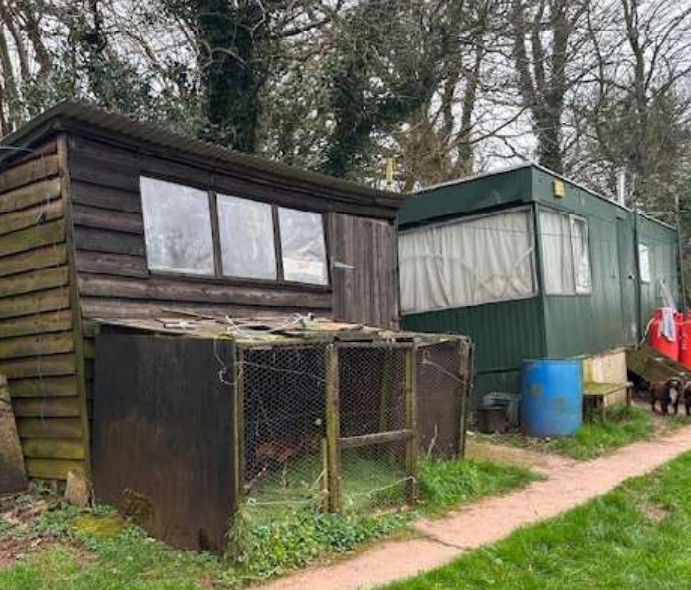
A CALL to allow a caravan occupied without permission for 30 years to remain a home has been given the go-ahead by county planners.
In a certificate of lawful development application to Pembrokeshire County Council, Wendy Campbell, through agent Preseli Planning Ltd, sought permission to keep the caravan and associated buildings at Warreston Lodge, Cosheston, the caravan having been on site since 1996.
An application for a certificate of lawfulness allows an applicant to stay at a development if they can provide proof of occupancy over a prolonged period.
The caravan site forms part of a 40-acre holding owned by Wendy Campbell who resides at nearby Warreston Farm; the caravan being occupied by Clive Hetherington who has been a tenant of the caravan since 1996, prior to Ms Campbell purchasing the holding in 2003.
A supporting statement said: “The caravan has been openly used, and no attempt has been made to conceal the development at any time since its occupation as a residential unit in 1996.”
As evidence of continual usage, it said the caravan was connected to mains electricity, with invoices to Mr Hetherington and the ‘Caravan,’ and also had an independent Royal Mail postal address which reinforces it forming a residential unit.

It also said Pembrokeshire County Council had confirmed Mr Hetherington has been registered as a resident at the Caravan, Warreston Lodge since the April 1, 1996, along with rental books showing continuous occupation and rental payments from August 2003 up until March 2026, along with aerial photographic images showing structures and a caravan being in situ since 1996.
It went on to say: “The affidavits accompanying the application clearly refer to living in the caravan, with no mention to a functional link to the main house. Furthermore, the caravan has only ever had one occupier whom is not a relative of the applicant and has resided in the caravan for residential purposes prior to Ms Campbell owning the land, thereby there is no link to the caravan being occupied in connection with Warreston Farm.
“The use has existed continually for a period of over 10 years with no intervening uses.”
An officer report recommending the granting of a certificate said: “Whilst the rent book evidence does not extend to the full period claimed, it nonetheless demonstrates occupation over a period significantly exceeding 10 years. The pattern and consistency of the entries, together with site observations, support the conclusion that the use has not been abandoned or interrupted.”
In granting approval, it said the relevant immunity period is 10 years, and the application demonstrates the caravan “had a continuous residential use for a period of time in excess of 10 years and the sheds have been on site for a period of time in excess of four years”.

A CALL to convert a ticket office to a home at a former Pembrokeshire railway line which closed more than 60 years ago has been lodged with county planners.
In an application to Pembrokeshire County Council, Mr James, through agent Harries Planning Design Management seeks permission for the conversion of a ticket office into a dwelling, at the old Ticket Office, Station Road, Crymych.
A supporting statement says: “The building used to serve as the ticket office for the Crymych Arms Railway Station serving both the Whitland and Cardigan Railway. The station closed in 1962, with this building becoming disused.
“Since its closure the building has been used as temporary storage by the owner, who has continued to maintain, fix and repair the building to a state where conversion is possible. The ticket office is semi-detached with a dwelling to the north. The ticket office building comprises faced stone elevations and a slate roof.
“Externally, it is served by overgrown green space to the south and concreted areas to the east and west. There are no known environmental or historical designations on site.”
It goes on to say: “The dwelling will retain the existing form, with no external extensions proposed. Internally, it is proposed to convert the building into a two-bed dwelling, with an open plan kitchen/living/dining area to provide ample space for modern habitation. Garden space is to be provided to the south and west, with lawned gardens and native beech hedging. External materials will remain as existing for the most part, with the windows replaced with heritage style UPVC sash and the existing chimney removed.”
It concludes: “The proposal seeks to retain the external form of the building to conserve its historic impact within the landscape. The proposal seeks to comply with [planning policy] which places open market housing within the settlement boundary of a service village and for the conversion of a historic building which is not being utilised. Therefore, the principle of development is considered acceptable and will contribute to a positive conversion within the landscape.”
The application will be considered by county planners at a later date.
The 27-and-a-half-mile-long Whitland and Cardigan Railway branch line, initially called the Whitland and Taf Vale Railway before becoming the Whitland and Cardigan, reached Crymych in 1874 though a passenger service didn’t start until the following year, with an extension to the edge of Cardigan opening in 1886.
A proposal to close the line, known locally as the Cardi Bach, came a little before the infamous ‘Beeching Axe’ which saw many stations in Wales and elsewhere close; the line closing to passengers in 1962, the last being the 5.45 Cardigan Mail, remaining open to freight traffic for a short while before a final closure in 1963.
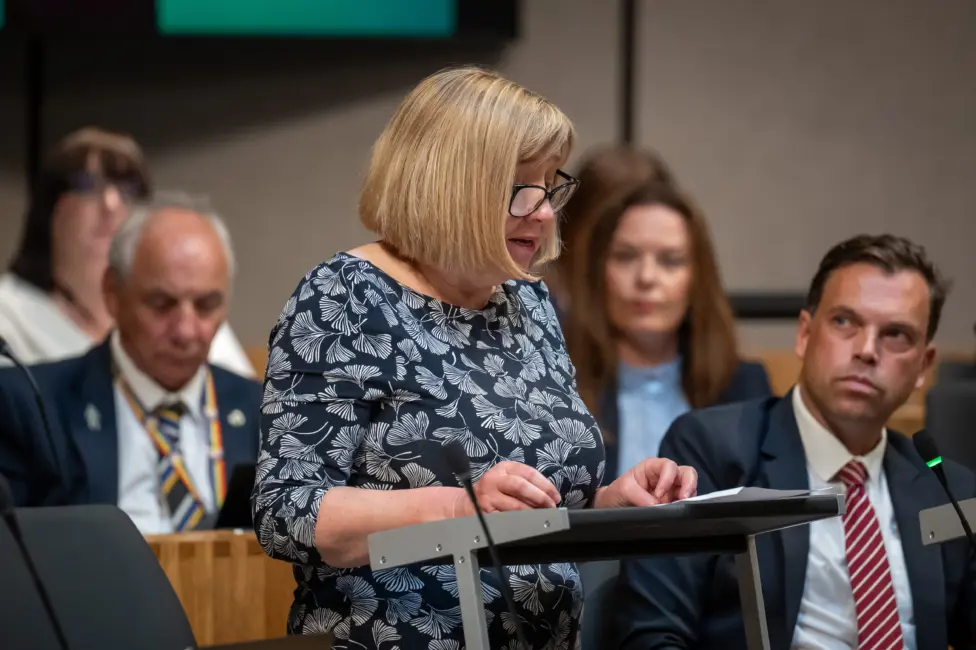
CALLS for a new negotiating body for school support staff, and an end to term-time only pay, has been backed in the Senedd.
A motion, put forward by Labour’s education spokesperson Lynne Neagle, was supported by Senedd Members on Wednesday June 10.
Ms Neagle said support staff “build strong relationships with children and young people, which are crucial for their wellbeing, so that they can learn and reach their potential”.
Pointing to the fact support staff are now the majority of the school workforce in Wales, Ms Neagle said: “Our schools simply couldn’t function without them. They are quite simply the glue that holds our schools together.”
The Sir Fynwy Torfaen MS highlighted the extent of in-work poverty facing support staff, referencing a Unison survey of more than 1,400 school support staff showing 8% of support staff take home less than £1,000 a month.
Ms Neagle also described it as an equality issue, noting more than 90% of support staff are women.
Concluding her speech to the Siambr, Ms Neagle called on the Plaid Cymru government to commit to bringing forward new legislation and to end term-time only pay for school support staff – a pledge featured in the Labour election manifesto.
She said: “Our calls are supported by the Welsh trade union movement, including Unison Cymru and the GMB. But valuing school support staff is not just the right thing to do for the staff; it’s the right thing to do for our schools, our communities and every learner in Wales.”

Paul Rock, Green Party MS for Caerdydd Fynnon Taf MS, supported the motion, and spoke of the “tireless dedication” provided by school support staff.
Mr Rock, whose wife works as a teaching assistant, said: “I don’t need to remind members of the important work that school support staff do: one-to-one interventions to support children with additional learning needs or children who are simply falling behind.
“They work with small groups, they cover for teachers and look after whole classes at a time, they run breakfast clubs and after-school clubs, they supervise children at lunch times and play times, they work unpaid overtime daily, and the pressures of the job mean they cannot always take the breaks they are entitled to.”
Mr Rock described this as an issue of “fairness, safety, and wellbeing” and said the lack of year-round pay is “directly contributing” to the gender pay gap in Wales.

He outlined his party’s commitment to treating school support staff fairly and ensuring they are “fully represented” in discussions about their pay.

Reform’s deputy leader, Helen Jenner, said she recognised the importance of school support staff but opposed the creation of “yet another quango”.
She said: “We in Reform want to see quangos brought in-house to save taxpayers’ money and reduce the tax burden on Welsh people. We don’t want to see new ones created.
“While we have sympathy for the proposals for year-round pay for school support staff, there will, of course, be financial implications to implementing that policy and we would not like to see more money diverted from our schools.”

Sam Rowlands, the Conservative education spokesperson, also weighed in on the debate discussing the “inconsistency” built into the current system.
He said: “Pay and conditions can vary from one local authority to another quite significantly, even for staff doing very much the same roles. That means recognition and reward for their work depends too heavily on where they happen to be employed, rather than the value of what they do.”
Mr Rowlands also hit out at Welsh Labour and Plaid Cymru, saying: “This is not a new problem. It’s been developed over 27 years of Labour in government here in Wales, propped up by Plaid Cymru, during which these structural issues in our education workforce were allowed to persist.”
Describing the system as “fragmented, under pressure and increasingly reliant on goodwill rather than proper structure”, Mr Rowlands said it is “not credible” for Plaid and Labour to “now present themselves as discovering these problems for the first time or to claim ownership of a solution only once they are no longer solely responsible for fixing it.”

Education minister Anna Brychan began by recognising the “value and contribution” made by support staff in schools across Wales.
She said: “Teaching assistants, administrative officers, technicians, lunch-time supervisors, caretakers – roles that have been referred to by many of the contributors this afternoon – are the backbone of our schools across Wales, and I do recognise the crucial role of school support staff in Wales and very much appreciate their contribution to our education system as a whole. They are crucial and their contribution is priceless.”
Ms Brychan however then addressed the practicality of the motion.
The minister clarified the Welsh Government currently does not have the power to set the pay, terms and conditions for support staff, noting that this responsibility lies with local authorities or schools as the employers.
She acknowledged the benefits of introducing a statutory body for Welsh support staff, as is being introduced in England, but said this “would take time to establish” and said she is “eager” to see what can be done without legislation to make a difference more swiftly in the short term.
Concluding her response, the cabinet minister said: “I look forward to working with colleagues across this chamber to support and appreciate our school support staff.
“It is clear that there is support for and an understanding of their work across the chamber, and that is something valuable that we can build upon, and to help them give the best possible experience to our learners, as they already do, but also to provide an attractive career for them as individuals and as a profession too.”
The motion was agreed with 17 in favour, 74 abstentions, and none against.



Local Government8 hours ago
Council admits 74 rights of way complaints remain unresolved
Key post vacant since February as walker raises safety concerns over paths near Llanteg and Amroth PEMBROKESHIRE COUNTY COUNCIL has...


Education1 day ago
Diocese threatens legal action as Manorbier school closure battle intensifies
Church says council could face judicial review over fire-hit school A BITTER row over the future of Manorbier Church in...


Health1 day ago
Baby loss charity calls for urgent action after latest Wales figures published
Sands says Welsh Government must set clearer targets to reduce stillbirths and neonatal deaths A BABY loss charity has called...

Health1 day ago
Cancer delays worsening as west Wales hospitals struggle to recruit specialists
Health board admits standards are difficult to meet as doctors warn of “extremely dangerous” shortages PATIENTS in west Wales are...


News1 day ago
Rhun ap Iorwerth highlights first 25 days in office as First Minister
Plaid Cymru leader says government is moving quickly on NHS, farming and economic priorities FIRST MINISTER Rhun ap Iorwerth has...


Crime3 days ago
Man accused of six rapes including alleged Haverfordwest offence
A MAN has been sent to Crown Court accused of six rapes, including an alleged offence at a Haverfordwest campsite....


News3 days ago
Childcare row erupts as Plaid faces questions over costs and delivery
Opposition parties clash over flagship pledge as Senedd debate exposes growing divisions PLAID CYMRU’S flagship promise to create what it...


Crime3 days ago
Farmers fined in bovine TB scandal face fresh court action
Hartt family members listed at Haverfordwest Magistrates’ Court over unpaid penalties linked to major cattle prosecution TWO PEMBROKESHIRE farmers convicted...


Crime3 days ago
Pembrokeshire child killer stabbed to death in prison cell, murder trial hears
Kyle Bevan, jailed for the murder of Haverfordwest toddler Lola James, was allegedly stabbed 25 times and left ‘as if...


News4 days ago
Pendine cliff fall victim recovering after major emergency response
A 22-YEAR-OLD man who suffered serious injuries after falling from cliffs overlooking Pendine Beach is recovering well following emergency surgery....
-

 Crime6 days ago
Sex offender in senior role at Tenby family hotel
-

 Crime4 days ago
Haverfordwest pair accused of £80,000 rogue trading frauds
-
Education1 day ago
Diocese threatens legal action as Manorbier school closure battle intensifies
-

 Community5 days ago
Forgotten wartime archive found in Pembroke Dock attic after 80 years
-

 Crime5 days ago
Families condemn failed appeal by paddleboard boss jailed over Haverfordwest tragedy
-
Crime3 days ago
Man accused of six rapes including alleged Haverfordwest offence
-
 Crime5 days ago
Knife blankets call as school staff face rising violence fears
-

 Local Government7 days ago
Ombudsman confirms Woodham complaint still live after Cllr Dennison’s suspension