


News
£377m spent saving blast furnaces months after Port Talbot closure


Government intervention keeps UK’s last primary steelmaking furnaces running
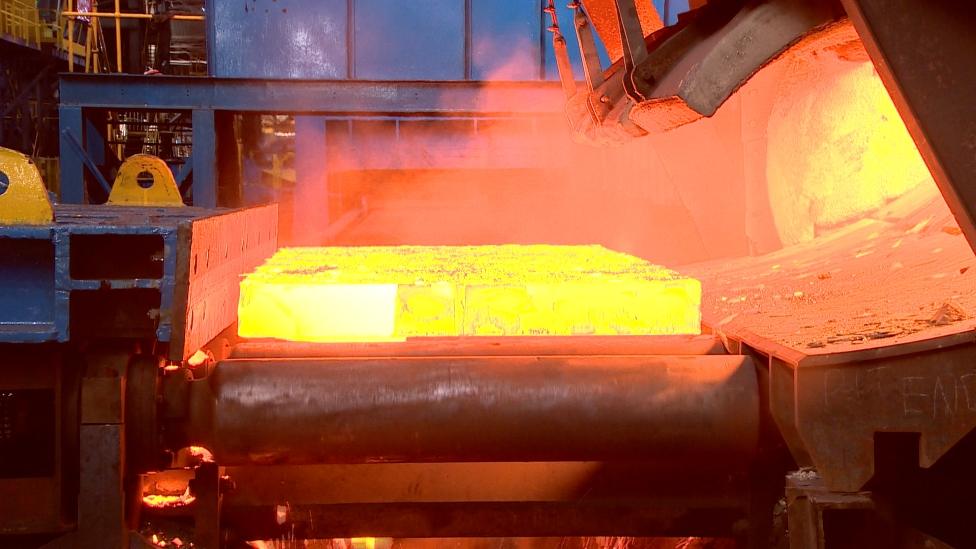
THE UK GOVERNMENT spent £377 million to prevent the closure of the country’s last remaining blast furnaces at British Steel’s Scunthorpe plant, according to a new report.
The emergency intervention came less than a year after the shutdown of the final coal-fired blast furnace at Port Talbot, which ended more than a century of primary steelmaking at the UK’s largest steelworks.
A report by the National Audit Office (NAO) said the Department for Business and Trade (DBT) stepped in quickly in 2025 to keep the Scunthorpe furnaces operating, warning that their closure would have led to thousands of job losses and major disruption to critical UK supply chains.
The £377 million spent between April 2025 and January 2026 has been classified as a loan, but the NAO warned that total costs could exceed £1.5 billion by 2028 if current spending levels continue.
Operating the furnaces is currently costing around £1.3 million a day, the report said, with no fixed budget, repayment schedule or clear end date for the government support.

British Steel’s owner Jingye had been in talks with the Government between 2022 and 2025 about switching the plant to electric arc furnaces, but no agreement was reached.
In March 2025 the company said it was losing around £700,000 a day due to difficult market conditions, tariffs and environmental costs and warned that it was considering closing the blast furnaces.
The Government feared the closure would leave the UK without the ability to produce virgin steel from raw materials — a capability considered strategically important for defence, infrastructure and rail manufacturing.
Electric arc furnaces, which melt scrap steel using electricity rather than iron ore and coal, are seen as the future of the industry because they produce far fewer carbon emissions. However, they cannot fully replace blast furnaces for certain specialist steel products.

The closure of Port Talbot’s blast furnaces last year marked the end of traditional steelmaking in Wales and triggered widespread concern about the long-term future of the UK steel industry.
At its peak, the Port Talbot plant employed thousands of workers and was capable of producing around five million tonnes of steel a year.

Trade unions and industry groups warned that without intervention at Scunthorpe, Britain risked becoming the only G7 nation unable to produce primary steel.

The NAO said the Government’s decision to intervene reflected the “strategic importance” of maintaining domestic steelmaking capacity, but warned that long-term plans for the sector remain uncertain.
Industry figures and unions reacted quickly to the report, warning that the future of UK steel remains uncertain.
Gareth Davies, head of the National Audit Office, said the Government had acted quickly to prevent serious economic damage.
He said the intervention avoided heavy job losses and disruption to major UK infrastructure and construction projects but warned that the high cost of keeping the furnaces running created “significant uncertainty” about how long support could continue.
Trade unions also backed the decision to intervene.
Alasdair McDiarmid of the steelworkers’ union Community said allowing the plant to close would have had devastating consequences.
He said the Government had taken the right decision to act, warning that local economies would have been “decimated” and that Britain would have lost its ability to produce steel from raw materials.
The intervention has also reignited political debate in Wales, where critics have questioned why similar emergency action was not taken sooner to save the blast furnaces at Port Talbot.
The shutdown of the Welsh plant resulted in around 2,800 direct job losses, with thousands more roles across the wider supply chain affected.
Opposition politicians and industry figures have argued that the contrast between the Government’s approach to Scunthorpe and the earlier closure in South Wales highlights the lack of a clear long-term strategy for the UK steel industry.
Ministers say a wider steel strategy is now being developed to balance the transition to greener electric arc furnace technology with the need to maintain domestic steelmaking capacity.









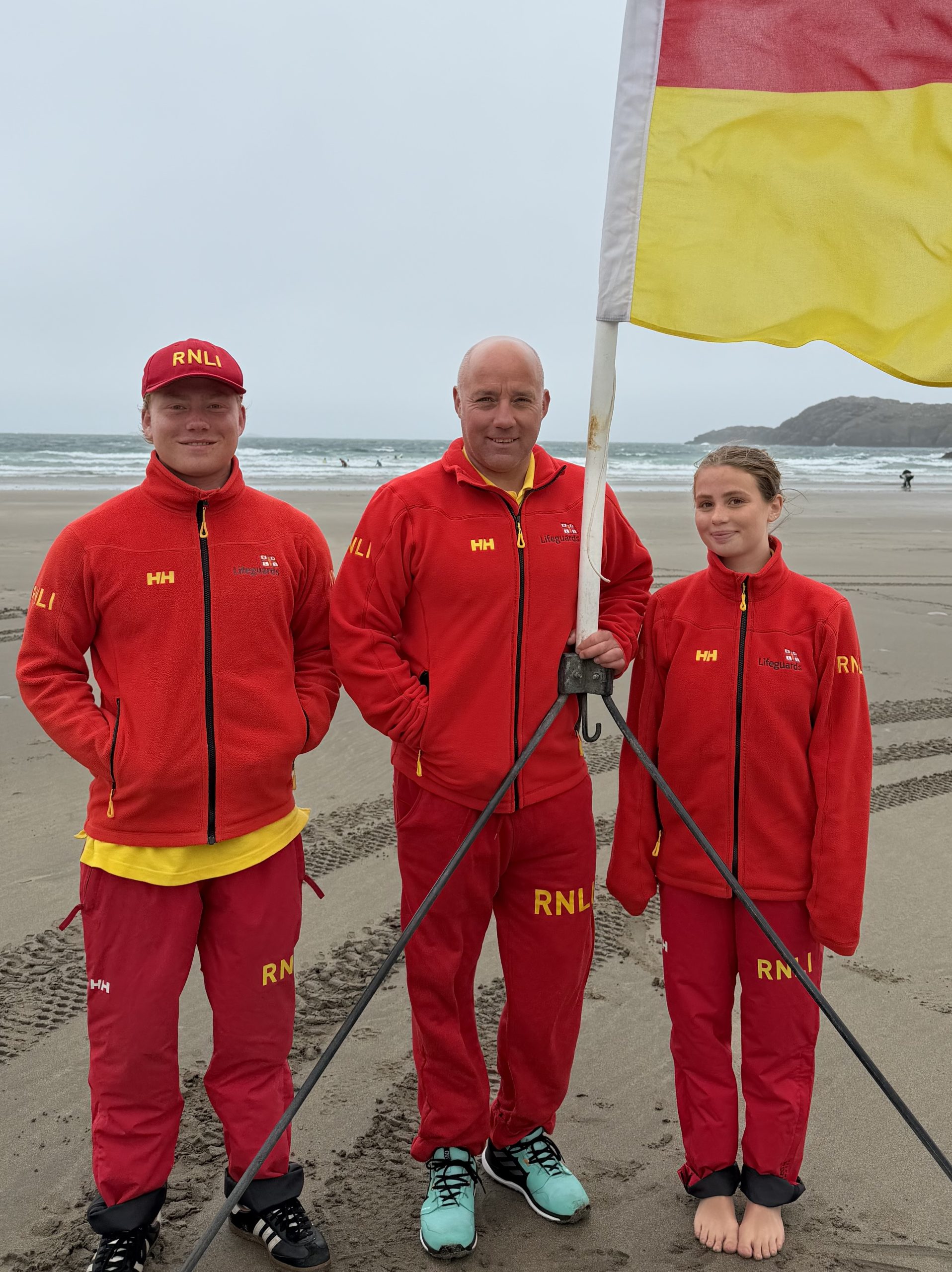
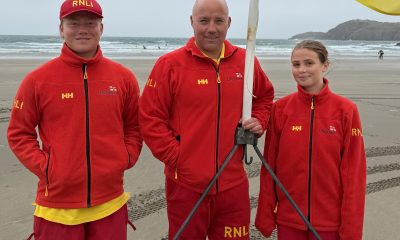
A FATHER, son and daughter are preparing to help keep beachgoers safe on the Pembrokeshire coast this summer as part of the same RNLI lifeguard team.
Tom Owen, 52, his son Cai, 19, and daughter Poppy, 17, are all RNLI beach lifeguards in north Pembrokeshire.
Tom joined the North Pembrokeshire team in 2022, with Cai following in 2023 and Poppy joining last year after turning sixteen.
Family effort
Tom is also the oldest lifeguard in the North Pembrokeshire team, but he has decades of experience around the water.
He first worked as a beach lifeguard for the local council in 1992, before the RNLI lifeguard service was introduced in Pembrokeshire in 2008.
Tom said: “I first had the opportunity to work as a beach lifeguard for the local council in 1992 before the RNLI’s lifeguard service was rolled out in 2008. My interest grew whilst in Australia, so I spent a couple of summers out there volunteering mainly for surf lifesaving clubs.
“Joining the RNLI has always appealed to me and now that my children are old enough, I took the opportunity to give it a go. It’s also lovely working alongside my kids. I’m really proud of what they have achieved, although I try not to embarrass them too much.”
Coastal upbringing
Cai and Poppy have grown up on the Pembrokeshire coast and have spent much of their lives in and around the sea.
Both have swum competitively for many years, competing at club and county level, while both are also surfers. Poppy has represented Wales at the Junior Santa Cruz Eurosurf in 2022, 2023 and 2024.
Cai said: “My most memorable lifeguard shift with my dad was when we cycled to work together, but on the way home my bike got a puncture.
“Dad cycled home and I had to walk back. But I really enjoy cycling to work in the summer with Dad and having the opportunity to be active and help others.”
Poppy said: “I really enjoyed my first season working on the beaches last year and can’t wait for this one to begin. I have already completed my lifeguard induction and have just finished my A-levels.

“It’s hopefully going to be a great summer working alongside my brother and dad, and in a special year as the charity celebrates the 25th anniversary of RNLI lifeguards.”
‘Give it a go’
Tom said age should not be a barrier for anyone thinking about becoming a lifeguard.
He added: “My age was never a consideration of mine when applying for the beach lifeguard job. I’ve always enjoyed working in a team and having the opportunity to be outside on my local beaches is brilliant.
“It’s hugely satisfying knowing I’m helping to keep others safe.
“I hope other people my age see that lifeguarding isn’t just for youngsters. If you’re still fit and healthy and love being at the beach, just give it a go, you won’t regret it.”
Since the RNLI lifeguard service began in Pembrokeshire in 2008, lifeguards in the county have saved 164 lives, aided 15,513 people and carried out 1,799 rescues.
Photo caption:
Family team: RNLI lifeguards Cai, Tom and Poppy Owen will be helping to keep Pembrokeshire beaches safe this summer (Pic: RNLI).

PRIME MINISTER Sir Keir Starmer has confirmed plans to ban children under the age of sixteen from using a range of social media platforms, in what would be one of the biggest changes to online safety rules in recent years.
The move is being presented by the UK Government as a major step to protect children from harmful content, online bullying, exploitation, addictive screen use and unwanted contact from strangers.
Speaking today, Starmer described the announcement as “a big moment for our country” and said the government had a responsibility to act as more children grow up with smartphones and constant access to online platforms.
The ban is expected to apply to major social media services, with reports naming platforms such as TikTok, Instagram, Facebook, Snapchat, X, YouTube and other similar apps as likely to be affected.
Full details of exactly which platforms will be covered have not yet been confirmed, but ministers are expected to set out further information as the proposals move forward.
Age checks expected
A key part of the plan is expected to be stronger age verification, with technology firms required to prevent children under sixteen from creating or using accounts.
The government is also expected to look beyond traditional social media sites, with possible restrictions on features such as livestreaming, disappearing messages, location sharing and contact with adult strangers through messaging, gaming and other online platforms.
The proposals could also include limits on some artificial intelligence chatbots and other services considered unsuitable for children.
Support from parents
The announcement follows months of growing pressure from campaigners, parents and MPs who have argued that children are being exposed to online content and behaviour they are not equipped to deal with.
Supporters of the ban say parents have been left to fight a losing battle against powerful technology companies, addictive algorithms and peer pressure among children.
They argue that a national rule would give parents a clearer boundary and prevent families being forced to make the decision alone.
Concerns over enforcement
However, the plans are likely to face criticism from technology firms, privacy campaigners and some child safety experts.

Opponents are expected to argue that age verification could raise privacy concerns, be difficult to enforce, or push children towards less regulated websites and apps.
There are also questions over how the ban would apply to children who already have accounts, whether parents would be able to give consent, and what penalties companies could face for failing to comply.
Part of wider online safety debate
The UK has already introduced tougher online safety rules through the Online Safety Act, but campaigners have continued to call for stronger action on children’s access to social media.
The proposed under-16 ban would go further than many existing rules and would put Britain among a growing number of countries considering or introducing age-based restrictions on social media use.
Ministers are expected to publish more detail on the legislation, enforcement and timetable in the coming months.
For now, the announcement marks a major shift in government policy and signals a tougher approach towards technology companies over children’s safety online.
NEW STUDY PRAISES AFFORDABILITY, AIR QUALITY AND QUALITY OF LIFE
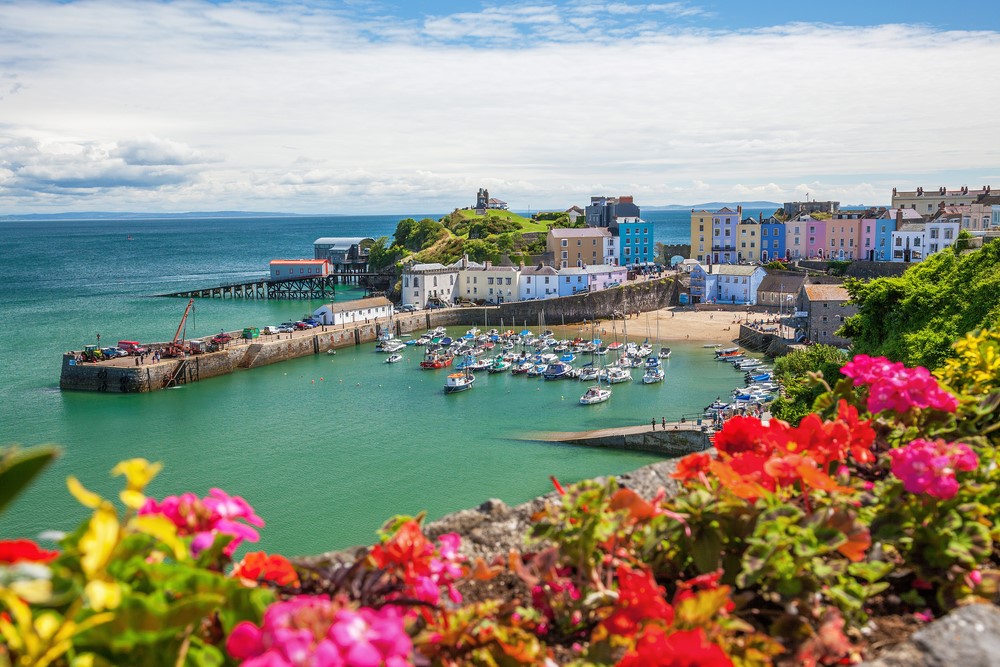
WALES has been named the second best region in the UK for retirement in a new study, although the findings may prompt debate among older residents facing pressures over healthcare, transport and the cost of living.
The analysis, carried out by private healthcare group Spire Healthcare, ranked UK nations and regions on a range of factors including house prices, crime rates, the proportion of over-65s, risk of falls, number of hospitals, air quality and access to free events.
Wales scored 59.30 out of 100, putting it second in the UK behind the East Midlands, which topped the table with a score of 61.25.
The South West came third, followed by Northern Ireland and the West Midlands. London was ranked lowest, with a score of 33.62.
Spire Healthcare said the figures showed Wales was one of the most attractive areas in the UK for retirees, helped by relative affordability, environmental quality and lower fall risk compared with some other regions.
The company said Wales was also among the three regions with the lowest fall risks, alongside the East and the South West.
Mark Frame, a consultant orthopaedic surgeon at Spire Southampton Hospital, said falls remained a serious concern for older people.
He said: “Most falls result in bruising or sprains, but we frequently see fractures of the wrist, ankle and hip.
“In older patients, hip fractures are especially concerning as they can significantly impact mobility and independence.
“In terms of prevention, maintaining strength and balance is one of the most effective protective measures.
“Regular activity such as walking, swimming or balance-focused exercises can significantly reduce fall risk. At home, simple steps such as improving lighting, securing loose rugs and wearing appropriate footwear can make a substantial difference.”
However, the study is likely to be viewed with caution by some older people in Wales, particularly in rural counties such as Pembrokeshire, where access to NHS dentists, GP appointments, public transport and social care remains a major concern.
The index did not directly measure NHS waiting times, ambulance response times, access to care packages, rural isolation, or the availability of public transport, all of which can have a major impact on quality of life in retirement.
The full ranking placed the East Midlands first, followed by Wales, the South West, Northern Ireland, the West Midlands, Yorkshire and the Humber, the South East, the North East, the North West, Scotland, the East of England and London.
Spire Healthcare said the index was designed to measure retirement suitability using publicly available datasets, with higher scores indicating regions that performed better on affordability, safety, healthcare access, environmental quality and social opportunity.


Community2 hours ago
The father, son and daughter lifeguard trio saving lives in Pembrokeshire
A FATHER, son and daughter are preparing to help keep beachgoers safe on the Pembrokeshire coast this summer as part...


Community13 hours ago
Beating of the Bounds brings music, boats and tradition to Haverfordwest
CENTURIES-OLD CEREMONY DRAWS FAMILIES TO THE RIVERSIDE HAVERFORDWEST’S historic Beating of the Bounds returned on Sunday (Jun 14), with boats,...


Community20 hours ago
Milford Haven School pupil praised after stepping in during real-life emergency
A YEAR 11 pupil at Milford Haven School has been praised after putting his first aid training into action to...

Community23 hours ago
River festival brings crowds to Haverfordwest
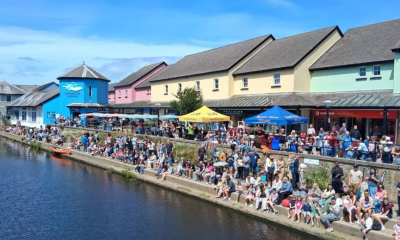
A CELEBRATION of the River Cleddau brought crowds into Haverfordwest on Saturday (June 13) as the town’s River Festival returned...


Charity24 hours ago
Voices at the Castle hailed as unforgettable night after weather setback
Russell Watson headlines spectacular charity concert at Pembroke Castle A SPECTACULAR evening of live music at Pembroke Castle has been...


Local Government2 days ago
Council admits 74 rights of way complaints remain unresolved
Key post vacant since February as walker raises safety concerns over paths near Llanteg and Amroth PEMBROKESHIRE COUNTY COUNCIL has...


Education3 days ago
Diocese threatens legal action as Manorbier school closure battle intensifies
Church says council could face judicial review over fire-hit school A BITTER row over the future of Manorbier Church in...


Health3 days ago
Baby loss charity calls for urgent action after latest Wales figures published
Sands says Welsh Government must set clearer targets to reduce stillbirths and neonatal deaths A BABY loss charity has called...


News3 days ago
Rhun ap Iorwerth highlights first 25 days in office as First Minister
Plaid Cymru leader says government is moving quickly on NHS, farming and economic priorities FIRST MINISTER Rhun ap Iorwerth has...


Crime4 days ago
Man accused of six rapes including alleged Haverfordwest offence
A MAN has been sent to Crown Court accused of six rapes, including an alleged offence at a Haverfordwest campsite....
-

 Community14 hours ago
Pembrokeshire Chess Club crowned Welsh champions
-
Education3 days ago
Diocese threatens legal action as Manorbier school closure battle intensifies
-

 Crime6 days ago
Haverfordwest pair accused of £80,000 rogue trading frauds
-
Crime4 days ago
Man accused of six rapes including alleged Haverfordwest offence
-

 Community7 days ago
Forgotten wartime archive found in Pembroke Dock attic after 80 years
-

 Crime6 days ago
Families condemn failed appeal by paddleboard boss jailed over Haverfordwest tragedy
-

 Crime4 days ago
Pembroke Dock teenager sentenced over train strangulation attack
-
 Crime6 days ago
Knife blankets call as school staff face rising violence fears