


Comment
Attack on Jewish ambulances: When hatred burns, nobody wins


THE IMAGES from Golders Green this week should stop all of us in our tracks.
Ambulances, not symbols of power, not political offices, not even property tied to profit, but ambulances, vehicles dedicated to saving lives, were set alight in the early hours of the morning. Oxygen tanks exploded. Families were forced from their homes. Volunteers who give their time freely to help others were targeted.
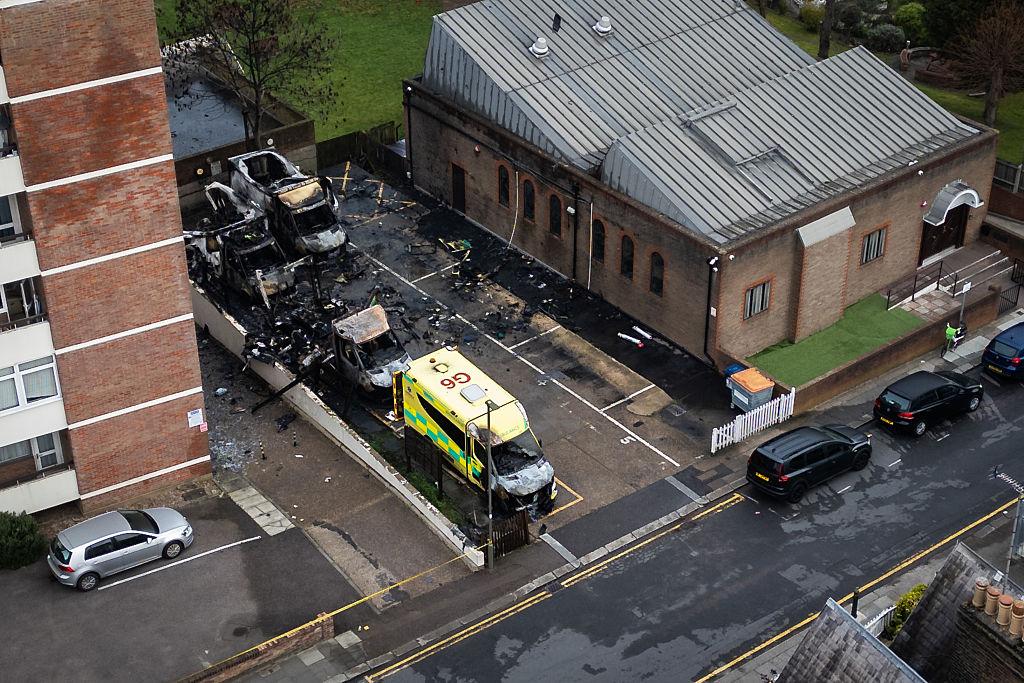
If that does not cross a line, then we have lost sight of where the line is.
Police are treating the attack as antisemitic. It is hard to see it as anything else. And it should be said plainly: there is no cause, no grievance, no anger about events abroad that can justify targeting Jewish communities in Britain, least of all those providing emergency care.
But if we are honest, this did not come out of nowhere.

Across Europe, and yes, in parts of the UK, tensions linked to the Israel-Gaza conflict have been bleeding into our streets, our conversations, and increasingly, our behaviour. What begins as outrage about war risks mutating into something darker: collective blame, dehumanisation, and eventually violence.

We have seen this pattern before in history. It never ends well.
At the same time, we cannot pretend that outrage only travels in one direction. Reports from the West Bank of settler violence, homes torched, communities terrorised, are deeply disturbing. Innocent people are suffering there too, often with little protection and even less accountability.
These are different situations, with different causes and different responsibilities. But they are connected by one dangerous thread: the erosion of empathy.

When people stop seeing individuals and start seeing “sides”, everything becomes easier to justify.
Burning an ambulance becomes, in someone’s mind, an act of resistance.
Torching a home becomes, in someone else’s mind, a matter of security.
Both are wrong.

And both depend on the same lie, that the person on the receiving end somehow deserves it.
Britain now faces a choice.
We can import the hatred of a conflict thousands of miles away, allowing it to fracture communities that have lived side by side for generations. Or we can draw a firm line and say: not here.
That means something uncomfortable for everyone.
Those who stand with Israel must be willing to speak out when Palestinians are attacked unjustly. Silence in those moments undermines credibility and fuels resentment.
Those who stand with Palestine must be equally clear in condemning antisemitism, not hedging it, not contextualising it, not quietly ignoring it when it appears on “their side”.
Because once you start excusing hatred when it suits your position, you are no longer arguing for justice, you are just choosing your victims.
The attack in Golders Green is not just about four burnt-out vehicles. It is a warning sign.
If ambulances are fair game, what is not?
Britain has long prided itself on being a place where different communities can live together, disagree, protest, and still recognise each other’s humanity. That tradition is under strain.
The truth is, anger is easy. Outrage is easy. Social media makes both effortless.
Restraint is harder. Nuance is harder. Refusing to hate, especially when confronted with images of suffering, is one of the hardest things we can ask of people.
But it is also the only thing that prevents society from sliding into something far worse.
The flames in Golders Green were put out.
What matters now is whether we put out the ones that lit them.


This is not the time to turn our backs on jobs, security and our proud defence heritage
PEMBROKESHIRE is once again being asked a simple question: do we want to be a county that helps shape Britain’s future, or one that says no to opportunity when it matters most?
The growing row over the proposed DARC project at Brawdy has generated more heat than light in recent days. With Eluned Morgan now calling for the scheme to be paused because of Donald Trump, and campaigners demanding it be scrapped altogether, it is worth stepping back from the noise and looking at what is really at stake.
Of course people are right to be alarmed by some of Trump’s behaviour. His rhetoric, his antics, and his bizarre attempts to wrap politics in religious theatre deserve criticism, ridicule even. If politicians want to condemn that kind of behaviour, fair enough. But serious decisions about Pembrokeshire’s future cannot be based on one man’s latest stunt.
Trump will not be President forever. By the time DARC is fully built, operational and delivering benefits, he will almost certainly be long gone. To throw away a major long-term opportunity for Pembrokeshire because of short-term panic over a single US President would be a serious mistake.
What is being proposed at Brawdy is not some passing political gimmick. It is a major defence and infrastructure project that would help secure the future of an existing military base, create jobs during construction, support permanent roles once operational, and ensure Pembrokeshire continues to play a serious role in national security.
That matters.
For this county, DARC is not an abstract foreign policy argument. It is a chance to protect the long-term future of a strategic site that has served Britain for decades. It is a chance to keep Brawdy alive, relevant and useful in a changing world, rather than letting it slowly drift into uncertainty and decline.
It is also a jobs issue, however much opponents try to talk that down. Construction work means contracts, wages and money circulating in the local economy. Once complete, the site would still need to be run, maintained, secured and supported. In a county where stable, skilled jobs are never to be sniffed at, that should matter to every sensible politician.
And then there is the wider issue of safety.
We are living in a more unstable world. Space is no longer some distant science-fiction sideshow. It is central to communications, intelligence, navigation and defence. Any country that cannot see what is happening above it is leaving itself dangerously exposed. Supporting DARC is not warmongering. It is common sense. It is about readiness, awareness and protecting the systems modern life now depends on.
Much of the argument against the project has been emotional. We hear a great deal about appearance, about symbolism, about fears of what the radar might represent. But leadership means weighing those concerns against reality. Pembrokeshire cannot afford to reject every major development on the basis that change makes people uncomfortable.
There is an uncomfortable truth here for DARC’s opponents. Protecting Pembrokeshire is not just about preserving a postcard view. It is also about protecting livelihoods, maintaining strategic assets, and making sure this county does not become a beautiful but economically sidelined corner of Wales where every serious opportunity is driven away.

A live military base with a renewed purpose is better than a fading one with none.
A project that brings jobs, investment and national relevance is better than managed decline dressed up as moral virtue.
And a serious defence asset in west Wales is better than the slow erosion of infrastructure while politicians pretend symbolism pays wages.
This newspaper understands why people care deeply about Pembrokeshire’s landscape and identity. So do we. But we also understand that counties survive by adapting, by staying useful, and by having the confidence to back projects that serve both local and national interests.
DARC does all of those things.
It would bring construction jobs. It would help sustain long-term operational roles. It would preserve the use of an important military base. And it would place Pembrokeshire at the heart of a serious national security project at a time when the world is becoming less safe, not more.
What Pembrokeshire needs now is not panic, hedging, or election-time theatrics. It needs backbone.
If politicians want to criticise Donald Trump, they are welcome to do so. But they should not use him as an excuse to duck a decision that could benefit Pembrokeshire for decades to come.
Trump is temporary.
The opportunity for Pembrokeshire is not.
WHEN I was studying law at university, constitutional law lectures were easily the most boring part of the course.
Dry cases. Ancient statutes. Endless discussion about parliamentary powers, constitutional conventions and obscure historical arrangements that seemed far removed from everyday life.
At the time, I thought it was all terribly dull.
Looking back now, I realise I had completely missed the point.
Constitutional law is not simply about legal rules. It is about the story of how Britain came to govern itself. Every institution, every convention and every reform is part of a long historical journey stretching back centuries.
This week marks one of those rare moments when that history visibly turns a page.
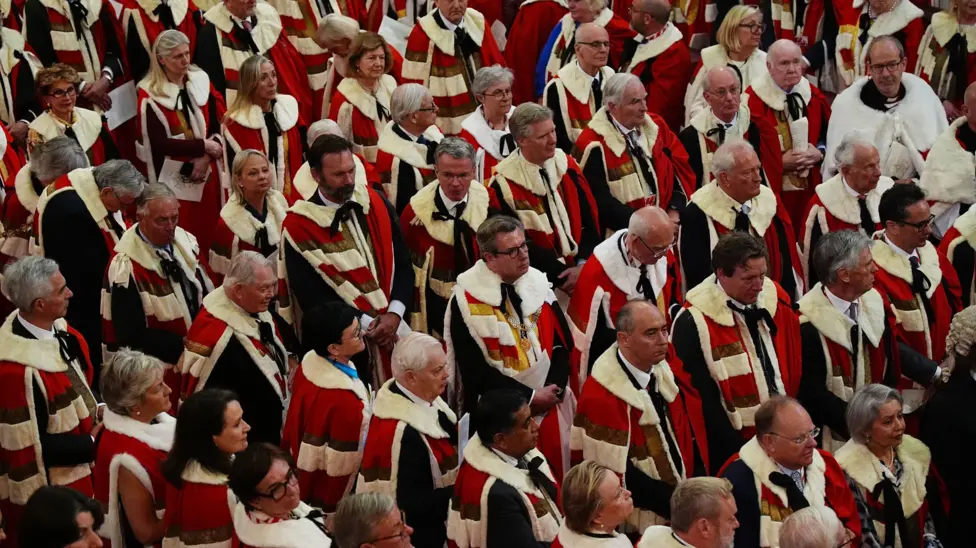
The remaining hereditary peers in the House of Lords are set to lose their automatic right to sit and vote in Parliament. When that happens, a constitutional principle that has shaped British law and government for more than seven hundred years will finally come to an end.
The origins of the Lords lie in the medieval councils summoned by Edward I of England, when nobles and bishops were called together to advise the Crown. Over time, attendance at Parliament became tied to noble titles, and those titles were inherited.
From that point onward, birth carried political power. If your family held a peerage, you could sit in Parliament and help shape the laws of the kingdom.
For centuries that arrangement formed one of the pillars of Britain’s constitutional structure. It survived civil war, revolution, reform acts and the expansion of democracy.
Even the great wave of reform in 1999 only reduced the number of hereditary peers rather than eliminating them entirely.
Now the final remnants of that system are set to disappear.
For critics, the change is long overdue. The idea that someone should help make the law purely because of who their parents were sits uneasily with modern democratic principles.
But the hereditary peers also represented something else — a direct and living connection to the deep historical roots of the British constitution.
Many of those who remained after the reforms of the late twentieth century became respected contributors to parliamentary scrutiny. They were part of the institutional memory of Parliament, carrying with them traditions that stretched back through generations.
The removal of hereditary membership will not fundamentally alter the role of the House of Lords. It will remain a revising chamber that scrutinises the work of the House of Commons.
But symbolically, something important is ending.
A constitutional principle that endured for more than seven centuries — longer than most political systems anywhere in the world — is finally passing into history.
Those constitutional law lectures I once found so dull were not just about dusty legal doctrines.
They were about the slow evolution of the British state itself.
And this week, that story takes another step forward.
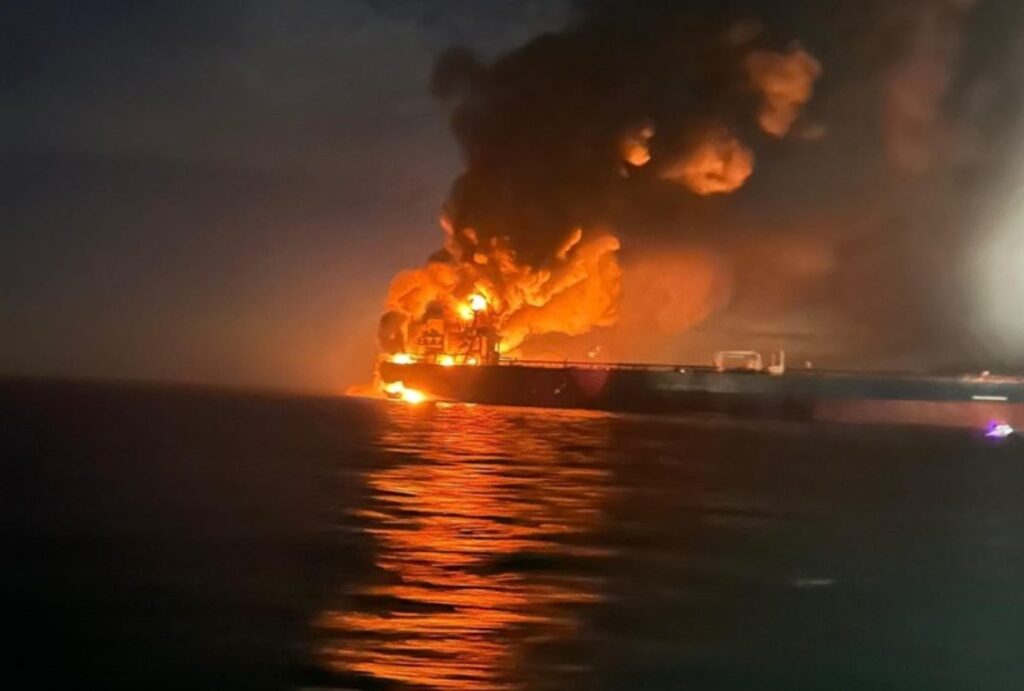
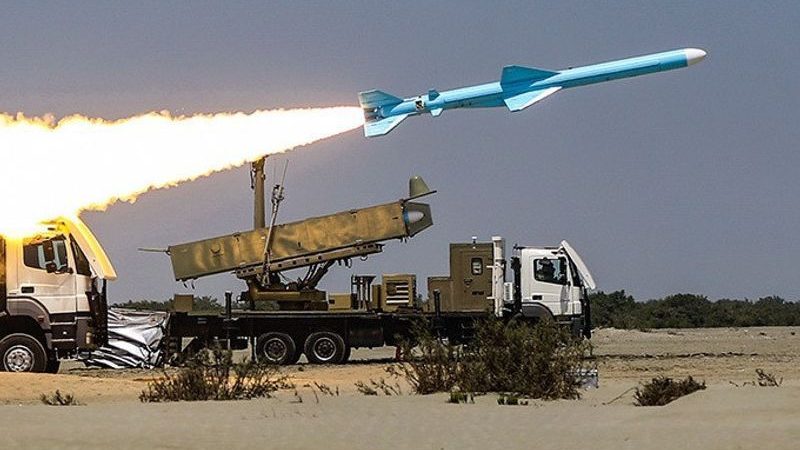
IN THE FIRST weeks of the latest confrontation between the United States and Iran, headlines have focused on airstrikes, missile exchanges and the destruction of Iranian launch sites. Some commentators have rushed to declare that Tehran is already on the back foot.
That conclusion is dangerously premature.
Iran is not Iraq in 2003, nor Afghanistan in 2001. It is a large, heavily populated state with a formidable military doctrine built around survival, endurance and retaliation. Even after weeks of strikes, Iran retains several advantages that make the idea of a quick victory highly doubtful.
A major factor is the sheer scale of Iran’s military resources. The country possesses one of the largest missile arsenals in the Middle East, with hundreds of ballistic missiles capable of striking targets across the region. Alongside this, Iran has developed a substantial drone programme and a wide range of rockets and cruise missiles designed specifically to overwhelm sophisticated Western air defence systems.
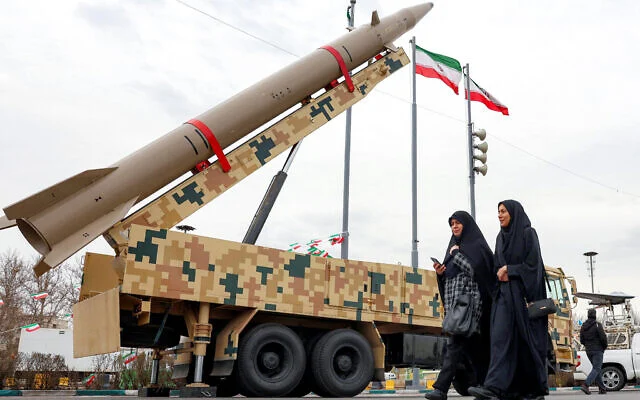
These weapons form part of a layered strategy developed over decades. Iran has constructed underground facilities, often referred to as “missile cities,” where large quantities of drones, missiles and other weapons are stored in tunnels beneath mountains and desert terrain. Even if airstrikes destroy some launchers or storage sites, the system is designed to survive and regenerate.
Geography also makes Iran one of the most difficult countries on earth to invade.
The Zagros Mountains stretch for roughly 1,500 kilometres along Iran’s western frontier — precisely the direction any land invasion from Iraq would likely take. These mountains create narrow passes, chokepoints and defensive high ground that strongly favour defenders and slow mechanised armies.
Iran is also vastly larger than the countries the United States has fought in recent decades. It is almost four times the size of Iraq and has a population of more than eighty million people. Any ground war there would not resemble the rapid march to Baghdad in 2003. It would almost certainly become a grinding and prolonged campaign.
History offers a warning about underestimating Iran’s ability to absorb invasion.
In 1980, Saddam Hussein’s Iraq — backed by many Western and regional powers — launched a full-scale invasion of Iran. The conflict lasted eight brutal years. Despite suffering enormous casualties and economic damage, Iran ultimately survived the war and forced Iraq into a costly stalemate.
That experience shaped Iran’s entire modern military doctrine. The country has built its defence strategy around endurance, attrition and the ability to mobilise large numbers of fighters if necessary.
Iran also holds one of the world’s most powerful economic pressure points: the Strait of Hormuz.

Roughly a fifth of the world’s oil shipments pass through this narrow waterway linking the Persian Gulf to global markets. Iran’s naval strategy focuses on the ability to disrupt or potentially close that route using sea mines, fast attack boats, anti-ship missiles and drones. The geography of the strait, with narrow shipping lanes running close to Iran’s coastline, makes it particularly vulnerable to such tactics.
Even limited disruption to shipping there can push global oil prices sharply higher and trigger wider economic shocks. In other words, Iran does not necessarily need to defeat the United States militarily to inflict serious damage on the world economy.
There is also the wider geopolitical picture to consider.
While Russia and China are unlikely to intervene directly in the conflict, both powers have strategic reasons to see the United States tied down in a prolonged Middle Eastern war. Russia benefits from higher energy prices and from American military attention being diverted elsewhere. China relies heavily on Gulf energy supplies and has developed increasingly close economic ties with Tehran.
Neither country is likely to support a scenario in which Iran is completely defeated or the regional balance shifts decisively in Washington’s favour.
For that reason alone, the conflict is unlikely to remain a simple bilateral confrontation (or trilateral including Israel).
The economic consequences of the conflict could also reshape the political landscape in the United States itself. Rising oil and gas prices are already beginning to feed into inflation and household costs, and history shows that wars which drive up energy prices rarely remain popular for long. If disruption in the Strait of Hormuz continues, American motorists and businesses will feel the effects within weeks.
With mid-term elections approaching, the political pressure on Washington could grow rapidly. Voters are already asking two simple questions: why are we fighting this war, and what exactly is the endgame?
Military technology may give the United States overwhelming air superiority, but wars are not won from the air alone. Iran’s strategy has never been about defeating the United States in a conventional battlefield clash. Instead, it is about making victory so costly — economically, politically and militarily — that outside powers eventually conclude the war is not worth continuing.
That strategy helped Iran survive the Iran-Iraq war in the 1980s.
It may yet shape the outcome of this conflict as well.
For now, the early headlines suggesting Iran is already beaten say far more about wishful thinking than about the realities of war. The uncomfortable truth is that this conflict may only just be beginning — and the question facing the world is no longer how it started, but how it ends.



News2 days ago
State Opening overshadowed by Starmer leadership crisis
KING CHARLES has arrived at Parliament for the State Opening as Sir Keir Starmer faces the most serious crisis of...


News3 days ago
Rhun ap Iorwerth becomes Wales’ new First Minister
PLAID CYMRU TAKES POWER AFTER HISTORIC SENEDD VOTE PLAID CYMRU leader Rhun ap Iorwerth has become Wales’ new First Minister...

News3 days ago
Hotel was hit during a Luftwaffe bombing raid
THE COMMEMORATION, held on Tuesday (May 12), marked the anniversary of the wartime attack, with members of the community gathering...


News3 days ago
Starmer fights for survival as Labour civil war erupts
Cabinet split, ministers resign and MPs revolt as pressure mounts on Prime Minister after disastrous election losses KEIR STARMER is...


News4 days ago
Starmer accused of ignoring Wales in major ‘reset’ speech
Prime Minister pledges EU reset, British Steel nationalisation and youth jobs guarantee — but critics say Wales was left out...


Community4 days ago
Concern grows after child hospitalised following Tenby sea swim
PARENT SAYS BOY BECAME SERIOUSLY ILL AFTER SWIMMING DURING FAMILY VISIT CONCERN is growing in Pembrokeshire after a parent claimed...


News5 days ago
Rhun prepares for clash with Starmer as Plaid eyes power in Cardiff Bay
PLAID CYMRU leader Rhun ap Iorwerth has signalled he is ready for confrontation with Prime Minister Keir Starmer after the...


News6 days ago
Plaid Cymru celebrates historic victory as Rhun ap Iorwerth arrives at Cardiff Bay
CROWDS gathered outside the Senedd as Plaid Cymru leader Rhun ap Iorwerth arrived in Cardiff Bay following his party’s historic...

Crime6 days ago
Police standoff ends after four-hour incident in Pembroke Dock
ELIZABETH COURT SCENE STOOD DOWN AFTER DOMESTIC INCIDENT A FOUR-HOUR police standoff in Pembroke Dock has ended with a 21-year-old...

Crime6 days ago
Teen denies attempted murder of Milford Haven teacher
TEENAGER REMANDED AHEAD OF JULY TRIAL A 15-YEAR-old boy has denied attempting to murder a teacher during a stabbing incident...
-
 Crime2 days ago
Teenager banned from roads after being caught six times over drug-drive limit
-

 Crime2 days ago
Man threatens to torch Silverdale Lodge through ‘demon drink’, court hears
-

 Crime2 days ago
Man sentenced for stalking women and threatening to torch home
-
Crime6 days ago
Police standoff ends after four-hour incident in Pembroke Dock
-

 Crime2 days ago
Violent man jailed after ‘Banksy’ claims and campaign of domestic abuse
-
Community4 days ago
Concern grows after child hospitalised following Tenby sea swim
-

 Local Government4 days ago
Council leadership hopeful responds after anti-Tory rally photos surface
-

 Crime2 days ago
Man denies exposure in Pembrokeshire town