


News
Senedd roadshow to visit Haverfordwest college ahead of key election


Interactive photobooth campaign aims to boost youth voter engagement in Pembrokeshire
AN INTERACTIVE Welsh Parliament roadshow designed to encourage voter participation will visit Pembrokeshire next month as part of a nationwide campaign ahead of the Senedd election.
The “More Power to You” photobooth experience will stop at Coleg Sir Benfro in Haverfordwest on Tuesday (Apr 15), offering students and members of the public the chance to learn more about how Welsh democracy works in a fun and accessible way.
The visit comes in the lead-up to the Senedd election on Thursday (May 7), which is expected to be one of the most significant in Wales’ political history. Changes include an expanded Senedd, increasing from 60 to 96 Members, as well as new constituencies and a revised voting system.
Visitors to the roadshow will be invited to take part in a shareable photobooth experience while learning how decisions made in Cardiff Bay impact everyday life in Pembrokeshire, including healthcare, education, transport and the environment.
Information will also be available on how to register and vote, with staff on hand to guide people through the process and answer questions.

Organisers say the aim is to make voting more visible and relevant, particularly for younger people and first-time voters, by bringing the campaign directly into communities and education settings.
The Pembrokeshire stop forms part of a wider tour across Wales, with earlier events taking place in Wrexham, Bridgend and Cardiff before moving into colleges.
Welsh social media influencers are also supporting the campaign, helping to raise awareness and encourage participation among younger audiences through online content.
Media organisations are invited to attend the Haverfordwest event, with opportunities available for interviews, photography and coverage.

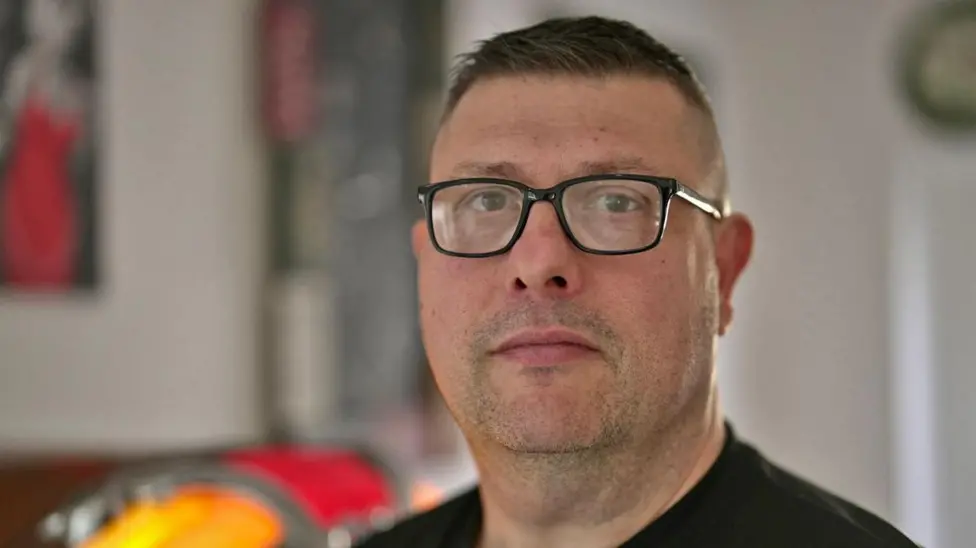
Brian Buckle’s case raises fresh questions over justice system that says a man can be cleared by a jury but still not qualify for a payout
A FISHGUARD man who spent more than five years in prison before being cleared by a jury has been refused miscarriage of justice compensation for a second time.
Brian Buckle was convicted of historical child sexual offences in 2017 and sentenced to 15 years in prison.
He always maintained his innocence.
After a long legal battle by his family and defence team, his conviction was ruled unsafe by the Court of Appeal in 2022. He was released from prison and later faced a retrial at Swansea Crown Court.
In May 2023, after fresh forensic evidence was put before the court, a jury unanimously found him not guilty.
But according to BBC Wales, the Ministry of Justice has now rejected his compensation claim again following a further review.
The decision has caused anger in Pembrokeshire and at Westminster because Mr Buckle’s case exposes a brutal gap in the justice system.
He has cleared his name in court.
He has been found not guilty by a jury.
But the compensation scheme still says he has not met the legal test for a payout.
The Herald reported from the retrial in 2023, when Swansea Crown Court heard that the prosecution case had relied in part on forensic evidence said to link Mr Buckle to a childhood diary.
Mr Buckle denied the allegations throughout. His barrister argued that he had never seen the diary before the original 2017 trial. The defence also called forensic evidence about traces of condom lubricant, which helped cast doubt on the earlier case against him.

The jury returned not guilty verdicts and Mr Buckle walked free.
For him and his family, however, the damage was already done.
The legal fight to clear his name is said to have cost around £500,000. In earlier Herald coverage, Mr Buckle said his father-in-law had sold his house to fund the legal battle, his wife’s inheritance had gone, and he had lost a well-paid job he had held for 16 years.
He also missed his daughter’s 18th and 21st birthdays while he was in prison.
Mr Buckle has spoken publicly about living with PTSD following his imprisonment.
He previously said: “I don’t want millions. I just want recognition of the injustice I suffered and the chance to rebuild my life.”
His case has become one of the clearest examples of what campaigners call the “innocence tax”: the huge cost paid by people who are forced to spend years and vast sums of money proving they should never have been jailed in the first place.
The reason Mr Buckle has been refused compensation lies in a controversial change to the law made in 2014.
Before that change, compensation could be paid where a conviction was overturned and the evidence showed that no reasonable jury could have convicted.
Since 2014, the test has been much harder. Applicants must show, beyond reasonable doubt, that they did not commit the offence.
Campaigners say that creates an almost impossible hurdle in many cases.
A person can have their conviction quashed. They can be cleared at retrial. But unless they can produce the sort of conclusive evidence that proves innocence beyond doubt, such as DNA or CCTV, they can still be refused compensation.
That is what has happened to Brian Buckle.
His MP, Ben Lake, has repeatedly raised the case in Parliament.
In March 2025, Mr Lake led a Westminster Hall debate on miscarriage of justice compensation. He told MPs that many people assume those wrongly convicted are compensated when their convictions are overturned, but in England and Wales compensation is often the exception rather than the rule.
He said the system was forcing people who had already been cleared to prove their innocence all over again.
Mr Lake has described Mr Buckle’s case as one of the clearest injustices he has encountered during his time as an MP.
The issue was also raised directly with Prime Minister Keir Starmer at Prime Minister’s Questions in July 2025.
Mr Lake told the Commons that Mr Buckle had been wrongfully imprisoned for more than five years, had been unanimously cleared by a jury, and yet had still been refused compensation because of the 2014 legal test.
The Prime Minister described the case as a “grave miscarriage of justice” and said he had undertaken to look at the statutory test for compensation.
A year on, Mr Buckle has again been told that he does not qualify.
The Ministry of Justice has previously said that refusal of compensation does not affect the fact that Mr Buckle’s conviction was quashed, nor does it cast doubt on the outcome of the appeal.
For his supporters, that is exactly the problem.
The state accepts that his conviction was quashed. A jury has cleared him. But the compensation scheme still says he is not entitled to be paid.
The Government announced last year that compensation caps would be increased for victims of miscarriages of justice. But that does not help people like Mr Buckle if they are ruled ineligible before the amount of any payment is even considered.
The Law Commission is now reviewing the criminal appeals system in England and Wales, including compensation and support for the wrongly convicted.
Its provisional proposals include replacing the current requirement to prove innocence beyond reasonable doubt with a lower test based on the balance of probabilities.
A standalone report on compensation and support for the wrongly convicted is expected by the end of 2026.
Mr Buckle hopes any change will apply retrospectively, so people already caught by the current rules are not left behind.
For Pembrokeshire, this is not simply a legal technicality.
It is the story of a local man who lost years of his life, a family that spent everything trying to clear his name, and a justice system that still appears unable to say the one thing he has been waiting to hear from the state: we got it wrong.
Cover image: Stephen Fildes / BBC


Zachery Lee Griffiths denied intentional strangulation but admitted or indicated guilty pleas to six other charges
A WEST WALES prison campaigner has admitted assaulting a woman and indicated guilty pleas to assaulting two police officers.
Zachery Lee Griffiths, 34, of Golygfor, Llanelli, appeared before Llanelli Magistrates’ Court on Monday, June 30, following incidents in Whitland at the end of June.
Griffiths pleaded guilty to assaulting a woman by beating on June 28.
He also admitted two charges of criminal damage, after damaging a phone and glasses belonging to the same woman. The offences were said to have happened in Whitland on June 26.
Griffiths further indicated a guilty plea to threatening to destroy or damage a Mercedes A180 on June 28.
He also indicated guilty pleas to two charges of assault by beating of an emergency worker, relating to PC 535 Tatum and PC 526 Westron, who were both acting in the exercise of their duties as police officers.
However, Griffiths denied a further charge of intentional strangulation, which is alleged to have taken place in Whitland on June 28.
A full bail argument was heard by the court and Griffiths was remanded on conditional bail.
His bail conditions include a 7pm to 7am curfew, a requirement to live and sleep each night at his address in Llanelli, not to enter Whitland, and not to contact the complainant directly or indirectly.
The court also made a direction under section 36 of the Youth Justice and Criminal Evidence Act 1999, meaning Griffiths will not be permitted to personally cross-examine named witnesses.
Griffiths is due to return to Llanelli Magistrates’ Court on Wednesday, August 12, at 2pm. The next hearing is listed for sentence and has been given a two-hour estimate.
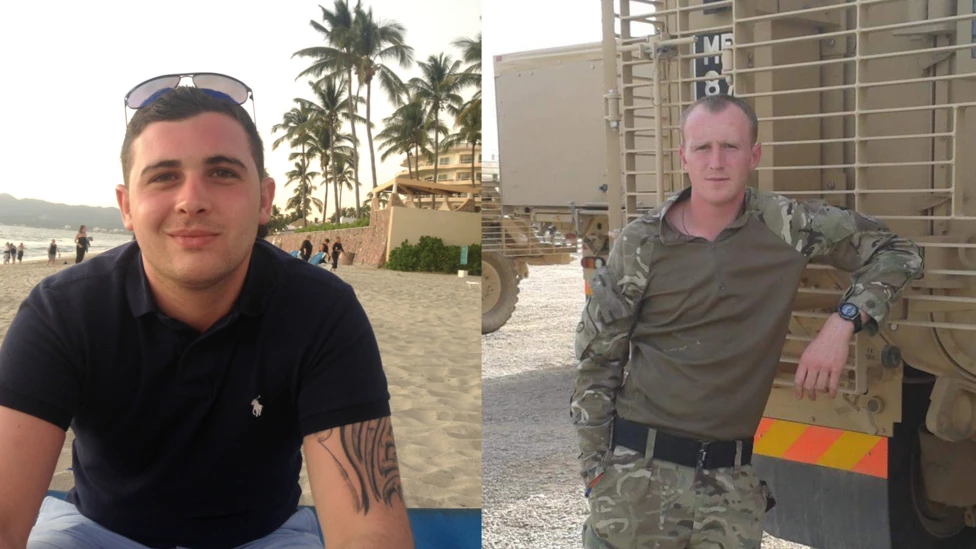
Crown Censure authorised after two Royal Tank Regiment soldiers were killed in Challenger 2 explosion in Pembrokeshire nine years ago
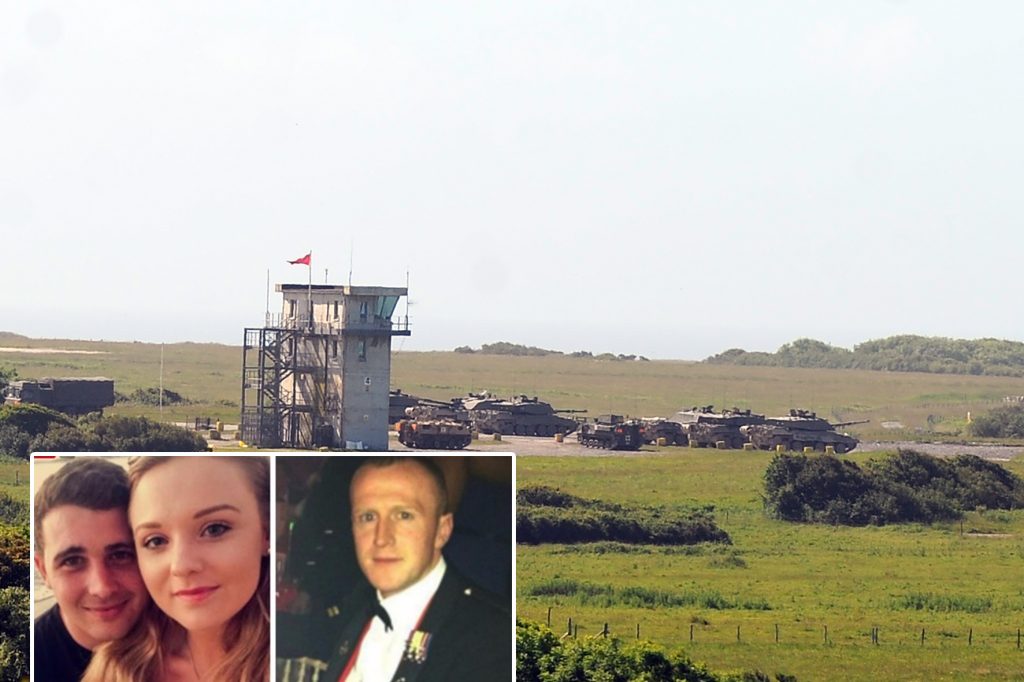
THE MINISTRY OF DEFENCE is facing the strongest sanction available to the Health and Safety Executive after two soldiers were killed in a tank explosion at Castlemartin Range in Pembrokeshire.
Cpl Darren Neilson, 31, and Cpl Matthew Hatfield, 27, died when an L30 gun exploded on a Challenger 2 tank during a live-firing exercise on June 14, 2017.
Two other soldiers were injured in the blast. One was left with life-changing injuries.
The Health and Safety Executive has now authorised a Crown Censure against the MoD. It has also authorised the prosecution of defence contractor Rheinmetall BAE Systems Land Ltd.
Rheinmetall BAE Systems Land Ltd, formerly BAE Systems Global Combat Systems Ltd, was responsible for producing the safety case for the tank and gun system. The MoD held ultimate responsibility for the health, safety and welfare of its soldiers, and for the suitability and sufficiency of that safety case, HSE said.
HSE has stressed that neither the authorisation of a Crown Censure nor the authorisation of criminal charges represents a finding of guilt.
But the decision, coming nine years after the fatal incident, has raised fresh questions about delay, accountability, and whether all safety concerns identified after the deaths were fully addressed.

A Crown Censure is the maximum sanction HSE can issue against a Crown body. Because of Crown immunity, the MoD cannot be prosecuted in the same way as a private company.
If the censure is accepted or confirmed, it will amount to a formal public reprimand and an official record of failure. It does not carry a financial penalty.
The prosecution of Rheinmetall BAE Systems Land Ltd is a separate criminal matter.
What happened at Castlemartin?
The deaths of Cpl Neilson and Cpl Hatfield were examined at an inquest and through a Service Inquiry.
The incident happened during a live-firing exercise at Castlemartin Range, one of the UK’s main armoured vehicle training areas.

Previous findings identified a key issue involving the BVA assembly, a component linked to the gun system which helped prevent hot gases from coming back into the tank turret when the gun was fired.
The coroner’s Prevention of Future Deaths report found that the main cause of the incident was that the tank was able to fire without the BVA assembly being present.
The report said that, during the production and manufacture of the gun, the hazard of the gun being able to fire without the BVA assembly present had not been adequately considered or investigated.
After the gun was fired, extremely hot pressurised gases came back into the turret. The breech block then exploded, and flames were seen coming from the commander’s and loader’s hatches and the barrel.
The coroner also identified a number of other issues, including a lack of written process for checking the BVA assembly, confusion around the “prove the gun” drill, no written handover between crews, and a failure to correctly stow charges.
The report said the practice of unstowed charges had become routine in the regiment and had not been identified or addressed by senior officers.
Safety concerns raised after the deaths
Senior Coroner Louise Hunt raised three main areas of concern after the inquest.
The first was that soldiers were not clear about when the “prove the gun” drill should be used and what parts of the drill meant.
The second was that the Range Conducting Officer, who was in charge of the live-firing exercise, did not know the state of the tanks on the range and had allocated a stripped-down tank for a live firing exercise.
The third related to risk assessment. The coroner said HSE evidence had indicated that, had advanced or developed risk assessment techniques been used, the danger of the gun firing without the BVA assembly could have been identified during design and manufacture.
The MoD later said changes had been made after the incident.
Those included a ban on 120mm training ammunition immediately after the accident, a halt to Challenger 2 live firing while safety work was carried out, updated procedures, and extra checks around the BVA, obturator and shim.
The MoD also said a red “Do not use” cover had been introduced for guns undergoing maintenance, to make it clear when a gun was not in a safe condition to fire.
Questions now need answering
The HSE decision has brought the Castlemartin tragedy back into focus.
The Herald is seeking answers to a number of key questions.
Why has it taken nine years for the Crown Censure and prosecution decision to be authorised?
Will the MoD accept the Crown Censure?
When will the formal Crown Censure hearing take place?
What is the next legal step in the prosecution of Rheinmetall BAE Systems Land Ltd?
Are all safety measures introduced after the coroner’s report and Service Inquiry still in force?
Have all recommendations from the coroner and Service Inquiry been fully implemented?
Have there been any further changes to live-firing procedures at Castlemartin Range since the incident?
Have the families of Cpl Neilson and Cpl Hatfield been informed of the latest HSE decision?
The Herald is seeking comment from the Ministry of Defence, HSE and BAE Systems/Rheinmetall BAE Systems Land Ltd.
Separate proceedings
HSE said the Crown Censure proceedings against the MoD and the criminal proceedings against Rheinmetall BAE Systems Land Ltd are separate matters.
The Crown Censure relates to an alleged failure by the MoD to ensure the health, safety and welfare of soldiers under Section 2 of the Health and Safety at Work Act.
The charge against Rheinmetall BAE Systems Land Ltd relates to an alleged failure to ensure the health and safety of people not in its employment under Section 3 of the same Act.
A formal hearing will now take place in relation to the Crown Censure.
The criminal case against Rheinmetall BAE Systems Land Ltd will follow its own legal process.



Crime3 minutes ago
Fishguard man cleared after five years in prison refused compensation again
Brian Buckle’s case raises fresh questions over justice system that says a man can be cleared by a jury but...


Crime6 hours ago
Wales’ police commissioners to face MPs over future of policing
WALES’ four Police and Crime Commissioners are to be questioned by MPs next week as major changes to the way...


Crime1 day ago
Man in critical condition after serious assault in New Quay
A 20-YEAR-OLD man remains in a critical condition in hospital after being seriously assaulted in New Quay. Dyfed-Powys Police said...


Community1 day ago
Kilgetty and Begelly tractor run raises funds for local charities
Around 70 tractors joined the annual charity road run, hosted by the Begelly Arms Hotel THE ANNUAL Kilgetty and Begelly...


Community1 day ago
Milford Haven Carnival brings colour, music and crowds to the town
MILFORD HAVEN was filled with colour, music and community spirit on Saturday as the town’s annual carnival brought crowds onto...

News2 days ago
A40 closed near Llandeilo following collision
A SECTION of the A40 in Carmarthenshire has been closed in both directions following a collision. The road is currently...

Local Government2 days ago
Award-winning Saundersfoot sauna faces refusal over location concerns
PLANS to allow an award-winning outdoor sauna to remain permanently at Saundersfoot Harbour have been recommended for refusal by Pembrokeshire...


Health2 days ago
NHS at 78: A moment to give back to the service Wales helped create
As the health service marks its 78th birthday, people in Pembrokeshire are being urged to support local NHS charities helping...


Community3 days ago
Saundersfoot Harbour regeneration project wins national planning award
SAUNDERSFOOT HARBOUR’S redevelopment has been named Best Project at the RTPI Cymru Awards for Planning Excellence 2026. The award recognises...


Business3 days ago
Pembrokeshire-based Ascona Group expands UK portfolio with Truckhaven acquisition
PEMBROKESHIRE-BASED Ascona Group has completed the acquisition of Truckhaven (Carnforth) Ltd, a major trunk road services area in Lancashire. The...
-

 News6 days ago
Biker dies and woman seriously injured in Black Mountain crash
-

 Crime5 days ago
Estate agent banned after drug-drive crash in Milford Haven
-
 Local Government6 days ago
Flood defence scheme moves closer as community invited to view plans
-

 Crime5 days ago
Eight guilty over ‘industrial scale’ cocaine conspiracy into Pembrokeshire and Carmarthenshire
-

 Crime5 days ago
Men threatened to have prisoner killed in chilling phone call to his father
-

 Crime5 days ago
Judge calls pensioner a ‘dirty old man’ as he avoids jail for exposing himself to women
-

 News6 days ago
Should Wales ban boiling lobsters alive?
-

 Community6 days ago
Volunteers recognised for making a difference across Pembrokeshire and beyond