


Climate
Bid to turn Maidenwells field into garden is approved

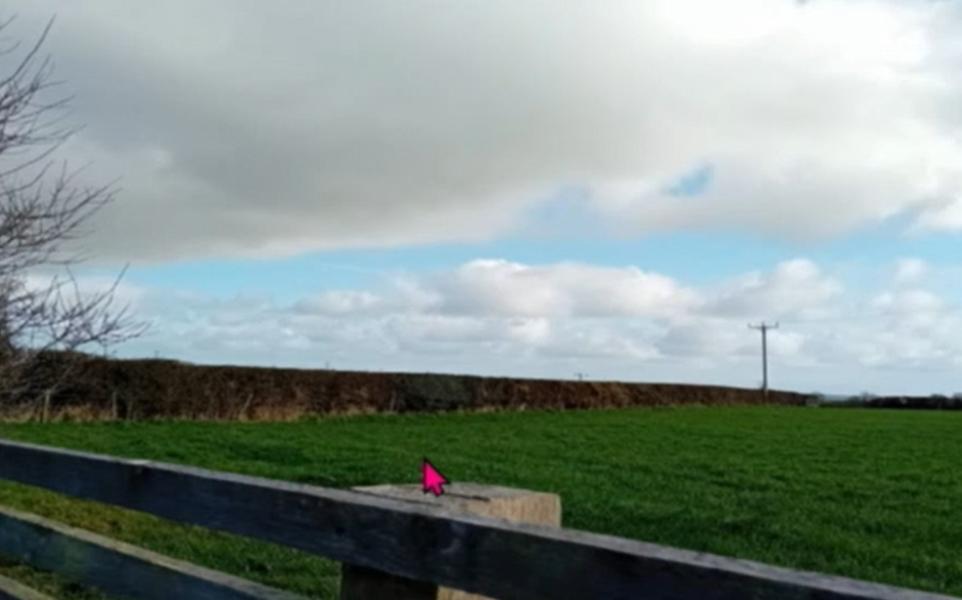
A CALL to change Pembrokeshire farmland to a garden and wildflower meadow has been given the go-ahead despite it falling under a condition restricting the loss of such agricultural land.
In an application recommended for approval at the April 21 meeting of Pembrokeshire County Council’s planning committee, Peter Jones sought permission for a change of use from agricultural land to garden, vegetable growing area and wildflower meadow/grove at Old Furzton Cottage, Maidenwells, near Pembroke.
The application was before committee members rather than being decided by officers under delegated powers as it was contrary to a policy of the development plan but was being recommended for approval.
An officer report for committee members said: “The proposal is for the change of use of the land to enable the agricultural field to be used for domestic purposes in conjunction with the dwelling known as Old Furzton Cottage. The land subject to this application is located outside of the curtilage of Old Furzton Cottage.
“Justification has been provided with the application to explain that the occupiers of the dwelling have a desire for a larger garden area to provide additional space for growing of fruit, salad and vegetables, tree planting and wildflower planting.”

One potential sticking point was the proposed site, some 0.4ha of land, falling into a Grade 3a agricultural land classification, defined as Best and Most Versatile (BMV) land, which has tight planning controls against its potential loss.
The report added: “The use of the land at present is for agricultural purposes including making of hay and grazing of livestock, as such the land is underused for agricultural purposes. The development subject to this application would enable some agricultural use to continue, with the production of food from the site.
“Further to this there would be a net benefit to green infrastructure and biodiversity on the site. For these reasons there is justification for the small loss of BMV land.”
At the meeting, committee chair Cllr Mark Carter read out a submission form the applicant, who was unable to attend the meeting, saying the land had been purchased from Pembrokeshire County Council with the intention of creating a low-intensity and environmentally sustainable form of development.

Local member Cllr Steve Alderman said his first concern had been the loss of the BMV land, but pointed out the proposal would offer “massive biodiversity increases,” moving approval.
Members unanimously backed approval of the scheme.


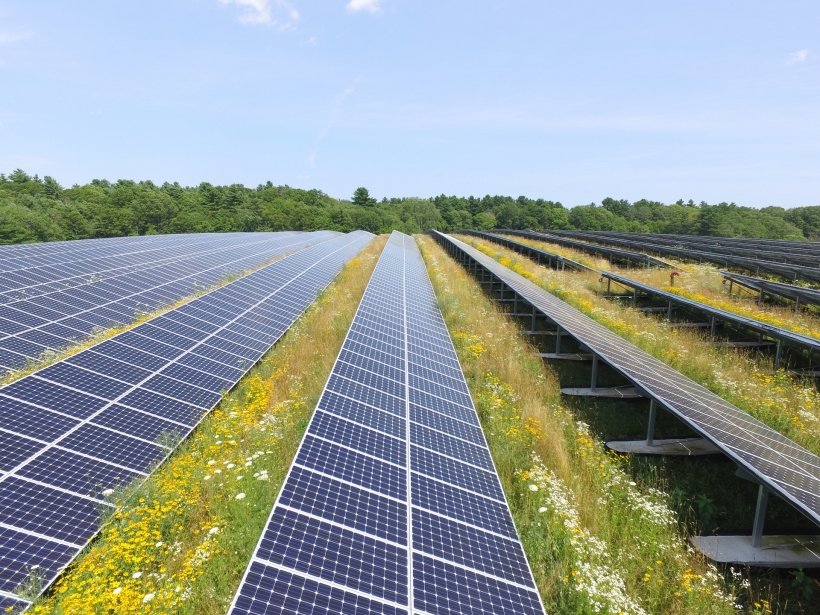
CALLS have been made for an immediate moratorium on industrial-scale solar and windfarm developments in Wales amid concern over the loss of productive farmland.
The Welsh Conservatives say the Welsh Government should pause major renewable energy schemes and urgently review the planning rules for Developments of National Significance.
Party leader Darren Millar MS said Future Wales 2040, the national planning framework, gives too much weight to large-scale renewable energy projects and risks allowing solar farms and windfarms to be built at the expense of food production.
Planning row
The row comes as Wales faces pressure to increase renewable energy generation while also protecting agricultural land, rural landscapes and farming communities.
Under the Developments of National Significance process, major infrastructure projects, including some large renewable energy schemes, are decided by Welsh Ministers rather than local councils.
Supporters say the system is needed to deliver clean energy and reduce reliance on fossil fuels, while critics argue it can leave communities feeling that decisions are being taken out of their hands.
Mr Millar said: “In opposition, the now First Minister campaigned against industrial-scale renewable developments in his own constituency for fear of the impact it would have on valuable farming land. Now in government, he needs to act accordingly to protect prime agricultural land.
“The current planning framework is fundamentally flawed. Future Wales 2040 creates an assumption in favour of industrial-scale solar farms and windfarm developments across great swathes of rural Wales, putting productive farmland at risk.
“We support renewable energy and recognise its role in achieving energy security and reducing emissions, but those developments should not be at the expense of Wales’ food security.
“Renewable developments should be appropriate in scale and sensitive to their environment, making better use of the roofs of buildings and car parks.
“The Welsh Government should introduce an immediate moratorium on industrial-scale solar and windfarm developments and undertake an urgent review of the planning framework for Developments of National Significance so Wales can take a more balanced approach to Wales’ energy future.”
Climate targets
The Welsh Government says renewable energy is central to meeting Wales’ climate targets and improving energy security, but that projects must go through the planning system before consent is granted.

Supporters of large-scale renewable schemes argue they are needed to cut emissions, reduce reliance on imported energy and help stabilise electricity supplies. Some farmers and landowners also see renewable projects as a source of income at a time when the agricultural sector is under pressure.
However, opponents say the scale and location of some proposals risk damaging landscapes, reducing food-producing land and leaving rural communities with too little say over major developments.

A PEMBROKESHIRE wind turbine scheme which was recommended to be refused over a lack of information on how it may affect bats, which led to it being previously withdrawn, has gained some breathing space to address the issue.
In December of last year, in an application recommended for refusal at Pembrokeshire County Council’s planning committee, Constantine Wind Energy Ltd sought permission for a 76-metre-high wind turbine at Summerton Farm, Sageston.
Back in 2024, an application to replace a current 60.5m high turbine on the site with one up to 90 metres, or just under 300 foot, at the site was refused on the grounds its height and scale would have a detrimental impact on the visual amenity of the locality, with the additional clause of failing to comply with supplementary guidance.
A report for committee members on the latest application says the smaller turbine than previously proposed, representing a 16-metre increase in height from a previously granted turbine “would not be sufficient for it to become an overbearing feature in the landscape,” with no objections from either the Council Landscape Officer or Natural Resources Wales.
However, concerns were raised by the council ecologist that the applicant’s Preliminary Ecological Appraisal Report was incomplete, with a bat survey not included.
It was recommended for refusal on the grounds that appraisal report, and technical note, “do not adequately address the impact of the proposed wind turbine on bat activity in the area”.
At the December meeting, members heard the scheme had been temporarily withdrawn to deal with issues raised, the application returning to the June meeting, again recommended for refusal on a lack of information on the potential impact on bats.
A report for members ahead of the June meeting says the application was withdrawn from the December agenda to allow the applicant time for consideration of the Council Ecologist’s request for further survey work.
It said the applicant had started a bat survey programme, with further surveys due to take place in July and September, the applicant asking for the matter to be deferred in November.
At the June meeting, Richard Grisk, on behalf of the applicants, referenced the additional surveys, calling for a further deferral, saying it would be far most cost efficient and effective for all parties, the applicants intending to resubmit an expected to be near-identical scheme, other than the bat reports, if it was refused.
After a great deal of deliberation on the matter, Cllr John Cole, who had initially proposed a deferral, moved the scheme be decided by officers under delegated powers.
This would allow them to either approve or refuse after the bat reports have been received.

Members, by 10 votes to four, supported the delegated decision, expected later this year.

A FREE public screening of The People’s Emergency Briefing will take place at Small World Theatre, Cardigan, on Friday, June 26.
Doors will open at 6:30pm, with the 50-minute film followed by a facilitated community discussion.
The screening forms part of a growing UK-wide programme of events aimed at ensuring the public, community leaders and decision-makers are clearly informed about the climate and nature crisis, and what it could mean for communities across the country.
The film follows the National Emergency Briefing, held at Westminster Central Hall in November 2025, where more than 1,200 MPs, peers and leaders from business, culture, faith, sport and the media gathered to hear from leading experts on the UK’s exposure to climate and nature risks.
Introduced by Chris Packham CBE, the briefing examined the implications of climate and nature breakdown for food security, public health, infrastructure, the economy and national security, as well as evidence-based actions which could help reduce those risks.
That national event has now been adapted into The People’s Emergency Briefing, a public film being screened in communities across the UK, including more than 100 screenings in Wales.
Chris Packham said: “I’d encourage people everywhere to attend a screening of The People’s Emergency Briefing. It creates exactly the kind of honest local conversation we now urgently need, both about what these changes mean where we live, and about what we can do together to address them.”
Organisers say the Cardigan screening is particularly relevant given recent flooding on the Teifi, longer hot dry spells, stronger storms, heavier rainfall, biodiversity loss and concerns over regular pollution incidents.
Following the film, those attending will be invited to take part in a structured open discussion focusing on what positive changes can be made locally.
Local MP Ben Lake is expected to attend, along with Members of the Senedd, councillors and other community leaders who have been invited.
The discussion will be led by Jane Davidson, former Welsh Government minister for environment, sustainability and housing, who helped inspire and lead the Well-being of Future Generations (Wales) Act 2015 and the Wales Net Zero 2035 project.
Philip Hughes, one of the event organisers, said: “This is a great opportunity for people to come together, look at the evidence, and begin a more open and informed conversation about what it means for our community.

“We often hear the views of ‘Dave down the pub’, but this film gives evidence from top scientists, economists, doctors and security chiefs on why bolder action is now needed.”
Tickets for the Aberteifi screening are free, but booking is essential as space is limited.
To book, contact [email protected] or call 07787 197630.
More information about The People’s Emergency Briefing can be found at www.nebriefing.org/screening-map




News4 hours ago
Pendine cliff fall victim recovering after major emergency response
A 22-YEAR-OLD man who suffered serious injuries after falling from cliffs overlooking Pendine Beach is recovering well following emergency surgery....


News23 hours ago
First Minister challenged over jobs for student nurses
REFORM WALES has accused the First Minister of failing to guarantee jobs for student nurses in Wales, despite continuing pressure...

Crime1 day ago
Knife blankets call as school staff face rising violence fears
GMB says protective equipment should be considered where risk assessments show staff could face blades SCHOOL staff should be given...


News1 day ago
Claire Archibald secures review of Milford Haven train times
RURAL TRANSPORT CONCERNS RAISED WITH TFW CLAIRE ARCHIBALD MS has secured a review of train times between Milford Haven and...


Crime1 day ago
PCC review calls for stronger youth crime prevention work
REPORT MAKES 13 RECOMMENDATIONS A REVIEW into crime and anti-social behaviour services for young adults has called for stronger prevention...


Crime1 day ago
Families condemn failed appeal by paddleboard boss jailed over Haverfordwest tragedy
RELATIVES SAY LATEST COURT BID HAS REOPENED PAIN AFTER FOUR DEATHS ON WESTERN CLEDDAU THE FAMILIES of victims of the...


Community2 days ago
Forgotten wartime archive found in Pembroke Dock attic after 80 years
Remarkable family collection reveals story of father and son who served through two world wars A REMARKABLE untouched family archive...


Crime2 days ago
Milford Haven woman left with facial fractures after drunken attack
A WOMAN in her late fifties suffered facial fractures after being repeatedly punched through the window of her car during...


Crime2 days ago
Sex offender in senior role at Tenby family hotel
CREST HOTEL GROUP says it is investigating safeguarding concerns after staff at the Imperial Hotel in Tenby raised alarm over...


Sport3 days ago
Runners tackle new route in Ras Y Castell 10k
MORE than 90 runners took to the streets and paths around Cardigan on Friday evening (June 5) for the annual...
-
Crime5 days ago
Paddleboard company owner loses bid to cut sentence over Haverfordwest tragedy
-

 Crime4 days ago
Milford Haven man admits harassment and assault
-

 News4 days ago
Community appeal for privacy after serious emergency in Pendine
-
Community2 days ago
Forgotten wartime archive found in Pembroke Dock attic after 80 years
-
Crime2 days ago
Sex offender in senior role at Tenby family hotel
-
 Business4 days ago
Call for gym and Padel courts at Kiln Park Farm unanimously backed
-
Crime1 day ago
Families condemn failed appeal by paddleboard boss jailed over Haverfordwest tragedy
-

 Community4 days ago
Founders Day hailed a success despite rising costs and extra security