


Local Government
National Express use of new Haverfordwest interchange still subject to risk checks


A RUMOUR that National Express coaches may struggle to use Haverfordwest’s new transport interchange has been denied by Pembrokeshire County Council — although the coach operator has stopped short of confirming it will definitely use the facility when it opens.
The Herald asked the council whether the new interchange, currently under construction in Haverfordwest, had sufficient height clearance for full-size long-distance coaches.
Concerns had been raised locally after published images of the scheme appeared to show a relatively low covered bus area.


Pembrokeshire County Council said the new facility had been designed to accommodate the National Express service operating within the county.
A council spokesperson said: “Pembrokeshire County Council can confirm that the new Haverfordwest Transport Interchange has been designed to accommodate the National Express service operating within Pembrokeshire.

“The facility has been constructed in line with the operational requirements identified for the local National Express route, including appropriate bay design and clearance to enable safe access for those vehicles.
“The new interchange will provide a modern, high-quality transport hub for Pembrokeshire, improving passenger experience and connectivity across the county and beyond.”
The council confirmed that the interchange bus area has a minimum clearance height of 4.1m, with an entry height of 4.280m.
However, it also said the bus area had been developed “primarily for local service buses” and that the overall build height limits some access due to planning requirements.

The facility will be signed with an access limit of 4.0m.


Asked whether National Express services would use the new interchange once operational, the council said operators would have to complete their own risk assessments to ensure both they and PCC were satisfied that services could operate safely within the interchange.
PCC also confirmed that a swept-path analysis and height assessment had been undertaken.

National Express has also responded to The Herald, but its statement leaves final use of the interchange dependent on risk assessments.

A spokesperson for National Express said: “Subject to satisfactory risk assessments, it would be our intention to use the new Haverfordwest Transport Interchange. We are continuing to engage with relevant stakeholders regarding the operational arrangements.”
The response means that while the council insists the new facility has been designed for the local National Express route, the operator has not yet given an unconditional confirmation that its coaches will use the interchange when it opens.
The new Haverfordwest Transport Interchange is intended to provide a modern hub for bus and coach services in the county town.











A PUBLIC consultation is to be held on discontinuing two schools in the Tenby area, including Greenhill comprehensive, with the aim of establishing a new 3-19 community school.
In a report before Pembrokeshire County Council’s meeting of July 16, members were asked to back a public consultation into establishing a new 3-19 community school in the Tenby area, discontinuing Tenby Church in Wales VC School and Ysgol Greenhill comprehensive.
Back in December councillors backed authorising the Director of Education to commence statutory consultation on establishing a new 3-19 school, a split site initially, but as part of an investment to rebuild/extend Tenby’s Greenhill site, or on a new site.
It included a consultation with the St David’s Diocese to discontinue Tenby Church in Wales Voluntary Controlled School, and to discontinue Ysgol Greenhill before the report before members in July.
A report for members, presented by the council’s deputy leader, and now Cabinet Member for Education, Cllr Paul Miller said that, since the December meeting, St David’s Diocese responded by conditionally supporting the Tenby VC School element, subject to the newly established 3–19 school retaining a religious character, either as a Voluntary Aided (VA) or Voluntary Controlled (VC) school.
The report added: “In accordance with the decision of council at its meeting on December 12, and the statutory requirements of the School Organisation Code, consultation has been undertaken with the St David’s Diocese.
“In relation to the council’s proposal for Tenby VC School, the comments received from the Diocese do not provide any reason not to proceed with general consultation.”
It added: “As most pupils within the cluster attend community primary schools, it is recommended that consultation be undertaken on the basis of establishing a community primary school.
“It should be noted that, whatever the decision, this would merely reflect the preferred option outlined within the general consultation document.
“Members would still be required to give due consideration to feedback received as a result of the consultation, which may include a preference by consultees for a different governance model.”
Members, by 41 votes to two abstentions, backed the formal consultation, which had been moved by Council Leader Cllr Tessa Hodgson.
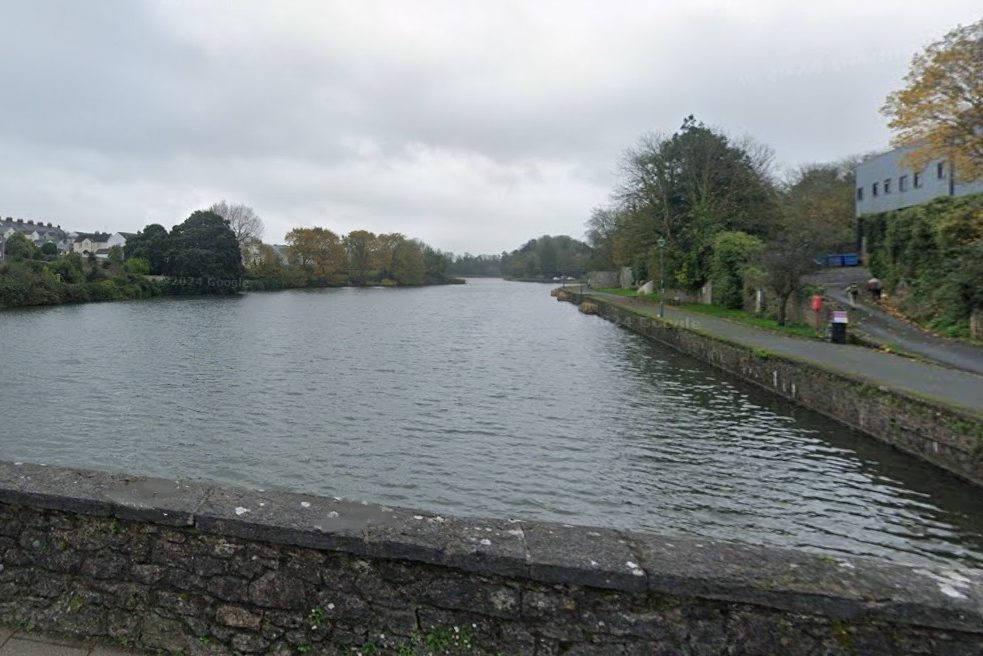
WILDLIFE at Pembroke’s Mill Pond beauty spot may be being killed after being deliberately targeted by what appears to be catapult attacks, the town council has said.
The beauty spot close to the town’s castle has long been a haunt of swans and other wildlife, and concerns have been raised recently that several reported deaths of animals may be related to levels of algae present in the pond.
In a statement issued by Pembroke Town Council it said it has received a number of comments and enquiries from concerned residents regarding deceased wildlife recently found at Pembroke Mill Pond.
“We are aware that there has been speculation on social media suggesting that the deaths may be linked to the water quality or algae currently present in the pond. We would like to reassure residents that this is not the case.
“For the past seven years, Pembroke Town Council has employed Aqua Clear to help manage algae growth and control the spread of reeds within the pond. This ongoing work has been highly successful, with algae levels reducing by approximately 45 per cent since the programme began. The pond’s water quality continues to be monitored and remains in good condition.
“Following reports from residents, council representatives visited the pond and retrieved some of the deceased wildlife.
“On examination, it appears that around five different animals had suffered injuries consistent with being intentionally targeted using a catapult. This is an extremely distressing and cruel act against wildlife.
“The matter has been reported to the Wildlife Crime Officers, who are aware of the incident and will be investigating.
“Pembroke Town Council strongly condemns any form of cruelty towards wildlife and would encourage anyone who witnesses this type of behaviour, or has any information that may assist enquiries, to report it immediately. Information can be provided anonymously through Crimestoppers on 0800 555 111.
“We would like to thank residents for bringing this matter to our attention and for their continued care and concern for Pembroke Mill Pond and the wildlife that calls it home.”
A Pembrokeshire County Council spokesperson said: “Pembrokeshire County Council officers have inspected a deceased bird at the Mill Pond with what appeared to be an obvious head injury. The concerns regarding treatment of wildlife have already been reported to police.
“Hot weather may have exacerbated growth of pond weed and a visual inspection indicates the water is in reasonable health. Further visits will be carried out next week.”

SUPPORTERS of Ysgol Cilgerran’s Church in Wales school have protested at a Pembrokeshire County Council meeting against council plans to remove church status from the school.
Back in May, Pembrokeshire County Council voted to remove Voluntary Controlled (VC) status from the Welsh-medium rural school despite 97 per cent of the responses to a consultation having opposed a change which the church describes as ‘entirely unnecessary’.
The Church in Wales has objected formally to the proposal and has warned it will take legal action on the grounds of “public misrepresentation and unqualified legal assertions made by Pembrokeshire County Council officers,” and “discrimination against faith schooling”.
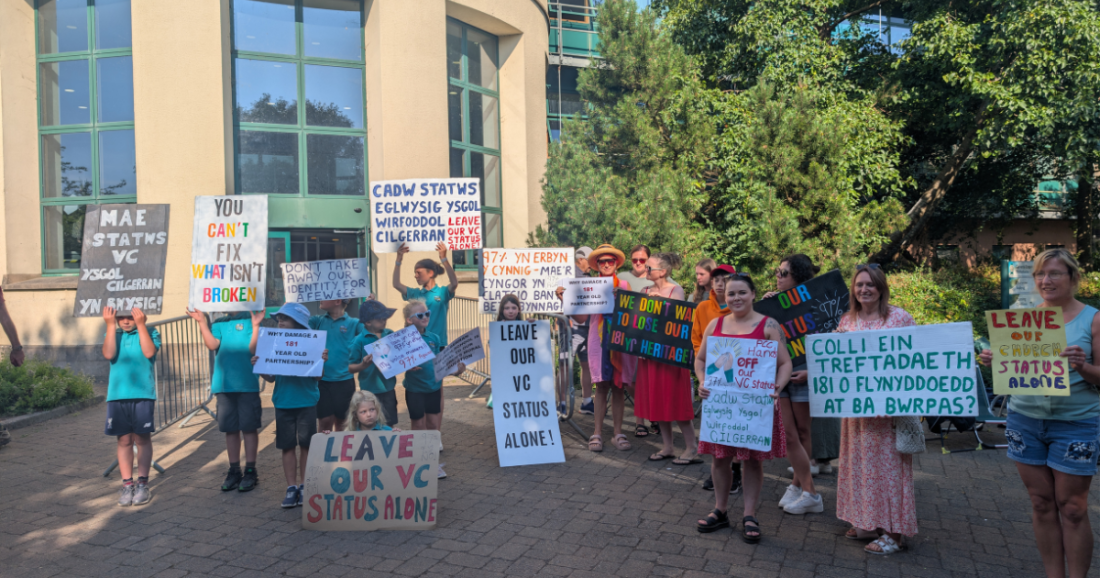
During Pembrokeshire County Council’s full council meeting of July 16, parents, teachers, and students travelled to County Hall, Haverfordwest to protest.
Their colourful protest signs, made by students, carried messages such as “You can’t fix what isn’t broken”, “Leave our VC status alone”, and “Don’t take away our identity for a few £££”.
One of the protesters, an ex-pupil and governor, Sarah Moore, has said: “I’m here today because I’m horrified that the council are talking about taking the church status away from our school. The church gave that land for the school over 180 years ago.
“97 per cent have voted against this and yet they’re still trying to do it. If we want our children to stay in a church school, the nearest one is Letterston. So where will these children have that good education that they are getting now?”
Kelly Davies, parent and governor, said: “We feel really strongly as parents, the pupils and the community that we’re not happy about them taking VC status away.
“We have really strong links with the church and the school and the community. It just seems that they’re taking this away from us permanently for no reason.”
The Church has said it has deep concern about what it sees as a pattern of the council’s recent actions regarding Church Schools.
In June, councillors voted to close Manorbier Church in Wales Voluntary Controlled School, which was damaged by a fire in 2022.
The Church says it is taking formal action in this case.

It has also expressed concerns about VC status being lost for Tenby Church in Wales VC school after councillors backed a consultation on penitential education changes in the Tenby area.
A spokesperson for the Church in Wales said: “The entirely unnecessary threat to the status of this much-loved community school has had an impact on children, families, and the wider community. We are not prepared to allow another thriving rural school to lose its treasured character.
“Ysgol Cilgerran has our full support, and we hope that Pembrokeshire County Council listens to the voices of the community it serves, and chooses not to remove VC status.”



Crime16 hours ago
Jury hears final arguments in Milford Haven teacher stabbing trial
Defence says there was no motive or intention to kill as judge reviews competing accounts of classroom knife incident SPECIAL...


News20 hours ago
Andy Burnham becomes Labour leader and prepares to enter No 10
Former Greater Manchester mayor promises an ‘unashamedly Labour’ government after completing extraordinary return to Westminster ANDY BURNHAM has been formally...


News21 hours ago
Motorcyclist dies following collision near Narberth
Police appeal for witnesses and footage after fatal crash on B4313 at Redstone A MOTORCYCLIST has died following a collision...


Local Government2 days ago
Stepaside school saved as council abandons closure proposal
Governors welcome decision but maintain original plans were based on outdated information STEPASIDE Community Primary School will remain open after...

Crime2 days ago
Footballer given 200 hours’ unpaid work for eye-gouging assault during match
Magistrates heard Robert Hedley put an opposing player in a headlock before gouging at his eyes during a match in...


Community2 days ago
Tenby Summer Spectaculars brought to an end after harbour licence revoked
Round Table says it was willing to make major safety changes but could not secure the access controls needed to...

Local Government4 days ago
Catapult attacks suspected after wildlife deaths at Pembroke Mill Pond
Wildlife Crime Officers are investigating after the town council said around five animals showed signs of deliberate injury WILDLIFE found...


Crime4 days ago
Narberth retailer speaks of shoplifting toll after ‘collectable bear’ stolen
Independent shop owner said rising costs meant businesses could not afford to absorb losses caused by theft A NARBERTH retailer...


Crime4 days ago
Teen accused of attempting to murder teacher says she lied about stabbing
Defendant accepts teacher was terrified and that a knife wound to the head could kill, but denies deliberately attacking her...


Local Government5 days ago
Calls grow for independent investigation into Manorbier school closure
Councillor alleges misleading figures, inadequate insurance and poor treatment of staff CALLS for an independent investigation into the controversial closure...
-
Crime19 hours ago
Milford Haven teacher ‘fought for her life’ during alleged knife attack
-
Crime16 hours ago
Jury hears final arguments in Milford Haven teacher stabbing trial
-

 News2 days ago
Welsh broadcasting authority plan sparks row over powers and cost
-
Community2 days ago
Tenby Summer Spectaculars brought to an end after harbour licence revoked
-
Local Government2 days ago
Stepaside school saved as council abandons closure proposal
-
 Crime37 minutes ago
Fears wildlife at Mill Pond beauty spot being targeted by catapults
-
 Community2 days ago
Llangwm LitFest returns with tales of slow travel and inclusive writing
-
 Crime2 days ago
Police searching for driver who abandoned car after Haverfordwest pursuit