

Cymraeg
Young musicians to bring National Eisteddfod to a spectacular close

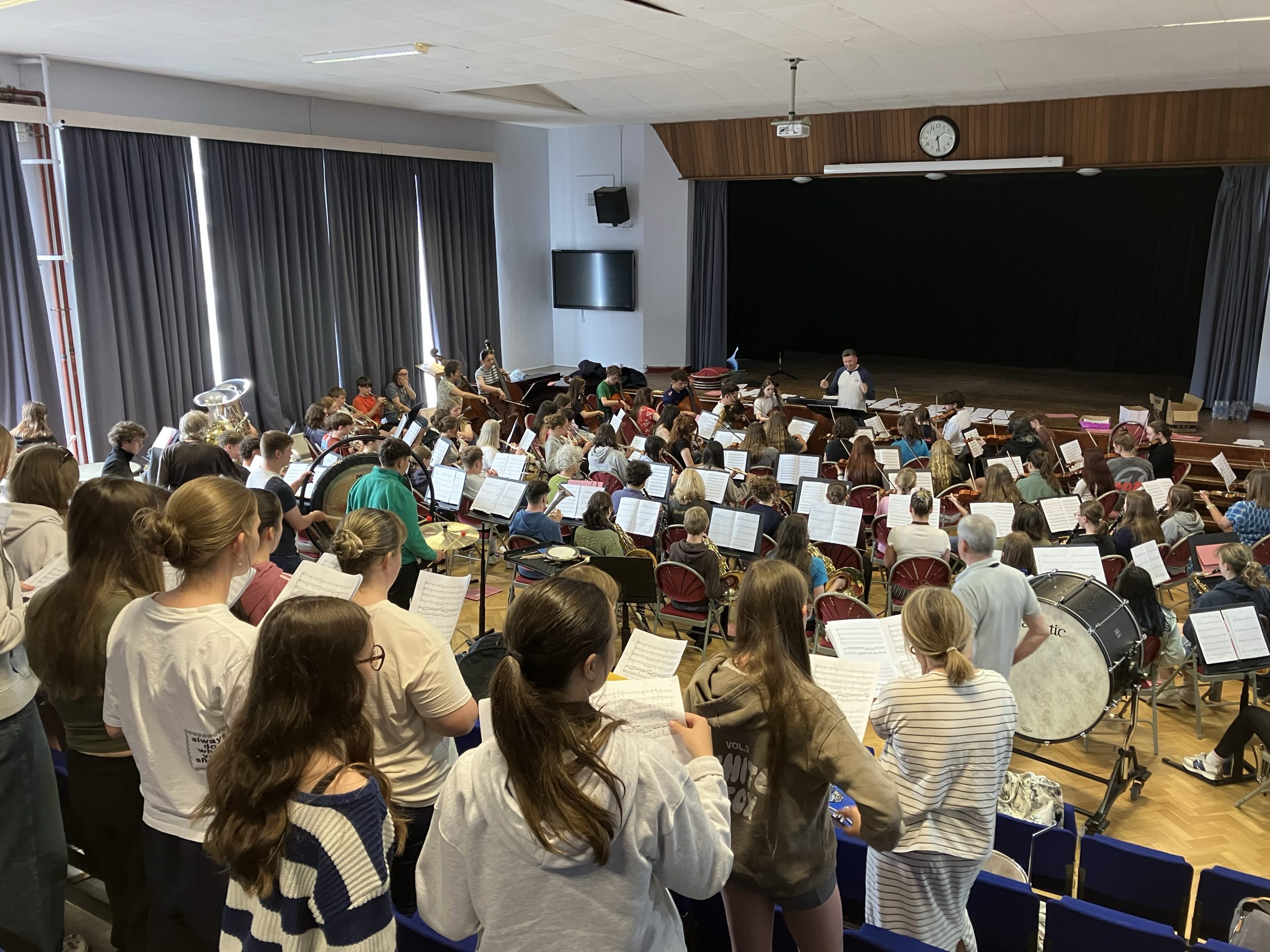
NEW Paul Mealor work, with words by Menna Elfyn, will be performed by 150 young people from Carmarthenshire, Ceredigion and Pembrokeshire
A new composition by internationally acclaimed Welsh composer Paul Mealor will bring this year’s National Eisteddfod to a spectacular close, as 150 young musicians from across west Wales take to the Pafiliwn stage.
Côr a Cherddorfa’r Tair Sir, the Three Counties Choir and Orchestra, will perform Angerdd a gerdd, a new work specially commissioned from Professor Mealor, with words by celebrated poet Menna Elfyn.
The concert will close the Pafiliwn programme on the final Saturday evening of the festival, bringing together young performers from Carmarthenshire, Ceredigion and Pembrokeshire for what organisers say will be one of the highlights of the week.
Côr y Tair Sir was originally formed following the creation of Dyfed in the 1974 local government reorganisation, becoming well known across the region and beyond. It has now been revived especially for this year’s National Eisteddfod, with support from the National Music Service of Wales and sponsorship from the Gwendoline and Margaret Davies Charity, Gregynog.

Rehearsals began in the spring, with pupils meeting regularly to prepare for the performance.
Professor Mealor said he had been delighted by the response from the young musicians.
“One hundred and fifty young people came together to rehearse my new work, to Menna Elfyn’s powerful words, and it sounded wonderful from the very first rehearsal,” he said.
“It’s a challenging piece for young voices, but I’ve been hugely impressed by their commitment, and I’m certain it will be a thrilling experience for the audience on the night.”
Mealor, who was born in St Asaph and raised in Connah’s Quay, has long-standing links with Wales’ musical tradition. He studied composition with Professor William Mathias at the University of York and has credited Mathias as the inspiration behind his musical career, particularly his passion for choral music.
The new work will also showcase the words of Menna Elfyn, one of Wales’ leading poets. Since the publication of her first poetry collection, Mwyara, 50 years ago, she has produced numerous volumes of poetry, children’s books and anthologies, while also writing for stage, radio and television. Her work has received widespread critical acclaim and many awards.
As well as marking the end of the festival week, the concert will celebrate the National Eisteddfod’s rich musical heritage and give a new generation of performers the chance to present a major choral work on one of Wales’ most prestigious stages.

Classical music will feature prominently across the Maes this year, with events taking place at Y Stiwdio and Encore.
Among the highlights is a performance of Atgof o’r Sêr, Memory of the Stars, composed by Robat Arwyn with words written especially for Bryn Terfel. First performed at the 2001 Denbigh National Eisteddfod, this year marks the 25th anniversary of its premiere.
The eight-song cycle will be performed by recent winners of the Osborne Roberts Memorial Prize, including Steffan Lloyd Owen, Meinir Wyn Roberts, John Ieuan Jones, Llinos Haf Jones, Dafydd Jones, Siriol Elin, Joshua Mills and Lisa Dafydd.
Another highlight will be a rare opportunity to hear two songs by composer Meirion Williams, marking the 50th anniversary of his death.
On behalf of the Eisteddfod, musician Sioned Webb and Steffan Prys explored the archive of the late soprano Ceinwen Rowlands, with the assistance of Maredudd ap Huw at the National Library of Wales.
Sioned spent time in London during the 1980s researching and completing an MA dissertation on the life and work of Meirion Williams, but she was unaware of the Ceinwen Rowlands collection at the time.
This year she discovered two previously unperformed pieces in strict Welsh metres, cywyddau by Siôn Cent and Huw Morys, also known as Eos Ceiriog. She edited them for performance with the assistance of Eurig Salisbury.
It will be the first time the two songs have been heard in more than 80 years. Nerys Williams, the composer’s daughter, has been invited to attend the Eisteddfod and present the scores to Tŷ Cerdd.
Betsan Moses, Chief Executive of the National Eisteddfod, said: “There’s a strong programme of classical music across the Maes this year. We’re delighted to welcome so many former competition winners back to perform, celebrating the connection between competing at the Eisteddfod and their career in music.
“We’re also using Rhosygilwen, near the Maes, as the venue for our music prelims during the week, and everyone is welcome to come along and enjoy the performances.
“The Pafiliwn event on the final Saturday evening promises to be one of the highlights of the festival. It is wonderful to give classical music such a prominent place at its heart, while offering talented young local musicians the chance to be part of a unique experience, working alongside one of Wales’ best-known composers and bringing the words of one of our leading poets to life through music.
“It will provide a memorable finale to a week of music and creativity.”
Eisteddfod Genedlaethol y Garreg Las will be held in Llantwd, north Pembrokeshire, from August 1 to 8. Further information and tickets are available at eisteddfod.cymru.


ADULT Welsh learners must not be overlooked if the Welsh Government is serious about reaching its target of “a million and more Welsh speakers”, the founder of an online Welsh learning programme has warned.
Suw Charman-Anderson, founder of Ymestyn.Cymru, said ministers needed to do more to support learners who have moved beyond beginner level but are struggling to progress towards fluency.
Her comments follow a statement by Anna Brychan, Cabinet Minister for Education and the Welsh Language, setting out the Welsh Government’s latest plans to support the language through childcare, education and community use.
Ms Charman-Anderson said she welcomed the commitment to strengthening Welsh, but warned that adult learners, particularly those at Canolradd, or intermediate level, appeared to have been left out.
She said: “It is heartening to hear Anna Brychan commit to a variety of interventions that will strengthen Welsh learning and its use in childcare, education and the community.
“But once again, there’s no mention of adult learners, particularly those who’ve reached the Canolradd level, for whom there is currently little to no targeted support or content outside of the limited Dysgu Cymraeg Canolradd courses.”
According to figures from the National Centre for Learning Welsh, only around 23% to 26% of Mynediad learners have progressed to Sylfaen over the last five years, while the number of Canolradd learners has remained below 2,000.
Ms Charman-Anderson said this showed a “leaky learner pipeline”, with too many adults dropping out before reaching fluency.
She said: “If we want a strong and vibrant future for the Welsh language, we need to support Canolradd learners through to full fluency.”
She also argued that adult fluency is essential if children are to use Welsh outside school.
An Institute of Welsh Affairs report previously warned that children taught through Welsh, but who do not speak Welsh at home, are less likely to overachieve by the end of primary school.
Ms Charman-Anderson said confident Welsh-speaking adults were needed in homes, workplaces and communities to help normalise the use of the language.

She said: “For the Government to achieve its ambition of a million and more Welsh speakers, children need the support of fluent speakers at home and in their communities.”
She also pointed to concerns about the availability of bilingual teachers, citing Senedd research which found that 39% of teachers reported having intermediate Welsh skills or higher, while only a quarter were currently teaching Welsh or through the medium of Welsh.
The same research also identified a downward trend in the number of teachers able to teach through the medium of Welsh.
Ms Charman-Anderson said more focus was needed on helping learners overcome the “intermediate plateau”, where they have a solid understanding of grammar but lack the vocabulary and confidence to use the language day to day.
She said: “None of the available Welsh courses focus on expanding vocabulary or helping learners memorise key grammar points. They introduce concepts and expect learners to fill in the gaps at home, without providing any tools to do so.”
Ymestyn.Cymru describes itself as a fully online programme designed specifically for Canolradd learners. It uses games, quizzes, articles, videos, transcription and speed-reading exercises to help learners build vocabulary, improve listening skills and practise grammar in real-world contexts.
Ms Charman-Anderson added: “The Welsh Government should be supporting programmes like Ymestyn, which are essential to fixing the leaky learner pipeline.
“More help for Canolradd learners will translate into more fluent speakers who are using Welsh day to day, with their children, communities and at work.”
THE WELSH GOVERNMENT has promised a new focus on delivery as it seeks to secure the future of the Welsh language and reach its target of one million Welsh speakers.
Cabinet Minister for Education and the Welsh Language Anna Brychan told the Senedd on Tuesday (July 7) that the Government would now move from “ambition to action” after years of discussion about how best to strengthen Cymraeg across Wales.
At the heart of the plan is a commitment to build a clearer Welsh-medium education pathway, from childcare and the early years through to post-16 learning.
Ministers say the Welsh Language and Education Act will be implemented in full, with the aim of ensuring every child has a fair opportunity to become a confident and independent Welsh speaker.
An urgent review of Welsh in Education Strategic Plans is already under way. Its findings will shape a new national framework designed to ensure that half of all children in Wales begin their education journey through the medium of Welsh by 2050.
The Welsh language will also form part of the Government’s planned childcare offer, which will provide 20 hours of funded childcare each week for every child aged between nine months and four years.
Ms Brychan said the aim was to make Welsh-medium provision available from the earliest stages of a child’s life, while also expanding opportunities for teenagers and young adults to continue learning, working and living through Welsh after the age of 16.
The announcement will be closely watched in west Wales, where Welsh-speaking communities remain a vital part of local identity but where concerns have been raised for many years about housing, migration, school reorganisation, transport, employment and the long-term sustainability of the language in daily life.
The Welsh Government says work has already begun with local authorities to decide how areas with a higher density of Welsh speakers should be formally designated, with the aim of strengthening everyday use of the language in those communities.
Ministers are also looking at further legal and non-legal measures to support Welsh-speaking areas in the long term.
However, the Government says its plans are not limited to traditional Welsh-speaking heartlands. It says the language must also grow in areas where there are currently lower or medium levels of Welsh speakers.
A cross-government response is being developed following the second phase of the Commission for Welsh Communities.

Ms Brychan said responsibility for the language could not sit with one minister or department alone. She said housing, health, transport, the economy, local government, culture and sport all had a role to play in meeting the target.
The Minister also confirmed that Welsh language standards will be extended to new sectors, including UK Government bodies.
She said she is writing to major technology companies to press them to ensure new digital developments support the Welsh language, amid growing concern that artificial intelligence and online platforms could either help or hinder minority languages.
Work is also under way to standardise and record Welsh place names, while options for protecting them in law are being explored.
Ms Brychan said: “People from all parts of Wales are proud of our language and want to see it thrive.
“Cymraeg belongs to us all, and we should move away from seeing ourselves as ‘Welsh-speaking’ and ‘non-Welsh-speaking’ Welsh people. We are all somewhere on the same journey, and we all belong.
“The existing goodwill and ambition provide us with a strong foundation, but the challenges are real and the coming years will be critical.
“Our focus now is on turning ambition into action and securing the strongest possible future for the Welsh language in our schools, our communities and our workplaces. We have already started this work within our first 100 days.”
She added: “The future of the Welsh language depends on people as well as policy. I encourage everyone to use whatever Welsh they have, to support one another in learning and using the language, and to play their part in building a Wales where the Welsh language belongs to us all.”
The Welsh Government’s long-standing ambition is to reach one million Welsh speakers by 2050. The latest announcement signals that ministers want to put education, childcare, community planning and digital policy at the centre of that effort.
For many communities, the key question will now be whether the Government can turn those commitments into practical change, including enough teachers, childcare staff, post-16 courses, affordable housing and local job opportunities to make Welsh a living language for the next generation.

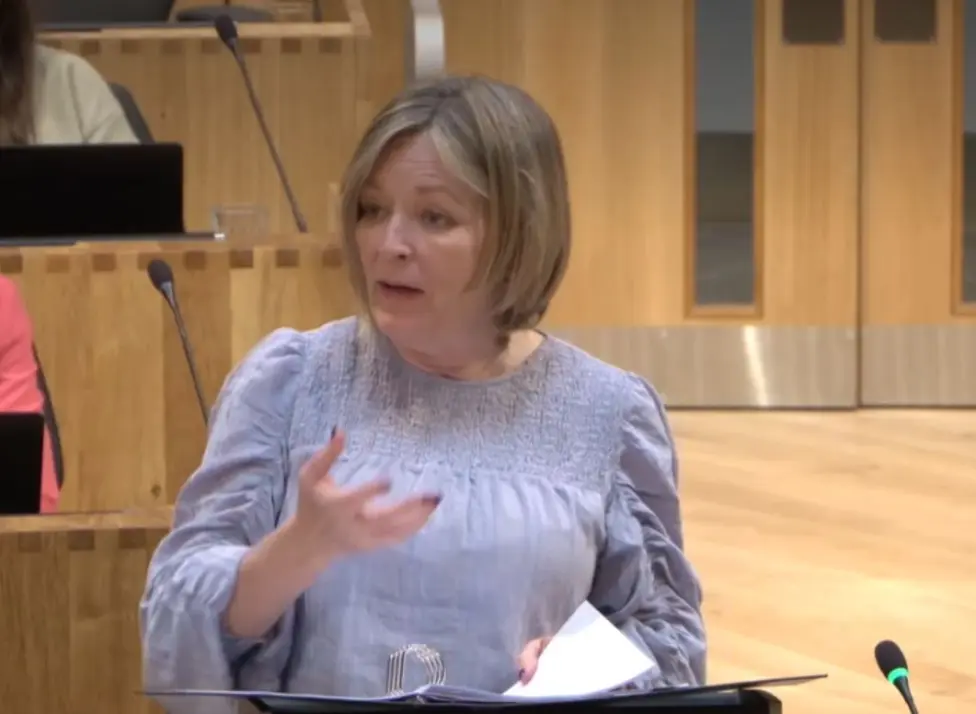
EDUCATION is “the key to unlocking our nation’s potential”, according to the new minister responsible for Wales’ schools.
Anna Brychan, who was appointed education and Welsh language minister last month, now has responsibility for school standards, improvement and attainment, Welsh medium education, early childhood education, and curriculum and assessment arrangements.
She also has responsibility over policies to protect and promote the Welsh language.
Setting out her priorities for the seventh Senedd term, the Caerdydd Penarth MS highlighted raising educational standards, workforce support, and strengthening skills.
She said: “This government has made education a national priority, to raise standards in our schools and ensure the best conditions for learning and teaching. The education system is currently failing too many of our children and young people.
“A lack of talent is not the problem, neither is a lack of commitment. We have children and young people who are full of potential, and we have an able and dedicated workforce.
“The problem is that the whole system hasn’t always worked together to support and unlock the potential of our learners, nor do we share data and understanding of what is needed to ensure progress in every school, in every area, consistently and powerfully.”
“We want the education system to function as one connected system: to support our children from early years right up to the point where they start working.”
Concluding her speech, Ms Brychan pledged the Welsh Government will build “an education system that works for all learners, in Welsh and English – in our two national languages – and above all else, for Wales.”
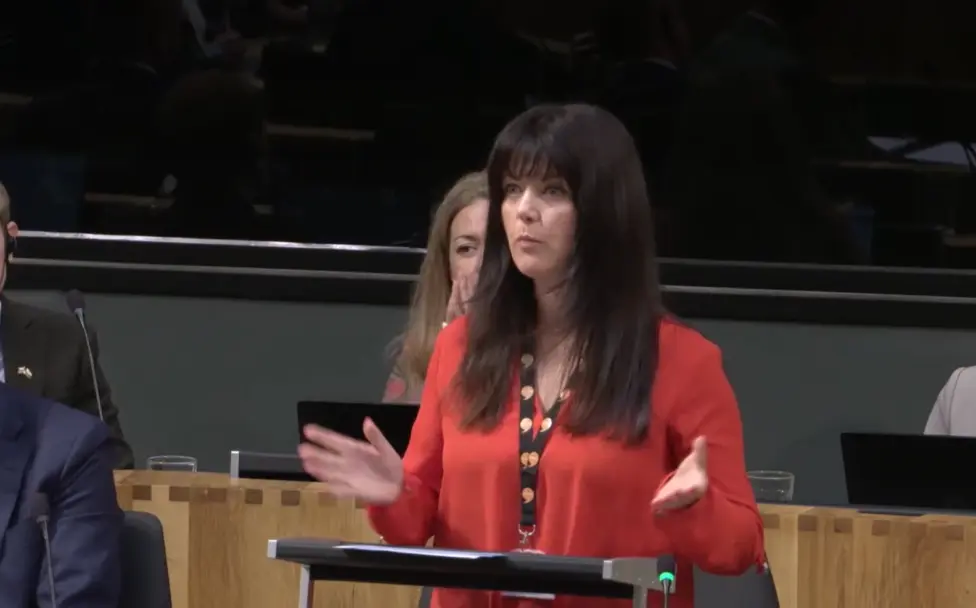
Helen Jenner, who is Reform’s deputy leader and shadow minister for education, voiced “concerns” about the minister’s statement and the lack of detail regarding teacher retention.
Ms Jenner, who was a teacher herself in London, told the Siambr that she can “understand” why so many are leaving the profession.
She said: “We’re losing experienced teachers faster than we can replace them. That concern is only amplified by our shared ambitions for bilingual and Welsh-medium education.

“The challenge is not simply finding teachers; it’s finding teachers with the language skills needed to deliver those ambitions. Every experienced bilingual teacher who leaves the profession is not easily replaced.
“If we’re already struggling to retain the workforce we have today, how can the government realistically hope to deliver the workforce it will need tomorrow?”
Concluding her statement Ms Jenner said: “Every one of us here can remember a teacher who changed our lives. The problem is that experience takes years to build, but only a moment to lose.
“If this government fails to address workload and behaviour in detail, Wales will continue to lose our best teachers, and when teachers leave, it is not the ministers who pay the price, it is our children.”
Ms Brychan responded: “I’ve said often that I’m of the opinion that this is the most important professional role in our society – and I’m sure that some people here will disagree, but that is my view – and that we then need to retain that experience within the classroom.
“I can also assure [Ms Jenner] that we will be working with teachers and local authorities, and with unions in the social partnership that we have, to look at how we can proceed with the detailed work on reducing the workload, and tackling, to all intents and purposes, the conditions that teachers are working in.”
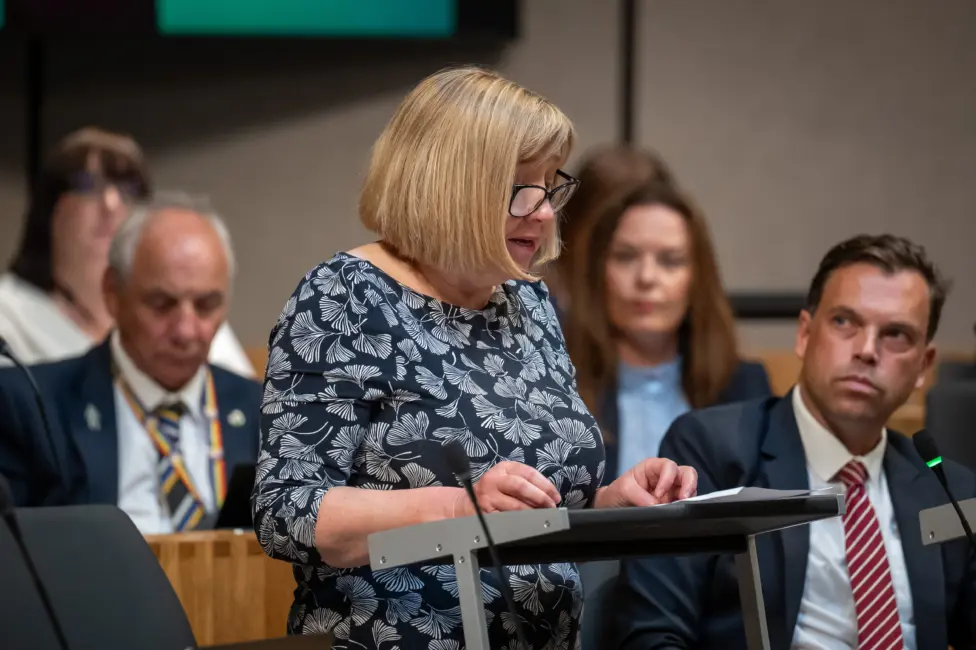
Labour’s Lynne Neagle, a former education minister, congratulated Ms Brychan on her appointment and said the role is “without any shadow of a doubt, the very best job in government.”
Questioning the minister on why the Plaid government has chosen to delay the response to the independent Welsh pay review body report on teachers’ pay, Ms Neagle noted the previous Labour administration had “made a commitment” to consult before the school holidays to “protect time for our teaching staff.”
She said the delayed response “will likely lead to teachers not being paid in September”.
Ms Brychan confirmed she had received the report but told Ms Neagle it is “sensible” to “take time to consider the recommendations”.
She added: “Previous governments have also found that they would need to take proper time over the summer, before coming to a firm conclusion about that.”
Ms Neagle also quizzed Ms Brychan on mental health in schools, saying she is “very proud” of the previous Welsh Government’s record on the issue.
She told the Siambr: “It is essential to ensure that young people have consistent, high-quality access to school counselling.
“And if I might say, politics can never ever come before the mental health of children and young people.”
In response, Ms Brychan said: “Mental health will be a priority for us in schools as well.
“We know it is a significant factor, and any factors that influence or hinder learners from making the progress we want them to make, we want to see them making, we will make sure that the support is there to support them.”

Sam Rowlands, the Conservative spokesperson for education and families, asked Ms Brychan where she would like to see Wales in the PISA rankings come the end of this Senedd term.
He said: “The reality is that we continue to see Wales at or near the bottom of UK education rankings, and consistently doing poorly on international PISA rankings, with too many young people still leaving school without secure literacy and numeracy skills.
“That’s a longstanding issue and one that requires urgent attention and clear accountability.”
The minister responded: “Our education system isn’t where we would like it to be. I think there is agreement on that among the workforce and broader society, and that is why we are focused on these fundamentals and are deliberately setting targets whereby we can hold ourselves to account”.
With PISA results due to be published again in September, Ms Brychan committed to take the “most meaningful information” she can from the report, adding: “It’s about more than just numbers. There’s a lot of data that we can use there, and we can use that meaningfully in order to inform our numeracy and literacy plans.”
Mr Rowlands went on to question his opposite number on the Welsh Government’s position on mobile phones in schools.
Referencing a survey published on Tuesday 16 June by the Welsh Conservatives, he shared findings which suggested mobile phone restrictions have positive impacts on “reducing distraction, improving behaviour, tackling bullying and supporting learner wellbeing.”
Mr Rowlands pushed Ms Brychan to confirm whether the Welsh Government intends to “take a more consistent, national approach to mobile phone use in schools” or if it will leave the decisions to the discretion of individual schools.
Noting there currently is no national directive or guidance, Ms Brychan told Mr Rowlands that the intention is to move to statutory guidance from September.



Crime1 hour ago
Teacher stabbing trial: The first week of evidence
Jury hears accounts of alleged planned classroom attack, teacher’s fear she was dying, and boy’s words after leaving school A...


Community4 hours ago
Haverfordwest Castle refurbishment reaches new heights as roof goes on
Major milestone reached in project to transform historic gaol building into flagship visitor attraction A MAJOR milestone has been reached...


Business1 day ago
Pembrokeshire lands £98m share of Wales marine energy boom
New industry report says county has received the second highest level of marine energy investment in Wales, supporting more than...
Crime1 day ago
First aider tells jury teacher was “crying, shaking” after classroom stabbing
A SCHOOL first aider has told a jury that teacher Vicki Williams was “crying, shaking” and in “complete shock” after...


Crime2 days ago
Teacher feared she was dying after Milford Haven classroom stabbing
A TEACHER allegedly stabbed in the head at Milford Haven Comprehensive School told a jury she feared she was dying...


News2 days ago
Farage to resign as MP and fight Clacton by-election amid finance row
NIGEL FARAGE has announced he will resign as MP for Clacton and stand again in the by-election he intends to...
Crime2 days ago
Teacher tells jury there were ‘no issues’ with accused pupil hours before ‘stabbing’
Milford Haven teacher gives evidence as trial of 15-year-old continues at Swansea Crown Court A TEACHER allegedly stabbed at Milford...


News3 days ago
Major incident stood down after fire at Impala Terminal in Milford Haven
Fire involved decommissioned oil tank containing residual crude oil and around 60 cylinders A MAJOR incident declared during a fire...


News3 days ago
Large fire breaks out at Impala Terminal in Milford Haven
Black smoke seen for miles as emergency services respond to incident at former Puma Energy site A LARGE fire has...
Crime3 days ago
Prosecution outlines ‘planned attack’ as Milford Haven teacher stabbing trial opens
Jury hears teenager allegedly brought kitchen knife into school before teacher was stabbed in the head THE JURY in the...
-
 Community6 days ago
Closure-threatened Stepaside school expected to remain open
-
 Education6 days ago
Education secretary vows to tackle ‘root causes’ of antisocial behaviour in schools
-

 Crime7 days ago
Llandeilo man accused of rape sent to Crown Court
-
 Education6 days ago
First Minister pressed on biological sex, additional learning needs, and NHS jobs
-

 Community7 days ago
Saundersfoot Harbour regeneration project wins national planning award
-

 Education6 days ago
Ysgol Glannau Gwaun celebrates prestigious Gold Active Travel award
-
News3 days ago
Large fire breaks out at Impala Terminal in Milford Haven
-

 Charity6 days ago
New weekly palliative care support service launched at Withybush Hospital