

Welsh Government
Calls for Barnett Formula reform narrowly rejected in Senedd


SENEDD Members have narrowly rejected a Welsh Government bid to reform the way Wales receives money from Westminster.
A motion calling for “fair funding for Wales”, put forward by Welsh Government Trefnydd Heledd Fychan, was beaten by 46 votes to 45 on Tuesday July 7.
The motion called on MSs to back the Welsh Government as it seeks changes to the Barnett Formula.
The Barnett Formula is used by the UK Treasury to calculate changes in the funding provided to the devolved administrations in Wales, Scotland, and Northern Ireland.
According to the Institute for Government, the Barnett Formula “calculates devolved budgets by using the previous year’s block grant as a starting point (or ‘baseline’), and then adjusts it based on increases or decreases in ‘comparable’ spending per person in England, meaning spending by the UK government on services in England that are devolved to one or more of the other nations.


“Changes to the devolved block grants are calculated by multiplying the change in spending by UK government departments by the comparability factor and the population proportion of each nation.”
Though initially intended to be used as a temporary solution for determining funding allocations between the UK nations, the formula has remained in used since its introduction in 1979.
Each of the opposition parties tabled an amendment to the motion.
Labour’s amendment called to delete all of the Plaid Cymru motion and instead recognise “that redistribution of wealth is a major benefit of being part of the United Kingdom”.
It also stated that Scottish resistance to Barnett formula reform should be the “primary focus” in the Welsh Government’s engagement with the Scottish Government.
Reform’s amendment similarly proposed to delete the entirety of the Plaid Cymru motion and called for the Welsh Government to focus spending on devolved areas, noting that, according to analysis from the Institute for Fiscal Studies, reforming the Barnett formula could result in Wales receiving £1 billion less a year.
It also called on the UK Government to cut international spending to deliver fairer funding for Wales.

The Conservative amendment meanwhile called on the Welsh Government to use its existing budgets to deliver “better value for money for Welsh taxpayers”.
It also noted the work of previous Conservative UK governments, including the 2016 introduction of a “need-based factor into the funding formula for Wales”.
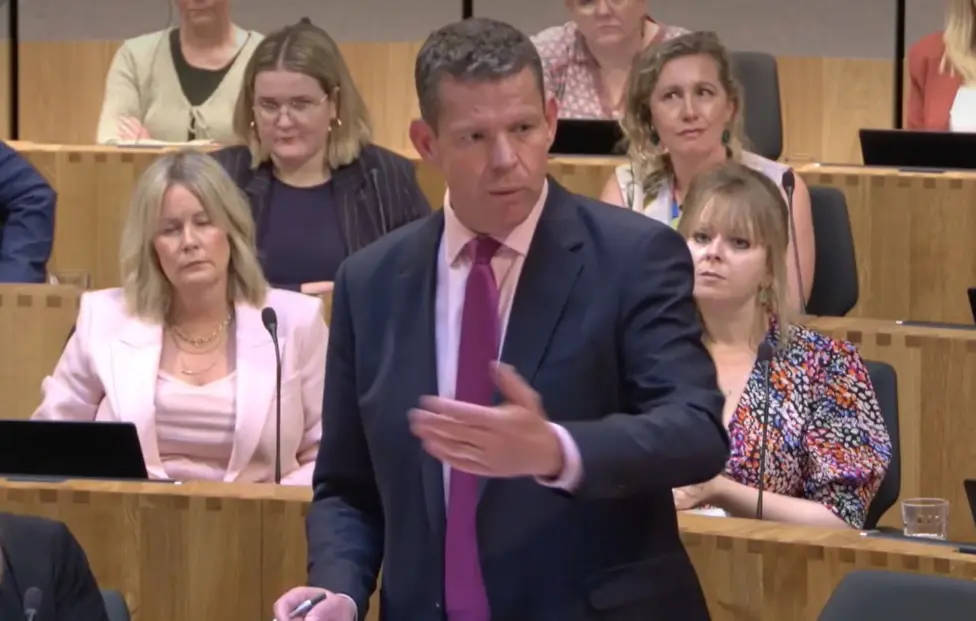
First Minister Rhun ap Iorwerth told the Siambr that fair funding for Wales is “more than just politics or political party rhetoric”.
He said: “It relates to Wales, which has the tools in its hands to build a better future for ourselves.
“The current fiscal arrangements in the United Kingdom aren’t just unfair to Wales, they make economic failure more likely, and through reforming the current system we will ensure that the Welsh Government has the resources and the powers… to invest in public services, in infrastructure and in economic growth.”
Mr ap Iorwerth vowed to work “constructively” with the UK Government, noting Andy Burnham – the likely next Prime Minister – has experience of devolution from his time as Mayor of Manchester.
He urged Labour MSs to vote for his party’s motion, noting their manifesto committed to fair funding.
Taking an intervention shortly before closing his speech, the First Minister was questioned by Tory MS Andrew RT Davies on whether he had reached out to opposition parties to find a consensus.
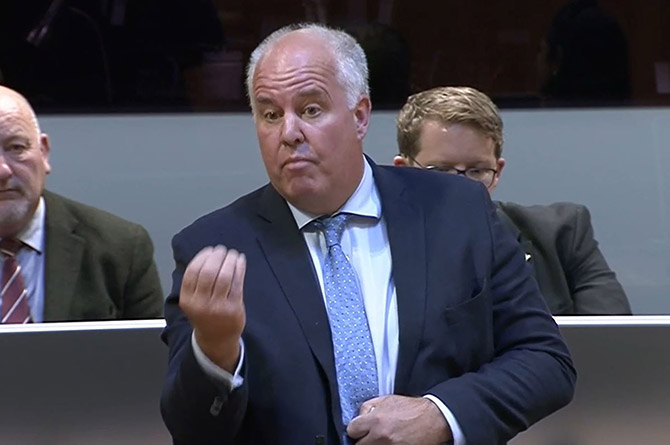
Noting the “simplicity” of the Plaid Cymru motion, Mr ap Iorwerth said it was “worrying” that Mr Davies believes it is something consensus needs to be found on.
He said: “This is the fundamental of what we are here as a Senedd to do. This is the fundamental of us being able to speak with one voice as a nation.”
Concluding, the First Minister added: “This Senedd has voted unanimously in favour of fairer funding for Wales before.
“It’s my sincere hope that we can do so once more today, in the interest of the wellbeing and prosperity of our people.
“And this is bringing to the Senedd that pursuit of consensus right here in our national parliament today.”

Caerdydd Penarth MS Huw Thomas spoke of Welsh Labour’s belief that Wales “benefits from being part of a union”.
Describing Wales and the UK as “stronger together”, Mr Thomas said: “The Welsh Government continues to receive over 20% more per person than equivalent UK Government spending in the rest of the UK.
“That means that, for every £1 spent by the UK Government in devolved policy areas, the Welsh Government is able to spend at least £1.20 on devolved priorities like health and education.
“On the most basic level, this is redistributive. It brings a material benefit to public services and communities in Wales and I would urge those members, who cheerfully advocate leaving such an arrangement by exiting the United Kingdom, to consider those impacts extremely carefully.”
Acknowledging the Barnett Formula is not “perfect”, the Labour finance spokesperson said reforming it requires negotiation between all four nations.
He said: “Fundamentally reforming the Barnett formula in favour of a needs-based system will require negotiation, and ultimately agreement between all four nations. No single nation can do this alone, and yet, that agreement between nations is not forthcoming”.
Mr Thomas, the former leader of Cardiff Council, said the Scottish Government “stops short” of calling for a needs based system because “the current system benefits Scotland further”.
Quoting the Institute for Fiscal Studies, he said: “’No needs-based factor has been introduced for Scotland, likely reflecting the fact that it currently receives more funding per person than Wales, despite assessments suggesting it has lower needs’.”
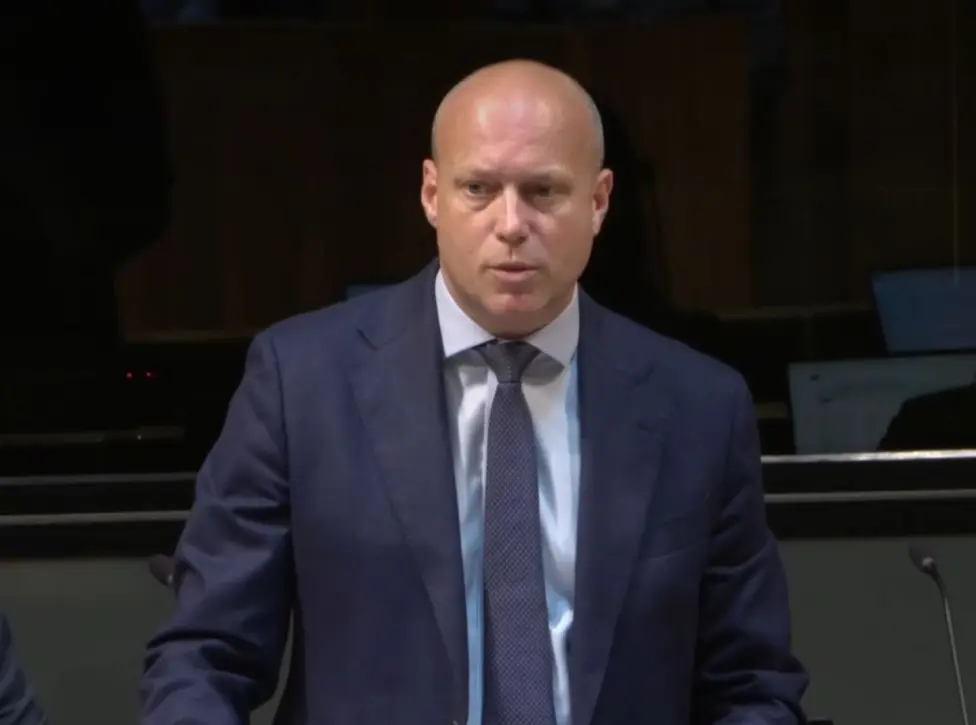
Reform’s Welsh leader Dan Thomas described the debate as more about “Plaid’s unfunded manifesto” than securing fair funding.
He said: “The First Minister is taking his begging bowl to London not because Wales doesn’t get enough funding, but because Plaid, in my opinion, misled voters when they said that their manifesto was fully costed.”
Similarly to Welsh Labour, the Casnewydd Islwyn MS said Plaid Cymru’s first step in calling for changes to the funding formula should be to “align with their sister nationalist party”.
But the opposition leader said the Welsh Government confirmed to him in writing that no discussions have yet been held with the Scottish Government.
He told the government it should “turn their attention” instead to the “huge amount of waste within the Welsh public sector”.
Mr Thomas, a former leader of Barnet Council in London, said: “Standing up for Wales is not about taking a begging bowl to London, asking for more money when we already receive more than England.”
He called on the Welsh Government to make “solid business cases” for investment in Wales, to focus on the M4 relief road and A45 upgrades, and to seek private sector and UK Government money to build houses in Wales.
He added: “Make no mistake, Reform is in favour of making the case for capital investment above and beyond our block grant.
“But we need to do some of the heavy lifting ourselves, and we need to be much more ambitious.
“So, it’s time to end the blame, the excuses, the platitudes, the begging. Let’s stand up for Wales by taking action and taking our ambition to another level.”

Welsh Conservative leader Darren Millar described the Barnett Formula as “beyond its shelf life” and “out of date”.
He said there is a need for a new funding mechanism for the UK, but said the “big issue” with the fair funding debate is there is “always a risk” when asking for a review of the funding arrangements.
Mr Millar also criticised what he described as the “political game” played by Plaid Cymru where “it has lots of disagreements with the government down the other end of the M4”.
Responding to the debate, Mr ap Iorwerth said: “There’s a straightforward question at the heart of this debate. Should we always seek to stand up for Wales and stand up for fairness? […] Or do you believe Westminster is being generous to Wales and we should be grateful for what we get?
“That is clearly Reform’s position. To seek fairness for Wales is to hand out a begging bowl. That is their level of respect for Wales.
“They are happy for Wales to languish. Pitching people against each other is what they do, creating divisions within our communities that deepen the challenges that face us as a nation, and blaming some of the most vulnerable people, rather than being willing to stand up against the deep inequalities within the UK.”
Mr ap Iorwerth also criticised Labour’s position on the debate, describing it as a “remarkable” shift in tone.
Addressing calls for the Welsh Government to tackle Scottish resistance to reforming the Barnett Formula, the First Minister said: “It is not the position of Welsh Government versus Scottish Government that is important here.”
He continued: “It is not Scottish Government that will block the devolution of rail or will block the devolution of the Crown Estate, which is essential to bringing about fair funding for Wales.
“It is not Scottish Government that is blocking Wales from being able to get the consequentials of HS2 that can transform our infrastructure and lead to the improvement in Welsh productivity that we should all strive for.”
Mr ap Iorwerth stressed the need for a “fair” and “transparent” funding system reflecting Welsh needs.

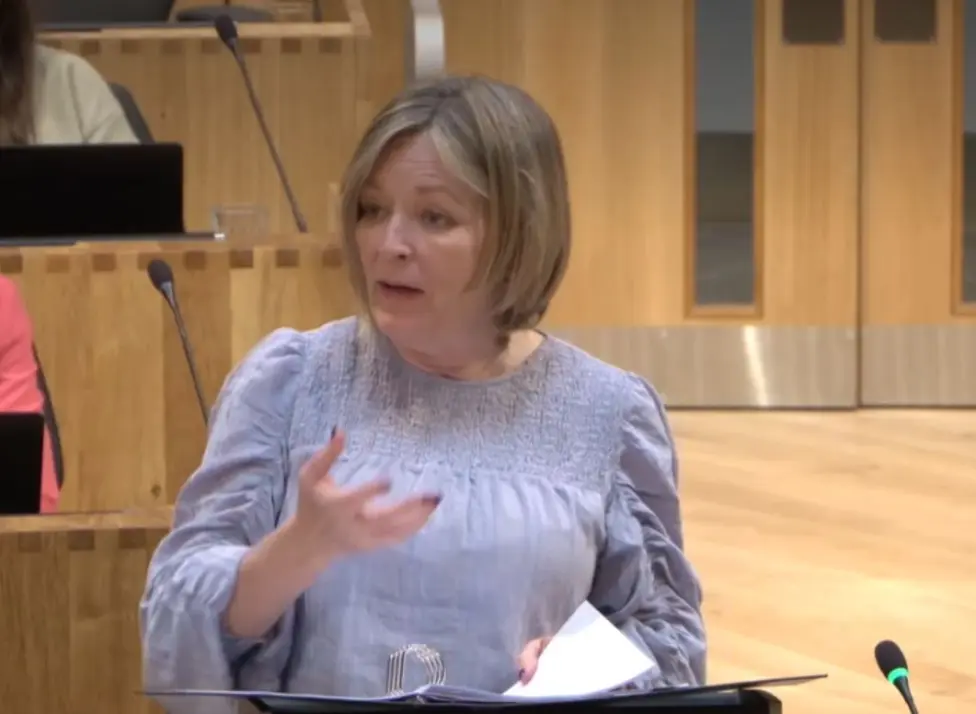
THE WELSH language is “one of our biggest success stories as a small nation on the world stage”, according to the minister responsible for the language.
Education and Welsh language minister Anna Brychan told the Senedd on 7 July that “language does not live solely through policy, but through people and through use.”
Sharing how the language has influenced her life, Ms Brychan said: “My personal story is a bilingual one. My mother learned Welsh as an adult. Today, Welsh and English intertwine in my family at home in Grangetown, and several other languages can be heard around us, and that’s a good thing.”
Concluding her speech, Ms Brychan said: “This is our opportunity to ensure that our two languages drive our future – in the community, digitally, in education and in the economy, and with the Welsh language contributing to making a welcoming, confident bilingual and multilingual country for us all.”
Reform’s deputy leader in Wales, Helen Jenner, described her parents’ decision to send her to a Welsh-medium school as one of “the most precious gifts” they could have given her.
Ms Jenner shared the story of her grandfather, Silgwyn Weston, who didn’t speak any English until he was around eight years old.
She told the Siambr how having received advice from his sister, who attended university in London, her grandfather decided the best way to provide opportunities to his children was for them to speak English at home, meaning her mother did not have the chance to speak Welsh.
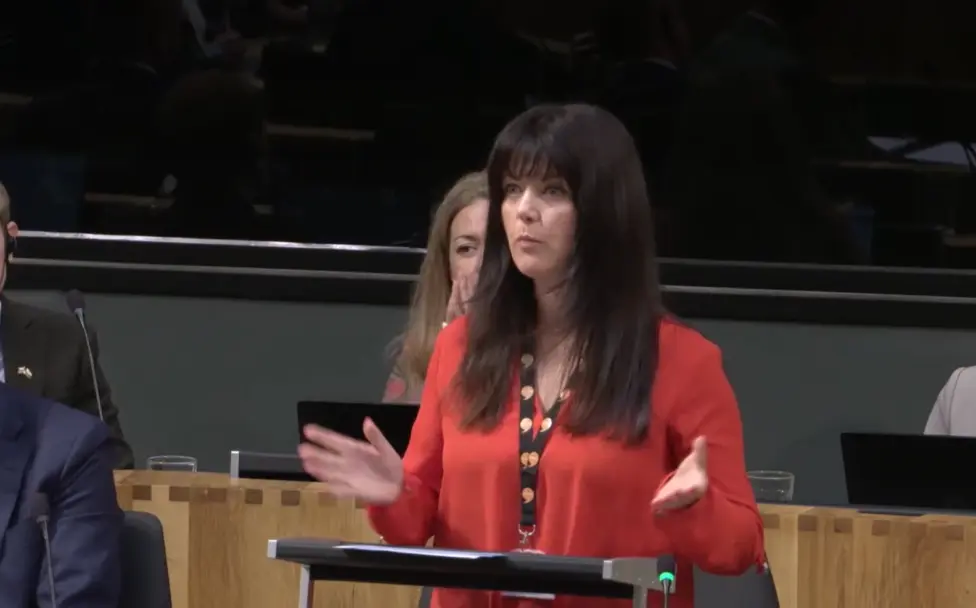
She said: “There was something very special between myself and my grandfather. We were the only two members of the family who could hold a natural conversation in Welsh.
“Silgwyn Weston was a very proud Welshman and in his final years, there was one constant – his hearing was somehow always better if the conversation was about rugby or if someone spoke Welsh to him.”
Reform’s deputy leader agreed with Ms Brychan that language sits at “the heart” of Welsh culture, but criticised the government’s plan to use legislation and targets to secure the language’s future.
She said: “We can’t force people to love a language. We can’t legislate for enthusiasm. We can’t create Welsh-speaking communities through targets alone. The Welsh language flourishes when people choose to use it at home, in the workplace, in the pub, on the rugby pitch and on the street.”
Ms Jenner also welcomed the minister’s commitment to strengthening the Welsh language in digital and AI, adding that if Welsh is not available in these technologies there is a risk of it being “left behind”.

She asked how the government will measure an increase in the daily use of the language and what practical steps will be taken to help learners use Welsh once they have left school.
Responding, Ms Brychan said: “People shouldn’t have to look for opportunities to use the Welsh language.”
She noted importance of including Welsh outside of education, in areas such as “technology, workplaces, sport, culture, planning, research, and leadership in our communities”.
Also sharing his experiences with the Welsh Language, Labour’s Huw Thomas told the Siambr that he himself “couldn’t speak a word of English” until he was around 7.
Discussing the Welsh Government’s target of a million Welsh speakers by 2050, former Cardiff Council leader Mr Thomas called for further details on how the Welsh language will be pushed through childcare and the education system.
He asked Ms Brychan how many Welsh-medium childcare settings will need to be developed to reach the target of free childcare from nine-months-old and how the Welsh Government plans to ensure Welsh-speaking staff will be available to meet demand.
Ms Brychan acknowledged the challenges in terms of developing the necessary workforce, but said there’s “a plan in place” to address this.
The Labour spokesperson for the Welsh language then noted the importance of Welsh in technology and the workforce.
He urged the minister to work with trade unions to promote the Twf Charter, which was developed to promote Welsh in the workplace.
Mr Thomas also questioned what measures the government will be taking to introduce more Welsh-medium apprenticeships.
Ms Brychan revealed she has numerous upcoming meetings on technology, and said the Welsh language is at the forefront of her discussions with such companies.
She also said she’s “always” willing to speak to unions to get their views and expertise.

Conservative Paul Davies voiced his and his party’s support for the Welsh Government’s target of one million Welsh speakers by 2050, but questioned Ms Brychan on Welsh-medium education and socialising through the Welsh language.
Mr Davies highlighted that currently only 21% of children are in Welsh-medium schools, according to the latest schools survey.
He suggested that work could be done in terms of learner travel to help reduce barriers to Welsh language education.
The Conservative spokesperson called on Ms Brychan to reveal whether she will review the Learner Travel (Wales) Measure 2008 to see if more “can be done” to allow children access to Welsh-medium education. However, Ms Brychan did not mention learner travel in her response.
Mr Davies also spoke of the importance of socialising in Welsh in cultural settings, referring to events such as Tafwyl, which took place in Cardiff last month.
He said: “These events and many other community events are held by organisations like the mentrau iaith and others, of course, that do so much in our communities with little resource.”
Mr Davies called on the Welsh Government to consider how it can support community organisations “more effectively” in the future.
Ms Brychan replied: “In terms of socialising through the medium of Welsh, that takes me back to the point that I was making that we need to create the environment where people don’t have to look for opportunities to use the Welsh language.
“As you mentioned, the opportunities provided through the mentrau iaith are key to ensure that those opportunities are available.”
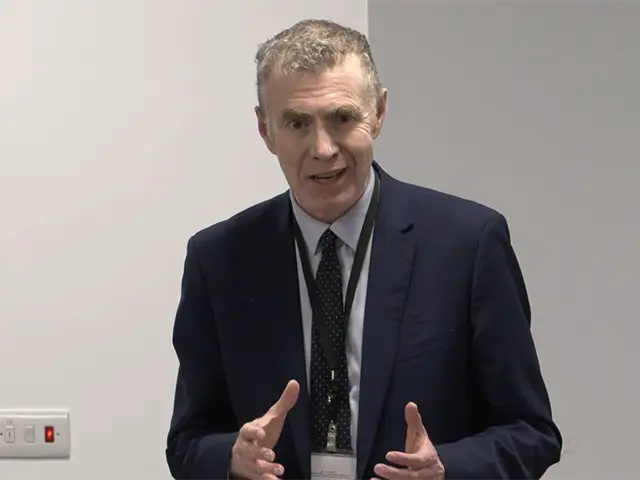
A NEW development agency will “improve productivity”, according to a Welsh Government minister – but opponents have dubbed it “yet another quango”.
Enterprise, connectivity, and energy minister Adam Price outlined his plans in the Senedd on Tuesday July 7.
He said: “Less than three weeks into this administration, we announced the most ambitious economic goal in Wales in two decades; namely, halving Wales’s productivity gap with the UK within ten years.
“If we are going to meet that challenge, we need a fundamental change in how we approach economic development in Wales. The proposed new agency will be a key driver in achieving that change.”
Mr Price previously faced criticism on his plans when he raised the proposal in the Senedd last month.
Reform’s shadow minister for economy and transport, Jason O’Connell, then described the idea of a new agency as “another unnecessary bureaucratic quango”.
Speaking in the Siambr, Mr Price said: “Creating a new development agency is a crucial part of driving the positive changes in productivity that we need. But it needs to be a much wider, collective effort across Wales.
“We need – collectively and collaboratively – to look at the current landscape and work with local and regional partners to create an economic development system where roles are clear and we’re all working together as one team for the people of Wales.”
As set out in Plaid’s 100 day plan, the party will be establishing an “expert panel” to advise the development of the new agency, which he confirmed will be chaired by Jonathan Lewis.
He said: “The appointment of the chair of the panel to advise on the remit and operating model of the new agency is a key stepping stone in the journey towards making Wales the best place in the United Kingdom to start a business, to grow a business, and to invest in a business.”
The minister told colleagues he would confirm the full membership of the panel in the coming weeks.

Reform’s Jason O’Connell told the Siambr that it was a “shame” MSs were once again debating “the creation of yet another quango”.

Noting the importance of scrutiny for “better government”, Mr O’Connell accused Plaid Cymru of denying the chamber that scrutiny.
He said: “If taxpayers are funding this new development agency, then they deserve transparency. Minister, you say you want the new agency to provide support, advice and guidance, but you’ve said nothing about how.
“So, let me give you a suggestion. Decades ago, Welsh Labour scrapped the Welsh Development Agency, WDA1. They promised a simpler, better support mechanism for Welsh businesses. But instead, we’ve got a patchwork of organisations: Business Wales for advice, the Development Bank of Wales for finance, and now what we’re proposing is WDA2 to sit on top. The current system is too confusing.”
Reform’s shadow economy minister then claimed Business Wales returns £18 of economic value for every £1 that’s invested. He also questioned Mr Price on why he has no plans to bring Business Wales into the new WDA to make things “less confusing and more accessible”.
Responding, Mr Price said his government “absolutely” wants to make sure businesses can access a “streamlined level of support”.
Mr O’Connell also asked about attracting inward investment to Wales, noting the “real test” is whether that investment becomes “rooted across Welsh communities up and down the country”.
He said: “In the last WDA, Wales welcomed major international employers, created thousands of jobs, and celebrated new investment, as short-lived as it was.
“But those companies moved production elsewhere when the government reduced the support. They took high-paying jobs with them, because their supply chains were never truly anchored in Wales, and it was easy to do so.”
The Pontypridd Cynon Merthyr MS drew attention to the Irish economy where “inward investors are expected to work with local suppliers, strengthen domestic supply chains, and create opportunities for already-established local businesses in that country to grow alongside them”.
Mr Price noted his agreement with the shadow minister on the need to be strategic about inward investment.
He said: “Foreign direct investment has a role in any economy, but we need to actually focus it on those areas that will be more embedded – through supply chains, as he suggests – in the Welsh economy that actually build on our existing and possible future strengths.”

Labour’s Shav Taj said her party shares Plaid Cymru’s ambition for a “new type of Wales, a reinvigorated Wales, a Wales that attracts more investment and ultimately creates good jobs”.
The Labour spokesperson for economic transformation told the Siambr that what the people of Wales want to know is what “meaningful difference” these internal arrangements will make.
She also drew attention to the work of the previous Labour government in ensuring a strong economy for Wales, including setting up the Development Bank of Wales and hosting the Wales investment summit.
Ms Taj said it’s the “practical” questions that are important and pressed Mr Price on when the new agency will get staff, whether they will be new staff or shuffled from other departments, and how much the new agency will cost the Welsh public.
She also pushed for confirmation on the “constitutional status” of the agency, notably whether the Senedd will need to legislate “at some point” for it to get going.
Ms Taj added: “Ultimately, this is about jobs, jobs for the future, high-skilled jobs, and young people in Wales are really watching to see whether or not your government is going to do any better than we did.”
Mr Price responded: “They [development agencies] have played a central role in virtually anywhere that you can think about in the nations and regions that have closed an economic gap, and few of those nations or regions that have had one have got rid of them.
“We’re one of the few exceptions. There may be a reason for that, and I suggest it’s because they are an incredibly valuable tool.
“Do you need to get the design right? Absolutely. The right relationship in terms of how arm’s length it is from government but how close it is from a government – getting that right is absolutely important and it’s one of the key questions that we’ve already done a lot of thinking on, and we will continue as we go through the design process.”
Pen-y-Bont Bro Morgannwg MS, Andrew RT Davies, expressed the Conservatives support for “the principle” but said there was “too much blank space” around the new agency.
He asked Mr Price for a timeframe in which he expects to bring the organisation into existence, whether it be 12 months, two years, or by the end of this Senedd term
Mr Davies also questioned the cost and said: “I’m not going to ask you for every pound, shilling and pence, but can you give an indication on what your thinking is of the type of budget that you will make available to the organisation?”
He continued: “When we look at the old WDA, it had a complete offer, from building industrial sites, gaining the planning permission and promoting foreign direct investment.
“Does this organisation, in your mind, need to do all that, or will it be more specific in what it does about promoting Wales as a destination for inward investment? And when we look at the organisation, are we thinking of an organisation that will look like Natural Resources Wales with a remit letter, or will this be a unique organisation that hasn’t been seen in the Welsh public landscape before?”
Mr Price confirmed the new agency will be a statutory body, and said he plans to bring forward legislation “fairly soon”.
He also noted the Welsh Government’s ambition for the new agency to be operational “as soon as possible”, but said he could not provide a specific date.
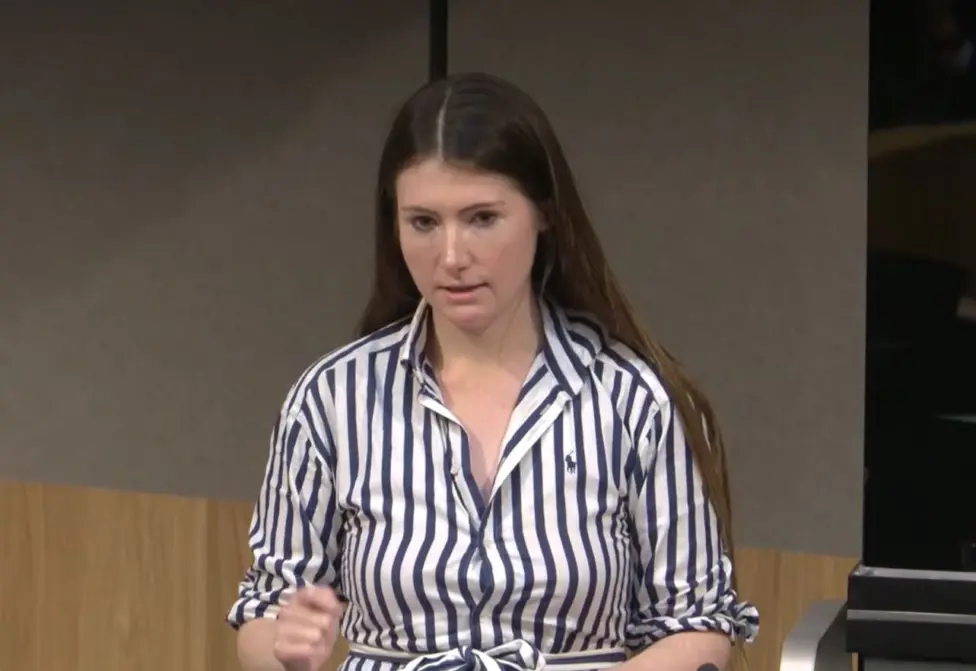
A SENEDD Member who lost her birth mother at just three weeks old has spoken about her childhood experiences during a debate on the lasting impact of adverse childhood experiences.
Reform’s Sarah Cooper-Lesadd discussed her adoption in a debate tabled by Plaid Cymru’s Beca Brown, with the Senedd hearing calls for a ‘trauma-informed’ approach to services.
The debate called on the Senedd to “recognise the profound and lasting impact of trauma on individuals throughout their lives.”
Ms Cooper Lesadd said: “My story did not start with adoption. It began with loss.
“My birth mother died when I was three-weeks-old. She had postnatal psychosis, a severe, frightening and treatable condition, and she did not get the help she needed in time.
“Today, with her history known, she might have been seen before crisis ever came, supported through pregnancy, monitored in the weeks that followed, kept safe.
“She fell through every gap the system had, and the highest price was paid by her and by a three-week-old baby, me, who entered care because the mother who loved her could not be saved.”
The Pen y Bont Bro Morgannwg MS continued: “My birth father took me in for a time, and then he gave me up too. So, before I was old enough to understand the world, I’d already been let go of twice.”
“I was not told how she died until I was ten. People sometimes assume you cannot grieve someone you never really knew. You can. You mourn not who they were, but everything you never got to be.
“I have grieved my mother my entire life. I have two photographs, and never once heard her voice.”
Ms Cooper-Lesadd told the Siambr that she comes to this debate not from reading policy papers or briefings but as “the child in the file, the case number, the placement”.
Discussing the importance of support for care-experienced children, she said: “The difference between a care-experienced child who thrives and the one who does not is rarely talent, and never worth.
“It is about whether someone in the system chooses to see them. And this is what trauma-informed practice means – not a slogan, not a toolkit gathering dust, but a culture in which the midwife, the teacher, the nurse, the social worker are equipped to see the person, not just the case.”
Ms Cooper-Lesadd called for three things; for trauma-informed training to be standard for professionals on the frontline; for individuals to have to tell their story only once not to “relive the worst of their life at every new desk”; and for recognition that trauma does not end at 18.
Concluding her statement, she said: “If my being here means anything, let it mean this – that we build a Wales that sees a struggling mother and the frightened child before it is too late. That Wales might have saved her.”
During the debate, the Senedd Commission – the body responsible for the Senedd’s property staff, and MS support services – faced calls to “adopt trauma-informed approaches across all Senedd activities and services” and to “promote approaches that place individuals at the centre of services”.

The debate was opened by Beca Brown who told the Siambr “far too many people” are living with complex trauma that is often related to adverse childhood experiences (ACE).
ACEs are associated with an increased risk of poorer mental and physical health, an increased risk of substance misuse, and an increased likelihood of suffering from chronic conditions in later life.
Ms Brown noted the importance of a secure home for all, reciting the words of Shelter Cymru – ‘A home is everything’.
Yet, she told her colleagues how being homeless, or experiencing housing insecurity, is often overlooked as an adverse childhood experience.
She said: “A home is essential for a child to feel safe. It’s more than just bricks and mortar, and it’s at home that a child learns to relax and to close the door on the troubles of the world.
“When that foundation is not available to a child, temporary accommodation can create, exacerbate and perpetuate trauma.”
The Plaid Cymru MS went on to discuss the rates of child sexual abuse, noting that an estimated 25,000 children and young people are sexually abused in Wales each year.
Ms Brown shared the story of Venus, who was referred to the Rape and Sexual Abuse Support Centre North Wales by Sussex Police during an investigation into prolonged childhood sexual abuse.
Ms Brown shared Venus’ own words about her experience: “’I never felt like I wasn’t believed. I was always treated with respect, and my experiences were never referred to as allegations before the trial.
“The support I received was centred on me and the feelings I was experiencing, rather than trying to fit me into labels or clinical models.
“Their trauma-informed approach meant they recognised how trauma can affect trust, communication, emotions and day-to-day life. It helped me understand myself better.’
“They worked at my pace and I felt understood as a person, rather than defined by something that had happened to me.”
Venus emphasised the importance of a “safe, non-judgemental space” in her recovery, as well as the knowledge that the support wouldn’t end abruptly.
She said: “Knowing there was continuity and that I wouldn’t suddenly be discharged gave me a sense of security and stability – an important part of my recovery.”
Ms Brown called for the Welsh Government to commit to “supporting positive childhood experiences and prioritise opportunities for trusting, therapeutic relationships”.
She continued: “We could embed relational health across Welsh Government and public services, ensure trauma-informed practice prioritises positive relationships, strengths and collaboration with people, rather than transactional or process-driven services.
“We can invest in prevention by promoting positive childhood experiences, PCEs, create policies that strengthen parent-child relationships, therapeutic relationships and family strengths, and recognise the impact of poverty on relational health.”
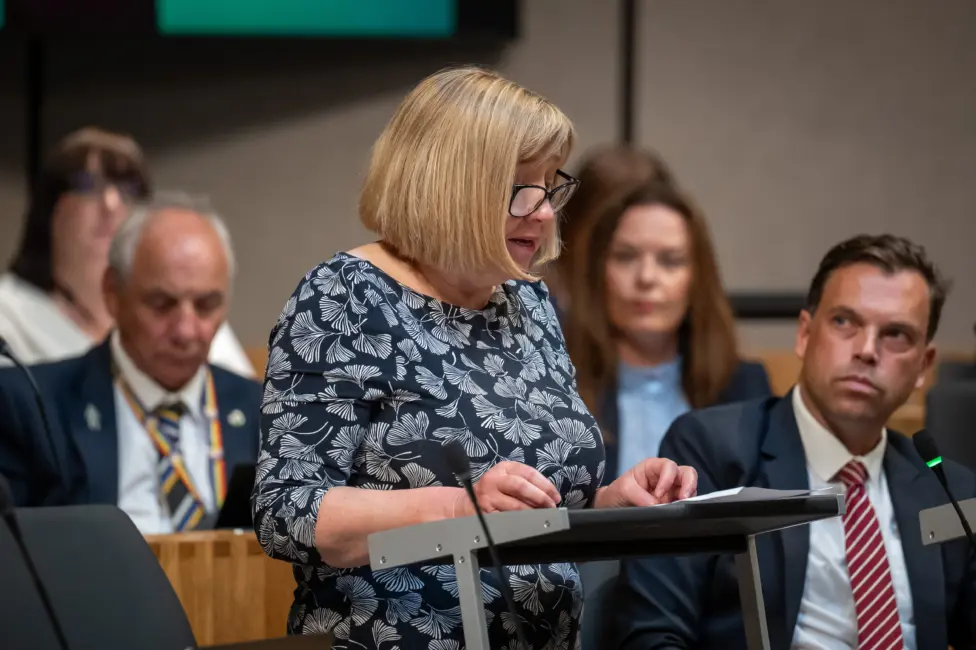
Highlighting the importance of treating others with “kindness and empathy”, Labour’s Lynne Neagle drew attention to the benefits of trauma-informed practices in schools.
Discussing her visit to Ysgol Gyfun Llangefni last year, Ms Neagle noted children at the school are met off the bus each morning by staff – an example of the trauma-informed practices in place there.
She said: “The purpose of that is so that those young people know there is always an adult keeping them in mind, and the power of that, especially to a child who doesn’t have strong relationships at home, is incalculable.”
The former education minister told the Siambr that one of the last things she did as minister was to announce new funding for additional mental health and wellbeing support in schools, as well as new funding to develop the introduction of trauma-informed practice in schools.
She called on the new Plaid government to ensure those initiatives continue, adding: “I think there is consensus around supporting our young people with strong relational practice, and I hope that, regardless of political differences, we can all agree on that.”

Sam Rowlands, the Conservative spokesperson for families, spoke of the importance of funding for organisations supporting those living with trauma.
Mr Rowlands shared his experience meeting Stepping Stones – a charity supporting adult survivors of child sexual abuse in his Fflint Wrecsam constituency.
He said one issue the charity raised with him was that it operates with “significant uncertainty” due to much of their funding being allocated on an annual basis.
Mr Rowlands said: “I appreciate that public finances are under pressure, but organisations delivering essential trauma-informed services should not have to spend so much time worrying about whether they will still exist the following year.
“As I say, the people who require that support need to know that services are there into the future as well.”
He called on the cabinet minister for social justice and equality to consider “whether longer term funding arrangements could be introduced for charities”.
He added: “If we’re serious about supporting people who’ve gone through these adverse childhood experiences, we must be serious about providing that sustainable support for the organisations doing this work day-in and day-out.”
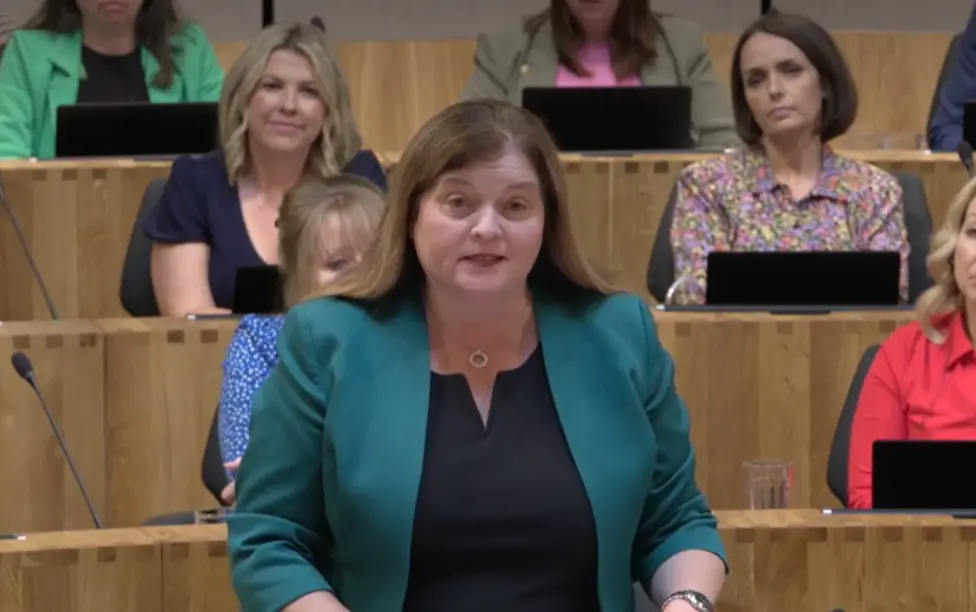
Deputy First Minister Sioned Williams said it is “quite clear” action must be taken on adverse childhood experiences – and said preventing ACEs is “not only critical to the health and wellbeing of individuals, it’s crucial to the wellbeing of our nation”.
Ms Williams, who is also social justice and equality minister, continued: “The cost of not doing so impacts not only the individual in terms of the lost opportunity to enjoy a long, happy, healthy and productive life, but is also felt by families, communities, public services, and our economy.
“One study that looked at the financial cost of ACEs in England and Wales estimated that the annual costs were nearly £43 billion, equivalent to around £1,800 per household per annum. So, as well as a moral obligation, we have an economic imperative to act on ACEs.”
Ms Williams pointed to Plaid’s early years programmes, which aim to identify and prevent adverse childhood experiences early and offer timely support.
She recognised the importance of “taking a cross-Government, system-wide, holistic approach to tackling childhood adversity and trauma, guided by the evidence and best practice.”
Concluding her response she added: “A commitment to working in an ACE and trauma-informed way is already embedded within Welsh Government policies, programmes and strategies, but I will continue to encourage and push for this as new policies and programmes are developed, and to ensure good practice is continued and shared.”
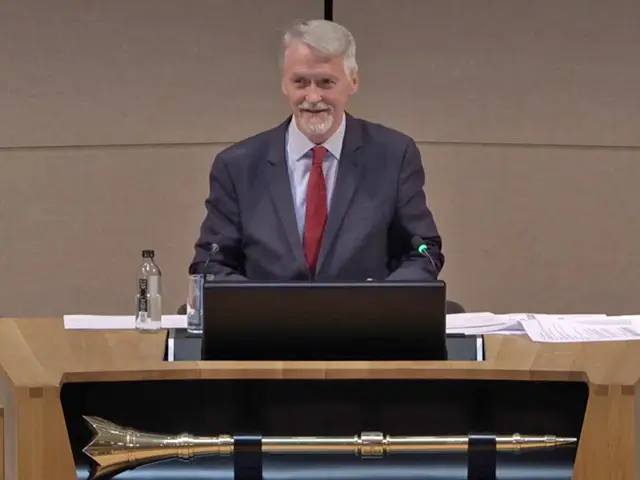
Huw Irranca-Davies responded to the debate in his role as Llywydd and chair of the Senedd Commission.
Describing the debate as one of “profound importance”, Mr Irranca-Davies stressed the impact of trauma on individuals and Welsh society as a whole.
He told his colleagues in the Siambr the Senedd Commission “firmly recognises” the importance of considering how working practices, services, and engagement can reflect an understanding of trauma.
The Llywydd emphasised the commission’s commitment to both increasing awareness of the impact of trauma among MSs and promoting the approaches that put individuals at the centre of services.
Closing his response, Mr Irranca-Davies said: “The matters raised in this motion highlight not only the challenges associated with trauma, but also the opportunity and the responsibility for public bodies to respond thoughtfully and effectively.
“The Senedd Commission will continue to reflect on how its role, responsibilities and services can contribute to this aim in a manner consistent with its duties and its resources.”
The motion was agreed with no objections.



Crime14 hours ago
Teacher stabbing trial: The first week of evidence
Jury hears accounts of alleged planned classroom attack, teacher’s fear she was dying, and boy’s words after leaving school A...


Community17 hours ago
Haverfordwest Castle refurbishment reaches new heights as roof goes on
Major milestone reached in project to transform historic gaol building into flagship visitor attraction A MAJOR milestone has been reached...


Business2 days ago
Pembrokeshire lands £98m share of Wales marine energy boom
New industry report says county has received the second highest level of marine energy investment in Wales, supporting more than...
Crime2 days ago
First aider tells jury teacher was “crying, shaking” after classroom stabbing
A SCHOOL first aider has told a jury that teacher Vicki Williams was “crying, shaking” and in “complete shock” after...


Crime3 days ago
Teacher feared she was dying after Milford Haven classroom stabbing
A TEACHER allegedly stabbed in the head at Milford Haven Comprehensive School told a jury she feared she was dying...


News3 days ago
Farage to resign as MP and fight Clacton by-election amid finance row
NIGEL FARAGE has announced he will resign as MP for Clacton and stand again in the by-election he intends to...
Crime3 days ago
Teacher tells jury there were ‘no issues’ with accused pupil hours before ‘stabbing’
Milford Haven teacher gives evidence as trial of 15-year-old continues at Swansea Crown Court A TEACHER allegedly stabbed at Milford...


News3 days ago
Major incident stood down after fire at Impala Terminal in Milford Haven
Fire involved decommissioned oil tank containing residual crude oil and around 60 cylinders A MAJOR incident declared during a fire...


News3 days ago
Large fire breaks out at Impala Terminal in Milford Haven
Black smoke seen for miles as emergency services respond to incident at former Puma Energy site A LARGE fire has...
Crime4 days ago
Prosecution outlines ‘planned attack’ as Milford Haven teacher stabbing trial opens
Jury hears teenager allegedly brought kitchen knife into school before teacher was stabbed in the head THE JURY in the...
-
 Education7 days ago
Education secretary vows to tackle ‘root causes’ of antisocial behaviour in schools
-

 Education7 days ago
Ysgol Glannau Gwaun celebrates prestigious Gold Active Travel award
-

 Community7 days ago
Closure-threatened Stepaside school expected to remain open
-
 Education7 days ago
First Minister pressed on biological sex, additional learning needs, and NHS jobs
-

 Farming3 days ago
Pembrokeshire slaughterhouse given urgent improvement rating after audit failure
-
News3 days ago
Large fire breaks out at Impala Terminal in Milford Haven
-
 Education4 days ago
Council failed Welsh language standards over school closure
-

 Entertainment2 days ago
Swing and big band classics heading to Torch Theatre