


News
Badger and the pick of the pops


 OVER the last couple of weeks, even by his own benighted standards, Badger has been a gloomy soul. However, readers, this week Badger resolved to strike an altogether lighter and less sombre note; with what is, admittedly, variable success.
As Badger was listening to the wireless the other day he slipped back into a time warp. There he was, Tony Blackburn, who sounded as gruesomely cheery as Badger remembered from his childhood. Tone was playing the top twenty selling singles from 1985. At that time it took significant sales to get into the top twenty, let alone the top ten, and it was not uncommon for singles to sell in the hundreds of thousands.
For those of Badger’s readers who are not familiar with the concept, a swift history lesson is in order. In a world before CD’s, and long before downloads, the purchase of seven inch disks of vinyl to be played on a Hi-fi turntable – or even, if one was lucky enough, a music centre. In fact, music centres gave one the option of just recording the top forty and adeptly editing out the disc jockey banter between records: particularly useful for avoiding Bruno Brookes.
Anyway, Badger digresses. There Badger was, back in 1985, with Tony Blackburn doing the top twenty-selling singles of the year.
1985: The year of The Smiths, The Cult, The Cure, The Style Council, Bruce Springsteen, Prince. Badger settled down for a treat.

Oh dear, readers, oh dearie, dearie, dearie me.
Badger listened aghast.
Apparently, when Morrisey sang the lyrics ‘the devil will find work for idle hands to do’, the thing the devil found for idle hands to do was to buy singles perpetrated by Jennifer Rush, Barbara Dickson & Elaine Paige, and Foreigner.
Asbestos-lunged American power-ballad diva, Jennifer Rush bellowed The Power of Love to five weeks at the top of the chart in October. As Badger discovered to his horror when researching this article – La Rush had recorded the UK’s best-selling single by a solo female artist until overtaken by something equally interminable by Whitney Houston several years later.

Memory, not the most reliable of mediums at the best of times, had somehow preserved for Badger the memory of Walls Come Tumbling Down, Between the Wars, and Close to Me, but erased Easy Lover, and the knuckle-whitening horror of Frankie.
Now, Badger is many things but he is no musical elitist. He can be found a-shuffling his paws along to tunes – if you excuse the pun – of any stripe. But the discovery of precisely what had been a hit when the world was young and green came as a mortifying surprise to Badger. 1985 was no golden age of popular music, it was an age right up there with the horror of times when young girls chanted for the Bay City Rollers or David Cassidy.
Readers, it was an age of Phil Collins.

Phil-bloody-Collins. I mean it is not as if Genesis was not quite bad enough, Phil had to distil its essence, cube it and record it. Those are not only musical crimes, readers: they are crimes against humanity. Phil Collins constitutes the final proof of the proposition that the only band in which the drummer was the most talented member was Nirvana.
And it came to Badger that much of the mid-80’s had been erased from Badger’s mind by a combination of Phil Collins and Margaret Thatcher. Shaken by the sheer awfulness of the period, musically and politically, Badger had expunged its recollection and retained only the memory of little shafts of light to illuminate the gloom.
On reflection, the whole period from, say, 1982 to the end of 1990 seems a little hazy. Not so much never glad confident morning again, as an abrupt break in cultural transmission that only picked up again a long time later. Lager and despair might have had something to do with that, readers.
But still Tony Blackburn endures: we are now past post-modern irony – way past Smashy and Nicey territory -and into the realms of complicity.
We know he is corny, we know he has hung around longer than a fart in a freezer, but Tony Blackburn is a reminder to us of a time when what went to the top of the charts had a certain cultural currency.
Popular music is less a sign of our times than a diary marker in our memories. If pressed to remember a specific day or month, you might fail. But people always remember what they were doing when they first became aware of a certain song, or a certain artist.
The old joke about innumerable progeny being conceived to the melodic rumbling of Barry White probably has a certain ring of truth about it; although in Pembrokeshire in the 1980’s, Badger is pretty sure that it was more likely to be to the strains of Hi Ho Silver Lining leeching through the windows of the village hall into a darkened car park at the end of a disco. Or possibly to the apparently endless long version of Freebird if you ventured out to The Old Rectory near Nash of fond Badgery memories.
The truth about the eighties, is that like Auden’s 1930’s, they were a low, dishonest decade. Their altitude and dishonesty is worse than some and better than others. (Don’t get Badger started on the 1970’s and the type of modern comedian who asks the audience whether it remembers Spangles.)
For all the gleaming newness of the now, and in the knowledge of its gloomier corners, the past still has its pull. Even now, even after Badger has discovered the unfortunate musical truth about 1985, his memory insists that for the portion of the year that Little Red Corvette was not number one, She Sells Sanctuary was in its stead.The thing about nostalgia, readers, is that nothing can kill it. Not even the truth.



Letterston racing family at centre of BHA ruling as two winners are disqualified
TWO Pembrokeshire horse trainers from Letterston have been fined £5,000 after two racehorses failed post-race drug tests, leading to both animals being stripped of race victories.
Peter and Mickey Bowen, father and brother of champion jockey Sean Bowen, appeared before a British Horseracing Authority disciplinary panel on Thursday (May 28).
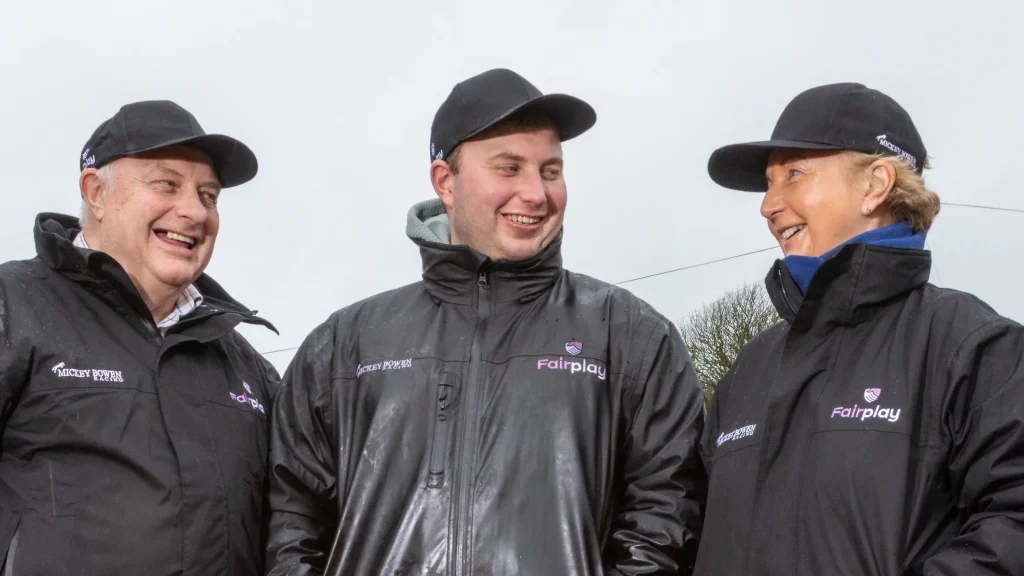
The father-and-son training partnership was operating under the same licence at the time of the positive tests, although Mickey Bowen has been the sole licence holder since May 2025.
The pair were fined £4,000 for breaching Rule (K)2.2, which states that no category B substance may be present in a horse’s system on the day it is engaged to run.
They were also fined a further £1,000 for breaching Rule (D)24, which requires trainers to keep clear and accurate records of medication given to horses in their care within 48 hours of treatment.
Two horses disqualified
The disciplinary action relates to Flying Fortune and Olivers Travels, both of which have now been disqualified from wins in 2024.
Flying Fortune has been stripped of victory in the Grade 2 Persian War Novices’ Hurdle at Chepstow on Friday (Oct 11, 2024).
The race is regarded as one of the key early contests of the National Hunt season, and the win had been a major success for the Bowen yard.
Racing reports at the time described it as a family affair, with Flying Fortune trained by Peter and Mickey Bowen and ridden by James Bowen. The mare was sent off 2/1 favourite and won by seven-and-a-half lengths.
However, a post-race urine sample later revealed the presence of procaine, a local anaesthetic.
The race has now been awarded to Intense Approach, trained by John McConnell.
Second winner loses race
Olivers Travels has also been disqualified from a 2m7f handicap chase at Worcester on Wednesday (Aug 21, 2024).

A post-race urine sample revealed the presence of dexamethasone, a corticosteroid commonly used to treat inflammation or allergic reactions.
That race has now been awarded to Galloping Pride, trained by Emma Lavelle.
The BHA said the case was dealt with by way of a plea agreement approved by the independent disciplinary panel.
A BHA statement said: “Following this morning’s hearing before the independent Disciplinary Panel, the Panel has approved a Plea Agreement.
“The penalty for breaching Rule (K)2.2 is a £4,000 fine and (D)24 a £1,000 fine.
“The two horses involved, Olivers Travels (IRE) and Flying Fortune (IRE), will be disqualified from their respective races at Worcester on 21 August 2024 and Chepstow on 11 October 2024.”
The ruling does not suggest any wrongdoing by the jockeys involved. The disciplinary action was directed at the trainers over the presence of prohibited substances on race day and failures in medication record keeping.
WEEKEND EVENTS TO MARK LANDMARK ANNIVERSARY
THE SALVATION ARMY in Tenby is celebrating 140 years of service to the town, with a weekend of music, worship and community events.
The church and charity was founded in Tenby in 1886, with its arrival described at the time in The Salvation Army’s magazine The War Cry as an “invading party”.
Although some locals were initially sceptical, the movement quickly became established and has remained a trusted presence in the town for generations.
Today, The Salvation Army in Tenby continues to offer practical help and support to vulnerable people, including emergency accommodation, employment counselling and food assistance. It also runs two weekly coffee mornings and Sunday worship.
Anniversary programme
Events begin on Saturday (May 30), with Tenby Band performing outside the hall from 12:30pm to 1:30pm, where refreshments will be available.
From 3:00pm to 4:00pm, the Divisional Fellowship Band will play at the harbour.
The main Saturday celebration will take place from 7:00pm to 9:30pm at St Mary’s Church, with an evening festival of music featuring the South and Mid Wales Fellowship Band and Wales Fellowship Chorus.
On Sunday (May 31), a morning service will be held at St Mary’s Church House at 10:30am.
This will be followed by an open-air meeting in Tudor Square from 3:00pm to 4:00pm, echoing The Salvation Army’s earliest tradition of outdoor preaching.
Senior leaders visit Tenby
The celebrations will also welcome two of The Salvation Army’s international leaders, Commissioner Edward Hill, Chief of the Staff, and Commissioner Shelley Hill, World Secretary for Women’s Ministries.
Commissioner Edward Hill said: “It will certainly be a celebration of faithful and compassionate service to a beautiful community dating back to the early days of the Movement.
“We anticipate being inspired not only by the rich heritage and ongoing ministry of The Salvation Army in Tenby, but also by its vision for the future, continuing, in the name of Jesus, to shine as a bright light and enduring source of hope for generations to come.”

Legacy of service
The Salvation Army has often stepped forward when Tenby and Pembrokeshire have needed support.
In 1996, following the Sea Empress disaster, when 72,000 tonnes of crude oil spilled off the Pembrokeshire coast, volunteers helped provide food and support to emergency workers in remote areas.
Lieutenant Colonel Jonathan Roberts, Divisional Commander for Wales, said: “The Salvation Army in Tenby has a lot to celebrate as it looks back on 140 years of service in the town and wider area.
“It is also important to recognise what it is doing today, offering a helping hand to all. I encourage the members to keep on doing that long into the future.”
Captain Clare Jones, who leads the church in Tenby, said: “We thank God for His faithfulness and for the continued mission through The Salvation Army here in Tenby.
“From its beginnings as an ‘invading party’ singing in the streets to its present role as a place of worship, welcome, and practical support, The Salvation Army continues to serve the community with compassion and hope.”
The Salvation Army in Tenby is based at Upper Park Road, Tenby, SA70 7LT. It can be contacted by emailing [email protected] or calling 01834 843537.

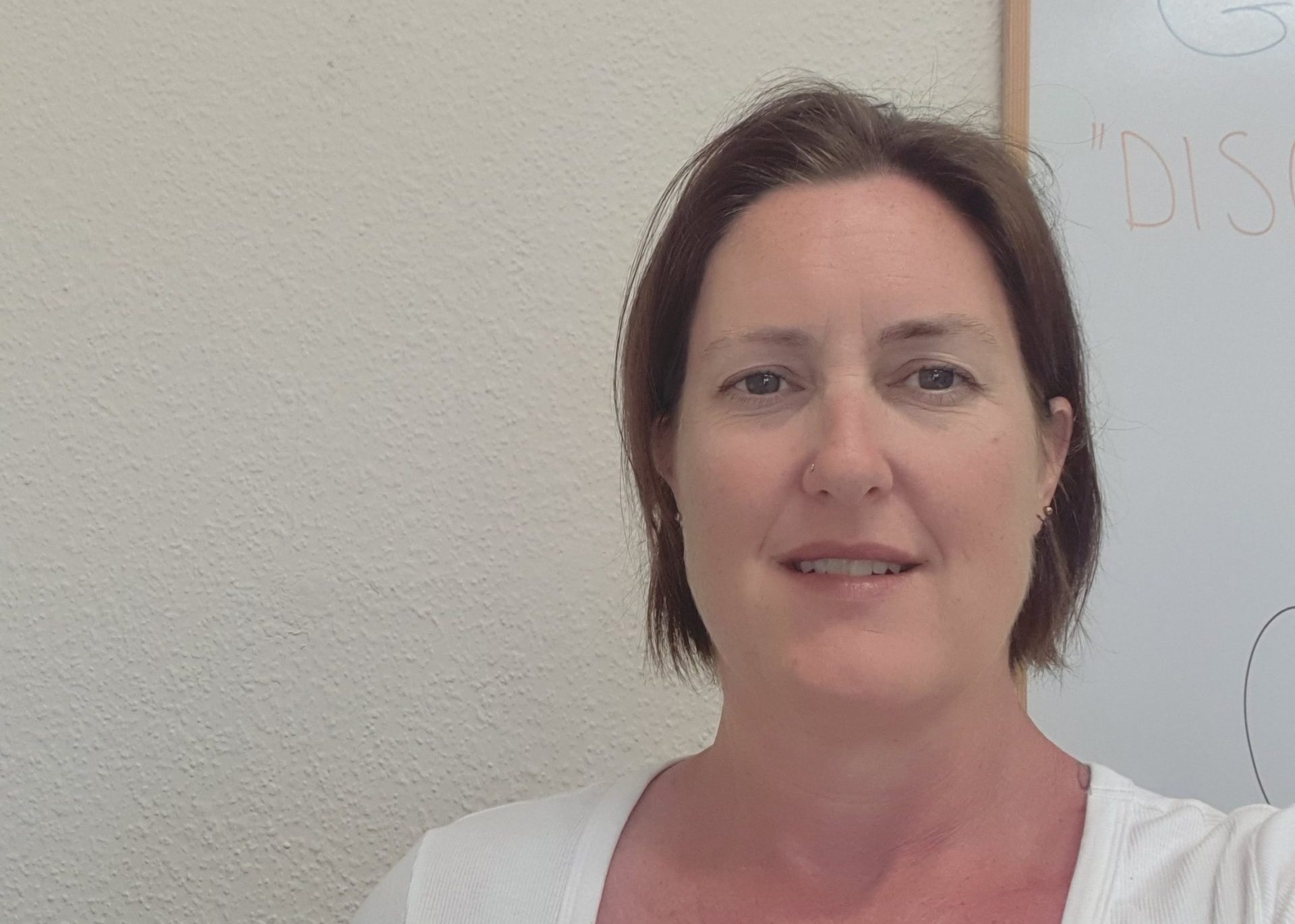
BARCUD Housing Assistant, Amanda Evans, is a brave ‘sole’ as she has agreed to do a Firewalk to help raise funds for Wales Air Ambulance. The charity, which is celebrating its 25th anniversary, relies entirely on public donations to keep both the rapid response vehicles and helicopters running.
The firewalk is a sponsored walk with a difference! It might be the shortest and hottest walk, but it takes strength of mind to complete the challenge of walking five metres, barefoot, over hot coals which reach temperatures of up to 800°C!
Amanda has never done a Firewalk before but last year she changed her mindset and since then the word ‘no’ hasn’t been in her vocabulary. She said, “Doing a Firewalk sounds awesome. I decided it would be a giggle to sign up on behalf of Barcud to raise funds for Wales Air Ambulance. Why not? It would be great to have a crowd at the Firewalk in Aberaeron to show support and cheer me on.”
Day to day Amanda works at Barcud’s office in Glyn Padarn, Aberystwyth. She works as part of a team with housing officers to provide support for tenants.
Barcud is based in mid and west Wales with a 300 strong workforce and 4,500 tenants. This is the group’s first year of fundraising for a specific charity and at the annual colleague conference last winter the majority were in favour of supporting a charity, that, like Barcud, helped and supported those living rurally.
Gail Windley, Wales Air Ambulance’s Events and Partnership Fundraiser said, “We’re delighted to be launching our firewalks this year on our special 25th anniversary year. Fundraisers will take on the ultimate challenge of walking over hot coals to helps save lives across Wales. This is a wonderful challenge aimed at all physical abilities and one that needs some courage.
“Walkers don’t need any previous experience to take part in the firewalk, as all the training will be provided on the day. We want to reiterate that this is not an activity to be tried at home and should only be done during a professionally organised event.
“The Charity relies on donations to continue to keep our helicopters in the air and our rapid response vehicles on the road. Fundraising events, like the firewalks, will help to continue this lifesaving service for the people of Wales. It will be an unforgettable day for the participants and their supporters.”
Amanda will be doing her Firewalk at Moody Meadows in Aberaeron from 6pm on Friday, 10th July 2026. Any donations to support Amanda, and Barcud reach its fundraising target of £5,000 would be very gratefully received. Click here to support Amanda online: https://firewalks.walesairambulance.com/amanda-evans



News10 hours ago
Lifeboats and helicopter join search for missing person off Broad Haven
SEARCH teams carried out a major operation at Broad Haven after reports of a missing person. Little and Broad Haven...

News23 hours ago
Multi-agency rescue after child falls on rocks while coasteering
Child airlift requested after four-metre fall near Lydstep A CHILD was rescued from rocks near Lydstep after falling around four...


News1 day ago
Police investigate ‘arson’ after vehicle fire spreads to property in Pembroke
A VEHICLE is believed to have been deliberately set alight during an alleged arson in Pembroke in the early hours...

News1 day ago
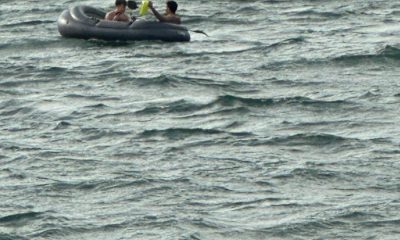
Four rescued after dinghy deflates off Pendine
FOUR people were rescued off Pendine on Wednesday evening after Tenby’s all-weather lifeboat was launched to reports of an inflatable...

News1 day ago
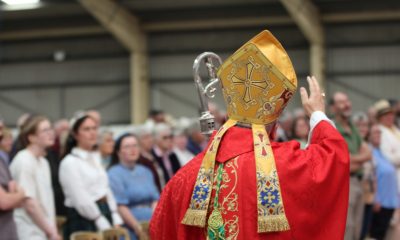
Hundreds attend major Diocese of St Davids gathering
Churches across West Wales urged to take message of faith back into their communities HUNDREDS of people gathered at Carmarthenshire...


News1 day ago
Vehicle destroyed in early morning fire in Pembroke
POLICE are investigating after a vehicle was destroyed in an early morning fire in Pembroke. The incident happened in the...


Climate3 days ago
Pembrokeshire named among Wales’ green economy hotspots
New analysis says the county’s net zero sector supports 1,600 jobs and accounts for 5.3% of local economic output PEMBROKESHIRE...


Local Government3 days ago
Dennison code breach raises serious questions over common sense at County Hall
Standards Committee finds Milford Haven councillor breached code despite claims he only helped another councillor complete paperwork A PEMBROKESHIRE councillor...


Business5 days ago
Plaid energy policy challenged by Labour after Adam Price interview
LABOUR SAYS MINISTERS MUST EXPLAIN COST AND TIMETABLE FOR PYLON PLANS PLAID CYMRU’S approach to energy infrastructure has come under...

Community5 days ago
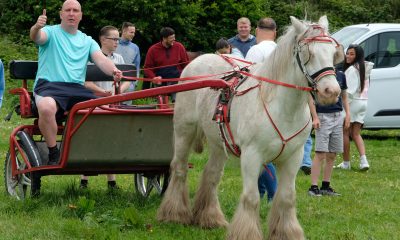
Pembroke Fair praised as well-organised community event
HORSES, STALLS AND FAMILY CROWDS RETURN TO MONKTON FAMILIES, horse owners and visitors turned out in force for Pembroke Fair...
-

 News7 days ago
Watchdog criticises health board over £10m GP contract checks
-

 Health1 day ago
Paul Davies warns health board over Withybush and Bronglais services
-
 Crime3 days ago
Police tip-off leads to drink-drive ban for Pembrokeshire pensioner
-

 Crime1 day ago
Carmarthenshire man sent to Crown accused of 33 historic sexual offences
-

 Crime2 days ago
Steynton motorist banned after drink-drive collision
-

 Crime3 days ago
Warrant issued for man accused of taking wild goldfinches
-
 Crime2 days ago
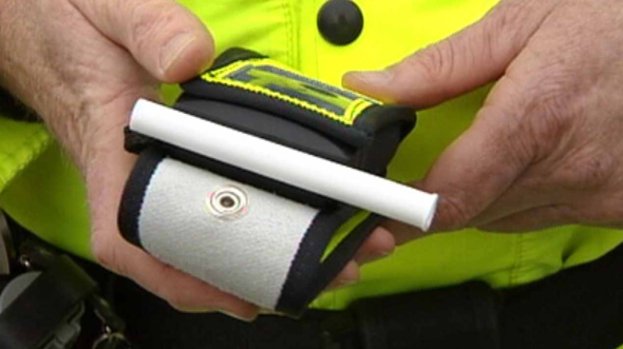
Dock man given suspended prison sentence for third drink-drive offence
-
 Crime3 days ago
Dock motorist fined £1,600 after four speeding offences