


News
Badger and the political animal


 WHAT A tumultuous week it has been since Badger put paw to keyboard for his last article. That nice Mr Bryn Parry Jones has been packed off to his Llangwarren stronghold, there to lend his garden and plot hideous revenge. I am sure that you will be shocked to learn, readers, that there is little doubt that Beloved Chief Bryn’s period of absence was not the result of any sudden moral impulse on the part of the Council’s IPPG leader Jamie Adams. No, leaders: Jamie is not a man given to sudden sentiment or hi-falutin’ principle when it comes to matters political and administrative. Jamie will have made his judgement on political grounds. And that, readers, as far as Badger is concerned, is nothing for which Jamie needs to be ashamed. Badger has written before about politics being the art of the possible. And it is the persistent and disturbing series of public revelations about the CEO’s conduct that has made his “period of absence” not only possible but — to Jamie — positively desirable. “Politics” has become a dirty word. It has fallen almost as low in people’s estimation as politicians themselves. How often do you hear David Cameron or Ed Milliband deride each other for “playing politics” about one or another big issue of the day? It is as though even the leaders of political parties want to deny their own political natures and the manoeuvring and complex interrelationships that brought them to positions of power. Politics, readers, is not a game. Still less does it deserve to have any pejorative unpleasantness attached to it. Politics is, at heart, the way of behaving as a member of a group or a member of society. It is related to concepts such as politeness and the way in which we all interact with each other, whether in groups or as individuals. That
readers, is all “politics” of one sort or another. When Badger sees people complaining about there being “too much politics” or sees buffoons like Nigel Farage bounce up and decry politics as being inherently and fundamentally at odds with the interests of the people (whoever he thinks they are!), Badger cringes. The problem is not that there is too much politics but that there is not enough, readers. So when Badger sees Jamie Adams being criticised for making a political decision, it rather strikes Badger that the IPPG leader is being criticised for being a fish and swimming in the sea. That is not to say Badger in any way endorses the [PPG leader, still less the !PPG members. However, within the constraints of the County Council’s political and administrative system, it was necessary for Jamie to reach a decision that would accrue political advantage to him and to his group and he did. And advantage has flowed. Those members of the MPG prone to bitching and grumbling have been shown to be paper tigers. “Prepared to wound but not to strike”, as the saying goes. Over the last week there have been rumours of wars and unrest within the IPPO. People were said to be ringing round, expressing misgivings at the group’s closeness to Bryn and the choppiness of the waters in which they were sailing. All sorts of names were swirling around as being “concerned”. Having gazed into the future the MPG membership has, however, blinked. Recent events have concentrated their minds on the end of their journey on the gravy train. Let’s say you were an IPPO member, readers. Don’t worry, it’s only pretend. Let’s say you were getting not only your allowance but also remuneration for a committee post and a nice cosy appointment to an outside body that provided prestige, payment or both.
You have it pretty cosy where you are. Not exactly money for nothing, but an income that is not dependent on skills, training or even intelligence. Imagine being an MPG Councillor like Daphne Bush, for example. Now, imagine throwing all of that to the winds on a gamble. You do not need a penetrating intellect of the type Daphne possesses to think that you are better staying inside where it is warm and cosy, instead of venturing forth into uncertainty. And that, readers, is also a political decision. Not a very laudable one, certainly; but understandable and human. Because if the ranks of the opposition had been able to present a united and credible front and some sort of hope to potential IPPG defectors that they would not be cast out into the outer darkness or mocked for being Johnny-come-latelys to the cause of virtue, then the political decision to be made by IPPG members would have been and would continue to be that much harder. Badger has quite a lot of time for Councillor Bob Kilmister, leader of the Pembrokeshire Alliance. He at least has some vision for the future. But Bob’s difficulty is that since its launch the Alliance has not attracted a single new member on the Council. Even Stephen Joseph did not join them. The sentiment is good, the message sound, the ability to deliver remains in doubt. Labour leader Paul Miller is a polarising figure, even within his own party. He shows little sign or ability of being able to form the type of coalition necessary to oust the !PPG. Distracted, perhaps, by the prospect of fighting for Parliament within the next few months, he is possibly too tightly focused on the Paul Miller Project than leading an effective opposition. The Conservatives are a negligible force, demonstrably too close to the IPPG — which is, in reality, carrying out an agenda of semi-privatisation of services
and cost cutting which would be heartily endorsed by their own national party. The fact that the group managed to vote three separate ways on one vital issue is evidence that they are less of a party than a loose gathering. There are notable individual voices on the Council, who cling to the principle that it is the duty of an opposition to hold the executive to effective account. It is tragic for Pembrokeshire that the most able of those voices are unable to cohere around a uniting set of principles and offer a real alternative for Pembrokeshire’s electors. To some of those, but by no means all, Badger suggests that high personal principle is all very well, but some low political calculation would serve Pembrokeshire better. It is into the gap the opposition have left to him that Jamie Adams and the WPC have stepped. Jamie Adams, the man whose party ostensibly was formed as a reaction to party politics, has shown that in the jungle at PCC, and in the present circumstances, he is the most political animal of all.

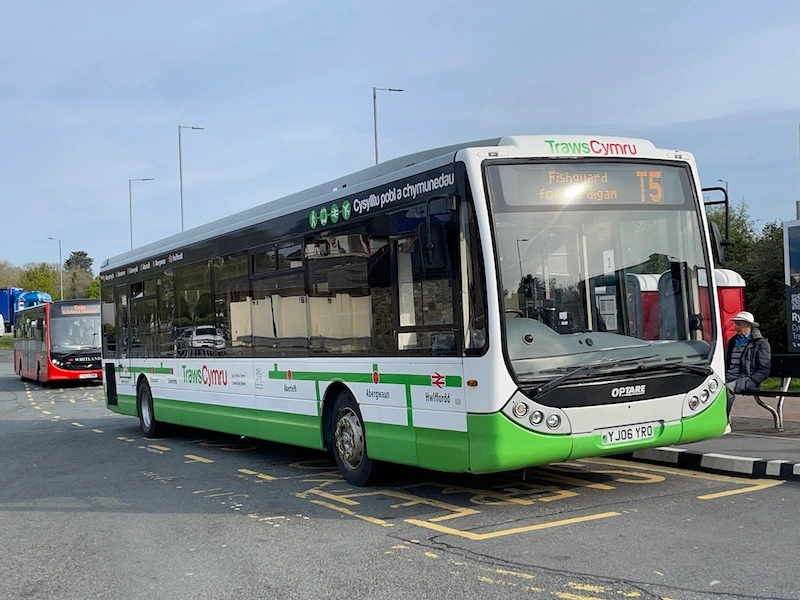
Concerns mount over transparency after Transport for Wales delays response on key documents
QUESTIONS are being raised over the future of a long-promised express coach service linking north and south west Wales, after a Freedom of Information (FOI) request triggered a delay by Transport for Wales.
The proposed express route between Bangor and Carmarthen was identified in a Welsh Government-backed business case in early 2025 as a key project capable of cutting journey times by up to 90 minutes.
However, more than a year after a public consultation was held, there has been no clear update on funding, delivery, or timelines.
Now, a detailed FOI request submitted to TfW is seeking answers — including business case documents, internal communications, and consultation results — but the transport body has said it needs more time to respond.
FOI delay sparks concern
In a reply dated Friday (Mar 27), TfW said it was relying on Section 43 of the Freedom of Information Act, which relates to commercial interests, and that it required additional time to carry out a public interest test.

The authority has indicated it will respond fully by April 28.
But the applicant, Dr John McTighe, has challenged that position, arguing that most of the requested information — including meeting dates, consultation documents, and performance data — cannot reasonably be considered commercially sensitive.
He has warned that failure to provide the non-sensitive material promptly could result in a referral to the Information Commissioner’s Office.
Contrast with north Wales rollout
The FOI request also highlights the introduction of the TrawsCymru T51 service between Wrexham and Rhyl, which was launched in 2025 and is set to receive a fleet of new vehicles this year.

Critics argue that while the north Wales route has progressed quickly, the west-coast express proposal — described as a “headline ambition” for improving north–south connectivity — appears to have stalled.
The Herald understands that the Bangor–Carmarthen route was backed by a positive business case and formed part of wider plans to improve long-distance public transport links across Wales.
Transparency questions
The request seeks details of meetings, internal correspondence, and consultation analysis — including the results of a public consultation which TfW said would be assessed using specialist software.

It also asks for information on how passenger numbers and performance data are monitored across the TrawsCymru network.
Concerns have been raised that key performance data, including annual passenger figures and punctuality statistics, are not routinely published in full.
Calls for clarity
The delay has prompted fresh calls for transparency over how decisions are made on publicly funded transport services in Wales.
There is particular concern in west Wales that strategic investment may not be progressing at the same pace as elsewhere, despite longstanding commitments to improve connectivity along the western corridor.
A spokesperson for Transport for Wales said the organisation is considering where the balance of public interest lies before releasing the requested information, and confirmed a full response will be issued by April 28.
The Welsh Government has been approached for comment.
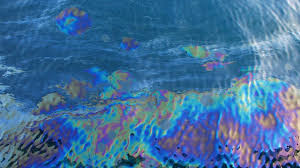
Heating oil believed to have entered water via culvert as investigation and clean-up continue
AN UGENT investigation is underway after a suspected heating oil spill contaminated the Commons Stream and spread into Castle Pond in Pembroke.
Pembroke Town Council first raised the alarm, warning residents of a potential pollution incident affecting the watercourse. Officers from Pembrokeshire County Council’s Pollution Control Team and Natural Resources Wales are now on site working to identify the source and contain the spill.
Further information from local county councillor Aaron Carey suggests the oil likely entered the stream through a culvert near Foundry House, indicating the source may lie somewhere to the south of that location.
The substance is believed to be domestic heating oil. It is not yet known whether the spill was accidental or the result of a possible attempted fuel theft.
Residents in St Daniel’s Hill, South Road and Orange Gardens are being urged to check their heating oil tanks for any signs of damage or unexplained loss.

Witnesses reported seeing a blue-green sheen on the water near the castle side earlier today, raising concerns about the extent of the contamination.
Clean-up efforts are ongoing, and members of the public may notice increased activity around the stream and pond while teams work to manage the incident.
Anyone with information or concerns is advised to contact the relevant authorities.
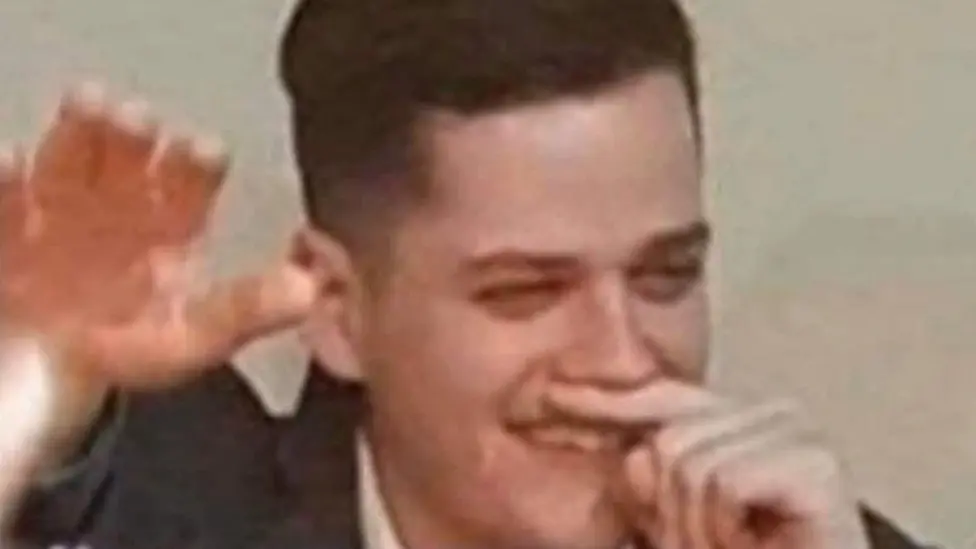
Corey Edwards stood in Pen-y-bont Bro Morgannwg and appeared at national hustings shortly before stepping down
REFORM UK Senedd candidate Corey Edwards has stepped down from the upcoming election, just days after controversy over a photograph appearing to show him making a Nazi salute.
The party confirmed on Thursday (Mar 27) that Edwards had withdrawn from the race, citing mental health issues. A spokesperson said: “Corey Edwards has informed us that he is stepping down as a candidate for the Senedd election this May, citing issues with his mental health.
“We wish him well for the future and hope his privacy can be respected at this difficult time.”
Edwards had been selected as Reform UK’s lead candidate for Pen-y-bont Bro Morgannwg, meaning he was in a strong position to be elected if the party secured a seat in the constituency.
His withdrawal comes shortly after a photograph emerged, first published by Nation.Cymru, which appeared to show him performing a Nazi salute. Edwards said the image, taken in 2019, could be “misinterpreted” and claimed he had been imitating either a scene from Fawlty Towers or Welsh footballer Wayne Hennessey, who was previously involved in a similar controversy.

Reform UK leader Nigel Farage said the image “looked terrible” but confirmed Edwards would not be removed as a candidate at the time, describing him as “a human being” and referencing the sitcom scene as context.
Edwards had also appeared publicly as a Reform representative at a national youth hustings event in Cardiff on Thursday (Mar 19), alongside politicians from other major parties.
In a statement, Edwards said: “Like many young people, I have made mistakes. But I am proud of the person I am today and the values I stand for.”
The Herald understands that Reform UK has not yet confirmed whether a replacement candidate will be selected for the constituency.




Education24 hours ago
Ysgol Henry Tudor reassures parents over Sikh ceremonial kirpan
School says religious item worn by pupil is secured, symbolic and non-functional YSGOL HENRY TUDOR has moved to reassure parents...

Crime2 days ago
Teen jailed after starting fire while others slept
Fire set in shared home left sleeping residents at risk and caused £130,000 damage A TEENAGER who started a fire...

Health2 days ago
GP crisis driving NHS pressure in Wales, Senedd report warns
Falling GP numbers and funding gaps blamed for worsening hospital delays THE NHS crisis highlighted earlier this week is being...

News3 days ago
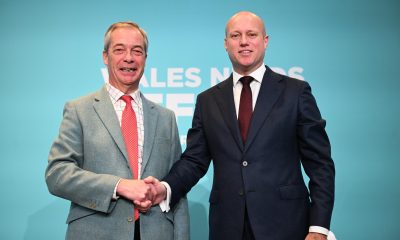
Reform reveals west Wales candidates for Senedd battle
Monkton councillor tops Pembrokeshire list as party confirms Carmarthenshire names and includes Haverfordwest councillor in unwinnable Swansea spot REFORM UK...

Health3 days ago
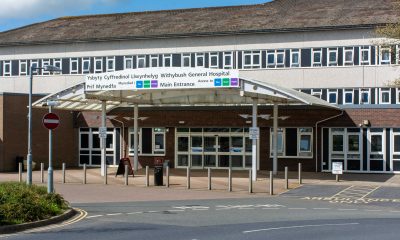
Clash over Withybush Hospital services as Paul Davies challenges First Minister
A HEATED exchange in the Senedd has laid bare growing tensions over the future of hospital services in west Wales....

Crime4 days ago
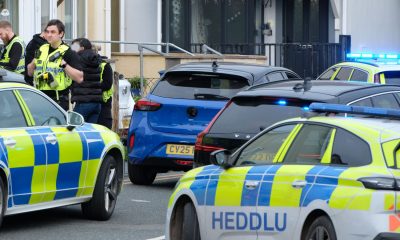
Police stop car in Pennar as three arrested in drugs investigation
Suspected drug driver report leads to major police response and multiple arrests DRAMATIC scenes were reported in Pennar on Monday...

Business4 days ago
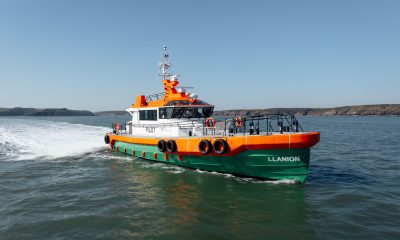
New pilot vessel Llanion arrives at Milford Haven
State-of-the-art 22-metre craft marks reset after £3.6m pilot boat controversy THE PORT OF MILFORD HAVEN has taken delivery of a...


Community4 days ago
Sycamore Gap legacy tree to take root in Pembrokeshire landscapes
A SAPLING grown from the famous Sycamore Gap tree is set to become part of Wales’ protected landscapes — with...

Business5 days ago
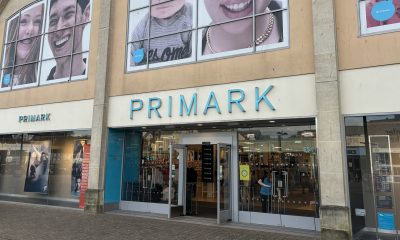
Could Primark be coming to Haverfordwest? Major retailer in talks for former Wilko site
Council confirms advanced discussions as speculation grows over high street boost HAVERFORDWEST could soon see a major high street revival,...

Business5 days ago
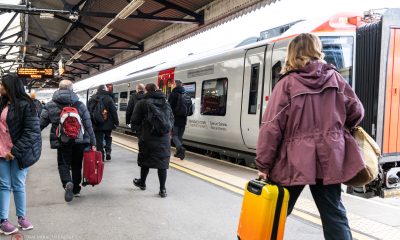
Rail investment ‘could unlock 40,000 jobs and £11bn for Wales’ says new report
RAILWAY stations across Wales could help unlock around 40,000 jobs and more than £11 billion for the economy by 2036,...
-

 Business4 days ago
Taxi fare shock in Milford Haven as drivers switch to meters
-
Business5 days ago
Could Primark be coming to Haverfordwest? Major retailer in talks for former Wilko site
-
 Crime6 days ago
Child rapist found with abuse images after moving to west Wales
-

 Sport6 days ago
Haverfordwest secure bonus-point win over title-chasing Tumble
-

 Community7 days ago
Charlie the ventriloquist doll returns to Pembroke Dock after 100 years
-

 Health4 days ago
Average of 18 deaths a week in Wales linked to A&E delays, figures reveal
-

 Crime6 days ago
Milford Haven drug dealing pub boss who boasted of ‘best coke around’ jailed
-
 Community6 days ago
Broad Haven volunteers secure ‘national asset’ status for nature reserve