


Education
AM’s fears for local higher education



Students given the chance to learn in Welsh face cuts
PLAID CYMRU AM Simon Thomas, has raised fears about the future of local higher education, following a large cut in funding to the sector from the Welsh Government.
The Welsh Government announced its draft budget last month featuring massive cuts to the Higher Education budget, affecting all higher education institutions in Wales, including the Carmarthen-based Coleg Cymraeg Cenedlaethol and the University of Wales Trinity Saint David.
There are 15 staff of the national all-Wales Coleg Cymraeg Cenedlaethol based in the office in Y Llwyfan, Heol y Coleg, Carmarthen.
The Shadow Education Minister: “I’ve been contacted by many people who fear for the future of our universities locally.
“The Welsh language Coleg Cymraeg, a newly founded institution based in Carmarthen, is just one of the higher education institutions which will now be underfunded and struggling to compete.

“Cutbacks of 32% for Higher Education in Wales will take £41million out of universities’ budgets whilst the Welsh Government is increasing its funding for English universities to £90m through its tuition fees policy.
“This is a scandalous admission from this government that it is pursuing short-term headlines instead of making long-term commitments.
“It will make it difficult for universities to widen access to Higher Education for students from all backgrounds, and the Welsh Government has questions to answer over how it intends to ensure a fair playing field for all students.”
An independent report by Universities Wales last October assessed the impact of Higher Education in Wales it discovered that 1512 full-time jobs in Carmarthenshire are generated by university activity and 542 in Pembrokeshire.

The contribution to the local economy was £8.2m in Carmarthenshire and £27.3m in Pembrokeshire.
The Coleg Cenedlaethol ensures more study opportunities for Welsh medium students – in partnership with the universities.
Since 2011 £18m has been invested in universities across Wales by the Coleg, with 115 lecturers appointed in universities in a large number of subjects including: medicine, geography and drama.

Their £1m scholarship scheme has benefited over 600 students that have received bursaries.
When the Coleg Cymraeg Cenedlaethol was established by Welsh Government in 2011, funds were allocated for a period of six years, up to 2017, to implement the recommendations of the report compiled by Professor Robin Williams. More than £30m has been invested thus far in the further development of Welsh medium provision, with the majority of the funding used to appoint new Welsh medium lecturers.
Over 115 new Welsh medium lecturers have been appointed as a result of Coleg funding and an extensive range of other activities are being supported across the higher education sector, including the development and provision of new resources, enhancing the student experience, facilitating collaboration between universities, providing scholarships to students and academic staff training, and working with schools and further education colleges. These activities have already led to a situation where an additional 1,000 full-time students are now studying through the medium of Welsh.
We asked Coleg Cenedlaethol to respond to the cuts and Mr Thomas’s comments.
We received a statement which set out the institution’s viewpoint and considerable concerns about the potential damage caused by a cut in funding.
From the outset, the Coleg was seen as a long-term project to ensure that Welsh medium university education was available to students in a wide range of subjects. The lecturers are distributed across the universities. The fact that so many of these lecturers are early career academics means that there is now a generation of lecturers who will, in time, be able to develop and embed Welsh-medium provision and thereby transform the situation in the universities.
The biggest challenge at present is to maintain what has been achieved during the first five years, and to build on it, at a time of considerable pressure on public funding. In Professor Ian Diamond’s recently published Interim Report, there is a section that deals specifically with Welsh medium provision, including the Coleg Cymraeg Cenedlaethol. It is also stated that further attention will be given to Welsh medium provision during the next phase of the Review. The Coleg believes that this presents an excellent opportunity to establish permanent and sustainable arrangements for maintaining Welsh medium provision in the universities and, in particular, to recognise the additional costs associated with that provision.
In this context, the Coleg is very concerned that short-term decisions in relation to the Coleg’s budget for 2016/17 will undermine the existing arrangements, thereby jeopardising much of what has been achieved, at a time when the Diamond Review could recommend a durable solution.
Recognising the current financial climate and the savings required by publicly funded bodies, the Coleg’s Board of Directors, at their meeting in November 2015, identified savings across the Coleg’s range of activities so that a budget can be set for the academic year 2016/17. The proposed budget would enable the Coleg’s activities to remain viable while discussions take place on the funding arrangements for 2017/18 and beyond. The Coleg has also held constructive discussions with the universities about their commitments to maintain provision following the end of some fixed-term grants provided by the Coleg.
The publication of the Welsh Government’s draft budget for 2016/17, however, creates uncertainty, since there is a possibility of a further and substantial cut in the Coleg’s budget. This is a cause for concern and, for that reason, the discussions are ongoing with the Welsh Government and the Higher Education Funding Council for Wales.
The Coleg does not intend to make any further public comment until those discussions have been completed.
Rebecca Williams, Policy Officer for UCAC education union, told The Herald: “UCAC has very serious concerns about the proposed 40% cut to the Higher Education budget, and indeed about the Welsh Government’s current funding methodology.
“By channelling such a high percentage of the Higher Education budget through students in the form of tuition fee grants, the Welsh Government is ensuring that millions of pounds are flowing from the Welsh budget directly to universities over the border, mainly in England.
“At the same time, by substantially reducing the funding it provides to universities via the funding body (HEFCW), the Welsh Government is undermining its ability to influence the sector in key areas such as parttime provision, increasing access to students from deprived backgrounds, and providing Welsh-medium courses. The clear and immediate consequence of such a cut will be the axing of these crucial types of provision.
“Such a move could be devastating to the nature and quality of university provision, the Welsh economy, and the options available to students of all backgrounds. We call on the Welsh Government to revisit this illconsidered and damaging decision.”
Universities Wales, the body which represents the interests of Universities within Wales were equally concerned and have suggested that the cuts are both in breach of the Welsh Government’s current policy on widening access and constitute a reverse of previous policy commitments. In its submission to the Welsh Government on the issue, the Uni Wales says: “The distribution of the cuts between institutions is likely to be very uneven. At this stage we are unclear how the sector can absorb a reduction of this size in a single year or where the shortfall in income can be made. The impact of the fee and funding changes introduced from 2012/13, for instance, has worked through the system already and will provide no significant additional income for 2016/17. Recruitment for 2016 entry is already in full swing, and growth in fulltime undergraduates from Wales remains subject to an overall limit in the sector.”



Campaigners call for supporters to attend ‘crucial’ County Hall meeting in bid to save village school
SUPPORTERS fighting to save Ysgol Clydau are urging parents, children and members of the community to gather at County Hall in Haverfordwest next month as councillors prepare to make a final decision on the school’s future.
The grassroots campaign group Save Ysgol Clydau – Cadw Clydau yn Gadarn has called on as many people as possible to attend an extraordinary meeting on Monday, June 15, describing it as a “crucial” moment in the battle to keep the school open.
Campaigners are asking supporters to gather outside County Hall from 9:00am ahead of the meeting, which is due to begin at 10:00am.
In a public appeal shared online, organisers said the day would likely be emotional regardless of the outcome, but stressed the importance of showing a united front.
A spokesperson for the campaign said: “We need as many parents, children, and supporters as possible at County Hall, Haverfordwest to help save our school.
“A final decision will be made. Please do your very best to attend and stand with our community.
“It will be an emotional day, whatever the outcome — but together we can show the county and the country that we are here, united, and determined to be heard.”
The campaign has become a rallying point for local families concerned about the future of education in rural communities, with supporters arguing that closing the school would have a lasting impact on village life and young children.
Promotional material shared by the group encourages families to bring children and “their voices” to the demonstration, with campaigners insisting: “Together we are stronger.”
The Herald understands the meeting is expected to draw strong local interest, with campaigners hoping a large turnout could influence councillors ahead of what may be a decisive vote.
Ysgol Clydau has been at the centre of an ongoing debate about the future of smaller rural schools in Pembrokeshire, with supporters arguing the school plays a vital role at the heart of the community.
The meeting takes place at County Hall, Haverfordwest, on Monday, June 15, with supporters gathering from 9:00am.
Students recognised as exhibitions and performances continue across Wales and beyond
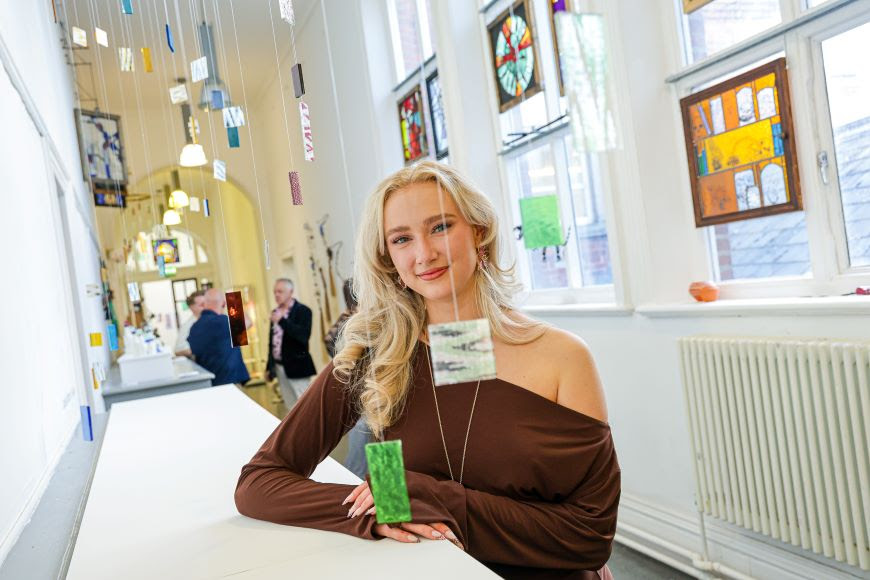
THE UNIVERSITY OF WALES Trinity Saint David has celebrated the work of emerging artists, designers and performers through its annual Summer Degree Shows.
The exhibitions and performances, held during May and continuing into the summer, showcase final-year projects from students across a wide range of creative disciplines, including Fine Art, Graphic Design, Surface Pattern and Textiles, Photography, Illustration, Automotive and Transport Design, Acting and Adventure Filmmaking.

Events have taken place across Swansea, Carmarthen, Cardiff and London, with major showcases held at Swansea College of Art’s Dynevor and Alex buildings. Performances have also been staged at Yr Egin in Carmarthen, with further exhibitions planned at national venues.
A key part of the celebrations was the annual prize-giving ceremony at Dynevor in Swansea, where students were recognised for outstanding achievement.
Aimiee Brown and Branwen Jones received the Elysium Sculpture Award, with two £500 prizes presented for excellence in sculptural practice.
The Hayden John James Prize awarded £1,000 prizes to undergraduate student Tilly Lewis and postgraduate student Andrew T Gardiner.
Surface Pattern student Samantha McGrath received the Elizabeth Jeffries Prize, while Cel Hopkins was awarded the Josef Herman Carolyn Davies Prize, presented by the Josef Herman Foundation.

Illustration student Morgan Stevens received the Rhys Bevan Jones Illustration Prize, while Seren Trodden was recognised twice, receiving both an Old Dyvorians Association President Prize and the Mission Gallery Makers Award in collaboration with the Jane Phillips Award.
Other Old Dyvorians Association President Prizes went to Bella Watkins, Rhiannon Hughes, Adam Mayhew, Emi Joy and Becca May.
Jewellery student Jessica Theobald received the ACJ College Jewellery Prize, which includes membership of the Association for Contemporary Jewellery, while Photography student Carys Bristowe-Davies received the Sarah Tierney Award, offering mentoring and access to workshops at Swansea College of Art.
Dr Mark Cocks, Dean of UWTSD’s Wales Institute for Science and Art, said: “The Summer Degree exhibitions celebrate the inspirational creative talents of our students.
“The innovation and diversity of the student work is testament to their dedication and creative application of their personal practice. These shows are the culmination of academic study, but also the beginning of professional creative journeys.”

Caroline Thraves, Academic Director for Art and Media at UWTSD’s Swansea College of Art, said the shows provided students with an important professional platform.
She added: “Hosting the Summer Shows is a vital part of our mission at UWTSD. It gives our students a professional platform to share their creativity with the world, celebrates their hard work, and connects them with the industries they are about to enter.”
Lynne Seymour, Academic Director for Design and Performing Industries, said this year’s programme was particularly significant as the university marks 25 years since the first graduates from its Set Design and Production course.
She said: “These exhibitions and performances represent not only the culmination of years of hard work, collaboration and artistic exploration, but also the beginning of many professional creative journeys.”
The Summer Shows continue throughout the season, including Architecture, Engineering and Computing exhibitions at UWTSD’s Swansea Waterfront campus, performances from WAVDA students at Yr Egin and in Cardiff, exhibitions at New Designers and Copeland Gallery in London, and Automotive and Transport Design showcases at the Goodwood Festival of Speed in July.

AS THE NATIONAL Centre for Learning Welsh celebrates its highest ever number of learners – over 20,000 in 2024–2025 – it has announced a new ambassadors scheme with the aim of inspiring even more people to learn, use and enjoy the Welsh language.
The Learn Welsh Ambassadors Scheme will be launched today (May 23) at the Urdd Eisteddfod on Anglesey, as part of the Eisteddfod’s ‘Learners’ Day’ celebrations.
Four high-profile ambassadors have been appointed to the new scheme:
- Aleighcia Scott – singer and DJ, and one of the mentors on S4C’s talent show Y Llais, who will also be honoured with the Green robe at Eisteddfod Genedlaethol y Garreg Las in August.
- Tori James – adventurer and the first Welsh woman to climb Mount Everest.
- Katie Owen – DJ and social media influencer.
- Ian Gwyn Hughes – Head of Public Relations at the Football Association of Wales.
The four ambassadors will represent the Centre, sharing their personal experiences of the Welsh language, and promoting the work of the Learn Welsh sector. They will also support recruitment campaigns, encouraging people from all backgrounds to begin learning Welsh, or to continue their language journey.
The scheme reflects the Centre’s vision to attract and support a wide range of audiences to learn and use Welsh, including workforces, communities, key sectors such as Health and Social Care, the Education Workforce and Sport, young people and families.
The Centre is launching the scheme at the Urdd Eisteddfod. It works in partnership with the Urdd to provide a range of opportunities for the organisation’s staff, and the young people using its services, to strengthen their Welsh language skills or to begin learning the language.
The Centre is also pleased to support the Urdd’s medals for young Welsh learners, the Bobi Jones Medal for learners aged 19 years’ old and above, and the Learners’ Medal for learners aged under 19 years.
Dona Lewis, Chief Executive of the National Centre for Learning Welsh, said: “Creating new Welsh speakers is the Centre’s main aim, supporting them to use and enjoy the language with confidence in their everyday lives.
“I’m pleased to say the Learn Welsh sector is going from strength to strength, with more people than ever completing our courses.
“We’re delighted to welcome a group of passionate ambassadors who will share their experiences of the Welsh language and help promote and celebrate our work. We’re proud to launch this new scheme at the Urdd Eisteddfod, one of our partners.
“The Centre works creatively and in partnership across different sectors, providing one, single learning pathway to becoming a Welsh speaker. We are all here to welcome and support our learners and new speakers at every stage of their language journey.”
Aleighcia Scott said: “I’m delighted to take part in this scheme. Learning Welsh has been an important personal journey for me, and it has opened new doors – both creatively and socially.”

Tori James said: “Learning a new skill can be a bit like climbing a mountain – it can be a challenge, but every small step is a success!
“I’m very pleased to have the opportunity to support people to take their first step into learning Welsh, and to keep going – it’s a journey well worth taking.”
Katie Owen said: “I’d always wanted to learn Welsh, and it has been the best thing I’ve done. The Welsh-speaking community is so welcoming, and the National Centre for Learning Welsh offers so many opportunities to learn and use the language.”
Ian Gwyn Hughes said: “Welsh belongs to all of us, and it has been fantastic to see the positive response to our use of the language at the Football Association of Wales. I look forward to supporting the Centre’s work to extend the use of Welsh in all kinds of contexts.”



Crime14 hours ago
Haverfordwest sex offender jailed over child abuse material
Registered offender used library computers to hide social media accounts A HAVERFORDWEST sex offender who used public library computers to...


Local Government14 hours ago
Milford Haven school redevelopment moves a major step closer
£141.6m scheme could transform education in the town A MAJOR step forward has been taken in the long-awaited Milford Haven...


Crime15 hours ago
Castlemorris man spared jail after knife confrontation over council tax debt
A CASTLEMORRIS man has avoided immediate custody after threatening enforcement officers with a knife during an early-morning visit over unpaid...


News1 day ago
Lifeboats and helicopter join search for missing person off Broad Haven
SEARCH teams carried out a major operation at Broad Haven after reports of a missing person. Little and Broad Haven...


News2 days ago
Multi-agency rescue after child falls on rocks while coasteering
Child airlift requested after four-metre fall near Lydstep A CHILD was rescued from rocks near Lydstep after falling around four...


News2 days ago
Police investigate ‘arson’ after vehicle fire spreads to property in Pembroke
A VEHICLE is believed to have been deliberately set alight during an alleged arson in Pembroke in the early hours...


News2 days ago
Four rescued after dinghy deflates off Pendine
FOUR people were rescued off Pendine on Wednesday evening after Tenby’s all-weather lifeboat was launched to reports of an inflatable...


News2 days ago
Hundreds attend major Diocese of St Davids gathering
Churches across West Wales urged to take message of faith back into their communities HUNDREDS of people gathered at Carmarthenshire...


News2 days ago
Vehicle destroyed in early morning fire in Pembroke
POLICE are investigating after a vehicle was destroyed in an early morning fire in Pembroke. The incident happened in the...


Climate4 days ago
Pembrokeshire named among Wales’ green economy hotspots
New analysis says the county’s net zero sector supports 1,600 jobs and accounts for 5.3% of local economic output PEMBROKESHIRE...
-
 Health2 days ago
Paul Davies warns health board over Withybush and Bronglais services
-
 Crime4 days ago
Police tip-off leads to drink-drive ban for Pembrokeshire pensioner
-

 Crime3 days ago
Steynton motorist banned after drink-drive collision
-
Crime2 days ago
Carmarthenshire man sent to Crown accused of 33 historic sexual offences
-

 Crime4 days ago
Warrant issued for man accused of taking wild goldfinches
-
 Crime3 days ago
Dock man given suspended prison sentence for third drink-drive offence
-

 Crime4 days ago
Dock motorist fined £1,600 after four speeding offences
-

 Business6 days ago
Plaid energy policy challenged by Labour after Adam Price interview