


News
Students raise funds for Paul Sartori



Delighted: Paul Sartori Fundraising Co-ordinator, Judith Williams (pictured centre with the cheque) with first year Business students
PEMBROKESHIRE COLLEGE first year Business students presented the Paul Sartori Foundation with a cheque for £482.21 having raised funds by running a charity fair.
Tasked with planning an event to raise money for charity, the students were quick to nominate the Paul Sartori Foundation after some members of the group had received their support when a family member fell ill.
The first year students took control of the project which saw them scouring all 12 Paul Sartori shops in the county for items to sell at the Charity Fair, held at the College. The students made delicious waffles to draw customers in and selected a giant teddy bear for a ‘Name the Teddy’ raffle. Aiming to appeal to fellowstudents, the group also ran a game stall selling turns on an X-Box for 50 pence a go.
First year Business student, Ross Mathias said: “It was great to raise money for the charity. They were really supportive and came in to give us promotional t-shirts and banners which gave a professional look to the fair”.
The students benefited greatly from working with a local charity, not only because the charity participated in their event but because the students have seen first-hand the invaluable support that they provide: “It’s good to help a local charity that will support a lot of people who are close to us” said fellow student Mari Evans.

The Paul Sartori Foundation provides hands on care and equipment loan in the homes of people living in the later stages of any life limiting illness. The services are provided free of charge, 24 hours a day, 365 days a year and rely heavily on the generosity of Pembrokeshire people who raise funds for these vital services.
Working on this live project has given the Business students experience and useful real-life skills that will benefit their CV, future job interviews or university applications.
“Myself and other members of the team were delighted to see the commitment and enthusiasm of the students and were thrilled to have been selected by the students as their charity of the year and to work alongside them at this event” added Judith Williams, Fundraising Coordinator at the Paul Sartori Foundation.
Want to see the group in action? Catch the Spring Fair at Pembrokeshire College running from March 23. Visit pembs.ac.uk/courses for information on courses available at Pembrokeshire College.



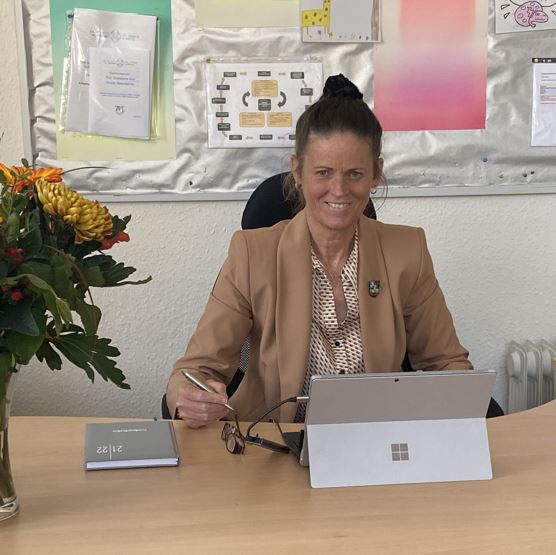
Rachael Thomas describes Ysgol Penrhyn Dewi as her ‘third child’ as she hands over leadership of the school to Sion Mason Evans
AN INSPIRATIONAL Pembrokeshire headteacher has said an emotional goodbye to pupils, parents and staff after completing 37 years in education.
Rachael Thomas is stepping down as headteacher of Ysgol Penrhyn Dewi VA in St Davids, a school she described as her “love, passion and reason for being”.
In a final letter to the school community, Mrs Thomas said she had been dreading the day when she would have to say farewell.
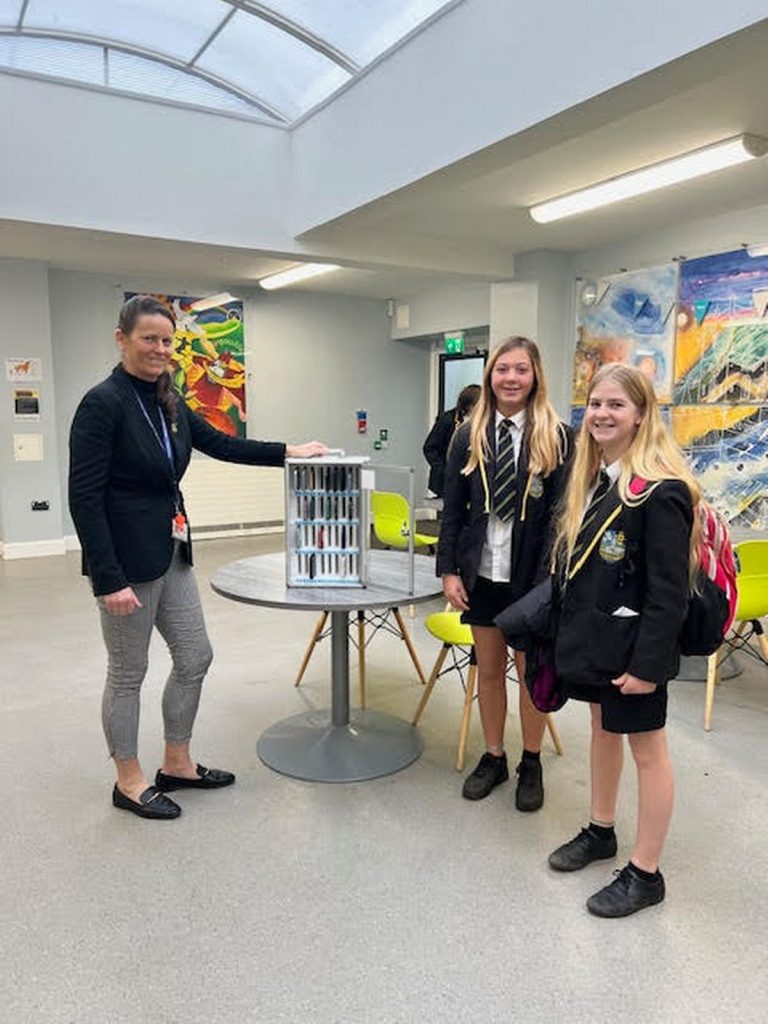
She wrote: “Ysgol Dewi Sant and Ysgol Penrhyn Dewi have been my third child, my love, passion and my reason for being.
“However, it gives me great comfort and pride to leave at this point, with strong leadership and a fantastic team of staff to take it to the next level.”
Mrs Thomas thanked parents and carers for trusting the school with their “most priceless possessions”, their children, and paid tribute to the staff, governors, Diocese, local authority and wider community who had supported her throughout her career.
She said she felt privileged to have worked at “the best school on the planet”, praising its pupils, staff and families for helping to create a nurturing culture based on love and respect.
Under her leadership, the 3-to-16 school has expanded across its campuses and developed a reputation for academic achievement, inclusion, outdoor education, sport and the performing arts.
During the past academic year, pupils helped the school achieve the Armed Forces Friendly Schools Cymru Bronze Award, the Peace Mala Gold Award, the Careers Wales Gold Award, two Green Flag Awards and a Climate Cymru Challenge Award for protecting and restoring nature.
The school also opened a new secondary learning resource centre and two additional classrooms on its Dewi Campus.
Pupils have enjoyed sporting success at local, regional and national level, with the school becoming Welsh champions and runners-up in tennis and basketball.
There have also been school productions, overseas visits, residential trips and a return visit from the school’s partners in Mahoeleng, Lesotho.

Mrs Thomas said the school remained committed to providing high expectations and opportunities for every pupil.
She wrote: “Pupils feel loved when they walk through the door.
“When they leave, this love continues, hence the knowledge that you never really leave YPDVA and YPDVA never leaves you.”
Several other members of staff are also leaving or changing roles at the end of the academic year.
Mrs Bramley has completed her work as assistant headteacher for teaching and learning but will continue as a supply teacher and lead choir and performing arts activities.
Miss Pullin is leaving to pursue a career with the National Park, while Mr Jeff Thomas is retiring, although the school hopes he will return to support its extended learning programme.
Mrs Brockbank is coming to the end of her time as a learning support assistant on the Dewi Campus, while Father Luke Spencer is leaving his teaching role to pursue his ministry.
The school will welcome a number of new staff in September.
Catherine James will become the new additional learning needs coordinator and assistant headteacher for inclusion, while Amy Morgan will become the school’s first deputy headteacher.
Former pupil Rhys Meredith Barrett will join as a full-time music teacher, and Kieran Mackay will become a teacher of English.
Sion Mason Evans will take over as headteacher.
Mrs Thomas said she was confident her successor would embrace the culture and vision of the school and take it into the next stage of its journey.
She concluded her farewell message with the words associated with St David: “Be joyful, keep the faith and do the little things.”
She signed off simply: “Llawer o gariad.”
The school community is now preparing to begin a new chapter, while recognising the enormous contribution Mrs Thomas has made to generations of children and families in St Davids and across Pembrokeshire.
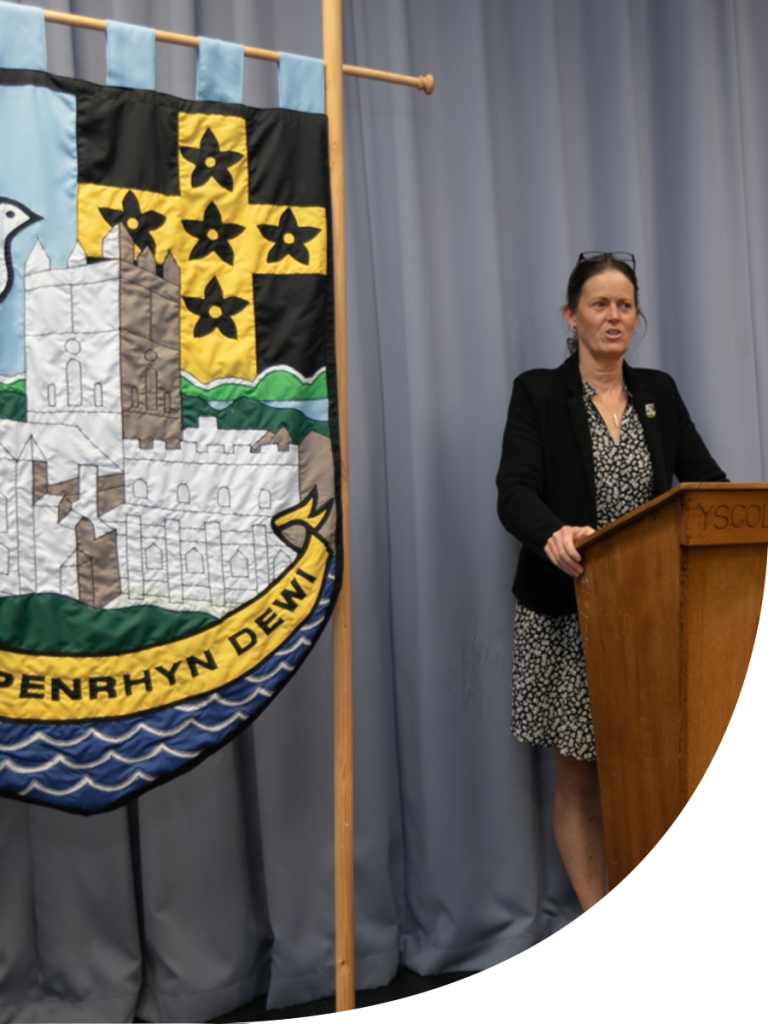


Crown says teenage pupil planned classroom assault and intended to kill, as attempted murder trial reaches closing speeches
LIVE FROM SWANSEA CROWN COURT
A TEACHER accused of being stabbed by a pupil survived only because she fought for her life, a jury has been told during the prosecution’s closing speech.
Christopher Rees KC said the teenage defendant deliberately selected the largest knife he could find, concealed it in his school bag and waited until history teacher Vicki Williams was alone before attacking her.
The 16-year-old, who was 15 at the time and cannot be named for legal reasons, denies attempting to murder Ms Williams at Milford Haven School on Thursday, February 5.
He also denies inflicting grievous bodily harm with intent and unlawful wounding. He has admitted possessing a knife on school premises.
Proceedings at Swansea Crown Court began on Friday (Jul 17) with Judge Paul Thomas KC giving the jury legal directions.
The judge told jurors they were the sole judges of the facts and must decide the case using the evidence, their collective experience and common sense.
He reminded them that the prosecution carried the burden of proving its case and that the defence did not have to prove anything.
Jurors were instructed to decide the case with their “heads, not their hearts” and to put sympathy and emotion aside.
Judge Thomas explained that if they were not sure the defendant deliberately stabbed Ms Williams, and believed the injuries were or might have been accidental, they must acquit him of all three charges.
However, if they were sure the stabbing was deliberate, they would then have to determine what the defendant intended.
An intention to kill would amount to attempted murder, while an intention to cause really serious harm could lead to a conviction for grievous bodily harm with intent. If neither intention was proved, jurors would then consider unlawful wounding.
Opening the prosecution’s closing speech, Mr Rees told the jury the central question was whether they accepted the account given by Ms Williams or that of the defendant.

“You don’t try this case on sympathy, not for Vicki or the defendant,” he said.
“You try the case on the evidence.”
Mr Rees said the prosecution’s case was that the incident was a calculated and planned attack rather than an accident during a struggle over the knife.
“This was no accident,” he said.
The prosecutor said the teenager had taken the largest knife from the kitchen at home and carried it secretly in his school bag throughout the day.
The defendant has told the jury that he brought the knife to school to show off to his friends but did not intend to use it violently.
Mr Rees said that explanation was “a lie from start to finish”, pointing out that the teenager had not shown the knife or mentioned it to any of his friends.
He said the weapon had been kept hidden because the defendant did not want anyone to intervene or alert a teacher.
The prosecution alleged that the teenager waited until the end of the school day, followed Ms Williams into her classroom and closed the door when she was alone and vulnerable.
Mr Rees said the defendant then moved behind the teacher and deliberately struck her in the back of the head with the knife.
The jury was shown CCTV footage of the defendant approaching the classroom before initially walking away.
Mr Rees claimed he had abandoned his first approach because Ms Williams was not alone and returned minutes later when he could carry out his alleged plan without being seen.
The prosecutor said the defendant had used external doors to approach the classroom because they provided a clear view inside.
He also reminded jurors of an incident two days earlier, on February 3, when one of the defendant’s friends kicked a door to Ms Williams’ classroom.
The defendant and other pupils were captured on CCTV running away and laughing following that incident.
Mr Rees said it was “no coincidence” that Ms Williams was allegedly attacked two days later.
The court was also reminded that the defendant had refused to attend a lesson on February 4, leading to his mother becoming angry with him.
“When he left the house on February 5 with that knife in his bag, he crossed the Rubicon and there was no going back,” Mr Rees said.
The prosecutor acknowledged that the Crown could not explain the defendant’s precise motive.
He suggested it could have involved a grudge or a desire for notoriety but stressed that the prosecution was not required to prove why the alleged attack happened.
Mr Rees described Ms Williams as a lone female teacher and “a vulnerable target”, telling the jury the prosecution considered it to have been a cowardly attack.
He reminded jurors of Ms Williams’ evidence that the defendant had a look of “pure hatred” on his face.
The teacher previously told the court she grabbed the blade of the knife during the struggle.
Mr Rees said a person’s natural instinct would be to avoid grabbing a blade and argued that she had done so only because she believed her life was in danger.
“She fought for her life,” he said.
The jury was reminded of medical evidence concerning the wound to the back of Ms Williams’ head.
Mr Rees said the back of the skull was particularly thick and argued that this was why the injury was not as serious as the defendant had allegedly intended.
He described the teenager’s account that the head wound occurred accidentally during a “melee” over the knife as “absurd” and “impossible”.
The prosecutor said damage to the tip of the knife was also inconsistent with accidental contact.
Mr Rees reminded jurors that the defendant fled the school following the incident and went to his grandmother’s home, where she said he told her that “something went in my head”.
The defendant has claimed he cannot remember saying those words and has maintained that he had no clear recollection of the incident for several weeks.
Mr Rees said the teenager’s grandmother had no reason to lie and argued that the comment showed he knew he had done “something terrible”.
He also referred to the defendant answering “no comment” during his police interview.
The teenager said he had done so because he could not remember what had happened, but Mr Rees argued that he had not yet devised the account he would later give.
The prosecutor contrasted the defendant’s evidence with what he described as the consistent accounts given by Ms Williams to colleagues, paramedics and police immediately after the incident.
He said none of those accounts suggested there had been an accident while she was attempting to confiscate the knife.
Mr Rees concluded that Ms Williams had been deliberately targeted and that the defendant intended to kill her when he struck the blow to her head.
He told jurors the reason she was able to give evidence was because the knife struck the thickest part of her skull and because she fought back.
The defence says the teenager brought the knife into school to show off and that Ms Williams was accidentally injured after trying to take it from him.
The defence closing speech and the judge’s summing up are expected to follow before the jury begins its deliberations.
The trial continues.
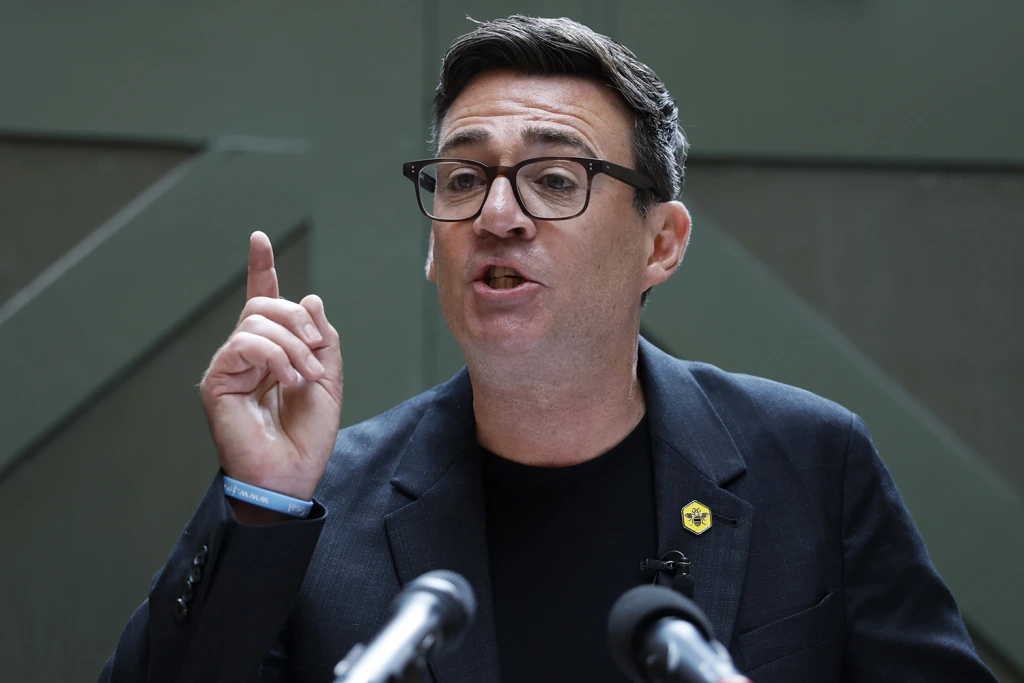
Former Greater Manchester mayor promises an ‘unashamedly Labour’ government after completing extraordinary return to Westminster
ANDY BURNHAM has been formally confirmed as leader of the Labour Party, clearing the way for him to become Prime Minister on Monday.
The former Mayor of Greater Manchester succeeded Sir Keir Starmer at a special Labour conference in London on Friday (July 17), after becoming the only candidate to secure enough nominations to enter the leadership contest.
Burnham received the backing of 379 of Labour’s 403 MPs, bringing the contest to an end without a ballot of party members.
Sir Keir will remain Prime Minister over the weekend. He is expected to visit Buckingham Palace on Monday (July 20) to formally tender his resignation to the King.
Burnham will then be invited to form a government before entering Downing Street, addressing the country and appointing his first Cabinet.
His arrival in No 10 will make him Britain’s seventh Prime Minister since 2016, following David Cameron, Theresa May, Boris Johnson, Liz Truss, Rishi Sunak and Sir Keir.
It will also complete one of the most remarkable political comebacks of modern times.
‘Unashamedly Labour’
In his first speech as party leader, Burnham promised a government with the courage to address problems which he said had been neglected by successive administrations.
He said Britain needed more than a change of leadership and pledged to transform the way the country is governed.
Burnham described his programme as “unashamedly Labour”, placing economic renewal, regional equality, public services and social care at the heart of his emerging agenda.
He argued that Britain had taken a series of wrong turns during the 1980s, when political power became increasingly concentrated in Westminster while industries and essential services were transferred into private ownership.
His government, he suggested, would seek to reverse that imbalance by giving communities greater control over decisions and allowing more parts of the country to take public control of services such as transport.

Burnham is expected to use his experience in Greater Manchester as a model for wider reform.
His flagship Bee Network brought buses under public control, introduced capped fares and sought to connect bus and tram services across the city region.
Supporters believe the project demonstrates that devolved government can deliver visible improvements to everyday services. Critics will question whether the Greater Manchester model can be expanded across a country facing severe financial pressures.
From regional mayor to Prime Minister
Burnham’s rise to the Labour leadership follows a decade-long political journey which appeared, at one stage, to have taken him permanently away from Westminster.
He served as an MP between 2001 and 2017 and held senior positions in the governments of Tony Blair and Gordon Brown, including Health Secretary and Culture Secretary.
He stood for the Labour leadership in 2010 and again in 2015, losing first to Ed Miliband and then to Jeremy Corbyn.
In 2017, Burnham left Parliament to become the first directly elected Mayor of Greater Manchester.
The move allowed him to build a political identity outside Westminster and to present himself as an advocate for regions which felt ignored by central government.
His national profile grew significantly during the Covid pandemic, when he publicly challenged Boris Johnson’s government over financial support for Greater Manchester during the imposition of regional restrictions.
The confrontation earned him the unofficial title “King of the North” and helped establish him as one of Labour’s most recognisable figures.
His return to Westminster was far from straightforward.
Burnham was prevented by Labour’s ruling National Executive Committee from seeking selection in the Gorton and Denton by-election earlier this year.
Following Labour’s disastrous local election results and growing pressure on Sir Keir, he was later selected to fight the Makerfield by-election.
He won the seat on June 18 with a majority of 9,231, giving him the parliamentary platform needed to contest the Labour leadership.
Sir Keir initially vowed to fight any challenge but announced his resignation days later as support within the parliamentary party collapsed.
Potential leadership rivals declined to stand as Labour MPs rapidly consolidated behind Burnham.
Less than a month after returning to the Commons, the former regional mayor is now preparing to become Prime Minister.
Immediate economic test
The celebrations are unlikely to last long.
Burnham will inherit a sluggish economy, continuing pressure on household finances, strained public services and deep concern about the state of the public finances.
His first major task will be to reassure voters and financial markets that his promise of significant economic change will not come at the cost of fiscal stability.
Attention will focus immediately on his choice of Chancellor, along with whether he retains senior figures from Sir Keir’s government or uses the reshuffle to signal a decisive political break.
Burnham must balance demands from Labour members for greater public investment with Treasury warnings about borrowing, debt interest and the limited room available for expensive new commitments.
He must also decide how far he is prepared to depart from the manifesto on which Labour won the 2024 general election.
A significant shift could help Burnham establish his own political identity, but it would strengthen demands from opposition parties for an early general election.
Another Prime Minister without an election
Burnham will become Prime Minister without having led Labour into a general election.
The transfer is permitted under Britain’s parliamentary system. A governing party can change its leader during a Parliament, with the monarch inviting the person most likely to command a majority in the House of Commons to form a government.
Labour retains a large Commons majority and the next general election does not legally have to take place until 2029.
However, opposition parties are expected to argue that Burnham should seek a personal mandate from the electorate, particularly if he intends to take the Government in a substantially different direction.
Burnham is likely to resist immediate calls for an election, insisting that Labour was elected to govern and must now deliver the change promised to voters.
Whether he eventually chooses to call an early contest may depend on his polling, the condition of the economy and his success in rebuilding support lost to Reform UK, the Conservatives, the Liberal Democrats, Plaid Cymru and the Greens.
The challenge from Reform
Reconnecting Labour with working-class voters who have moved towards Reform UK will be one of Burnham’s most urgent political challenges.
Labour’s heavy local election losses exposed anger over the cost of living, immigration, public services and a widespread belief that the Government had failed to deliver meaningful change after taking power.
Burnham’s supporters believe his less formal style and experience outside Westminster could help Labour rebuild trust in former industrial communities.
He has often presented himself as both a Labour loyalist and a critic of the Westminster system, allowing him to speak the language of political change while remaining at the head of the governing party.
But Reform will seek to portray his premiership as another internal transfer of power carried out without consulting the public.
The battle between Burnham and Reform is therefore likely to shape the next phase of British politics.
What Burnham’s leadership could mean for Wales
Burnham’s commitment to transferring power away from Westminster could have major consequences for Wales.
Welsh political leaders will be watching closely to see whether his support for devolution extends beyond English city regions and results in additional powers and funding for the Senedd.
Long-running disputes remain over rail investment, the Crown Estate, policing, justice, borrowing powers and the distribution of UK research funding.
Plaid Cymru is likely to increase pressure for further responsibilities to be transferred to Wales, while Welsh Labour will expect a closer and more productive relationship with the new Prime Minister.
Burnham will have to recognise that devolution in Wales is not simply another version of regional government in England.
The Senedd represents a nation with its own legislature, government and political identity. Any attempt to apply a single model across the UK would risk creating an early confrontation with Cardiff Bay.
His handling of Welsh funding and constitutional questions will provide an immediate test of whether his promise to move power out of Whitehall represents a genuine change in government or merely a change in tone.
A decisive moment
Burnham enters the Labour leadership with overwhelming support from his MPs, but without having faced a public leadership contest or a general election.
That has allowed Labour to complete the transition quickly, avoiding weeks of internal division.
It also means the public has heard relatively little detail about what a Burnham government will do.
His first Cabinet, his approach to the economy and his relationship with the devolved nations will begin to answer those questions.
For Burnham, Friday marked the completion of an extraordinary journey from defeated leadership candidate to regional mayor, returning MP and leader of the Labour Party.
On Monday, the campaign to reach Downing Street will be over.
The much harder task of governing Britain will begin.



Crime29 minutes ago
Milford Haven teacher ‘fought for her life’ during alleged knife attack
Crown says teenage pupil planned classroom assault and intended to kill, as attempted murder trial reaches closing speeches LIVE FROM...


News2 hours ago
Motorcyclist dies following collision near Narberth
Police appeal for witnesses and footage after fatal crash on B4313 at Redstone A MOTORCYCLIST has died following a collision...


Local Government22 hours ago
Stepaside school saved as council abandons closure proposal
Governors welcome decision but maintain original plans were based on outdated information STEPASIDE Community Primary School will remain open after...

Crime23 hours ago
Footballer given 200 hours’ unpaid work for eye-gouging assault during match
Magistrates heard Robert Hedley put an opposing player in a headlock before gouging at his eyes during a match in...


Community1 day ago
Tenby Summer Spectaculars brought to an end after harbour licence revoked
Round Table says it was willing to make major safety changes but could not secure the access controls needed to...
Local Government3 days ago
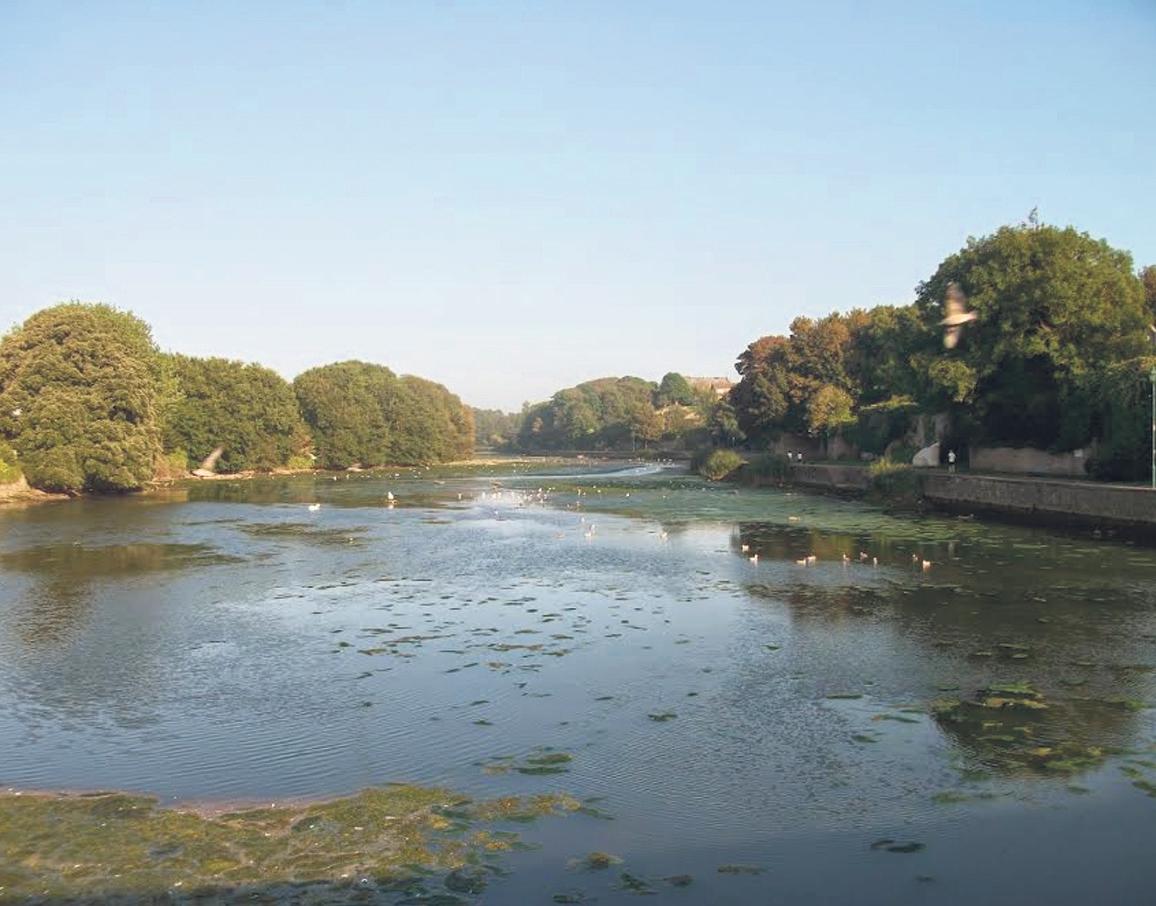
Catapult attacks suspected after wildlife deaths at Pembroke Mill Pond
Wildlife Crime Officers are investigating after the town council said around five animals showed signs of deliberate injury WILDLIFE found...


Crime3 days ago
Narberth retailer speaks of shoplifting toll after ‘collectable bear’ stolen
Independent shop owner said rising costs meant businesses could not afford to absorb losses caused by theft A NARBERTH retailer...


Crime3 days ago
Teen accused of attempting to murder teacher says she lied about stabbing
Defendant accepts teacher was terrified and that a knife wound to the head could kill, but denies deliberately attacking her...


Local Government5 days ago
Calls grow for independent investigation into Manorbier school closure
Councillor alleges misleading figures, inadequate insurance and poor treatment of staff CALLS for an independent investigation into the controversial closure...


Community5 days ago
Neyland Carnival hailed a huge success after streets fill with colour and crowds
NEYLAND CARNIVAL organisers have thanked the community, volunteers and local businesses who helped make this year’s event a memorable success....
-

 Crime3 days ago
Letterston footballer guilty of eye-gouging assault during match
-
 News7 days ago
Milford Haven Coastguard coordinates rescue of injured paddleboarder
-

 Crime7 days ago
Ann Widdecombe: Welsh politicians pay tribute as murder probe launched
-

 Business3 days ago
Former St Davids GP surgery to holiday let and home conversion conditionally approved
-
 Education7 days ago
Saundersfoot graduate secures teaching job before completing degree
-
 Education6 days ago
Welsh Government under fire to spend extra £340m on ALN
-

 Community7 days ago
Drag icon Dr Bev to perform at Pembrokeshire Pride
-
Community4 days ago
Call for investigation into Manorbier school closure as councillor seeks apology