


News
Solva axe attacker’s double sentence

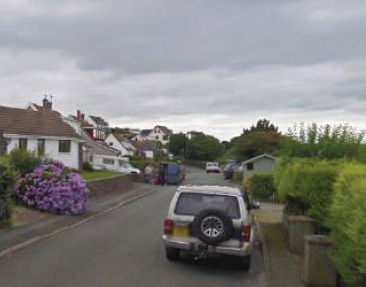

Anchor down: Solva
A MAN attacked his adoptive father with an axe before chasing him through the streets of Solva and proceeding to attack him for a second time in a pub.
Philip Swan, aged 40, denied attempting to murder David Swan but admitted causing grievous bodily harm with intent. He was given a 14 year prison sentence.
Swansea Crown Court heard that separate police forces had inadvertently provided Swan with the weapon and the location of his intended victim.
For the tragic offence Swan will serve between six and nine years behind bars but after his eventual release, he will be liable to be recalled to prison until February, 2030, after Judge Paul Thomas passed an extended sentence.
Ian Wright, prosecuting, said the offending began on July 3 last year at Gloucester railway station.

Swan had set off to attack Mr Swan but was arrested by British Transport Police (BTP) after getting into a row on the platform with a stranger.
By then Gloucester Police had told him that Mr Swan was living somewhere in Solva.
BTP found the axe in Swan’s rucksack but gave it back to him after he claimed to be “interested in bush craft.”
Swan went home but the following day travelled by train to west Wales. Early on July 5 a warden at St David’s church in Solva found him asleep on a pew.

He asked her where “David and Margery Swan” lived and was innocently directed to Anchor Down.
Swan broke into the property through a window and confronted Mrs Swan, described by Wright as an 89 year old lady suffering from advanced Altzheimers. She was effectively his grandmother, Mr Swan having married Swan’s mother and later adopting him, but would be wounded during the violence that followed.
Swan set about removing telephone handsets and kitchen knives and hiding them on the top of a fridge and bedroom wardrobes.

About midday Mr Swan arrived but left his partner, Anna Gifford, in his car parked outside.
Mr Wright said as Mr Swan entered the house “he knew immediately that something was wrong.”
Swan ran at him and delivered a blow to his forehead with the axe.
Mr Swan managed to grapple with his son and gained control, but agreed to release him after Swan promised not to resume the attack.
But that was exactly what he did and again struck Mr Swan with the axe as Mrs Swan tried to defend him, suffering leg injuries in the process. A forensic science officer later found blood and “fatty tissue” belonging to Mr Swan in the hall, kitchen and living room.
Miss Gifford heard screams coming from the house and then saw Mr Swan running out with Swan in pursuit.
He chased Mr Swan to The George pub and both entered virtually alongside. Swan hit him to his back with the axe and Mr Swan “screamed in pain.” Mr Swan was ushered by staff into the kitchen area leaving his son “swinging the axe around above his head.”
Before police could arrive Swan returned to Anchor Down and “touched” the shoulder of Mrs Swan, before returning to the pub, to tell the landlord, “I’ll get fifteen years for this.”
On his return, staff smuggled Mr Swan out of a private door but Swan saw him, approached him and made more threats, before telling a staff member, “It was a hell of a thing to attack someone with an axe when they had put their hands up to defend themselves.
He also said: “The look of fear on my step father’s face was worth it.”
Mr Swan was taken to the critical care unit of Withybush Hospital, Haverfordwest, where he spent seven days receiving treatment for a broken arm and “multiple” lacerations.
Police later discovered that Swan had put a photograph of the axe onto his Facebook page.
Questioned by police Swan refused to answer apart from offering to write a statement “that could take months to write.”
During the court hearing Swan repeatedly shouted from the dock and Judge Thomas sent him to the cells below.
James Jenkins, representing Swan, said that, while he had been in Gloucester, “it was sad that the axe had been returned to Swan when it must have been obvious that he was in a state of heightened, nervous tension.”
He added: “The police told him where David Swan lived.”
Judge Thomas said: “So, one police force gave him the axe and another gave him the address.”
Mr Jenkins said Swan had complained “for years” about having being physically abused by his adoptive father when he had been a child.
Judge Thomas said he was unable to decide whether that was true or not.
Mr Jenkins said Swan had indulged in “both legal and illegal highs.” Since his arrest he had been held in custody and was now a “very different man.”
Judge Thomas said Swan’s behaviour was unpredictable, especially after he had taken substances.
He deemed Swan, of no fixed address, to be dangerous, as defined by law.
“There have been numerous occasions in the past when he has lost his temper and become unpredictably violent.”
Judge Thomas said he noted that Swan’s criminal record included a row with a colleague at the store he was working in – Swan pushed her into a meat freezer and locked the door.
Residents of Solva who witnessed his attack on his father “must have been frightened out of their wits,” he added.



Council commits a further £2m after 18 households helped to buy homes during first year
A SCHEME aimed at helping local people buy homes in Pembrokeshire has been extended following what the council described as a successful 12-month pilot.
Pembrokeshire County Council’s Cabinet unanimously agreed to continue and expand Homebuy Pembrokeshire, which offers eligible buyers an equity loan to bridge the gap between the mortgage they can secure and the cost of a suitable property.
The scheme was launched in June 2025 with £1m raised through the Second Homes Council Tax Premium.
It had initially been expected to support up to 15 households during its first year, but ultimately helped 18 households purchase properties across the county.
A total of £814,000 was invested through the pilot.
Applicants must demonstrate a local connection to Pembrokeshire, meet income and property criteria, and show they can afford the ongoing financial commitments associated with owning a home.
The scheme is primarily intended to help first-time buyers who have savings and can obtain a mortgage, but are unable to afford a suitable property in the area where they live or have established local ties.
Cabinet Member for Housing, Cllr Michelle Bateman, said: “Homebuy Pembrokeshire has provided an important opportunity for local buyers to access suitable homes that meet their needs.
“The scheme has made a positive difference to households across the county and supports the council’s wider commitment to increasing housing choice and improving access to affordable housing.”
Following Cabinet approval, the programme will continue with a number of changes intended to reflect current mortgage lending and housing market conditions.
A further £2m has been approved for the scheme over the next two years, subject to satisfactory delivery.
Cllr Bateman added: “This is a clear demonstration of how income generated through the Second Homes Council Tax Premium can be used to support housing opportunities in Pembrokeshire.
“Homebuy Pembrokeshire helps people who have savings and access to mortgage finance, but who are unable to secure a suitable home because of challenging market conditions.”
One household supported through the scheme said: “Using the scheme to purchase a property has massively helped my family, as we have been able to own a property as well as creating a space for us to grow.”
Further information is available from Pembrokeshire County Council’s housing team by emailing [email protected] or calling 01437 764551.

Police found 14 plants, harvested cannabis worth thousands of pounds and evidence of small-scale dealing
A CARMARTHENSHIRE woman has received a suspended prison sentence after allowing a professionally equipped cannabis grow to operate from a shed at her home.
Police attended Lucy Pugh’s property in Llanfihangel-ar-Arth on February 28 last year, where they discovered 14 cannabis plants growing inside the outbuilding.
Swansea Crown Court heard that the shed contained specialist equipment consistent with a professional cultivation operation.
A police drugs expert estimated that each plant could have produced between one and three ounces of cannabis, giving the crop a potential maximum street value of more than £13,000.
Officers also discovered that the property’s electricity meter had been bypassed. National Grid engineers were called to make the electrical supply safe.
A further search of the house uncovered around 800 grams of cannabis in the kitchen which had already been harvested. Prosecutors said the drugs had an estimated value of £7,410.
Messages recovered from Pugh’s mobile phone showed that she had been supplying cannabis to a small number of people.
During her police interview, Pugh said two men from Bristol had installed the growing operation in her shed several months earlier. She admitted knowing the plants were there and said she had not objected to the arrangement.
Her phone also contained messages in which she asked one of the men for advice about caring for the plants.
Pugh, aged 50, pleaded guilty to producing cannabis and possessing cannabis with intent to supply.
The court was told she had one previous conviction, dating from 2020, for possession of a Class A drug and drug-driving.
Defending, Craig Jones said Pugh had entered guilty pleas at the earliest opportunity and had cooperated fully with the police.

He stressed that the cultivation operation had not originally been organised by Pugh and said she had only a limited criminal record.
Sentencing her, Judge Catherine Richards said Pugh had permitted the cannabis operation to be established at her property before making the separate decision to supply the drug.
Pugh was sentenced to six months in prison, suspended for 12 months.
She was also ordered to complete 100 hours of unpaid work and 20 rehabilitation activity requirement days.
Prosecutors confirmed that proceedings would be brought under the Proceeds of Crime Act in an attempt to recover any money Pugh had made through her offending.
She is due to return to Swansea Crown Court on November 12 for a proceeds of crime hearing.
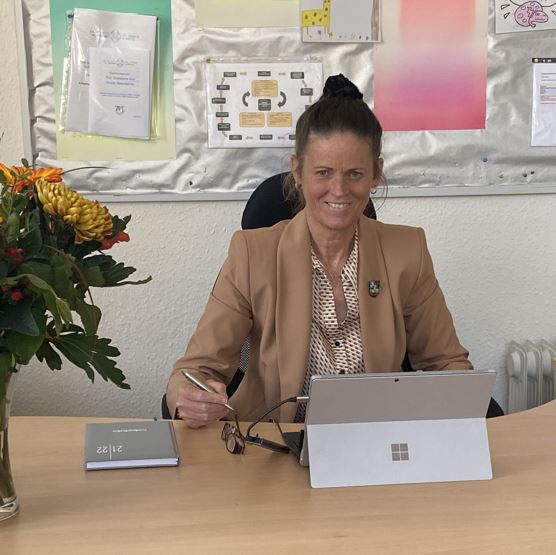
Rachael Thomas describes Ysgol Penrhyn Dewi as her ‘third child’ as she hands over leadership of the school to Sion Mason Evans
AN INSPIRATIONAL Pembrokeshire headteacher has said an emotional goodbye to pupils, parents and staff after completing 37 years in education.
Rachael Thomas is stepping down as headteacher of Ysgol Penrhyn Dewi VA in St Davids, a school she described as her “love, passion and reason for being”.
In a final letter to the school community, Mrs Thomas said she had been dreading the day when she would have to say farewell.

She wrote: “Ysgol Dewi Sant and Ysgol Penrhyn Dewi have been my third child, my love, passion and my reason for being.
“However, it gives me great comfort and pride to leave at this point, with strong leadership and a fantastic team of staff to take it to the next level.”
Mrs Thomas thanked parents and carers for trusting the school with their “most priceless possessions”, their children, and paid tribute to the staff, governors, Diocese, local authority and wider community who had supported her throughout her career.
She said she felt privileged to have worked at “the best school on the planet”, praising its pupils, staff and families for helping to create a nurturing culture based on love and respect.
Under her leadership, the 3-to-16 school has expanded across its campuses and developed a reputation for academic achievement, inclusion, outdoor education, sport and the performing arts.
During the past academic year, pupils helped the school achieve the Armed Forces Friendly Schools Cymru Bronze Award, the Peace Mala Gold Award, the Careers Wales Gold Award, two Green Flag Awards and a Climate Cymru Challenge Award for protecting and restoring nature.
The school also opened a new secondary learning resource centre and two additional classrooms on its Dewi Campus.
Pupils have enjoyed sporting success at local, regional and national level, with the school becoming Welsh champions and runners-up in tennis and basketball.
There have also been school productions, overseas visits, residential trips and a return visit from the school’s partners in Mahoeleng, Lesotho.

Mrs Thomas said the school remained committed to providing high expectations and opportunities for every pupil.
She wrote: “Pupils feel loved when they walk through the door.
“When they leave, this love continues, hence the knowledge that you never really leave YPDVA and YPDVA never leaves you.”
Several other members of staff are also leaving or changing roles at the end of the academic year.
Mrs Bramley has completed her work as assistant headteacher for teaching and learning but will continue as a supply teacher and lead choir and performing arts activities.
Miss Pullin is leaving to pursue a career with the National Park, while Mr Jeff Thomas is retiring, although the school hopes he will return to support its extended learning programme.
Mrs Brockbank is coming to the end of her time as a learning support assistant on the Dewi Campus, while Father Luke Spencer is leaving his teaching role to pursue his ministry.
The school will welcome a number of new staff in September.
Catherine James will become the new additional learning needs coordinator and assistant headteacher for inclusion, while Amy Morgan will become the school’s first deputy headteacher.
Former pupil Rhys Meredith Barrett will join as a full-time music teacher, and Kieran Mackay will become a teacher of English.
Sion Mason Evans will take over as headteacher.
Mrs Thomas said she was confident her successor would embrace the culture and vision of the school and take it into the next stage of its journey.
She concluded her farewell message with the words associated with St David: “Be joyful, keep the faith and do the little things.”
She signed off simply: “Llawer o gariad.”
The school community is now preparing to begin a new chapter, while recognising the enormous contribution Mrs Thomas has made to generations of children and families in St Davids and across Pembrokeshire.




Crime2 hours ago
Milford Haven teacher ‘fought for her life’ during alleged knife attack
Crown says teenage pupil planned classroom assault and intended to kill, as attempted murder trial reaches closing speeches LIVE FROM...


News2 hours ago
Andy Burnham becomes Labour leader and prepares to enter No 10
Former Greater Manchester mayor promises an ‘unashamedly Labour’ government after completing extraordinary return to Westminster ANDY BURNHAM has been formally...


News3 hours ago
Motorcyclist dies following collision near Narberth
Police appeal for witnesses and footage after fatal crash on B4313 at Redstone A MOTORCYCLIST has died following a collision...


Local Government23 hours ago
Stepaside school saved as council abandons closure proposal
Governors welcome decision but maintain original plans were based on outdated information STEPASIDE Community Primary School will remain open after...

Crime24 hours ago
Footballer given 200 hours’ unpaid work for eye-gouging assault during match
Magistrates heard Robert Hedley put an opposing player in a headlock before gouging at his eyes during a match in...


Community1 day ago
Tenby Summer Spectaculars brought to an end after harbour licence revoked
Round Table says it was willing to make major safety changes but could not secure the access controls needed to...

Local Government3 days ago
Catapult attacks suspected after wildlife deaths at Pembroke Mill Pond
Wildlife Crime Officers are investigating after the town council said around five animals showed signs of deliberate injury WILDLIFE found...


Crime3 days ago
Narberth retailer speaks of shoplifting toll after ‘collectable bear’ stolen
Independent shop owner said rising costs meant businesses could not afford to absorb losses caused by theft A NARBERTH retailer...


Crime3 days ago
Teen accused of attempting to murder teacher says she lied about stabbing
Defendant accepts teacher was terrified and that a knife wound to the head could kill, but denies deliberately attacking her...


Local Government5 days ago
Calls grow for independent investigation into Manorbier school closure
Councillor alleges misleading figures, inadequate insurance and poor treatment of staff CALLS for an independent investigation into the controversial closure...
-

 News7 days ago
Milford Haven Coastguard coordinates rescue of injured paddleboarder
-

 Crime3 days ago
Letterston footballer guilty of eye-gouging assault during match
-

 Crime7 days ago
Ann Widdecombe: Welsh politicians pay tribute as murder probe launched
-
 Business3 days ago
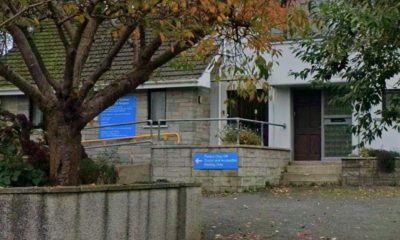
Former St Davids GP surgery to holiday let and home conversion conditionally approved
-

 Education7 days ago
Saundersfoot graduate secures teaching job before completing degree
-

 Education6 days ago
Welsh Government under fire to spend extra £340m on ALN
-
Community4 days ago
Call for investigation into Manorbier school closure as councillor seeks apology
-

 Climate6 days ago
Minister denies plan to cut livestock numbers over ‘left-wing ideological climate targets’