


Politics
KIP-Con coalition not ruled out


 THE LEADER of the Welsh Conservatives has failed to rule out a potential deal with UKIP as part of a ‘rainbow coalition’ following the Welsh Assembly elections in May – after publicly calling for Plaid Cymru to confirm that they would not enter a coalition with Labour.
At the UKIP conference in Llandudno, both party leader Nigel Farage and Welsh leader Nathan Gill expressed hopes that UKIP AMs could work with other parties.
Mr Gill said: “We welcome the opportunity of doing what’s right for Wales and if that was the right decision, if we could really between us work it out, work as a cohesive group of three parties or two parties – and actually really believe that we can improve the lot of the people of Wales then of course we’d do it because we are about making the lives of our fellow citizens better.”
Whether or not Labour or Plaid Cymru would work with UKIP is debatable, especially as both parties are campaigning for the Assembly elections on a pro-EU membership basis. It is unlikely that what the Conservatives repeatedly refer to as ‘Jeremy Corbyn’s Labour party’ would do business with UKIP, and would probably form a minority government – as they did this term – instead.
Having ruled out a coalition with the Welsh Conservatives, it would be surprising if Leanne Wood considered entering a ‘rainbow coalition’ with UKIP. The party suffered a loss of popularity after the 2007 coalition, and it is assumed that the fallout from a UKIP coalition would be at least as damaging.

Which leaves the Welsh Conservatives. Nathan Gill praised Andrew RT Davies for his stance on the EU, saying that the Welsh Conservatives’ leader was ‘very brave and patriotic in what he has done’.
Mr Farage went even further. In a speech at the party conference, he said that UKIP would be going into the assembly with ‘a constructive mentality’: “If we can work with other people and that delivers better results that’s good.”
“The fact that Davies has taken the stance that he has taken, probably long-term makes it easier to work with them. We will be entirely pragmatic.”
When questioned by the national media, Mr Davies was somewhat unwilling to discuss post-election deals. However, he added that he ‘regretted’ other parties (read Plaid Cymru) had not ruled out any deal with Labour.

“I think the one thing that unifies all parties that aren’t in Government here in Wales in the Assembly is that Labour is the problem,” he added.
A deal with UKIP could be problematic should any senior members, especially Mark Reckless, watch Mr Davies’ speech to the Conservative Party conference last year, in which he emphatically stated that UKIP was ‘not the answer.’
In this speech, Mr Davies reserved much of his ire for strategy director Mr Reckless: “When the good citizens of Rochester and Stroud gave Mark Reckless the boot in May, they saddled him to us – he has come now to be a candidate in next year’s Assembly elections,” he said.

“He is a part-time resident in Caerphilly, for goodness sake!
“I have to say, as you go out, there will be collection buckets at the door, so that you can give generously so that we can boot him back over to you, and you can do with him what you will!”
Last year, Mr Davies challenged Plaid Cymru leader Leanne Wood to rule out entering a coalition with Welsh Labour, and accused her of hypocrisy when she failed to do so.
The Herald asked Mr Davies if he could indicate whether or not he would be prepared to enter into a coalition with UKIP, bearing in mind their similar views on EU membership. We also asked if Mr Davies still stood by the remarks made in his conference speech. At the time of going to press – three days later – we had received no reply, and a voicemail message left with the senior press officer went similarly unanswered.

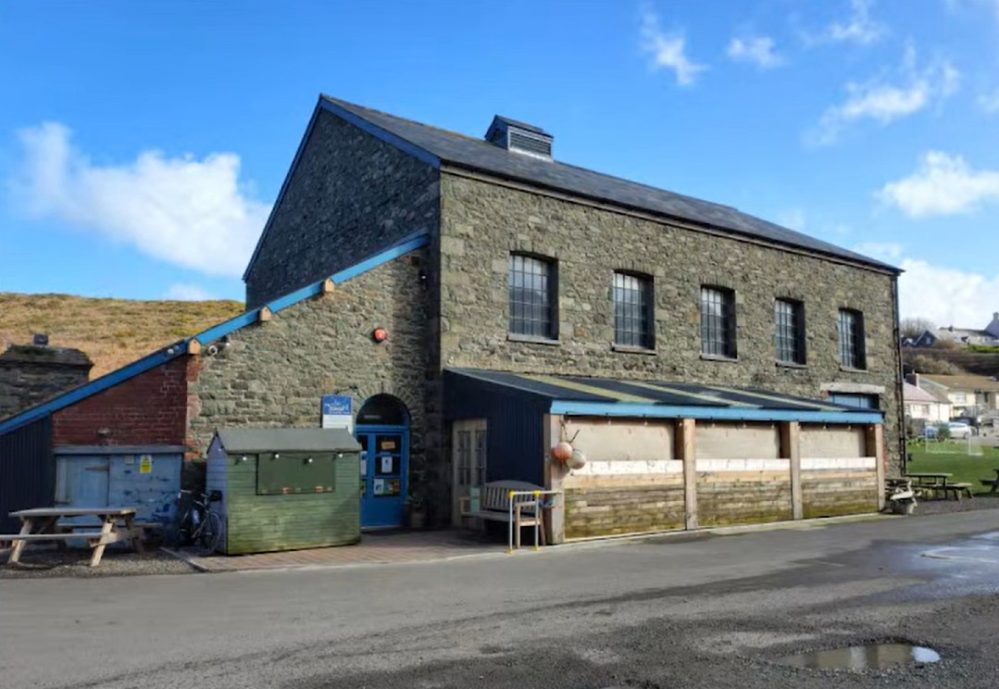
A CALL for works at a Pembrokeshire seaside tearoom, once the site of a Victorian brickworks machinery shed, has been given the go-ahead by national park planners.
In an application recommended for approval at the July meeting of Pembrokeshire Coast National Park’s development management committee, Caroline Jones sought permission to install solar panels to roof over an outside seating area at The Shed Tea Room, Porthgain.
The application, and a related listed building consent call, was for committee consideration as The Shed Tea Room forms part of Ty Mawr, a Grade-II-listed large stone-built former machinery shed owned by the national park itself.
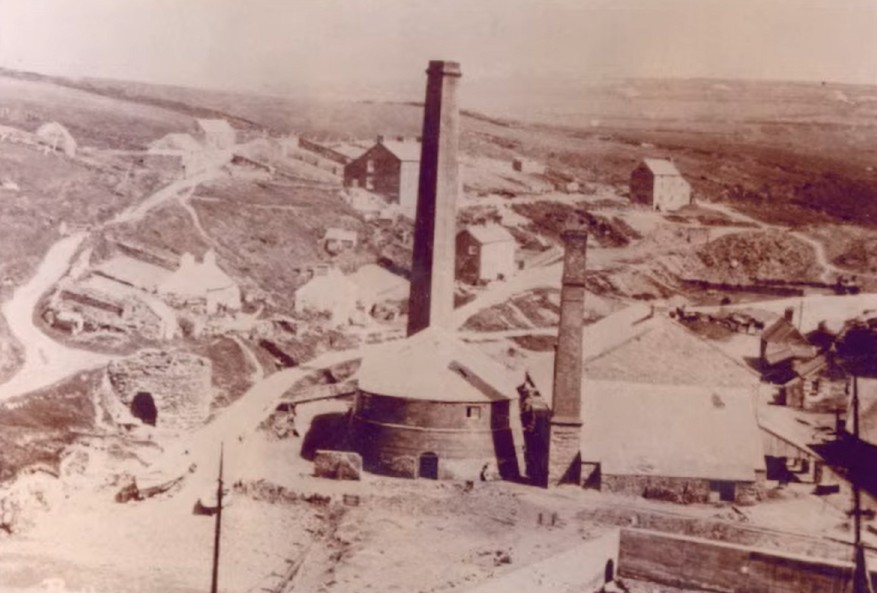
An officer report for members stated: “The Shed Tea Room is a lean-to structure at the west end of Ty-mawr, a Grade-II-listed large stone-built former machinery shed, built c. 1890 to serve Porthgain brickworks. The lean-to itself is built of a mixture of stone and brick, retaining the stump of the brickworks chimney.
“The Shed has been used for retail purposes since 1999, and as a tearoom and restaurant from 2001, after which roof-lights were inserted. The north-western section of the lean-to was incorporated after 2003, when the present timber windows were inserted.
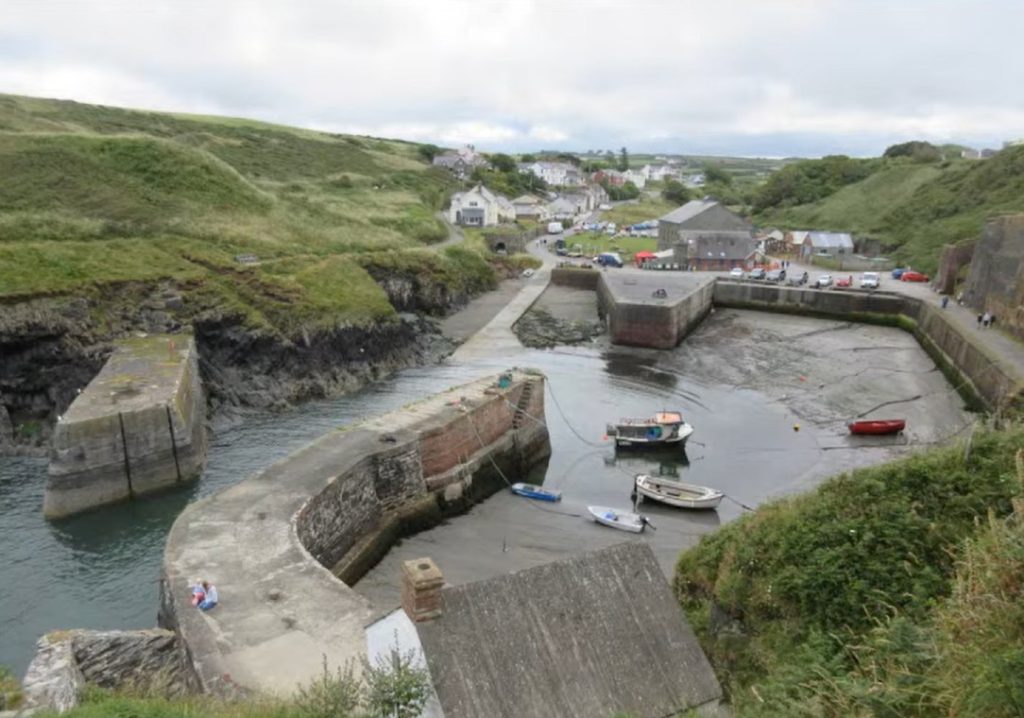
“After 2007, a lean-to scullery was added at the north end, alongside the chimney stump, with a small, fenced compound beyond. The south-western lean-to was added in 2024. The proposal comprises the addition of solar PV panels to the south-western lean-to. The panels – twelve in total – are all-black and frameless. The panels are configurated in a single block covering the majority of the roof, surface mounted on corrugated steel sheeting.
“The scheme is in keeping with the character of the listed building, and its setting in terms of design and form. As such, the application can be supported subject to conditions.”
The recommendation of approval was moved by Cllr Di Clements, and unanimously backed by members; the related listed building consent also moved by Cllr Clements, and again unanimously backed.
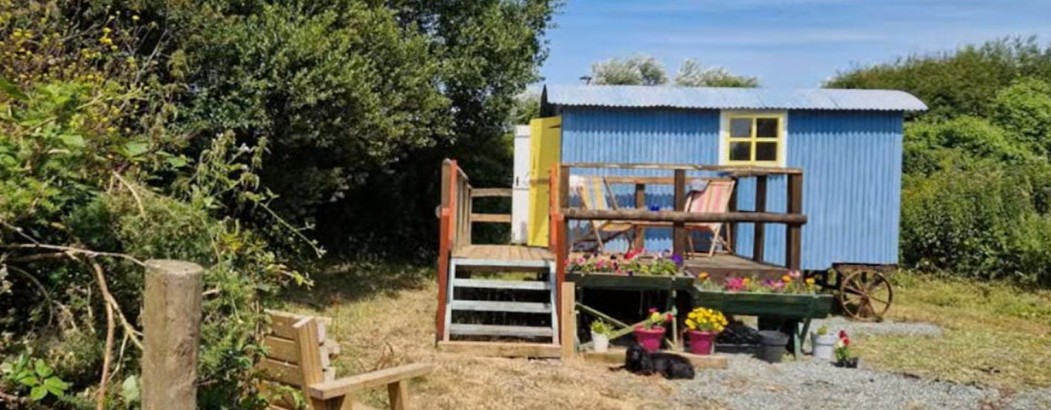
A CALL for a formal seasonal Pembrokeshire campsite with motorhomes camping on the site of a former scrapyard has been given the go-ahead by national park planners.
In an application recommended for approval at the July meeting of Pembrokeshire coast National Park’s development management committee, Mr A Stoddart, through agent Addison Design & Development, sought permission for a change of use of land for the formation of 11 ‘touring caravan’ pitches, tent pitches and the siting of three shepherd’s huts, partly retrospective, on land to the east of Talbenny Hall Farm, Talbenny, near Haverfordwest.
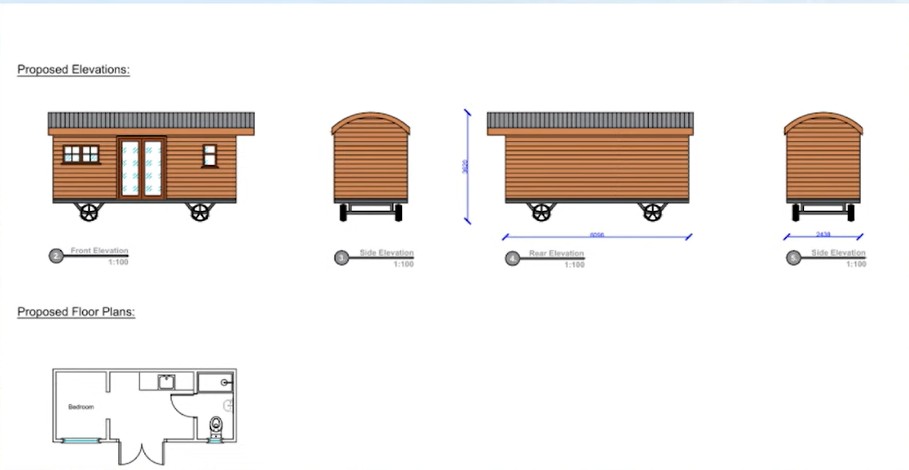
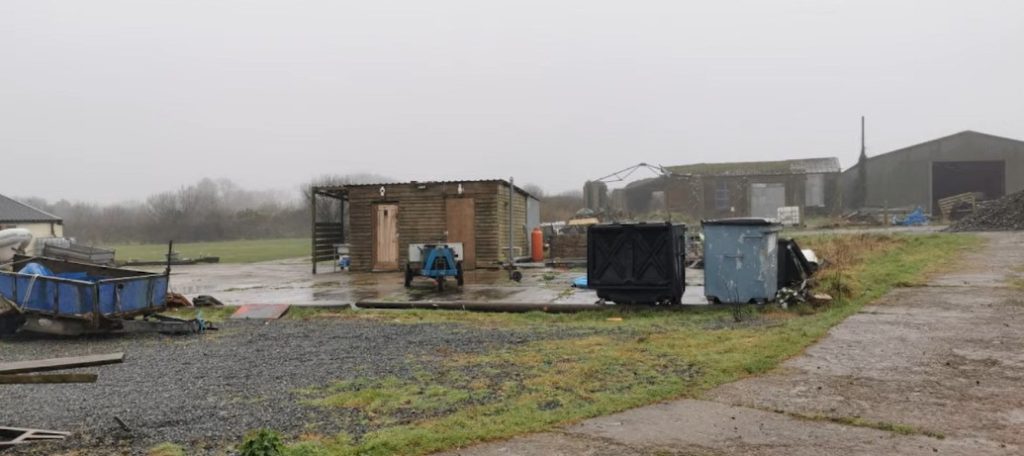
The retrospective element related to the retention of an existing storage shed and facilities building.
The application was for committee consideration as officers had recommended approval despite objections from local community council The Havens.
An officer report for members said a change of use was sought for a a former scrapyard site, “which has been remediated and more recently operated as a seasonal campsite, to provide a seasonal formal camping and glamping site”.
It added: “During the determination of the application, a significant amount of additional information has been submitted in response to consultee comments. In particular, the Local Highway Authority initially objected to the proposal on highway safety grounds pending the submission of further technical information.”
It said those concerns had been withdrawn after further information was received, the scheme before committee as it “relates to a new tourism development in the countryside, and because The Havens Community Council has maintained an objection on highway safety grounds”.
It went on to say: “The site will operate as a medium sized seasonal tourism development between March 31 and September 30 each year. The applicant has confirmed that the three shepherd’s huts will be removed from the site outside the operating season and stored within the existing onsite storage building.
“Officers consider that the previously developed nature of the site, its enclosed landscape setting, seasonal operation and the resolution of technical matters relating to highway safety, ecology and drainage demonstrate overall policy compliance with the requirements [of planning policy] and the proposal is therefore recommended for approval subject to conditions.”
At the meeting, members heard the 2023 submitted scheme had been delayed due to the applicant facing “exceptional personal circumstances”.
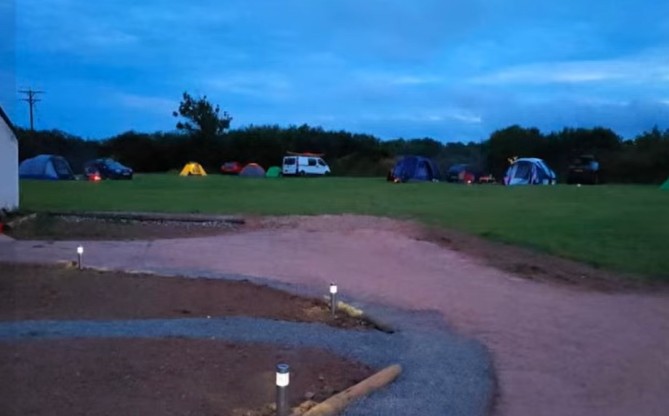
Concerns were raised at the meeting by objector Alison Gibbey on highways grounds, while agent Zac Addison told members the former scrapyard had been transformed into “a beautiful little haven,” the applicant not wanting to be “a nuisance to anybody”.
He said the ‘touring pitches’ would be solely used for motorhomes, with a maximum of 20 tents in the tent pitch area.

Moving approval, Cllr Di Clements reflected it was positive tourism in the county was spreading inland away from “honey pot” coastal areas, suggesting a ‘quiet time’ evening condition be included in any approval.
Members unanimously backed the recommendation of approval, Cllr Mike James commenting: “to have something like this in the rural areas, it’s really good to see this.”

A PUBLIC consultation is to be held on discontinuing two schools in the Tenby area, including Greenhill comprehensive, with the aim of establishing a new 3-19 community school.
In a report before Pembrokeshire County Council’s meeting of July 16, members were asked to back a public consultation into establishing a new 3-19 community school in the Tenby area, discontinuing Tenby Church in Wales VC School and Ysgol Greenhill comprehensive.
Back in December councillors backed authorising the Director of Education to commence statutory consultation on establishing a new 3-19 school, a split site initially, but as part of an investment to rebuild/extend Tenby’s Greenhill site, or on a new site.
It included a consultation with the St David’s Diocese to discontinue Tenby Church in Wales Voluntary Controlled School, and to discontinue Ysgol Greenhill before the report before members in July.
A report for members, presented by the council’s deputy leader, and now Cabinet Member for Education, Cllr Paul Miller said that, since the December meeting, St David’s Diocese responded by conditionally supporting the Tenby VC School element, subject to the newly established 3–19 school retaining a religious character, either as a Voluntary Aided (VA) or Voluntary Controlled (VC) school.
The report added: “In accordance with the decision of council at its meeting on December 12, and the statutory requirements of the School Organisation Code, consultation has been undertaken with the St David’s Diocese.
“In relation to the council’s proposal for Tenby VC School, the comments received from the Diocese do not provide any reason not to proceed with general consultation.”
It added: “As most pupils within the cluster attend community primary schools, it is recommended that consultation be undertaken on the basis of establishing a community primary school.
“It should be noted that, whatever the decision, this would merely reflect the preferred option outlined within the general consultation document.
“Members would still be required to give due consideration to feedback received as a result of the consultation, which may include a preference by consultees for a different governance model.”
Members, by 41 votes to two abstentions, backed the formal consultation, which had been moved by Council Leader Cllr Tessa Hodgson.


Community11 hours ago
84-year-old man rescued after falling overboard near Tenby
A MAYDAY call sparked a major nighttime rescue after an 84-year-old man fell from a tender and was swept towards...


Crime2 days ago
Jury hears final arguments in Milford Haven teacher stabbing trial
Defence says there was no motive or intention to kill as judge reviews competing accounts of classroom knife incident SPECIAL...


News2 days ago
Andy Burnham becomes Labour leader and prepares to enter No 10
Former Greater Manchester mayor promises an ‘unashamedly Labour’ government after completing extraordinary return to Westminster ANDY BURNHAM has been formally...


News2 days ago
Motorcyclist dies following collision near Narberth
Police appeal for witnesses and footage after fatal crash on B4313 at Redstone A MOTORCYCLIST has died following a collision...

Local Government3 days ago
Stepaside school saved as council abandons closure proposal
Governors welcome decision but maintain original plans were based on outdated information STEPASIDE Community Primary School will remain open after...

Crime3 days ago
Footballer given 200 hours’ unpaid work for eye-gouging assault during match
Magistrates heard Robert Hedley put an opposing player in a headlock before gouging at his eyes during a match in...


Community3 days ago
Tenby Summer Spectaculars brought to an end after harbour licence revoked
Round Table says it was willing to make major safety changes but could not secure the access controls needed to...
Local Government5 days ago
Catapult attacks suspected after wildlife deaths at Pembroke Mill Pond
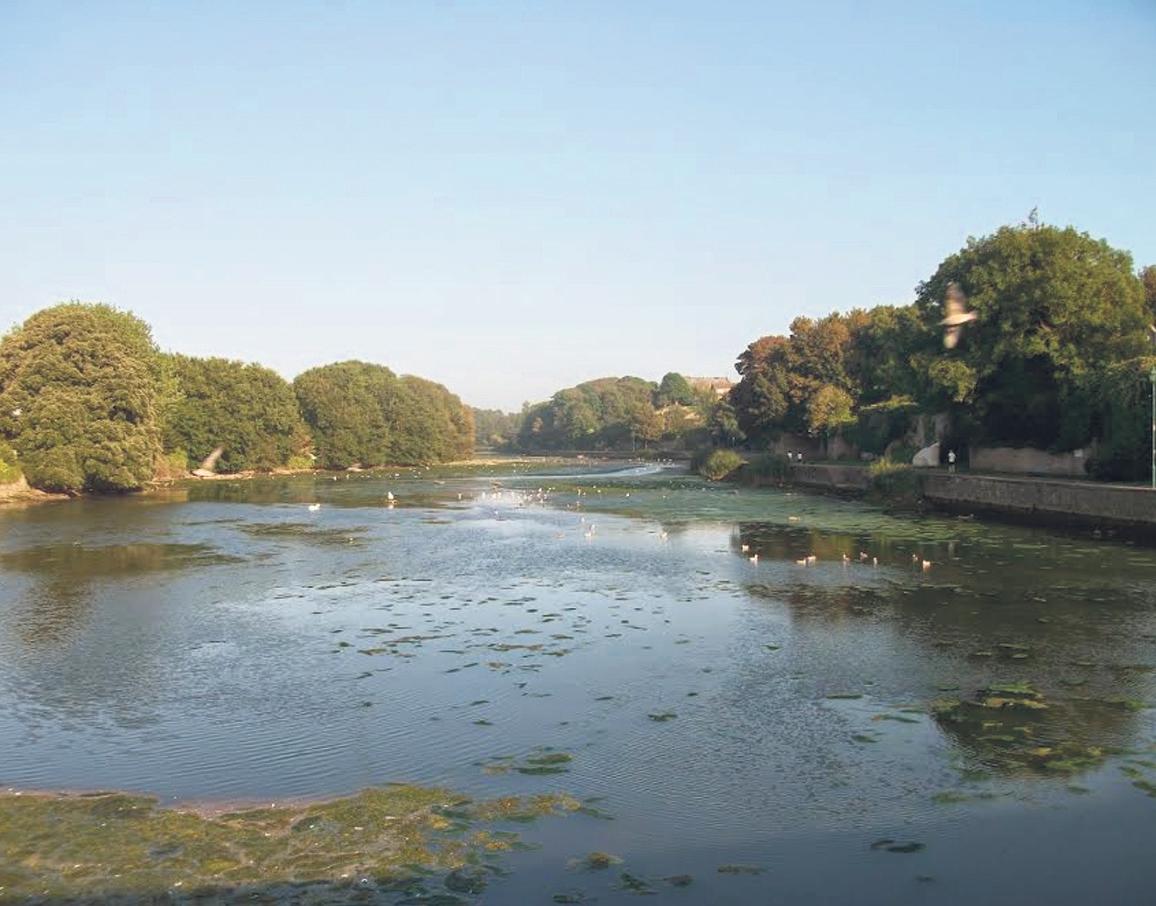
Wildlife Crime Officers are investigating after the town council said around five animals showed signs of deliberate injury WILDLIFE found...

Crime5 days ago
Narberth retailer speaks of shoplifting toll after ‘collectable bear’ stolen
Independent shop owner said rising costs meant businesses could not afford to absorb losses caused by theft A NARBERTH retailer...


Crime5 days ago
Teen accused of attempting to murder teacher says she lied about stabbing
Defendant accepts teacher was terrified and that a knife wound to the head could kill, but denies deliberately attacking her...
-
Community11 hours ago
84-year-old man rescued after falling overboard near Tenby
-
Crime2 days ago
Milford Haven teacher ‘fought for her life’ during alleged knife attack
-
Crime2 days ago
Jury hears final arguments in Milford Haven teacher stabbing trial
-
 Crime23 hours ago
Fears wildlife at Mill Pond beauty spot being targeted by catapults
-
News2 days ago
Andy Burnham becomes Labour leader and prepares to enter No 10
-

 News2 days ago
Historic budget defeat exposes divisions in Welsh politics
-

 Education2 days ago
St Davids headteacher says emotional goodbye after 37 years in education
-

 Education2 days ago
Pupils and governors vow to fight removal of Cilgerran school’s Church status