


News
Welsh Government scraps council mergers



THERE has been a widespread welcome and cautious approval of the announcement by Welsh Local Government Cabinet Secretary Professor Mark Drakeford that the Welsh Government has scrapped its controversial plans to force councils into mergers.
The decision is an embarrassing U-Turn by the government and a recognition that, not only was there little or no support for its scheme – described as ‘grandiose’ by former AM William Powell – among Welsh local government, but no enthusiasm for its plans in the Assembly.
Former local Government Leighton Andrews’ spectacularly maladroit words at the end of the last Assembly, when he described Plaid’s preparedness to work with the Welsh Government as making them ‘a cheap date’, not only soured relationships enough to cause other legislation to fall, but poisoned what little goodwill existed for the proposals to merge councils under any circumstances.
Professor Drakeford’s announcement follows long-running guerrilla warfare by local authorities resistant to the change and what is understood to be direct pressure brought to bear on the Welsh Government by Labour Party controlled councils in the south east of Wales, who faced losing their autonomy under the scheme.
LOCAL COUNCILS RESPOND POSITIVELY

Cllr Jamie Adams, Leader of Pembrokeshire County Council, and who was implacably opposed to the merger scheme proposed by former minister Leighton Andrews, said: “I welcome the certainty provided by Mark Drakeford. There is no question that the recent period of uncertainty has had a negative effect on the running of all local authorities.
“I will take the opportunity to engage in shaping sustainable services for the people of Pembrokeshire and ensuring that they are underpinned by local democratic accountability.
He added: “We look forward to the opportunity of building on the excellent services provided by Pembrokeshire County Council for the people of Pembrokeshire, as evidenced recently by the Local Government Performance report for Wales 2015-16.”
Cllr Adams’ words were echoed by Ceredigion leader Ellin ap Gwynn, who told us: “I welcome the change in direction by the Welsh Government, and the new Cabinet Secretary’s appreciation of the importance of local decision making and accountability.

“Ceredigion is an historic county steeped in tradition, and I am very pleased that Ceredigion residents will be able to continue to fully engage in democratic processes at this local level.
“Ceredigion County Council is no stranger to working in partnership with other authorities at a regional level, wherever such a model may enhance our ability to respond to the needs of our residents.
“I and my fellow Members will look forward to working with the Welsh Government to further discuss the implications and opportunities of broader collaborative working, and to play a full role in determining the most effective model possible for the county.”

Cllr Emlyn Dole, Leader of Carmarthenshire County Council, has welcomed the statement by Local Government Secretary, Professor Mark Drakeford, confirming that compulsory council mergers are off the table, with more emphasis added to regional partnership agreements.
“I very much welcome the statement by the Minister. He called with us at the beginning of the summer to engage in the conversation – he was open to listening and so were we,” said Cllr Dole.
“We welcome the fact that the 22 local authorities stay and keep their roles, but with emphasis on regionalisation for the delivery of certain services.
“In Carmarthenshire, we have already forged very strong and successful partnerships across the region to deliver a variety of services, and for us, we go where the strength is – what works best for Carmarthenshire in terms of stronger and better services.”
NO RETURN TO DYFED
West Wales’ councils and councillors had been staunch in their opposition to the scheme advanced during the last Welsh Assembly term, which was widely regarded as a power-grab by the Cardiff Bay government.
Ceredigion Council refused to enter even into preliminary talks on any potential merger; Pembrokeshire Council were united in rejecting reorganisation on the terms dictated by former minister Leighton Andrews and Carmarthenshire County Council was similarly unanimous in its opposition to the scheme.
The prospect of forced mergers and what amounted to the recreation of the hated Dyfed County Council, but without the former district council tier underneath, was not only a major sticking, but the focus of councillors’ and local AMs’ opposition to the plans, which increasingly seemed as though they were being made to serve the interests of Cardiff Bay by stripping out democratic accountability from local government.
Responding to the announcement, Councillor Bob Wellington CBE (Torfaen), Leader of the WLGA, said: “As a statement of intent we welcome these proposals and also the constructive way in which the Cabinet Secretary is working with local councils to develop a more resilient and stable future for local public services in Wales.
“Our ideas for future service innovation chime well with the proposals outlined by the Cabinet Secretary.
“What is encouraging is that these proposals highlight how councils will remain embedded in their communities, acting as the ‘front door’ through which people access a range of vitally important everyday services. In doing so, the proposals outline a vision that keeps the ‘local’ in local democracy and local government, while also offering a coherent agenda for regional collaboration on key service areas.
“There is much detail now to explore, not least on how the proposed ‘mandatory’ approach to regional working will work, but we look forward to working with the Cabinet Secretary and our other partners to ensure we deliver a workable vision for public service reform in Wales.”
DRAKEFORD’S NEW PLAN
Professor Drakeford told AMs that he had listened to the views of local authorities and trade unions and had found ‘an approach on a possible way forward’.
The new plan means retaining existing local authorities as the ‘front door’, through which people access services, but with key services being delivered regionally.
The Cabinet Secretary explained: “Behind this front door, we would have an enhanced level of mandatory and systematic regional working. This will give local authorities more resilience in terms of staffing and finance and also ensure that services are planned and delivered on the right scale.”
However, mergers were not ruled out altogether, with Professor Drakeford saying: “Some authorities may wish to build their resilience further by voluntarily merging and we will support them to help make that happen.”
Tackling a major sticking point with the previous plans regarding Community Councils, he said: “We will also make improvements to Community Councils in the short term, and establish an independent review to look at the future role of this tier of local Government.”
Responding, Labour Regional Assembly Member Eluned Morgan told The Herald: “I think it’s sensible that local authorities work together more to deliver key services.
“There’s less and less money available because of Westminster Government decisions on spending. This is likely to get even tougher with the decision to leave the EU. There are many examples of good practice in local authorities and more formal sharing arrangements can only help.”



Cash machine at High Street NatWest branch was broken into during an early-hours burglary
POLICE have launched an investigation after an estimated £55,000 was stolen from a cash machine at a bank in Brecon.
Dyfed-Powys Police received a report at around 1.15am on Monday (July 20) that the ATM at the NatWest branch on High Street had been broken into.
Cash was taken from the machine, with investigating officers estimating the total amount stolen to be approximately £55,000.
Police tape was placed across the entrance to the bank and around the outside cash machine during Monday as officers carried out inquiries at the scene.
Members of the public reported seeing a police presence on the high street, with officers entering and leaving the building throughout the day.
No arrests have been made and the investigation remains ongoing.
Officers are appealing for witnesses, including anyone who noticed suspicious people or vehicles in Brecon town centre during the early hours of Monday morning.
Police would also like to hear from anybody who may have CCTV, doorbell-camera or dashcam footage which could assist the investigation.
Information can be provided to Dyfed-Powys Police online, by emailing [email protected] or by calling 101.
Those contacting police should quote reference 26*586801.
Information can also be given anonymously to the independent charity Crimestoppers by calling 0800 555 111.
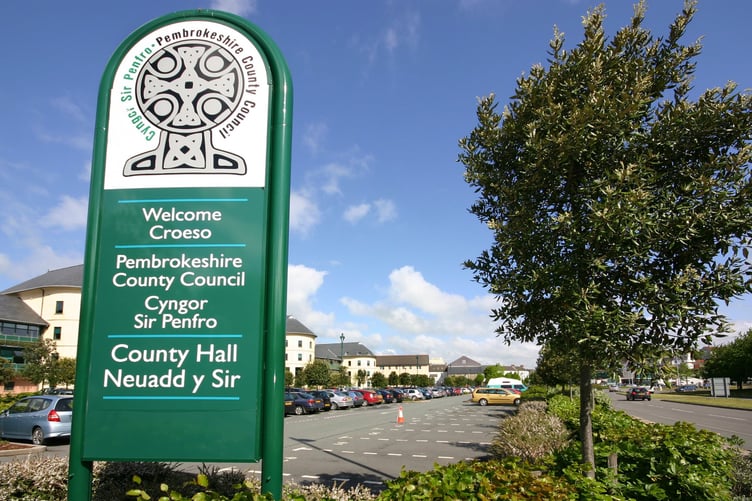
Residents are being asked for their views on proposed changes affecting councillor numbers and electoral arrangements in communities across the county
PEMBROKESHIRE COUNTY COUNCIL is inviting residents, organisations and other interested parties to have their say on proposed changes to the electoral arrangements of eight community councils across the county.
The consultation follows recommendations published by the Democracy and Boundary Commission Cymru in January 2025 as part of a wider review of Pembrokeshire’s community boundaries and local electoral arrangements.
The Commission’s review considered whether the county’s existing communities and community wards continued to provide effective and convenient local government.
It examined issues including community boundaries, the number of councillors serving each area, the distribution of councillors between community wards and whether existing arrangements continued to reflect local populations and community identities.
While a number of the Commission’s recommendations involved changes to community boundaries, it also proposed alterations to the electoral arrangements of some community councils where no boundary changes were recommended.
Those particular proposals could not be introduced through the original community review process and must now be considered separately by Pembrokeshire County Council.
The latest consultation concerns the following communities:
- Lamphey
- Llanrhian
- Martletwy
- Nolton and Roch
- Pencaer
- St Dogmaels
- Stackpole and Castlemartin
- Wolfscastle
The proposals could affect matters such as the number of councillors elected to individual community councils and how council seats are distributed between community wards.
Community and town councils form the most local tier of elected government. They represent the interests of their communities and may be responsible for services and facilities including public spaces, community buildings, play areas, noticeboards and local events.
The County Council said it was seeking views from residents and organisations with connections to the communities affected to ensure that local perspectives were considered before any decisions were made.
The consultation will open on Tuesday, July 28, and close on Friday, September 11, 2026.
Full details of the proposed changes and supporting documents will be available through Pembrokeshire County Council’s Have Your Say consultation portal.

Residents will be able to review the proposals affecting their community and submit comments online.
Paper copies of the consultation documents can also be requested by contacting the Council’s Customer Contact Centre on 01437 764551 or emailing [email protected].
Anyone with questions about the proposals or the review process is encouraged to contact the Council’s electoral services team.
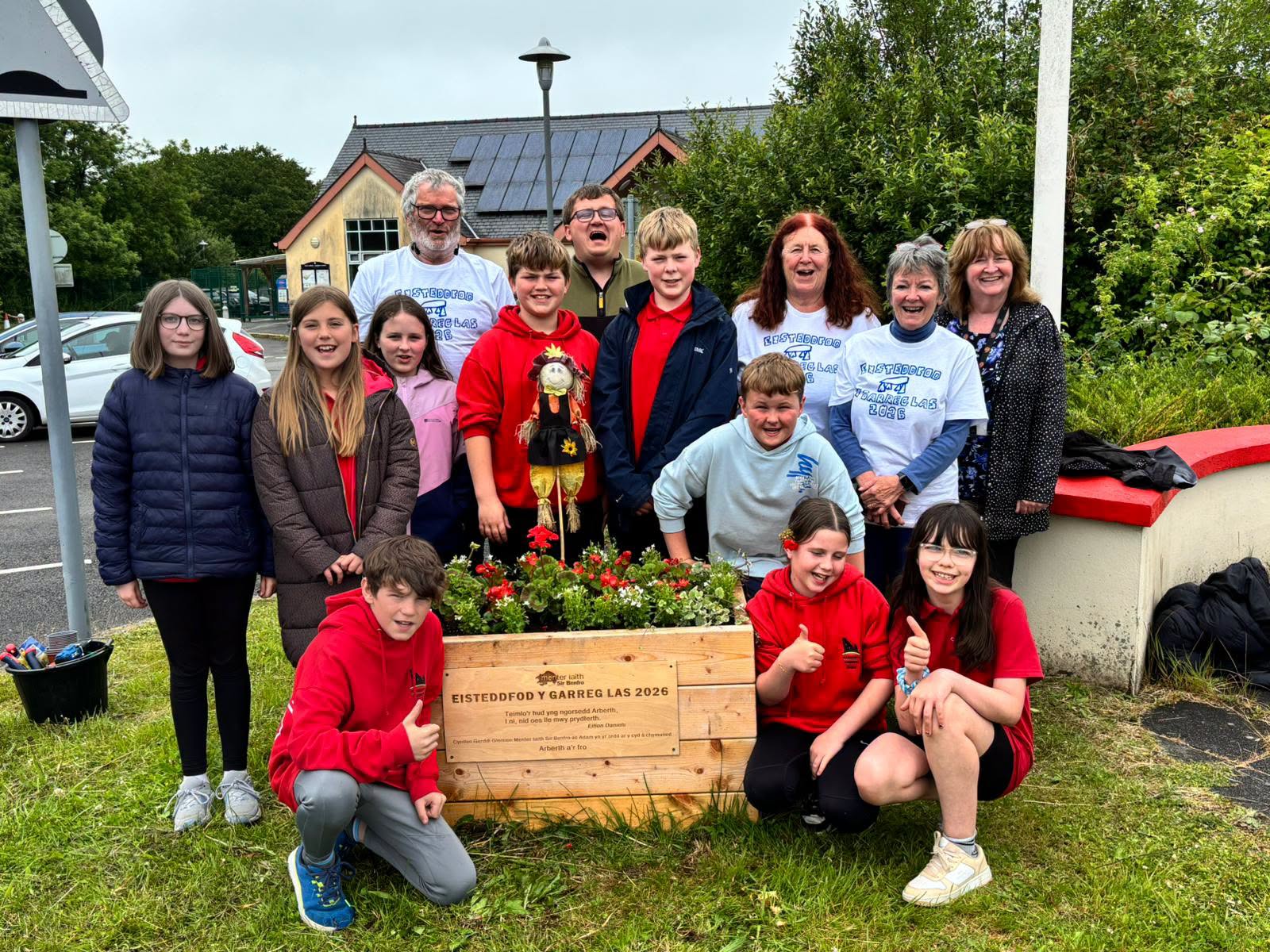
Community support and a £2,000 contribution from Narberth Town Council help committee achieve its fundraising goal
Narberth Eisteddfod Fundraising Committee is celebrating after successfully reaching its £8,000 fundraising target.
The milestone follows a busy programme of events organised by the committee, each of which received strong support from residents, businesses and community groups across the Narberth area.

Committee chair Glinys Meredydd thanked everyone who had helped make the campaign a success.
She said: “I would like to thank all members of the Narberth Eisteddfod team for their hard work and commitment.
“They organised some fantastic events, which were extremely well supported by the local community.
“I would also like to thank Narberth Town Council, which donated £2,000 on behalf of the people of Narberth.”

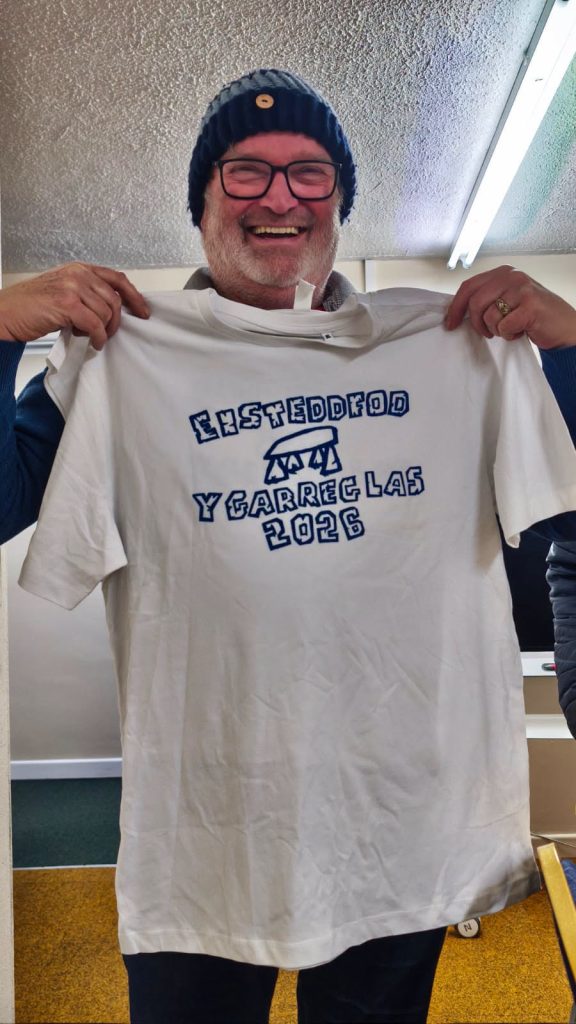
The committee will hold one final fundraising event with a last sale of its locally produced and hand-printed Eisteddfod Garreg Las 2026 T-shirts.
Members of the public are invited to visit the committee at Narberth Carnival Field on Saturday, July 25, where they will have a final opportunity to buy or win one of the T-shirts and join the celebrations ahead of the Eisteddfod’s return to Pembrokeshire.
The committee has thanked everyone who attended an event, made a donation, volunteered their time, purchased a T-shirt or helped promote the campaign.
Reaching the £8,000 target has been described as a powerful example of what can be achieved when the Narberth community comes together in support of Welsh language and culture.



Crime7 hours ago
Man, 37, found dead following major police response in Pembroke Dock
Death not being treated as suspicious as police make statutory referral to IOPC following active investigation A 37-YEAR-OLD man has...


Community10 hours ago
Household Cavalry drum horse returns home to Pembrokeshire for final farewell
Dyfed Willa Rose, who became Major Juno and the first mare to serve as a Household Cavalry Drum Horse, was...


News1 day ago
Jo Stevens out as Welsh Secretary as Burnham reshapes government
Cardiff East MP repeatedly visited Pembrokeshire to champion clean energy jobs, but her successor inherits unresolved questions over Milford Haven’s...


Crime1 day ago
Teen cleared of attempted murder but guilty of GBH after Milford teacher stabbed
Jury returns 11-1 majority verdict on charge of causing grievous bodily harm with intent, with sentencing set for September 3...

Community1 day ago
French troops march through Fishguard as Britain’s last invasion returns to life
Battle scenes, cavalry displays and a surrender procession brought one of Pembrokeshire’s most extraordinary stories back to the streets MUSKET...


News1 day ago
Andy Burnham promises new politics as he enters Downing Street
New Prime Minister admits politicians have “not been good enough” as he sets out a ten-year plan for Britain and...


Health2 days ago
Two new surgeons appointed as Hywel Dda admits orthopaedic waits remain too long
Health board says it is increasing capacity after figures revealed hip replacement patients waited an average of 64 weeks HYWEL...


Community3 days ago
84-year-old man rescued after falling overboard near Tenby
A MAYDAY call sparked a major nighttime rescue after an 84-year-old man fell from a tender and was swept towards...


Crime4 days ago
Jury hears final arguments in Milford Haven teacher stabbing trial
Defence says there was no motive or intention to kill as judge reviews competing accounts of classroom knife incident SPECIAL...


News4 days ago
Andy Burnham becomes Labour leader and prepares to enter No 10
Former Greater Manchester mayor promises an ‘unashamedly Labour’ government after completing extraordinary return to Westminster ANDY BURNHAM has been formally...
-

 Health1 day ago
Welsh Ambulance Service invites public to AGM and Board meeting
-

 featured7 hours ago
From a father-and-son project to an award-winning campervan business
-
Crime1 day ago
Teen cleared of attempted murder but guilty of GBH after Milford teacher stabbed
-

 Crime1 day ago
What the Milford Haven School stabbing verdict really means
-

 Business2 days ago
Port appoints two new directors as energy and regeneration projects advance
-

 Entertainment1 day ago
Imperial Hotel announces four-day Bank Holiday celebration in Tenby
-
Community10 hours ago
Household Cavalry drum horse returns home to Pembrokeshire for final farewell
-
News1 day ago
Andy Burnham promises new politics as he enters Downing Street