


News
Disappointment with resilience review report


 FARMERS in Wales will be disappointed by the review into the Resilience of Welsh Farming report launched last week and the minister’s accompanying statement accepting the recommendations.
NFU Cymru believes that both fail to address the cash flow issues currently facing the industry.
Ed Bailey, who stood down as NFU Cymru President last week, speaking at a meeting of Welsh Council said:
“Last week’s farm income figures showed the very real threats facing farmers in Wales now. This review and Alun Davies’ ministerial statement are filled with recommended changes that may well benefit farmers and Welsh agriculture in the medium to long term, but the concern is how can farm incomes be maintained in the short term to allow farmers and their families to then capitalise on the opportunities that may come further down the line from the implementation of the recommendations within the review.
“We are disappointed that this review has not recognised the need to re-introduce a dedicated Less Favoured Area / Area of Natural Constraint (LFA / ANC) scheme as allowed under the EU Rural Development regulations and already exist in the vast majority of countries the length and breadth of Europe.

“Whilst the review proposes the use of a number of potential tools under the next Rural Development Plan (RDP) this review, and the Minister’s response so far, fails to consider the most important tool available to help support and build resilience in upland communities the length and breadth of Wales.
Mr Bailey continued: “The minister, when he made the decision to take 15% of resource out of Pillar 1 and into Pillar 2, stated that under the next RDP there would be targeted support for upland farmers, this to us clearly means a dedicated LFA /ANC scheme delivered under Pillar 2 of the CAP. We have yet to see this from the Minister and feel that this, in our opinion, must be satisfactorily addressed when the Minister launches his consultation on the Wales RDP next month.
“Whilst NFU Cymru is disappointed at the failure so far to address the issue of dedicated upland support, the Union recognises that many of the recommendations have the potential to benefit Welsh agriculture. Recommendations with regards to the Glastir agri environment scheme, for example, mirror many of the changes the Union has long argued for.
Mr Bailey continued: “There are many things in this report which we feel we can welcome, for example the adoption of the proposed contingency management plan. We know full well that the extreme weather in March last year took many by surprise – including farmers, local authorities and the Welsh Government. It is only right that plans are formed to ensure everyone is better placed to deal with such an event in future.

“We can see merit in the development of a sustainable agriculture programme, the objective of which is to improve the financial viability of farm businesses, bringing together Young Entrants Support Scheme, Farming Connect and the Glastir efficiency grant into a single business model. NFU Cymru understands that the programme will look to prioritise the uplands and young/new entrants, but as always the devil will very much be in the detail.
“The report also identifies the upland beef and sheep sector as priority sectors for non-farm diversification and start-up support, whilst at the same time it acknowledges that opportunities for diversification are limited.
“There are numerous excellent examples of farm businesses having successfully diversified and in the process secured valuable additional income streams but the key priority must continue to be on ensuring upland beef and sheep enterprises can be profitable and viable in their own right.”



Independent review and Consumer Panel proposals highlight fragmented regulation, consumer harm and the need for a single oversight system
TWO major reports published within days of each other have raised serious concerns about the fragmented regulation of legal services in England and Wales.
An independent review of the Legal Services Board, published by the Ministry of Justice on July 13, found that weaknesses in regulatory oversight had resulted in “significant consumer detriment”.
The review, led by consumer rights expert Richard Lloyd, examined the performance of the Legal Services Board, which oversees frontline regulators including the Solicitors Regulation Authority and the Bar Standards Board.
It concluded that gaps in oversight had contributed to regulatory failures, with the Legal Services Board acknowledging that improvements were needed.
Three days later, the Legal Services Consumer Panel published its position paper, A Regulatory Framework for the Future, calling for the existing system to be replaced by a single regulator covering solicitors, barristers and other legal professionals.
The panel also proposed a unified disciplinary process and a central intelligence function bringing together complaints, professional conduct reports and financial monitoring.
However, neither report anticipates a substantially reformed regulatory system being operational before 2029.
The findings have also highlighted the pressures already facing barristers’ chambers, which must meet direct obligations relating to anti-money laundering procedures, cybersecurity and the safeguarding of client and chambers’ finances.
Unlike many solicitors’ firms, chambers are often managed by a senior clerk and a relatively small operational team, rather than a dedicated compliance department.
Compliance information may therefore be spread across several systems, including practice-management software, spreadsheets, external cybersecurity providers and separate financial controls.
VENTRiQ, which provides operational and compliance infrastructure to barristers’ chambers, said the problems identified at national level reflected challenges already being managed within individual legal practices.
Kevin Morrow, Head of Business Development at VENTRiQ, said: “What the Consumer Panel is describing nationally, a compliance picture stitched together from systems that do not talk to each other, is what a lot of sets are running internally today.

“AML checks might be held in one place, cybersecurity managed by an outside contractor and financial safeguards recorded on a spreadsheet.
“None of it is connected or visible in one place to the person who is ultimately accountable.”
Mr Morrow said chambers did not need to wait for the introduction of a new national regulatory structure before improving their internal oversight.
He added: “Most of what is being proposed, including having one place to view risk, complaints and financial exposure together, is something a set can already put in place.
“Better-connected systems can give chambers a clearer picture of their obligations and allow potential problems to be identified much earlier.”
The Legal Services Consumer Panel said its preferred model would simplify accountability, improve information sharing and create a more consistent disciplinary process across the profession.
Its recommendations are expected to contribute to a wider debate over the future regulation of legal services and whether the current structure remains capable of protecting consumers.

New £2 million Nofio Ysgol programme will begin in nine council areas this September before expanding across Wales
EVERY child in Wales is to be given the opportunity to learn how to swim and stay safe around water under a new national school swimming programme.
The Welsh Government has announced that its Nofio Ysgol programme will begin in September 2026, providing pupils with a minimum of 20 swimming and water safety lessons, primarily during Years 4 and 5.
The scheme is intended to address major differences in access to school swimming across Wales. Around one in five maintained primary schools currently offers no swimming lessons, while relatively few children take part in swimming activities outside school.
For many pupils, lessons organised through their school are their only opportunity to become confident in the water, learn essential swimming techniques and develop potentially life-saving self-rescue skills.
The first phase of the programme will begin in nine pathfinder local authority areas in September, backed by £2 million of Welsh Government funding.
It will then expand to as many as 16 council areas from September 2027 before being introduced across all 22 Welsh local authorities from September 2028.
The programme will include swimming instruction, water safety education and Swim Safe Cymru sessions, together with classroom resources linked to the Curriculum for Wales.
Additional support will be provided to children and communities facing the greatest barriers to participation, including pupils in rural and deprived areas, Welsh-medium schools, disabled learners and children with Additional Learning Needs or healthcare requirements.
The programme will be funded directly by the Welsh Government and delivered through participating local authorities, with national support from Swim Wales.
Announcing the Nofio Ysgol Implementation Plan for 2026–2029, Cabinet Minister for Culture and Sport Heledd Fychan said swimming was both a life-saving skill and an important foundation for lifelong physical activity.
She said: “Every child in Wales should have the opportunity to learn to swim, understand how to stay safe in and around water, and develop skills that could one day save their life.”
The Welsh Government said the phased introduction would allow councils and schools to test different delivery models, strengthen the swimming-teaching workforce, improve the collection of information and assess the programme’s impact.
The scheme forms part of the Government’s commitment to improving preventative health, physical activity and children’s mental and physical wellbeing.
Ministers said the long-term aim was to ensure that a child’s access to swimming lessons was not determined by where they lived, the school they attended or their family’s ability to pay for private lessons.
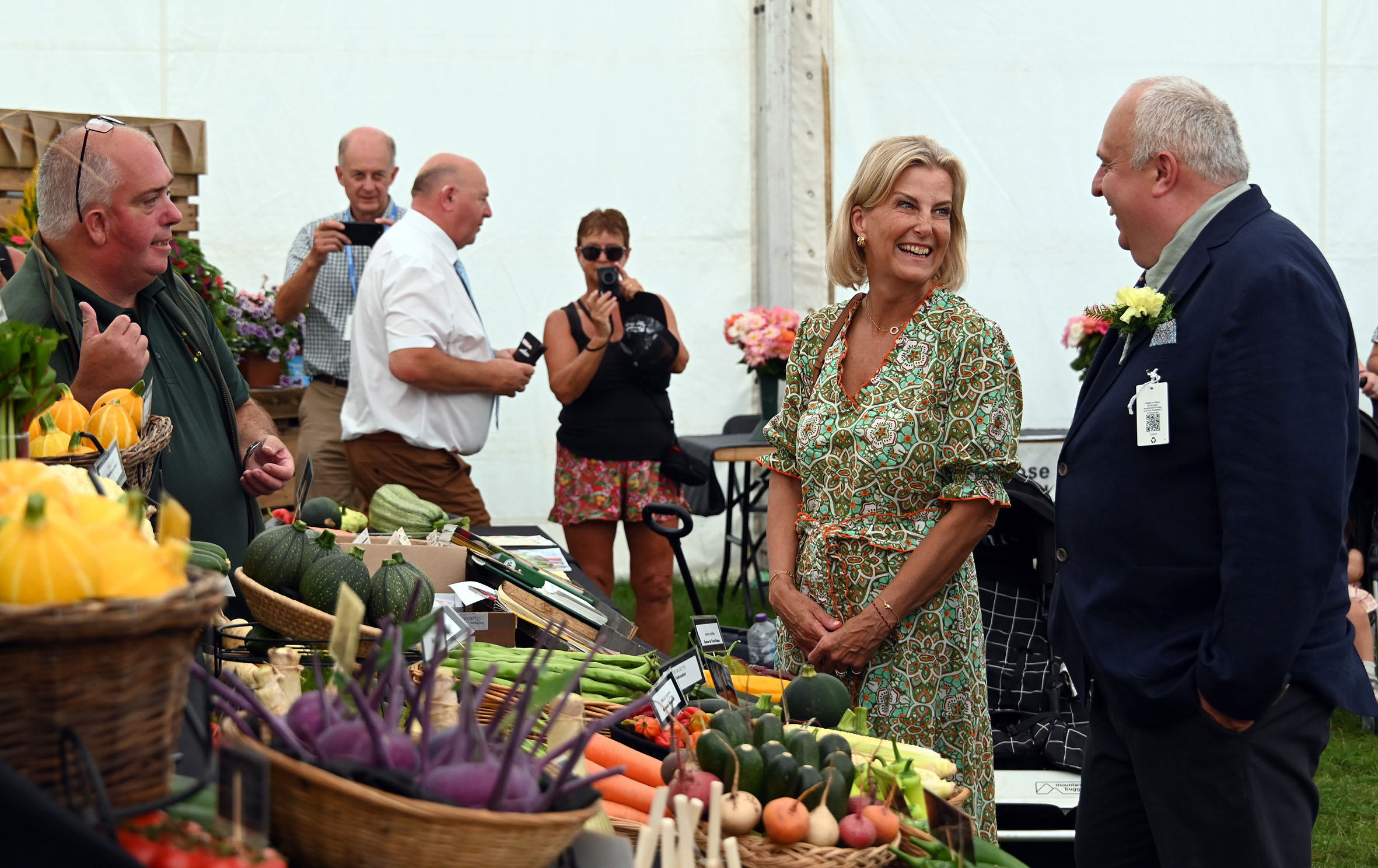
The Duchess of Edinburgh joined packed crowds at Llanelwedd as Welsh agriculture, livestock, food and rural traditions took centre stage during the four-day event
A ROYAL visit, a landmark performance by the Hawkstone Farmers’ Choir and victory for Wales in the Six Nations Shearing Championship were among the highlights of the 2026 Royal Welsh Show.
Large crowds packed into the Llanelwedd showground during four days of sunshine to celebrate the very best of Welsh and British agriculture, food production and rural life.
The Duchess of Edinburgh attended the show on Tuesday, making her first visit in her role as patron of the Association of Show and Agricultural Organisations.

A longstanding supporter of farming, food production and rural communities, the Duchess toured the showground and met exhibitors, staff, volunteers and members of the Royal Welsh Agricultural Society.
Another memorable moment came when the Hawkstone Farmers’ Choir performed the Welsh hymn Calon Lân in the main ring.
It was the choir’s first official performance in Wales since winning ITV’s Britain’s Got Talent and received a warm response from the crowd.
Livestock remained at the heart of the show, with exhibitors travelling from across the country to compete for some of the most prestigious prizes in British agriculture.
The supreme champion beef title was awarded to Charolais heifer Larahill Voiet, exhibited by Mike and Melanie Alford and bred by John O’Connor.
Corringham Lambda S Gremlin, a Holstein cow bred and exhibited by A Salter-Chalker and David Jones, was named supreme champion dairy cow.
In the sheep section, Arnold Oare claimed the supreme championship with a yearling Suffolk ewe, while the pig supreme champion title went to a Duroc bred by Morgan Halliday and exhibited by Pigs Dyfodol Pedigree.
Four days of equestrian competition culminated in the Royal Welsh supreme horse championship, which was awarded to Glyncoch Capoeira, a Section D Welsh Cob brood mare bred and exhibited by Glyncoch Stud.
A new Charles Arch Memorial Award was also presented during the grand parade in memory of the much-loved Royal Welsh commentator.

Charles served the show for more than four decades and was known for his commitment to encouraging young talent and promoting the Welsh language.
The inaugural award, which recognises an outstanding young handler, was presented to beef cattle champion Iestyn Llyr Hughes.
Wales also celebrated success in the Meirionnydd Shearing Centre, where the home team won the Six Nations Shearing Championship.
Champion Shearer of Wales Gwion Lloyd Evans and Llyr Jones, led by team manager Rhys Jones, defeated teams representing England, Scotland, France, Northern Ireland and the Republic of Ireland.
New Zealand took victory in the Wales versus New Zealand Machine Shearing Test under the guidance of manager Digger Balme.
The main ring programme included the return of the Paul Hannam Quad Bike Stunt Show, while the Shetland Pony Grand National made its first appearance at the Royal Welsh.
More than 64 newly elected Members of the Senedd attended the show, reflecting the event’s importance as a meeting place for farmers, rural communities, industry representatives and policymakers.
New attractions included Cynefin, the Welsh Sheep Village, while the Food Hall showcased produce from businesses across Wales and further afield.
The Welsh Food and Drink Village, Gwledd, featured live performances from the BBC Radio Cymru stage, while the Horticulture Village hosted demonstrations and talks.
The Heavy Horse Village also celebrated the heritage and continuing importance of working horses.
Aled Rhys Jones, chief executive of the Royal Welsh Agricultural Society, described the show as a “tremendous week”.
He said: “One of the highlights was seeing the Hawkstone Farmers’ Choir perform in the main ring.
“The engagement we’ve had on social media has also been absolutely sensational, with more than two million views across our channels.
“Thank you so much to everybody who supported this year’s Royal Welsh Show and to the incredible team from the Brecknock feature county, led with great distinction by our president, Gethin Havard, and his wife Ceri.
“We are pleased with all the feedback we have received about the new additions this year, including Cynefin, our new sheep village.
“Our thanks go to everyone who plays their part in making this show so special.”



Community17 hours ago
Narberth bursts into colour as carnival brings Civic Week to spectacular close
Crowds lined the streets for an afternoon of floats, fancy dress, music and family entertainment at one of Pembrokeshire’s longest-running...


Community17 hours ago
More than 100 racers take to Castle Pond for Paddle West’s inaugural regatta
Successful community event raised money for Forever11 and launched three consecutive weekends of waterside activity in Pembroke MORE than 100...


News17 hours ago
NASA chief meets west Wales scientist helping search for life on Mars
Aberystwyth-led technology will guide Europe’s first Mars rover as it drills beneath the planet’s surface, while the proposed DARC radar...


News2 days ago
Princess Royal celebrates Pembrokeshire craftsmanship at family-run weaving mill
A Pembrokeshire business that began after a mother grew tired of waiting three weeks for her children’s name tapes has...


Local Government2 days ago
Burger King could be coming to Haverfordwest as plans submitted
Plans have been lodged for a Burger King outlet at the Morrisons petrol station on Bridge Meadow Lane BURGER KING...


Crime3 days ago
Murder investigation launched into death of Pembrokeshire man in 1991
A 67-YEAR-OLD man has been arrested on suspicion of murder after new potential evidence emerged in connection with a death...

Community3 days ago
‘Paying £29 to reach a cashpoint is absurd’: Narberth’s urgent ATM appeal
Residents, businesses and visitors are being urged to provide evidence after two High Street cash machines were removed, leaving the...


Crime4 days ago
Haverfordwest man jailed for seven years for historic rape and sexual assault of girl
A HAVERFORDWEST man has been jailed for seven years after being convicted of raping and indecently assaulting a girl during...


News4 days ago
Burnham more willing to listen on Welsh devolution, says First Minister
Rhun ap Iorwerth says he will press the new Prime Minister for powers over policing, railways and Wales’ natural resources...


Crime4 days ago
Women jailed after man chased through Milford home and attacked with knives
Kelly Rees receives further 27-month sentence while already serving prison term for notorious taxi robbery TWO women have been jailed...
-

 News2 days ago
Burnham’s first week – what it means for Wales
-

 Business2 days ago
Certificate of lawfulness granted for Whitesands overflow campsite
-

 Crime2 days ago
Pembrokeshire teenager given referral order after shoplifting spree
-

 Business2 days ago
Resubmitted call convert a former architect’s studio into long-term let
-

 Crime2 days ago
Driver sentenced for cannabis offences on Cleddau Bridge and in Wolverhampton
-
 Business1 day ago
Retrospective call to keep glamping pod at caravan site
-

 Community2 days ago
Family pays tribute to ‘loving father’ who died after A487 motorcycle crash
-

 Entertainment2 days ago
From Sinatra to Bublé as The Story of Swing comes to Milford Haven
DavidTwera
March 12, 2026 at 11:45 am
Going abroad with CBD [url=https://www.cornbreadhemp.com/products/thc-sleep-gummies ]sleep thc gummies[/url] products demands a bit of forethought. While hemp-derived cannabidiol is federally permitted in the United States, rules differ from state to state and nation to country. Keeping original labels with visible ingredient lists and lab documentation can prevent possible issues at security. A brief research before takeoff ensures a smooth and relaxed trip.