


News
MP raises concerns about broadband speeds



Simon Hart MP: Raising concerns about broadband speeds
NEARLY half of homes in south Pembrokeshire and west Carmarthen are still getting broadband speeds slower than 10Mb/s, new figures reveal.
Statistics from the House of Commons library show that 74% of households in the constituency have the capability to access Superfast – which is classified as 30 Mb/s and above.
However only 20% of connections are receiving superfast speeds.
Local MP Simon Hart fears that this shows that people are not making the most of the technology that is available to them.
He said: “The fact that nearly three-quarters of houses have access to Superfast, but only a fifth are getting them suggests to me that people are not taking up the Superfast offer.

“Superfast is not like 4G on your mobile phone, it doesn’t happen automatically, you have to sign up for it and switch contracts.”
But he points out that there could be other reasons too.
He continued: “I do wonder if this is because superfast packages are too expensive or possibly that superfast connections are unreliable and customers are not getting the speeds they have been promised.
“I officially live in an area that can get superfast but because of problems with my landline I am unable to access it and so there is no point in switching to the more expensive superfast package, I think that quite a few rural properties probably fall into this trap which would explain some of the low take up.”

South Pembrokeshire and west Carmarthen comes in the bottom 10% of constituencies in the whole of the UK in terms of the number of hosueholds getting less than 2Mb/s.
“We are still quite a way off 97% of households getting access to superfast which is what Openreach has promised,” added Mr Hart.
“I would encourage people to make sure they are accessing faster speeds if they are available and complaining if they are supposed to be getting them but it’s a reality.”



Pembroke Regatta, an international canoe polo tournament and the traditional River Rally will take place beneath Pembroke Castle
CASTLE POND will become the centre of Pembroke’s summer celebrations as three major events bring racing, water sports and family entertainment to the historic town.
The programme begins on Saturday, July 25, with the Pembroke Regatta, when teams will race against one another on the river beneath Pembroke Castle.
Businesses, schools, sports teams, clubs and other community groups are being encouraged to enter, with the event promising competitive racing and an entertaining day beside the water for spectators of all ages.
The action continues over the weekend of August 1 and 2 with the return of the Julie Morris International, also known as the 27th Welsh Open Canoe Polo Competition.
Hosted by Dragon Canoe Club, the tournament is expected to attract teams from across the United Kingdom and Ireland. Organisers are expanding the competition to three playing pitches this year, allowing as many as 30 teams to take part.
Canoe polo combines paddling, ball skills and physical competition, with players attempting to score in goals suspended above the water. The fast-moving matches will be staged in the striking setting of Castle Pond, directly below the walls of Pembroke Castle.
Pembroke’s summer programme will conclude on Saturday, August 8, with the town’s much-loved River Rally.
Boats are expected to begin arriving in Castle Pond from approximately 2:00pm, forming a colourful flotilla on the river.
The event will have a pirate theme, with children invited to take part in a fancy dress competition. Other attractions will include face painting, balloon modelling, a treasure trail and bacon butties.
Neil Thomas will compere the event and play music throughout the afternoon.
The annual rally is more than a community celebration. It provides a rare opportunity for the barrage gate to be lowered so vessels can enter Castle Pond, helping preserve the historic right of navigation along the Pembroke River.
The River Rally is being organised by the West Wales Maritime Heritage Society in partnership with Pembroke Town Council, Pembroke Dock Town Council and Pembrokeshire County Council.

Residents and visitors are being encouraged to support the events and enjoy three weekends showcasing Pembroke’s maritime heritage, sporting community and spectacular waterfront setting.


Scunthorpe’s blast furnaces have been protected through public ownership, two years after primary steelmaking ended in South Wales
THE UK GOVERNMENT’S decision to nationalise British Steel has reignited questions over its handling of the steel crisis in Wales, following the closure of Port Talbot’s blast furnaces and the loss of thousands of jobs.
British Steel formally transferred from its Chinese owner, Jingye, into public ownership on Thursday after ministers said negotiations to secure the company’s future had failed.
The takeover is intended to protect approximately 2,700 direct jobs and preserve the Scunthorpe works, the last site in the UK still capable of producing primary steel from iron ore and coking coal.
However, the intervention is likely to cause renewed anger in Welsh steel communities.
Port Talbot’s final blast furnace closed in September 2024 as part of Tata Steel’s move towards electric arc production, bringing an end to traditional primary steelmaking at the South Wales site and contributing to the loss of approximately 2,800 direct jobs.
The UK Government committed £500 million towards Tata’s £1.25 billion transformation programme, with a new electric arc furnace now being built and expected to begin operating in late 2027 or early 2028.
Ministers say the investment secures a long-term future for steel production in Wales and safeguards around 5,000 jobs across Tata Steel’s UK operations.
Critics, however, are likely to question why public ownership was considered necessary to preserve blast-furnace production and skilled employment in Scunthorpe, while calls for similar intervention at Port Talbot were rejected.

Plaid Cymru MPs attempted to strengthen the legislation used to nationalise British Steel by adding protections for steelmaking sites and communities in Wales.
Caerfyrddin MP Ann Davies said during the passage of the legislation that Port Talbot remained a “painful reminder” of what she described as the neglect of Welsh steel communities.
The government previously confirmed that it had no plans to nationalise Tata Steel’s Port Talbot operation, arguing that its future was already underpinned by the electric arc furnace agreement.
The contrasting approaches reflect significant differences between the two companies. Tata Steel remains the owner of Port Talbot and is investing alongside the taxpayer, while ministers said they had been unable to reach a viable agreement with Jingye over British Steel.

Nevertheless, Thursday’s announcement means taxpayers will now own and support Britain’s remaining blast furnaces, while Wales has already lost the same primary steelmaking capability.
That distinction is expected to become central to the renewed political debate over whether Welsh steelworkers and communities were offered the same level of protection.
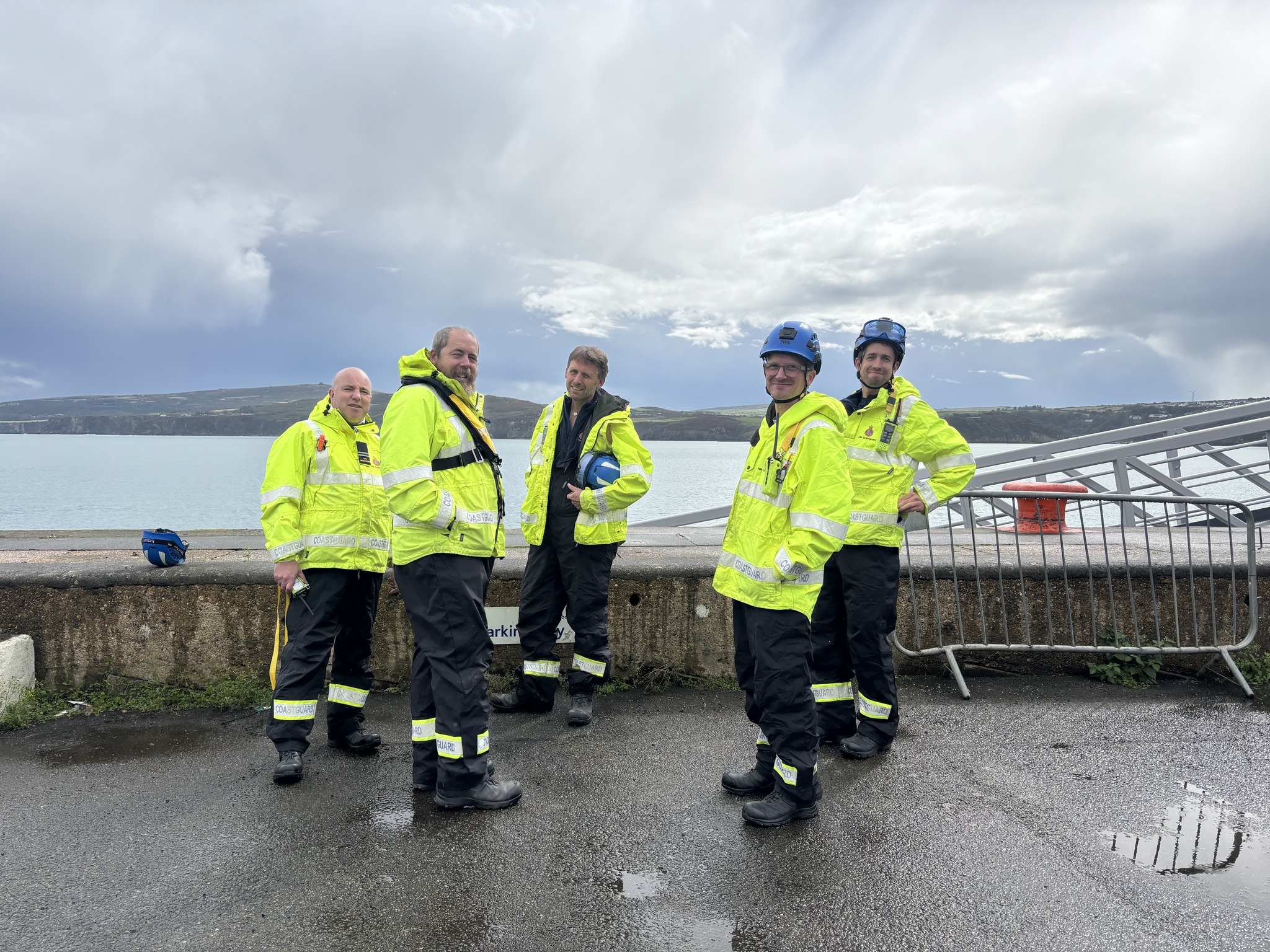
Current arrangements will remain in place after ministers admitted consultation work failed to properly assess the impact on volunteers and coastal operations
PLANS to move Coastguard Rescue Officers to an expenses-only volunteer system have been abandoned following widespread concern from crews, MPs and trade unions.
The Department for Transport confirmed on Thursday (July 16) that the proposed change, which had been due to take effect in September 2026, will no longer go ahead.
Current payment arrangements for Coastguard Rescue Officers will remain in place while the Maritime and Coastguard Agency carries out further consultation on the future of the service.
The reversal follows warnings that removing modest payments could force experienced officers to leave, placing additional pressure on teams responsible for responding to emergencies around the UK coastline.
Coastguard Rescue Officers are trained volunteers who attend incidents including cliff rescues, searches for missing people, flooding, maritime emergencies and casualties cut off by the tide.
The proposed expenses-only model was announced on June 1 following a Court of Appeal ruling in the case of Maritime and Coastguard Agency v Groom.
The judgment found that the payment of modest remuneration had inadvertently created a worker relationship between the MCA and Coastguard Rescue Officers.
The Government said the ruling meant it would either need to restore a fully voluntary model or formally adopt a worker model to remain legally compliant.
Transport minister Keir Mather said the expenses-only option had initially been considered the most appropriate response, based on advice provided by the MCA.
However, he said further scrutiny had revealed that two surveys used to inform the decision had not been detailed enough to properly assess the consequences for individual officers, their families or the wider service.
Mr Mather said: “I can confirm that plans to move to the expenses-only volunteer model in September will not go ahead and current arrangements will remain in place.”
He said ministers had listened to concerns raised by Coastguard Rescue Officers, MPs and trade unions, including during parliamentary questions, an urgent question and a Westminster Hall debate.
Mr Mather also visited a Coastguard station in Southampton, where he met members of the Hill Head and Portsmouth teams to hear directly how the changes could affect officers and their families.
He added: “Coastguard Rescue Officers must feel that their views have been heard and that they are valued, respected and empowered to carry out their duties.
“I am committed to ensuring that we now take the time to robustly gather the information required to understand the full operational implications of future decisions.”
Over the coming months, the MCA will consult directly with Coastguard Rescue Officers, trade unions and MPs before deciding on the longer-term structure of the service.
The Department for Transport will also examine how officers can continue to be properly recognised and rewarded while retaining the flexibility needed to serve their local communities.
Mr Mather said protecting the public around the coastline and recognising the work of Coastguard Rescue Officers remained his key priorities.



Community53 minutes ago
Tenby Summer Spectaculars brought to an end after harbour licence revoked
Round Table says it was willing to make major safety changes but could not secure the access controls needed to...

Local Government2 days ago
Catapult attacks suspected after wildlife deaths at Pembroke Mill Pond
Wildlife Crime Officers are investigating after the town council said around five animals showed signs of deliberate injury WILDLIFE found...


Crime2 days ago
Narberth retailer speaks of shoplifting toll after ‘collectable bear’ stolen
Independent shop owner said rising costs meant businesses could not afford to absorb losses caused by theft A NARBERTH retailer...


Crime2 days ago
Teen accused of attempting to murder teacher says she lied about stabbing
Defendant accepts teacher was terrified and that a knife wound to the head could kill, but denies deliberately attacking her...


Local Government3 days ago
Calls grow for independent investigation into Manorbier school closure
Councillor alleges misleading figures, inadequate insurance and poor treatment of staff CALLS for an independent investigation into the controversial closure...


Community4 days ago
Neyland Carnival hailed a huge success after streets fill with colour and crowds
NEYLAND CARNIVAL organisers have thanked the community, volunteers and local businesses who helped make this year’s event a memorable success....


Community4 days ago
Tenby Summer Spectacular: Anger grows over ‘disaster waiting to happen’ warning
A growing backlash has followed police calls for the event’s licence to be revoked, with supporters questioning why authorities failed...


Charity5 days ago
RSPB secures ‘missing link’ to reconnect wildlife habitats in Carmarthenshire
RSPB CYMRU has purchased a 96-hectare upland site in Carmarthenshire, describing it as a vital step towards reconnecting one of...


Crime6 days ago
Ann Widdecombe: Welsh politicians pay tribute as murder probe launched
Prime Minister Sir Keir Starmer has praised the former minister’s “conviction and dedication”, while political figures in Wales remembered her...


News6 days ago
Solardo pulls out of Haverfordwest show as organisers offer full refunds
Headline act confirms non-appearance as Park House Series announces major event changes DANCE music duo Solardo will no longer perform...
-

 Farming7 days ago
Working Carmarthenshire farm opens gates to visitors with new holiday cottages
-

 Sport7 days ago
Rising rally star claims maiden Mini Rally Challenge victory
-

 Farming7 days ago
Outer Hebrides stickmaker to make final Royal Welsh Show appearance
-

 Crime7 days ago
Greenacres confirms seized dogs are safe as investigation continues
-

 Sport7 days ago
Bluebirds give new home strip first run-out
-

 Health6 days ago
Hospital ward closed after highly contagious scabies outbreak
-

 Crime2 days ago
Letterston footballer guilty of eye-gouging assault during match
-

 Community7 days ago
Haverfordwest Castle refurbishment reaches new heights as roof goes on