


News
Saunders’WOOF’ celebrates all things dog

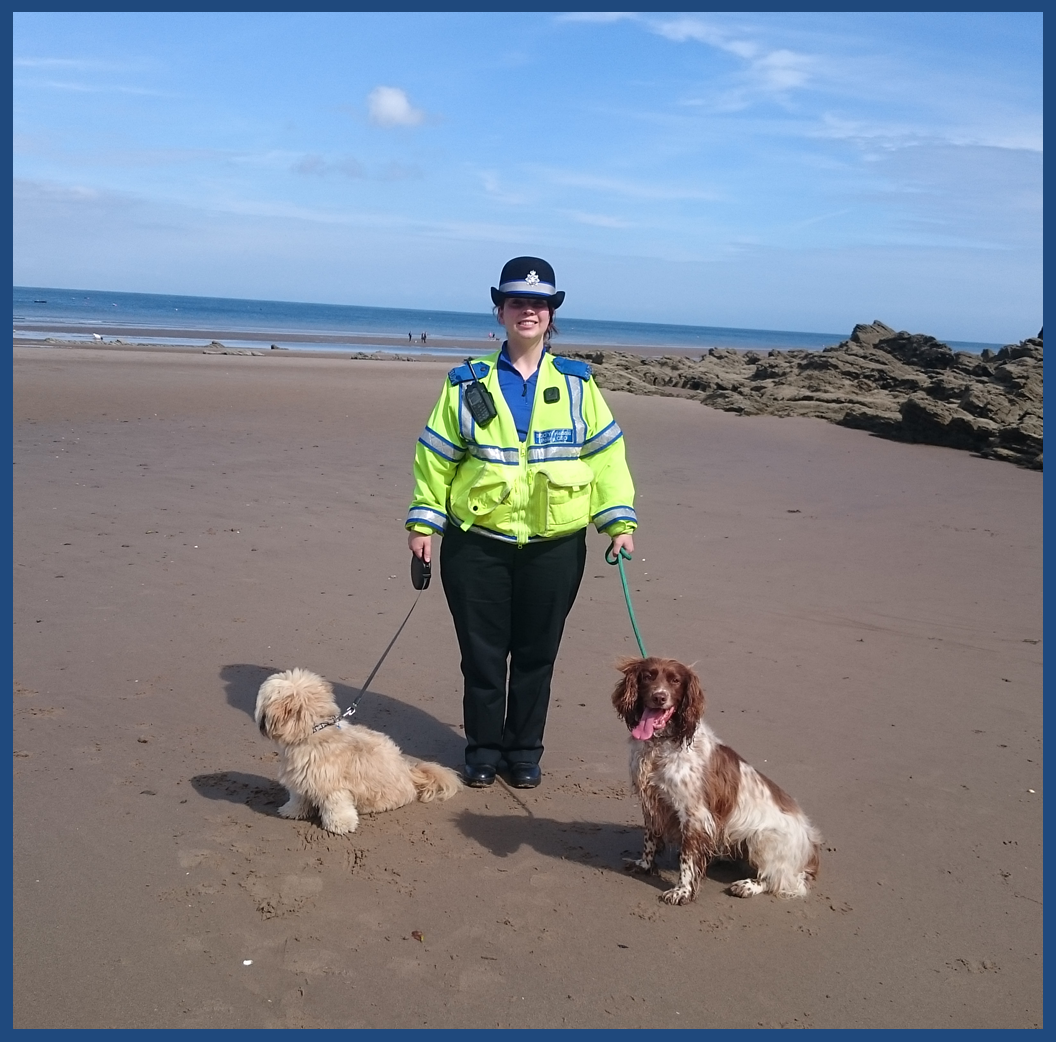
 DYFED-POWYS POLICE and Pembrokeshire Council want to see every man and his dog down on Saundersfoot Harbour on Friday (Apr 28) for Saunders’WOOF’, a free event celebrating everything great about the bond between man and dog.
Charities, companies and organisations from all sections of our communities will be there to host an enjoyable day offering free behavioural advice, microchipping, basic professional health checks for dogs and maybe the odd competition and canine treat!
The event, organised by Dyfed-Powys Police’s local Neighbourhood Policing Team and Pembrokeshire County Council, celebrates the last weekend before the annual dog walking restrictions come into action from the May 1 to September 30. These restrictions only apply to 11 beaches in the county including Saundersfoot, Amroth and Tenby Castle and South Beach, and there is always a spot nearby to feel the sand between your toes (or paws).
Saunders’WOOF’ aims to promote responsible dog ownership and show that our beaches can be fun and safe for all.
Saunders’WOOF’ also marks the launch of Saundersfoot’s very own Community Dog Watch Scheme, allowing members of the local community to take an active role in tackling the issue of dog fouling in their local areas.

Working closely with Pembrokeshire County Council Dog Wardens and Saundersfoot Neighbourhood Policing Team, the group will provide a high visibility presence when walking their own dogs in and around Saundersfoot in an attempt to encourage other dog owners to pick up after their pets.
The Community Dog Watch volunteers may report any owners that fail to pick up their dog’s mess in a public place. It is commendable that these individuals give up their time and put themselves on the frontline in order to make Saundersfoot a cleaner community for everyone to enjoy.
It is hoped that they will set the local standard for responsible dog owners and that their visible presence will encourage other dog owners to make sure they pick up and the numbers of volunteers will mean that wherever people take their dogs for a walk, there will be concerned members of the community keeping an eye to ensure they act responsibly.
Microchipping is also something at the forefront of the event. Malcolm Stagg who is attending from Dog’s Trust said: “As it is a year since the microchipping laws came in, one of the things we are keen to do is remind everyone who has their dogs chipped to check that their dogs’ details are up to date on the national database. Many people have changed mobile number, or even address since their dog was microchipped.

“Unfortunately this does mean that nearly half the stray dogs that are scanned by Dog Wardens, despite being chipped, cannot be readily returned home because the contact details are incorrect.”


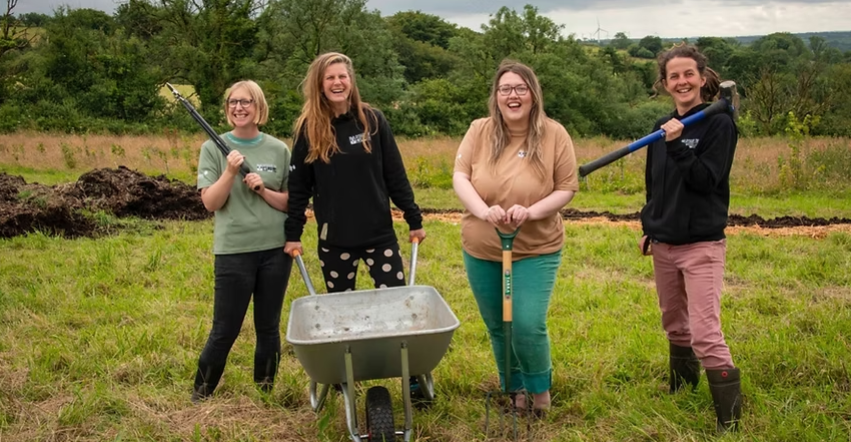
TO CELEBRATE National Volunteers’ Week from June 1-7, local community enterprise Cwm Arian is inviting people to help transform their CoedUNO site, which is an exciting community growing and agroforestry space nestled in Tegryn.
Thanks to a financial Community Grant from the Woodland Investment Grant (TWIG)- delivered by The National Lottery Heritage Fund in partnership with the National Forest for Wales programme – these free, hands-on sessions will run every Tuesday morning for the next few months.
The project offers a unique opportunity to step out into nature, connect with a friendly team, and learn practical, regenerative land skills directly from an industry expert. All sessions are guided by volunteer coordinator Kevin Rabbitt, an experienced horticulturist, woodsman, and agroecology advisor.
Under Kevin’s expert guidance, participants will gain rich, practical experience in everything from tree planting and plant species identification to mastering composting systems and nurturing soil health. Volunteers can also delve into traditional woodland crafts and broader regenerative land management.
Because the team wants these sessions to be shaped by the people who attend, volunteers are encouraged to share their own ideas and focus on the specific skills that interest them most. No prior experience is necessary, and a supportive, welcoming environment is guaranteed for everyone.
This collaborative effort comes at a pivotal time for CoedUNO, as work is actively underway to transform the site into a fully inclusive and accessible space. The project has already made fantastic progress with the completion of new, mobility-friendly pathways.
The next phase of development will bring a dedicated tool-shed shelter, a disability-friendly compost toilet, and significantly improved vehicle access.
Since active construction is taking place to upgrade this infrastructure, CoedUNO remains closed to the general public for safety reasons. Joining these supervised Tuesday sessions is currently the only way to experience the space and witness its transformation first-hand before the official public opening later this summer.
The sessions begin promptly at 10:00 am every Tuesday morning, with volunteers meeting in front of Ysgol Clyda in Tegryn (SA35 0BE), where convenient roadside parking is available. Due to the ongoing building works, organisers ask that participants approach the site with care and observe all safety signage.
To book a place, share project ideas, or find out more, please contact Kevin Rabbitt directly at [email protected].

MID and West Wales Fire and Rescue Service has become the first fire service in Wales to install specially designed sanitary bins for men with incontinence.
The service has installed 26 male incontinence bins across 22 sites as part of the Dispose with Dignity initiative, led by phs Group and Prostate Cancer UK.
The scheme supports men who experience bladder leaks, including those who have undergone life-saving treatment for prostate cancer.
Prostate cancer is the most common cancer in men, with one in eight men expected to develop the disease. The risk doubles to one in four for Black men. Urinary incontinence can be a side effect of treatment, including radical prostatectomy surgery.
Mid and West Wales Fire and Rescue Service employs 1,420 people, 81 per cent of whom are men.
The organisation has now achieved the Gold level of The BOG STANDARD Charter, which recognises employers and organisations that install suitable disposal facilities, provide support, and help raise awareness of prostate cancer and incontinence.
Kelsey Tiffin, from the service’s estates department, said: “Like many employers, we didn’t know this was an issue that affected so many men, but as soon as we became aware, we wanted to take action to support our team.
“We want to ensure that all the men at Mid and West Wales Fire and Rescue can feel confident to come to work, knowing they will have the facilities they need to dispose of their incontinence pads.
“Talking about bladder leaks is never easy, but it’s so important for us to do this and reduce the stigma associated with it, because prostate cancer is so prevalent.
“We really hope having the bins will raise awareness of prostate cancer, as well as being a good reminder for men on our team to get their PSA checked at the GP sooner rather than later.”
More than 2,170 businesses and organisations across the UK have signed up to The BOG STANDARD, with more than 21,700 specially designed bins installed since the campaign launched in February 2023.
Matthew Brabin, chief executive of phs Group, said too many men were avoiding work, social events and everyday activities because suitable facilities were not available.

He said: “Whether it’s going to work, a conference, to their local sports club or even to the local for a pint, when there are no sanitary bins, men with incontinence are staying at home, when they should be with us.
“This is what our Dispose with Dignity initiative is trying to change, and we’re so pleased to see Mid and West Wales Fire and Rescue join the fight by signing up to The BOG STANDARD Charter.”
Nick Ridgman, Head of Support Services at Prostate Cancer UK, said: “Many men need sanitary bins so they can dispose of their used pads discreetly and hygienically — but often these bins are nowhere to be found in men’s loos.
“It’s causing men stress and shame, and keeping them from going to work and doing the things they love.
“Mid and West Wales Fire and Rescue is making the organisation more welcoming and accessible for every employee, and we hope other organisations will follow.”
Anyone concerned about prostate cancer can contact Prostate Cancer UK’s Specialist Nurses on 0800 074 8383 or visit prostatecanceruk.org.

PEMBROKESHIRE’S last surviving tŷ unnos is set to undergo essential repairs after the county council’s Museum Service secured a £20,000 grant.
Penrhos Cottage, near Llanycefn, Maenclochog, is a rare surviving example of an overnight cottage — a type of building deeply rooted in Welsh cultural history.
Tŷ unnos were traditionally said to have been built on common land between sunset and sunrise, often with the support of the local community, to provide shelter for those in need.

The grant from the Pilgrim Trust will fund specialist conservation work on the exterior of the historic cottage, including repairs to the traditional thatched roof, restoration of lime mortar walls, limewashing, and improvements to the immediate surroundings.
The first phase of work is expected to begin in June.
Cllr Rhys Sinnett, Cabinet Member for Residents’ Services, said: “This is great news for Penrhos Cottage and the wider county, adding to the historical and cultural offer provided by the Museum Service of Pembrokeshire County Council.
“This is an important project and hopefully an important step towards opening the cottage in the future.”
Cllr Simon Wright, who represents the Maenclochog ward, said: “The grant from the Pilgrim Trust is a fantastic amount to receive for the much-needed improvements to Penrhos Cottage.
“The Maenclochog Community Council has fought long and hard to access funds along with the Friends of Penrhos. They will be extremely happy to hear the good news and eager to see the works start.
“It is just a start also, as more grant aid will be needed, and I look forward to working with Maenclochog Community Council and the county council to secure those funds.”
Built in the early 1800s on the edge of moorland in the Maenclochog area, Penrhos Cottage was first intended as a modest dwelling and was later rebuilt in more durable materials.
It remained a family home until 1968 before being acquired by the local authority and opened as a museum in the early 1970s.

In recent years, financial pressures have made it increasingly difficult to maintain the building and operate it as a museum. In response, the Museum Service began working with the local community in 2023 to explore new ways of managing and sustaining the site.
The restoration project, called Hidden Gem: Penrhos Cottage: restoring Pembrokeshire’s last surviving tŷ unnos, aims to secure the future of the building while developing it as a valued museum and community asset.
The Museum Service is working with Maenclochog Community Council and the Friends of Penrhos Cottage group to support the long-term care, presentation and reopening of the site.
Peter Nicholas, of Friends of Penrhos, said: “I am delighted that funding has finally been secured to allow these essential repairs to be carried out at Penrhos Cottage.
“This crucial work will help safeguard the future of this iconic, traditionally built thatched cottage, ensuring it can continue to be enjoyed and appreciated by future generations.”
Maenclochog Community Council said Bwthyn Penrhos was one of north Pembrokeshire’s hidden gems, offering an irreplaceable window into the past.
A spokesperson added: “We are thrilled that urgent expert repairs are now underway. Its preservation is not only vital for historical integrity, but also for the education and inspiration of future generations.
“Bwthyn Penrhos has the potential to become a vital community resource, creating opportunities for volunteering, partnership and shared learning.”
The work marks the first stage of a wider vision for Penrhos Cottage. Future phases, subject to funding, could include restoring the interior to reflect early 20th century life and reinstating the original cottage garden.
The long-term aim is for the cottage to open more regularly to visitors, supported by local volunteers, while remaining under the overall management of Pembrokeshire County Council’s Museum Service.
Local historian and author Hefin Wyn also welcomed the work.
He said: “Penrhos Cottage is very much an iconic part of the area’s heritage. Its presence, with its whitewashed walls, its thatched roof, its furniture and hearth, have been kept as they were when the last occupants lived there, thus reminding us of our history.
“It all reminds us of a way of life familiar to our forefathers.
“Indeed, some of the older generation still remember John Williams, Penrhos, and his family and will gladly relate the stories. As a result, Penrhos represents a visible link with our past.
“Poets and authors such as E. Llwyd Williams and Derfel Rees have heralded its distinctiveness.
“From the point of view of heritage, we are keen to preserve the cottage as it was, to be handed on to future generations, as testimony of what once was.”



Community8 hours ago
RNLI lifeguards rescue beachgoers during busy heatwave weekend
FOUR PEOPLE RESCUED AS RIP CURRENTS AND OFFSHORE WINDS HIT PEMBROKESHIRE BEACHES RNLI lifeguards in Pembrokeshire rescued four people and...


Local Government8 hours ago
Council and school staff pay row could hit Pembrokeshire services
COUNCIL workers, carers and school support staff in Pembrokeshire could be drawn into a growing UK-wide pay dispute after GMB...


Health15 hours ago
Hywel Dda to hold second consultation on future of stroke services
A SECOND phase of public consultation is to be held on the future of stroke services across Hywel Dda University...


Community15 hours ago
Warning as algal blooms mistaken for sewage on Welsh coast
Beachgoers urged to avoid contact with suspicious foam and report pollution concerns NATURAL RESOURCES WALES has issued summer advice to...


News1 day ago
Yacht towed to safety after engine failure off Tenby
A YACHT was towed to safety by Tenby RNLI after suffering total engine failure around 15 miles south-east of the...


Crime2 days ago
Haverfordwest sex offender jailed over child abuse material
Registered offender used library computers to hide social media accounts A HAVERFORDWEST sex offender who used public library computers to...


Local Government2 days ago
Milford Haven school redevelopment moves a major step closer
£141.6m scheme could transform education in the town A MAJOR step forward has been taken in the long-awaited Milford Haven...


Crime2 days ago
Castlemorris man spared jail after knife confrontation over council tax debt
A CASTLEMORRIS man has avoided immediate custody after threatening enforcement officers with a knife during an early-morning visit over unpaid...


News3 days ago
Lifeboats and helicopter join search for missing person off Broad Haven
SEARCH teams carried out a major operation at Broad Haven after reports of a missing person. Little and Broad Haven...


News4 days ago
Multi-agency rescue after child falls on rocks while coasteering
Child airlift requested after four-metre fall near Lydstep A CHILD was rescued from rocks near Lydstep after falling around four...
-

 Health4 days ago
Paul Davies warns health board over Withybush and Bronglais services
-
 Crime5 days ago
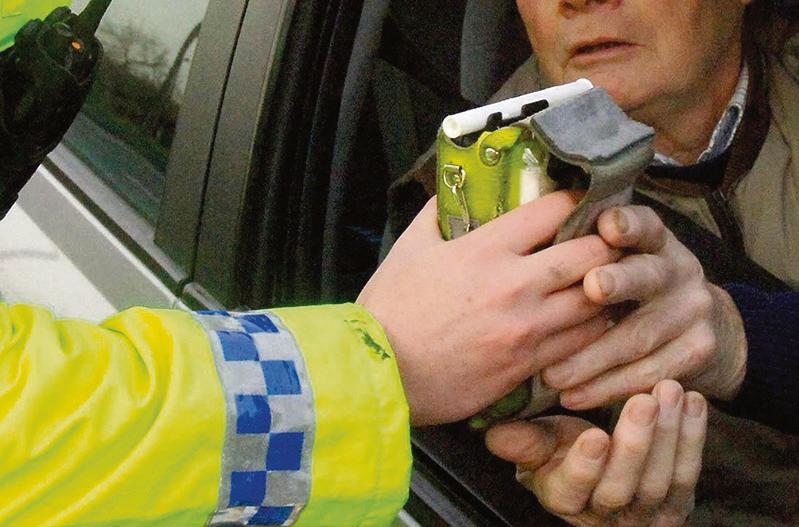
Police tip-off leads to drink-drive ban for Pembrokeshire pensioner
-

 Crime5 days ago
Steynton motorist banned after drink-drive collision
-
Crime4 days ago
Carmarthenshire man sent to Crown accused of 33 historic sexual offences
-

 Crime5 days ago
Warrant issued for man accused of taking wild goldfinches
-
 Crime5 days ago
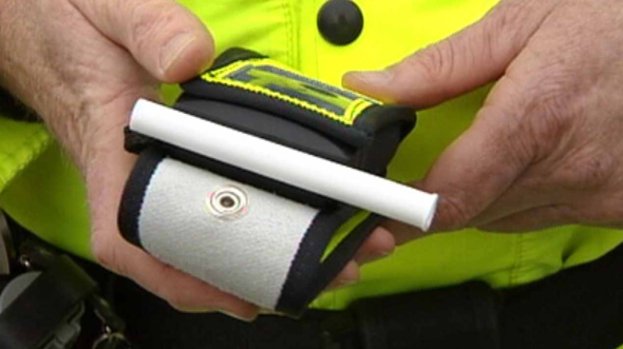
Dock man given suspended prison sentence for third drink-drive offence
-

 Crime5 days ago
Dock motorist fined £1,600 after four speeding offences
-

 Local Government6 days ago
Dennison code breach raises serious questions over common sense at County Hall