


News
Coroner says there were ‘lost opportunities’ in baby’s care

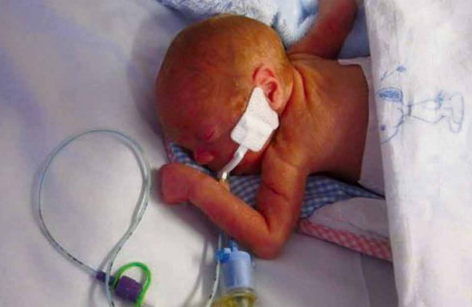
 THERE were “lost opportunities” in the care of a premature baby who died after being removed from a ventilator, a coroner has said.
Rohan Rhodes, of Narberth, was born 15 weeks early at Singleton Hospital in Swansea on August 27, 2012, weighing 814g (1lb 12oz). He was placed on a ventilator at the hospital’s neonatal intensive care unit, where he was described as “doing well” for four weeks after his birth. Flax Bourton Coroner’s Court heard the medical team’s plan was to keep Rohan on the ventilator ahead of his upcoming surgery.
But advanced neonatal nurse Amanda Dallorzo took the “autonomous” decision to remove the machine and put a breathing mask on Rohan instead. Within an hour, Rohan’s condition dramatically deteriorated and he developed NEC, a gastrointestinal disease, which required surgery.
Tragically, Rohan never became stable for the operation and he died, aged 36 days, in an incubator at the hospital with parents Alex and Bronwyn Rhodes close by.
Avon Coroner Maria Voisin recorded a narrative verdict following a three day inquest into Rohan’s death. She said three blood gas readings should have been taken to check Rohan’s condition but were not, resulting in “lost opportunities” to treat the baby.

“Rohan Rhodes was an extremely premature baby who was at risk of developing NEC,” Ms Voisin said.
“He developed this condition which caused his death on September 30.
“On September 29, there were three occasions when he should have had a blood gas test.
“It is not known what results would have been but these were lost opportunities which may have resulted in Rohan receiving earlier medical care.”

She told Rohan’s parents: “I am very sorry for your loss.”
Ms Voisin said the blood gas tests should have been taken directly after Ms Dallorzo removed Rohan from the ventilator, at 4pm on September 29. A second test should have been taken at 5pm, when it was noticed that a breathing mask placed on Rohan was leaking.
The final “lost opportunity” was after Rohan was put back on the ventilator, at 7.30pm that evening, Ms Voisin said. Rohan died at 6pm the following day.

Dr David Harding, lead clinician at St Michael’s Hospital, told the inquest the ward was short-staffed and at full capacity when Rohan was treated. At 4pm on September 29, Rohan was extubated by Ms Dallorzo – who did not consult Rohan’s parents or doctors on the ward – and nurse Suja Thomas.
“Rohan was extubated at 4pm and the ANNP (advanced neonatal nurse practitioner Ms Dallorzo) said it was her intention to check Rohan’s blood gas but she didn’t as she was too busy,” Ms Voisin said.
Rohan deteriorated within an hour.
Dr Vel Ramalingam, the registrar on the ward told how he found Rohan had been extubated and put on breathing mask treatment Continuous Positive Airway Pressure (CPAP).
Rohan’s heart was slowing and the mask was leaking, so Dr Ramalingam requested a blood gas from Ms Thomas and that she apply nasal prongs to Rohan.
“In evidence, Dr Ramalingam said he requested a blood gas to be carried out,” Ms Voisin said.
“This was not carried out.”
Ms Thomas removed the prongs and placed the mask back on Rohan within 30 minutes as he was crying.
At 6.30pm, Rohan became bradycardic as his parents changed his nappy, with his heart rate falling into the 20s at one point.
He was reintubated by 7.30pm.“The nurse practitioner said she intended to repeat the blood gas but was pulled away,” Ms Voisin said.
As Rohan was reintubated, his body temperature dropped to 33.6 degrees – around three lower than normal.
“It later became clear his humidifier has been left off,” Ms Voisin said.
His temperature did not recover until 11pm, the inquest previously heard.
Rohan’s blood gas had been taken at 1.47pm on Saturday 29 – two hours before he was removed from the ventilator. It was next checked at 12.13, almost 12 hours later. Results showed lactic acid and carbon dioxide was building, meaning his condition was weakening.
“By 2.30pm, Rohan was considered to be in circulatory collapse,” the coroner said.
“An abdominal x-ray at 5.12 showed a perforation and a consultant was called.
“The surgeon was called at 6am but sadly Rohan was never stable enough for surgery.”
Rohan went into cardiac collapse at 4pm that day and required resuscitation. An hour later, his mother, vet Mrs Rhodes, told doctors to stop resuscitation. She begged doctors to let him pass away in her arms, but they were unable to remove the lines from his body in time.
He died in his incubator at 6pm on September 30. Ms Voisin said the cause of Rohan’s death should be recorded as acute peritonitis and pneumonia, NEC and prematurity.
Rohan’s family are considering legal action following the inquest.



A HAKIN motorist has been banned from driving for three years after being caught behind the wheel with cocaine and benzoylecgonine in his system.
Mark Briskham, 53, of Waterloo Square, Wellington Road, Hakin, was stopped by police on January 5 as he drove a Ford Kuga along Steynton Road, near Milford Haven.
Blood tests carried out at the police station showed he had 800mcg of benzoylecgonine in his system. The legal limit is 50mcg.
He also had 64mcg of cocaine in his system. The legal limit is 10mcg.
Briskham pleaded guilty to two drug-driving charges when he appeared before Haverfordwest Magistrates’ Court this week.
Magistrates disqualified him from driving for three years, taking into account a previous drug-drive conviction from 2020.
He was also fined £120 and ordered to pay £85 costs and a £48 surcharge.cr
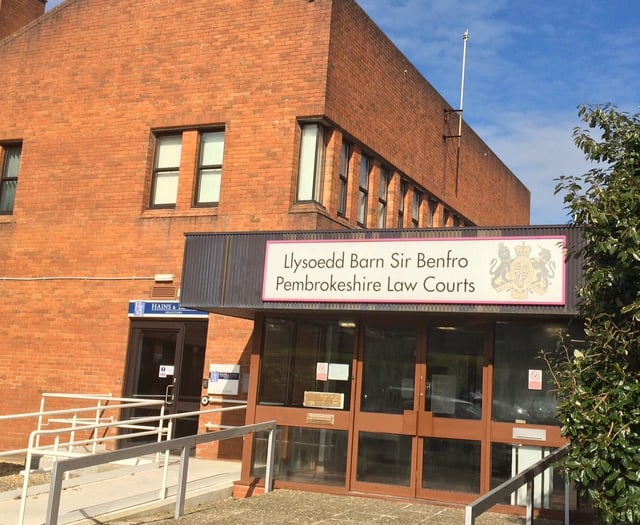
A PEMBROKESHIRE man has been remanded in custody following an alleged May Day assault against a woman in Begelly.
Tomas Baker, 34, of Ty Dee, New Road, Begelly, is accused of assaulting the woman, causing actual bodily harm, at an undisclosed location in Begelly on May 1.
Baker appeared before Haverfordwest Magistrates’ Court this week by video link from Swansea Prison.
He pleaded not guilty to the charge.
His trial will take place at Haverfordwest Magistrates’ Court on June 22.

A WATERSTON man has appeared before magistrates charged with 13 sexual offences against children, including three allegations of raping a girl under the age of 13.
Chaisee Price, 25, of Biggins Hill, Waterston, Milford Haven, appeared before Haverfordwest Magistrates’ Court this week.
He faces three charges of raping a girl under 13, eight charges of sexually assaulting girls aged between five and eight, and two charges of intentionally inciting girls under 13 to engage in sexual activity.
The offences are alleged to have taken place between 2014 and 2019.
Price denied all charges.
Because of the seriousness of the allegations, magistrates declined jurisdiction and the case will now proceed to Swansea Crown Court on July 10.
Price was released on conditional bail.
The conditions include a daily electronically monitored curfew between 6:00pm and 6:00am, no contact with the prosecution witness, no unsupervised contact with children under 18, and a requirement to surrender his passport to police.



News7 hours ago
First Minister challenged over jobs for student nurses
REFORM WALES has accused the First Minister of failing to guarantee jobs for student nurses in Wales, despite continuing pressure...

Crime10 hours ago
Knife blankets call as school staff face rising violence fears
GMB says protective equipment should be considered where risk assessments show staff could face blades SCHOOL staff should be given...


News10 hours ago
Claire Archibald secures review of Milford Haven train times
RURAL TRANSPORT CONCERNS RAISED WITH TFW CLAIRE ARCHIBALD MS has secured a review of train times between Milford Haven and...


Crime10 hours ago
PCC review calls for stronger youth crime prevention work
REPORT MAKES 13 RECOMMENDATIONS A REVIEW into crime and anti-social behaviour services for young adults has called for stronger prevention...

Crime13 hours ago
Families condemn failed appeal by paddleboard boss jailed over Haverfordwest tragedy
RELATIVES SAY LATEST COURT BID HAS REOPENED PAIN AFTER FOUR DEATHS ON WESTERN CLEDDAU THE FAMILIES of victims of the...


Community1 day ago
Forgotten wartime archive found in Pembroke Dock attic after 80 years
Remarkable family collection reveals story of father and son who served through two world wars A REMARKABLE untouched family archive...


Crime1 day ago
Milford Haven woman left with facial fractures after drunken attack
A WOMAN in her late fifties suffered facial fractures after being repeatedly punched through the window of her car during...


Crime1 day ago
Sex offender in senior role at Tenby family hotel
CREST HOTEL GROUP says it is investigating safeguarding concerns after staff at the Imperial Hotel in Tenby raised alarm over...

Sport2 days ago
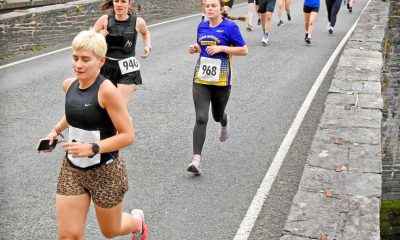
Runners tackle new route in Ras Y Castell 10k
MORE than 90 runners took to the streets and paths around Cardigan on Friday evening (June 5) for the annual...

Business2 days ago
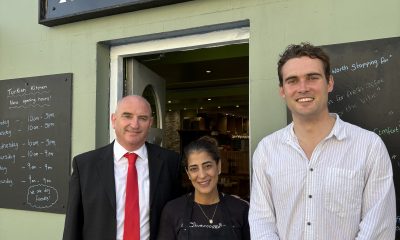
Turkish Kitchen reaches Welsh restaurant award semi-finals
Haverfordwest café praised as small independent business flies flag for Pembrokeshire A HAVERFORDWEST café has been named as a semi-finalist...
-
Crime4 days ago
Paddleboard company owner loses bid to cut sentence over Haverfordwest tragedy
-

 Crime3 days ago
Milford Haven man admits harassment and assault
-

 Crime6 days ago
Milford Haven man bit neighbour’s neck near cashpoint
-

 News3 days ago
Community appeal for privacy after serious emergency in Pendine
-

 Crime6 days ago
Pembroke Dock driver avoided jail after drug-drive crash
-

 Crime6 days ago
Dinas Cross man jailed over shop thefts
-
Crime1 day ago
Sex offender in senior role at Tenby family hotel
-

 News6 days ago
Mass rescue as west Wales lifeguards save three lives during busy half-term