

News
Betty Guy ‘murdered by her daughter and grandson’

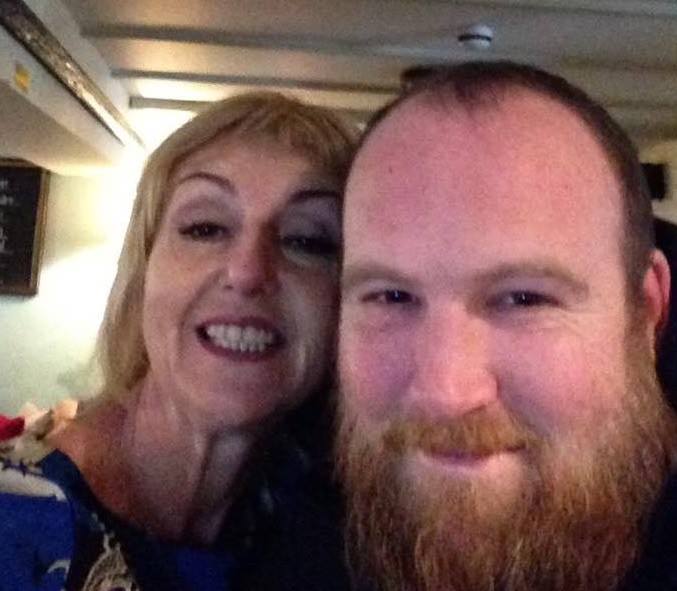
BETTY GUY was murdered by her own daughter and grandson, a jury heard today (Jan 9).
Penelope John fed her crushed transquilisers and alcohol and Barry Rogers smothered her with a pillow, it was alleged.
John, aged 50, of Union Terrace, St Dogmaels, and Rogers, 32, of High Street, Fishguard, deny murdering 84 year old Mrs Guy on November 7, 2011, at her home in Hillcroft, Johnston, near Haverfordwest.
Paul Lewis QC, prosecuting at Swansea Crown Court, said at first Mrs Guy’s death was put down to natural causes and her body was cremated soon afterwards.
But in the following years, he alleged, Rogers made a series of confessions to women he later had relationships with.

And police tape recorded more confessions after they secretly bugged John’s home and heard both of them discussing what they had done.
They included, said Mr Lewis, Rogers telling his mother: “But I did it. No honestly you have got nothing to worry about, it’s me that’s the one that’s done the act.”
Later they became concerned about whether Rogers had spoken about John putting tablets into Mrs Guy’s whiskey on a mobile telephone or put it in a text.
Rogers could be heard saying, softly, to John: “Are you starting to crack? Keep our story the same.”
John was taped saying: “No, I can’t remember. Did I text you when I said I crushed the diazepam up and I crushed zopiclone and put it in her….
“No, I would not have text that to you Barry. On reflection, I would have told you on the telephone.”
Rogers allegedly replied, “On the phone, yeah. I’m sure we spoke on the phone about it.”

Another recording caught Rogers, referring again to mobile telephones, saying to John: “But it’s f***ing technology like, a slip of a word here or there and we are in deep s**t like, we’re in jail for life.”
Mr Lewis said the prosecution case was that both Rogers and John had decided to end Mrs Guy’s life.
At 2.48am on November 7 John dialled 999 and said her mother had died. She said she had been suffering from stomach and bowel cancer, both of which were untrue.
She also said Rogers was in the house.
Because Mrs Guy was to be cremated her body was examined by two doctors. Dr Roger Burns noted small pinpoint bruising on the left side of her face.
No postmortem was carried out and the cremation went ahead at Narberth.
Rogers developed a relationship with Sandra Adams, who had been a junior school pupil in Haverfordwest with him many years before.
In November, 2015, Miss Adams went to the police to say Rogers had told her that he had smothered his grandmother with a pillow and an investigation began.
Detectives traced his estranged wife, Lisa Watkins, and another woman he had had a relationship with, Rhianne Morris.
Mr Lewis said they discovered that Rogers had also confessed to them.
The defendants were arrested on October 5, 2016.
While they were being interviewed bugs were placed at John’s home and on their release Rogers was granted bail on the condition he stayed with his mother.
“Almost as soon as they got in they began to talk,” said Mr Lewis.
When Rogers was re-interviewed and told about the tape recordings, he claimed to have made the statements ‘to take the p**s out of you pigs’.
Rogers, a former soldier, told police he knew the house had been bugged because he had bought a bug detector on EBay the day after he and his mother had been released on bail.
But, said Mr Lewis, the incriminating conversations had been recorded in the early hours of the morning or their release and ‘well before Barry Rogers could possibly have bought any bug detector’.
Mr Lewis said Rhianne Morris had told them that in 2010 she had moved in with Rogers, then living at 6 Rhydyfelin, Cardigan. Later, they moved to Frome in Somerset.
Late on November 6, 2011, Rogers received a telephone call from his mother and he could be heard saying: “It’s time, is it?”
Rogers then drove to Johnston and telephoned Miss Morris in the early hours of the following day to say ‘his Nan had gone’.
He allegedly told Miss Morris that John had given Mrs Guy ‘a load of tablets and a bottle of whiskey’.
Their relationship deteriorated and during a heated argument Rogers allegedly said to Miss Morris: “You want to be careful, or I’ll do to you want I did to her.”
Rogers allegedly picked up a pillow and held it to his face, saying to Miss Morris: “I’ll do it while you’re sleeping and you won’t know.”
Both John and Rogers deny having any involvement in Mrs Guy’s death.
t was now too late for anyone to prove medically how Betty Guy died, the jury heard.
Her body was cremated four days after her death.
But, said Paul Lewis QC, the prosecution would still show that she was suffocated as the result of an agreement between the two defendants.
After police had become suspicious about how she had died a Home Office forensic pathologist, Dr Deryck James, had reviewed her medical history and the notes made by the two doctors who had examined her body before she had been cremated.
Dr James concluded that although she had suffered ill health she had not any terminal illness.
Dr James said he noted that bruising had been visible on Mrs Guy’s face.
“In his opinion where a person is found dead, is face up and has not been the subject of any resuscitation attempts, then such petechiae (bruising) warrant further investigation because they raise the question of there having been pressure applied to the face or neck and thus the possibility of suffocation.
“However, such petechiae do not point inexorably to there having been an obstruction to Mrs Guy’s breathing and, from a medical standpoint, Dr James cannot now rule out that Mrs Guy suffered a natural death.
“The medical evidence cannot therefore provide any certainty as to how Mrs Guy died.”
He told the jury, “You will have to decide upon all the evidence that you hear.
“Did she die of natural causes as the defendants contend or, as we allege, was she suffocated as the result of an agreement reached between the two defendants.
“We submit, however, that she did not die from natural causes and that the defendants did not tell the truth in interview.
“Instead, they lied to try and conceal the arrangement they had made and the steps that they took to end Mrs Guy’s life.”
The trial continues and is expected to last for three weeks.












Businesses and members of the public across the Dyfed-Powys area are being urged to check banknotes carefully after fake currency was reported in Builth Wells
DYFED-POWYS POLICE has issued a warning after receiving an increased number of reports of counterfeit £20 notes being circulated in the Builth Wells area.
Although the reports have so far centred on the town, the warning is relevant to businesses and residents across the force area, particularly with thousands of visitors expected to travel to Powys for the Royal Welsh Show.
Police are urging shopkeepers, hospitality businesses, market traders, taxi drivers and members of the public to examine any £20 notes they receive.
A genuine Bank of England polymer £20 note contains several security features. When the note is tilted from side to side, the word “twenty” inside the oval hologram should change to “pounds”.
The holographic section should also appear multicoloured when moved. Genuine polymer notes have a smooth, slightly glossy texture, with raised printing on areas including the words “Bank of England”.
Signs that a note could be counterfeit include the word “twenty” failing to change when the note is tilted, the holographic section remaining silver and the note having an unusual texture or thickness.

On some fake notes, the holographic patch may also appear out of alignment because it has been glued into place.
Police are also warning people to look out for so-called “prop notes”, which may have the words “prop” or “copy” printed on them.
In some cases, these words are covered with a foil sticker intended to resemble the security hologram on a genuine banknote. Police said these notes are still considered counterfeit under UK law, even when the wording remains visible.
Anyone who suspects they have received a counterfeit note should avoid attempting to spend it and should report the matter to police.
Possessing or knowingly using counterfeit currency is a serious criminal offence which can carry a prison sentence of up to ten years and an unlimited fine.
Anyone with information is asked to contact Dyfed-Powys Police online, email [email protected] or call 101.

People who are deaf, hard of hearing or speech impaired can text the non-emergency number on 07811 311 908.
Information can also be provided anonymously to Crimestoppers by calling 0800 555 111.

Classic and vintage vehicles will gather at Hancock’s Yard this Saturday for a free family event
A RARE steam-powered car will be among the star attractions when classic and vintage vehicles gather in Pembroke Dock this weekend.
The Classic and Vintage Car Show takes place at the West Wales Maritime Heritage Society’s historic boatyard at Hancock’s Yard, Front Street, on Saturday, July 18.
Running from 11:00am until 4:00pm, the event will give visitors the chance to admire a varied collection of carefully preserved vehicles and speak to the owners who keep them on the road.
Organiser Peter Kraus said there was particular excitement surrounding one highly unusual exhibit.
“We even have a steam car coming,” he said.
Steam cars were among the earliest mechanically powered road vehicles, using a boiler and steam engine rather than the petrol or diesel engines found in most classic cars.
The show will offer motoring enthusiasts a chance to take a closer look at vehicles from different periods of road transport history, while providing an enjoyable day out for families and visitors to Pembroke Dock.
The event is being held within the West Wales Maritime Heritage Society’s working boatyard, where volunteers preserve the area’s maritime history.
Visitors will also be able to explore the society’s museum, restoration workshops and collection of historic vessels and maritime artefacts.
Admission and parking are free, although donations to support the work of the volunteer-run society are welcomed.
The Classic and Vintage Car Show takes place at Hancock’s Yard, Front Street, Pembroke Dock, SA72 6JY, from 11:00am until 4:00pm on Saturday, July 18.


Uwen Watts was jailed last year after exposing himself to a vulnerable woman and sending her offensive sexual messages
A REGISTERED sex offender who was jailed last year for exposing himself to a vulnerable woman has returned to court after police found a push dagger at his Milford Haven home.
Uwen Watts, aged 20, was sentenced to 29 weeks in prison in December after sending the woman links to pornographic material before exposing his genitals to her.
He was also made subject to notification requirements under the Sex Offenders Register for ten years.
Watts has now appeared before Haverfordwest Magistrates’ Court after officers discovered the push dagger at his home in Coombs Drive.
Police attended the property on May 15 while monitoring Watts in connection with an unrelated matter.
After entering the address, officers found the push dagger, which is legally classed as an offensive weapon.
Watts pleaded guilty to possessing an offensive weapon in a private place and was represented by solicitor Tom Lloyd.
“The item was found in a private place and he didn’t use it or threaten anyone with it,” Mr Lloyd told the court.
“It wasn’t hidden and he made full admissions to the officers.”
Magistrates fined Watts £40 and ordered him to pay £85 in prosecution costs and a £16 surcharge.
A destruction order was also imposed for the push dagger.




Crime1 hour ago
Narberth retailer speaks of shoplifting toll after ‘collectable bear’ stolen
Independent shop owner said rising costs meant businesses could not afford to absorb losses caused by theft A NARBERTH retailer...


Crime2 hours ago
Teen accused of attempting to murder teacher says she lied about stabbing
Defendant accepts teacher was terrified and that a knife wound to the head could kill, but denies deliberately attacking her...


Local Government2 days ago
Calls grow for independent investigation into Manorbier school closure
Councillor alleges misleading figures, inadequate insurance and poor treatment of staff CALLS for an independent investigation into the controversial closure...


Community2 days ago
Neyland Carnival hailed a huge success after streets fill with colour and crowds
NEYLAND CARNIVAL organisers have thanked the community, volunteers and local businesses who helped make this year’s event a memorable success....


Community2 days ago
Tenby Summer Spectacular: Anger grows over ‘disaster waiting to happen’ warning
A growing backlash has followed police calls for the event’s licence to be revoked, with supporters questioning why authorities failed...


Charity3 days ago
RSPB secures ‘missing link’ to reconnect wildlife habitats in Carmarthenshire
RSPB CYMRU has purchased a 96-hectare upland site in Carmarthenshire, describing it as a vital step towards reconnecting one of...


Crime4 days ago
Ann Widdecombe: Welsh politicians pay tribute as murder probe launched
Prime Minister Sir Keir Starmer has praised the former minister’s “conviction and dedication”, while political figures in Wales remembered her...


News4 days ago
Solardo pulls out of Haverfordwest show as organisers offer full refunds
Headline act confirms non-appearance as Park House Series announces major event changes DANCE music duo Solardo will no longer perform...


Local Government4 days ago
Conservatives win Pembroke Dock seat as Reform stalls and Dowson polls just 11
Jamie Street takes Market ward with a 43-vote majority as Reform finishes fourth despite its major Senedd breakthrough two months...


Health4 days ago
Hospital ward closed after highly contagious scabies outbreak
Hywel Dda confirms wider rise in cases across Carmarthenshire, Pembrokeshire and Ceredigion as patients and staff are offered treatment A...
-

 News7 days ago
Questions raised over Hamilton Accies finances after club’s Haverfordwest friendly
-

 Farming5 days ago
Working Carmarthenshire farm opens gates to visitors with new holiday cottages
-

 Entertainment6 days ago
Swing and big band classics heading to Torch Theatre
-

 Sport5 days ago
Rising rally star claims maiden Mini Rally Challenge victory
-

 Crime5 days ago
Greenacres confirms seized dogs are safe as investigation continues
-

 Farming5 days ago
Outer Hebrides stickmaker to make final Royal Welsh Show appearance
-

 Sport5 days ago
Bluebirds give new home strip first run-out
-

 Crime7 days ago
Carmarthenshire rapist jailed for 22 years for child sex offences